Let Us Be Your Right Hand For Your Injury Case.
We Make It Right!
Scroll or swipe to go to the page.
Insight

Structurally Unsound

Too often, developers and contractors put profits above the people who work for them. Construction site safety is nonnegotiable. Here’s how to make that aspiration a reality.

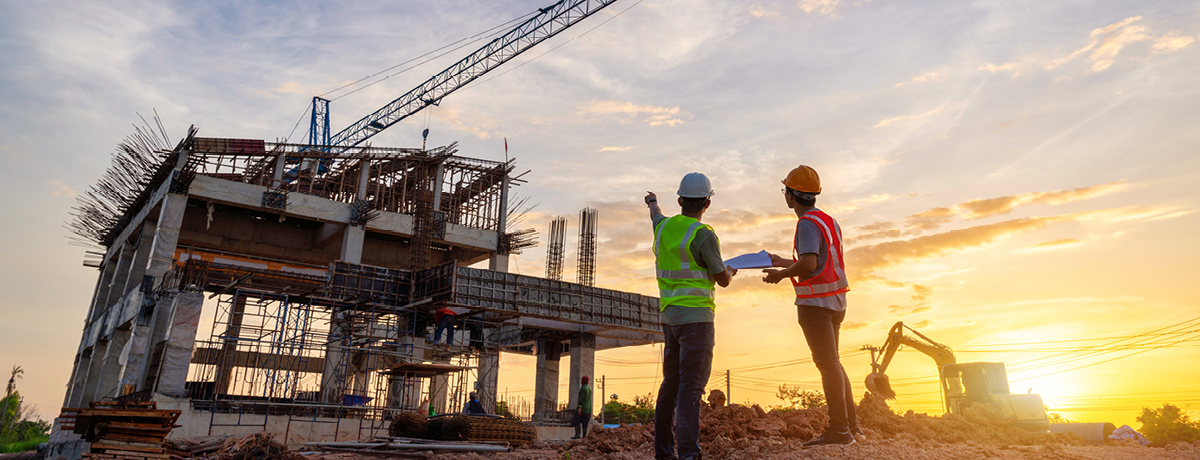
Two construction workers in PPE at construction site
Daniel P. O'Toole

Daniel P. O'Toole

May 18, 2023 09:16 AM

A CONSTRUCTION SITE can be a dangerous place to work. Sites that prioritize worker safety require numerous, varied and intertwined precautions. The lawyers at Block O’Toole & Murphy often represent construction workers who have been injured, as well as families of workers killed in accidents on the job. Each case underscores the grave importance of site safety. Providing the right equipment, training and planning—and rigorously following regulations—are all vital to protecting the lives of construction workers.

Site Safety Is Not Limited to PPE

A common misconception, even within the industry, is that personal protective equipment (PPE) suffices as a pillar of workplace safety. This includes goggles, gloves, earplugs, face shields, respirators and hard hats. The National Institute for Occupational Safety and Health (NIOSH), in fact, outlines a hierarchy of controls that places PPE at the bottom, ideally functioning as workers’ last line of defense. The best strategies for minimizing risk appear much earlier in the timeline of any project.

The Occupational Safety and Health Administration (OSHA) recommends incorporating safeguards into the planning stages. This corresponds with NIOSH’s aforementioned hierarchy of controls: The first priority should be eliminating hazards altogether.

The individuals responsible for site safety can limit accidents by calling regular “toolbox meetings.” These sessions enable workers to learn about any safety issues unique to their job site and get an overview of what they’ll be working on and how best to accomplish the job securely. One hurdle we often confront is that most people talking in such meetings are doing so in English but many of the workers speak a different language. Proper toolbox meetings can make a difference in workplace safety at construction sites.

Reducing Falls on Work Sites

Falls are the most common hazard construction workers face. OSHA highlights the critical (but perhaps surprising) fact that falls from even as little as four to six feet can be deadly. As such, flooring is an often overlooked safety measure. For instance, when a staircase is erected for the purpose of construction work, it’s legally considered a safety device. A worker using it to access a basement renovation, say, might fall and suffer serious head injuries. The stairs may have been fabricated with shoddy materials and inferior craftsmanship, or without railings or slip-resistant flooring.

In some cases, workers can fall through poorly made or badly placed temporary flooring. We also see accidents in which existing flooring is insufficiently supported. This is sometimes linked to other work on the site; if the pounding of demolition in the basement has rattled the foundation, it can trigger a cave-in on the first floor. Another example: an errant aperture in the floor causes an unsuspecting worker to fall through.

Scaffolding presents inherent fall risks. While it’s usually unavoidable at most construction sites, scaffolding should be secured to ensure its stability. Likewise, built-in-place ladders and stairways are a better choice than portable versions.

Some built-in forms of fall prevention have a conveniently small footprint. Cast-in sockets, for example, provide tiny slots in stairways for easy guardrail installation. Steel beams used in elevated platforms can be fitted with comparable holes for the threading of guardrail cables. Guardrails themselves can sometimes be made from steel plates which are then built into the walls of the finished structure. Finally, permanent roof anchors are compact fasteners that serve as vital tie-off points for roofers.

Harnesses and nets can be useful as a final safety measure in the event of a fall. However, nets require careful placement to be effective. A safety harness known as a Personal Fall Arrest System (PFAS) should be attached to a lifeline that can support 5,000 pounds. While one person weighs only a fraction of this, the total force of a fall includes the physics of rapid deceleration. Like any equipment that may affect a worker’s survival, harnesses should be inspected routinely for signs of wear or damage. Finally, a harness is only as strong as its tie-off point. Supervisors should make sure there are enough sturdy tie-off points to which workers can secure their harness.

Contending with Excavation Hazards

Falls are common throughout the construction industry, but excavation is the most dangerous aspect of the job. Disturbingly, its death rate is double that of the wider industry thanks largely to the constant threat of cave-ins. Even trenches just four feet deep require exit systems like ladders.

Several engineering solutions can mitigate cave-in risks. A technique known as “benching” carves out layered steps within the earth; “shoring” braces the sides of an excavation with materials such as aluminum or wood; and “shielding” describes boxlike structures that protect workers in the event of a collapse.

To help predict the chance of a cave-in, trained personnel are required on site to monitor and analyze soil conditions. As the American Society of Safety Professionals (ASSP) stresses, construction sites can change significantly over the course of even a single day. This is particularly true for excavation, where oxygen levels, fumes and changing weather must all be monitored.

To reduce underground work done by humans in the first place, hydraulic jacks can be used to widen trenches safely from above. Trenchless technology can also complete certain tasks through mechanical tunneling.

Addressing Administrative Problems

Management negligence is always an urgent concern for construction workers. Hazards can arise from inadequate training, enforcement, rotating employees among different projects and the order in which work is done. Many serious accidents, regrettably, are caused by managers rushing timelines—which stems from the menace of an employer or general contractor placing profits over people.

Unionized workers are less exposed to accidents, as their projects have better oversight. Regardless, the New York City Department of Buildings (DOB) has reported hundreds of injuries and dozens of fatalities in construction over the past seven years. Most of those victims were nonunion, lacking the protection of organized labor behind them. They’re often undocumented workers who might recognize dangers on site but who lack the power to demand changes or refuse work.

When immigration status is a source of anxiety for such plaintiffs, part of our job is to assuage their fears: to let them know they have rights and that their status is not an impediment to bringing a case. To help comfort them, we show how we’ve protected people in similar situations before. Unfortunately, the grievous exploitation of these workers, paired with an increase in major construction projects, has led to many accidents in New York as the city and its skyline continue to expand.

Meanwhile, regulators struggle with considerable roadblocks. Organizations tasked with the responsibility of inspecting sites, such as OSHA and New York’s DOB, are hindered both by staffing shortages and ineffectual deterrents to noncompliance. A paucity of inspectors coupled with more construction means each officer must conduct more visits per day than previously. Any violation uncovered consumes considerable additional time.

Regulatory institutions can fine wrongdoers, but legally, nothing substantial automatically happens after an accident. In the case of a wrongful death, no consequences ever match the severity of the injustice. The processes to amend safety guidelines are also moving slowly; the industrial code that covers construction work is decades old.

No matter the size of a project, it’s imperative for everyone involved to follow a comprehensive safety plan. Time and again, employers place the bottom line above all else, forgetting that human lives hang in the balance.

Daniel P. O’Toole is a partner at Block O’Toole & Murphy and co-chair of the Labor Law Committee for the New York State Trial Lawyers Association (NYSTLA). His career has been marked by historic results, including $110 million and $32 million verdicts; he has handled construction accidents, motor vehicle accidents and other serious injury cases for more than three decades. In his longtime role at NYSTLA, O’Toole remains dedicated to advancing worker safety.


Click to Explore the full Injury & Malpractice Legal Guide button
Headline Image: Adobe Stock/ tong2530

Related Articles

Building a Safer Culture


by Stephen J. Murphy

More construction workers die on the job in the U.S. than in any other occupation, yet rules and regulations are often honored more in the breach than the observance. Here’s an overview—and a blueprint for change.

Construction worker on high rise building above city

IN PARTNERSHIP

Six Tips for a Successful Mediation


by Judge Michael E. Riley and Pullman & Comley

Mediation encourages open dialogue and allows parties to express their concerns, fostering a collaborative atmosphere to reach resolutions efficiently.

Two animated figures with puzzle piece speech bubbles

IN PARTNERSHIP

Trial Lawyers Protect Employees, Make Workplaces Safer


by Esquire Bank

Trial lawyers Jeffrey Laffey and Sean Flaherty fight hard for injured workers because of their own personal experiences with the aftermath of workplace injuries.

Workplace safety trial lawyers Jeffrey Laffey of LBDRR and Sean Flaherty of KLG

Building a Greener Future on Unsolid Ground


by William S. Thomas

As climate change only intensifies, natural disasters are becoming more frequent and shifting how construction legal professionals conduct litigation.

Mutli-level house in the process of being built

IN PARTNERSHIP

How a Trial Lawyer Overcame Adversity and Is Paying It Forward


by Esquire Bank

After fighting to take the bar exam, Matt Nakajima continues to beat the odds for his clients as a personal injury trial lawyer, winning millions in settlements.

Matt Nakajima, a personal injury attorney at Rittgers Rittgers & Nakajima

IN PARTNERSHIP

Civil Litigation: How Trial Lawyers’ Efforts Help Communities


by Esquire Bank

There are many upfront costs when trying cases on a contingency fee model. However, Reza Torkzadeh is willing to fight to get the justice his clients deserve.

Civil case attorney, Reza Torkzadeh of TorkLaw

IN PARTNERSHIP

Trial Lawyers Fight to Protect Individuals from Abuse


by Esquire Bank

With Esquire Bank's financial support, Elise Sanguinetti was able to challenge and end the Forced Arbitration Act. Her legislation continues to help other trial lawyers attain justice for abuse survivors.

Trial attorney, Elise R. Sanguinetti shapes laws such as the Ending Forced Arbitration Act

IN PARTNERSHIP

Proving Negligence in a South Carolina Personal Injury Case


by Wyche

In South Carolina, as in other states, there are specific elements of negligence that must be established for a successful personal injury claim.

Person Receiving Form at Sight of Car Accident

IN PARTNERSHIP

3 Ways Contingency Fee Law Firms Provide Equal Access to Justice


by Esquire Bank

Laffey Bucci and TorkLaw Attorneys posing on a black background

The Role of Medical Experts in Catastrophic Injury Cases


by Timothy A. Loranger

When catastrophic injury is the result of an accident, medical experts can play a crucial role in the legal process, providing transparency for all involved.

Doctor and nurse discussing X-ray scan

Is Premises Liability the Same as Negligence?


by Taylor Rodney Marks and Jeremy Wilson

In today's age, we are always on the move, often inhabiting spaces we don't own. But what happens when someone else's property injures you or someone you know?

A pair of silhouetted legs falling down a hole with yellow background

Preventing Malpractice Issues in Pediatric Practice. A Lawyer's Perspective.


by Sean M. Cleary

Despite medical breakthroughs and patient care, hospitals often act as a source of medical malpractice claims, leaving patients in dire need of legal counsel.

Sketch of doctor providing medical care to child

The Push and Pitfalls of New York’s Attempt to Expand Wrongful Death Recovery


by Elizabeth M. Midgley and V. Christopher Potenza

The New York State Legislature recently went about updating certain wrongful death provisions and how they can be carried out in the future. Here's the latest.

Red tape blocking off a section of street

Things to Do Before a Car Accident Happens to You


by Ellie Shaffer

In a car accident, certain things are beyond the point of no return, while some are well within an individual's control. Here's how to stay legally prepared.

Car dashcam recording street ahead

Combating Nuclear Verdicts: Empirically Supported Strategies to Deflate the Effects of Anchoring Bias


by Sloan L. Abernathy

Sometimes a verdict can be the difference between amicability and nuclear level developments. But what is anchoring bias and how can strategy combat this?

Lawyer speaking in courtroom with crowd and judge in the foreground

IN PARTNERSHIP

Advancing Positive Change: How Trial Lawyers Are Closing the Justice Gap


by Esquire Bank

All citizens in the United States are equal in the eyes of the law, but access to justice is only sometimes so equitable.

Two trial attorneys looking at the distance with black and white filter

Trending Articles

The Family Law Loophole That Lets Sex Offenders Parent Kids


by Bryan Driscoll

Is the state's surrogacy framework putting children at risk?

family law surrogacy adoption headline

Algorithmic Exclusion


by Bryan Driscoll

The Workday lawsuit and the future of AI in hiring.

Workday Lawsuit and the Future of AI in Hiring headline

Best Lawyers 2026: Discover the Honorees in Brazil, Mexico, Portugal, South Africa and Spain


by Jamilla Tabbara

A growing international network of recognized legal professionals.

Map highlighting the 2026 Best Lawyers honorees across Brazil, Mexico, Portugal, South Africa and Sp

Unenforceable HOA Rules: What Homeowners Can Do About Illegal HOA Actions


by Bryan Driscoll

Not every HOA rule is legal. Learn how to recognize and fight unenforceable HOA rules that overstep the law.

Wooden model houses connected together representing homeowners associations

Holiday Pay Explained: Federal Rules and Employer Policies


by Bryan Driscoll

Understand how paid holidays work, when employers must follow their policies and when legal guidance may be necessary.

Stack of money wrapped in a festive bow, symbolizing holiday pay

Reddit’s Lawsuit Could Change How Much AI Knows About You


by Justin Smulison

Big AI is battling for its future—your data’s at stake.

Reddit Anthropic Lawsuit headline

Florida Rewrites the Rules on Housing


by Laurie Villanueva

Whether locals like it or not.

Florida Rewrites the Rules on Housing headline

US Tariff Uncertainty Throws Canada Into Legal Purgatory


by Bryan Driscoll

The message is clear: There is no returning to pre-2025 normalcy.

US Tariff Uncertainty Throws Canada Into Legal Purgatory headline

Alimony Explained: Who Qualifies, How It Works and What to Expect


by Bryan Driscoll

A practical guide to understanding alimony, from eligibility to enforcement, for anyone navigating divorce

two figures standing on stacks of coins

UnitedHealth's Twin Legal Storms


by Bryan Driscoll

ERISA failures and shareholder fallout in the wake of a CEO’s death.

United healthcare legal storm ceo murder headline

Can a Green Card Be Revoked?


by Bryan Driscoll

Revocation requires a legal basis, notice and the chance to respond before status can be taken away.

Close-up of a U.S. Permanent Resident Card showing the text 'PERMANENT RESIDENT'

The 2026 Best Lawyers Awards in Chile, Colombia and Puerto Rico


by Jamilla Tabbara

The region’s most highly regarded lawyers.

Map highlighting Chile, Colombia and Puerto Rico for the 2026 Best Lawyers Awards

New Texas Family Laws Transform Navigating Divorce, Custody


by Bryan Driscoll

Reforms are sweeping, philosophically distinct and designed to change the way families operate.

definition of family headline

Why Skechers' $9.4B Private Equity Buyout Sparked Investor Revolt


by Laurie Villanueva

Shareholder anger, a lack of transparency and a 'surprising' valuation.

Skechers shareholder lawsuit headline

What Is the Difference Between a Will and a Living Trust?


by Bryan Driscoll

A practical guide to wills, living trusts and how to choose the right plan for your estate.

Organized folders labeled “Wills” and “Trusts” representing estate planning documents

How Far Back Can the IRS Audit You?


by Bryan Driscoll

Clear answers on IRS statutes of limitations, recordkeeping and what to do if you are under review.

Gloved hand holding a spread of one-hundred-dollar bills near an IRS tax document