


MORE THAN $600 MILLION
RECOVERED FOR OUR CLIENTS
Scroll or swipe to go to the page.
Insight

Hit by a Truck? Here’s What Victims Need to Know

If you’re a driver or passenger in a car involved (or, especially, injured) in an accident with a much larger, heavier vehicle, it can seem Sisyphean just to get your life back on track. But you can do it, armed with this critical information.

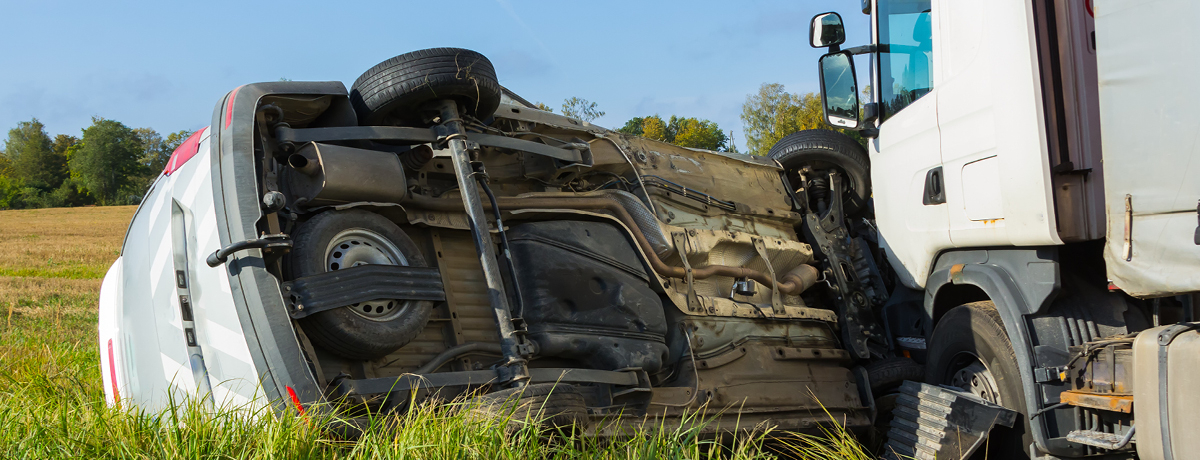
Car turned on its side in grass after collision with truck
Jeffrey A. Block

Jeffrey A. Block

May 18, 2023 09:19 AM

A collision with a truck can be devastating for those involved, potentially leaving them with life-altering injuries, emotional distress and financial hardship. Crashes involving large trucks and smaller vehicles are especially dangerous for passengers of the latter. According to the Insurance Institute for Highway Safety, in 2020 a staggering 97% of vehicle occupants killed in two-vehicle crashes involving a passenger car and large truck were riding in the car.

Summary prepared by
  • Truck accidents have serious repercussions, especially for passenger cars, leading to injuries, distress and financial setbacks.
  • Immediate actions after a crash, like documenting the scene and calling the police, are crucial for legal and insurance claims.
  • Understanding state-specific insurance and legal deadlines can prevent hardships and aid recovery post-accident.
  • Consulting a personal injury lawyer can streamline complex legal processes and help you secure potential compensation.

It’s impossible to predict when an accident will happen, but being prepared and knowing what to do after a crash can make a significant difference. The path forward in the wake of a truck collision can be nerve-wracking and complicated, but this guide will help you understand and protect your rights as you navigate the aftermath.

Immediate Steps to Take

Every accident is different, so the specific steps you take after one will vary based on your situation.

1. Remain calm, check for injuries and move your vehicle to safety if possible. Safety is your top priority. Keep calm and assess your situation. If anyone appears to be seriously injured, call emergency medical services to the scene as soon as possible. Do not leave the scene even if you believe everyone involved is OK.

Depending on the situation, you might want to move your car away from traffic to a safer area such as the nearest shoulder or a median. Doing so will protect you from oncoming traffic, allow other motorists to pass safely and make it easier for first responders to reach you. Do this only if you’re certain there are no serious injuries, your car is operable and there’s no risk in moving it.

It’s also important to realize that many people don’t experience pain immediately after a crash involving a truck. Sometimes a victim’s adrenaline is elevated; an injury might also be only gradually developing. Carefully monitor your body. At Block O’Toole & Murphy, we have represented many seriously injured clients who didn’t experience pain at the time, only to have it surface at some point later.

2. Document the scene and exchange information with the other driver and any witnesses. Take photos and videos, making sure to document where the accident occurred, damage to your car, damage to surrounding property and any skid marks or debris on the road. Footage like this can be useful whether you need to provide evidence in court or share details with your insurance company. Photographs are often far more powerful and persuasive than testimony from one of the drivers or passengers when trying to persuade a jury. (If you’re represented, it’s critical to remember to share all this with your attorney.)

Be sure to collect the other driver’s information before they leave the scene. Ask for their name, address, phone number, driver’s license number, insurance carrier and policy number. Document vehicle details including make, model and license plate number; it can’t hurt to take a photo of the other driver’s license as well.

You’ll want to gather names and contact info from any witnesses. If you eventually file a case that goes to trial, witnesses can provide valuable testimony concerning the circumstances of the wreck. Independent witnesses can make the pivotal difference between winning and losing your case.

3. Call the police and report the accident. Even if you believe the crash was minor and didn’t cause any injuries, it’s in your best interest for the police to create a report—a legal document that will typically include the following:

  • where the incident happened
  • who was involved
  • property damage
  • vehicle information
  • specific details (what kind of damage resulted; whether a driver was intoxicated)
  • names and badge numbers of responding officers

Once the police file their report, be sure to obtain a copy for your records. Even if you don’t intend to pursue legal action, a police report is important when you submit an insurance claim.

4. Call your insurance company. Do so as soon as you can. Waiting too long can make it more difficult to submit a claim to be reimbursed for damages. Be aware of whether your state has laws regarding no-fault insurance, also called personal injury protection.

Many states mandate deadlines to file paperwork so your medical bills and lost wages will be covered. For instance, New York’s no-fault laws require that a “no-fault application” be submitted within 30 days of an accident. Failure to comply can result in real hardship for a driver, passenger or pedestrian who has been injured.

You are required to cooperate with your insurance company’s investigation. However, you are not required to speak with another party’s insurer. In fact, it’s better not to, should they attempt to contact you. Rest assured they are not trying to help you. You may wish to have an attorney handle these matters on your behalf.

5. Seek medical treatment if you’re injured. By nature of their size and weight, trucks are capable of doing tremendous damage. As noted above, it’s possible that signs of an injury won’t show for days or even weeks after. It can take time for your initial adrenaline rush to wear off and swelling to go down before you realize something isn’t right.

It’s important to get medical attention as soon as you can, both to begin treatment and to have your injuries documented should you ultimately decide to seek compensation. Keep careful track of any medical expenses and lost wages, too.

Legal Considerations After a Collision

The losses an accident victim might suffer from a truck collision can be debilitating. It might initially feel impossible to get your life back on track as you or a loved one recovers from a serious injury. In such circumstances, it may be in your best interest to speak with a personal injury lawyer to discuss your options moving forward. It’s possible you have a legal right to compensation that will cover damages including medical bills, lost wages, and pain and suffering.

An experienced personal injury lawyer will be able to guide you through the complex legal process and fight on your behalf. Keep in mind that you’ll need to file a lawsuit within your state’s statute of limitations. In New York, for example, most personal injury cases need to be filed within three years—but that can vary by case and state.

Pursuing a personal injury lawsuit can feel scary and intimidating. It’s crucial that an accident victim choose an attorney and a law firm they trust, with a track record that affirms their expertise.

Jeffrey A. Block is the founding partner at Block O’Toole & Murphy, where he has been fighting for the underdog since 1989. As a formidable trial attorney and advocate for personal injury victims, he has obtained over one hundred results that exceed $1 million. In 2023, Best Lawyers named Mr. Block Lawyer of the Year for Personal Injury—Plaintiffs in New York City.


Headline Image: Adobe Stock/jteivans

Related Articles

Things to Do Before a Car Accident Happens to You


by Ellie Shaffer

In a car accident, certain things are beyond the point of no return, while some are well within an individual's control. Here's how to stay legally prepared.

Car dashcam recording street ahead

Crash Course


by Paige Cerulli

A bad car accident left me reeling, but my worst symptoms wouldn’t appear until two weeks after. If it weren’t for excellent legal representation, there’s no way I’d have made it through—or with anything close to the settlement I got.

Giant bridge with multiple cars going in different lanes

Head Games


by Paul D. Friedman

How the science of traumatic brain injuries has improved in recent decades—and what those advances might mean for victims of these horrific ailments in the courtroom.

Brain cut in half with half of the brain red and half black with white background

Think Inside the Box


by David M. Carter

Black box data retrieval after a serious accident—it’s not just for commercial airplanes anymore.

The mechanics inside of a box with computer technology behind it

Do I Need a Lawyer for a Car Accident?


by Bryan Driscoll

Deciding whether to hire an attorney after a crash depends on injuries, insurance disputes and financial risk.

Shattered windshield and damaged interior of a car after a collision

IN PARTNERSHIP

5 Things To Do If You’re At Fault In a Car Accident in Atlanta, GA


by James Goldstein

Two cars involved in a car accident, with visible damage.

IN PARTNERSHIP

Benefits of Hiring an Attorney After a Car Accident


by Michael Hall III

Car accidents can cause life-altering injuries and financial setbacks. Hire a car accident attorney to stay prepared.

Internal Injury

IN PARTNERSHIP

Six Tips for a Successful Mediation


by Judge Michael E. Riley and Pullman & Comley

Mediation encourages open dialogue and allows parties to express their concerns, fostering a collaborative atmosphere to reach resolutions efficiently.

Two animated figures with puzzle piece speech bubbles

IN PARTNERSHIP

Georgia Car Accident: How to File a Car Accident Case


by Robert Hammers

In a car accident in Georgia? Read this guide for key steps from actions at the scene to settlement talks and lawsuit filing. Stay informed and prepared.

Figure with clipboard assesses the scene of an accident

How a New Maryland Bike Safety Law Honors a Client’s Legacy


by Justin Smulison

Four-time Lawyer Of The Year Patrick Regan discusses how a client’s bicycling tragedy led to a result that improved Maryland traffic law to protect riders.

Group of lawyers posing for a photo

IN PARTNERSHIP

Trial Lawyers Protect Employees, Make Workplaces Safer


by Esquire Bank

Trial lawyers Jeffrey Laffey and Sean Flaherty fight hard for injured workers because of their own personal experiences with the aftermath of workplace injuries.

Workplace safety trial lawyers Jeffrey Laffey of LBDRR and Sean Flaherty of KLG

IN PARTNERSHIP

How a Trial Lawyer Overcame Adversity and Is Paying It Forward


by Esquire Bank

After fighting to take the bar exam, Matt Nakajima continues to beat the odds for his clients as a personal injury trial lawyer, winning millions in settlements.

Matt Nakajima, a personal injury attorney at Rittgers Rittgers & Nakajima

IN PARTNERSHIP

Civil Litigation: How Trial Lawyers’ Efforts Help Communities


by Esquire Bank

There are many upfront costs when trying cases on a contingency fee model. However, Reza Torkzadeh is willing to fight to get the justice his clients deserve.

Civil case attorney, Reza Torkzadeh of TorkLaw

IN PARTNERSHIP

Trial Lawyers Fight to Protect Individuals from Abuse


by Esquire Bank

With Esquire Bank's financial support, Elise Sanguinetti was able to challenge and end the Forced Arbitration Act. Her legislation continues to help other trial lawyers attain justice for abuse survivors.

Trial attorney, Elise R. Sanguinetti shapes laws such as the Ending Forced Arbitration Act

IN PARTNERSHIP

Proving Negligence in a South Carolina Personal Injury Case


by Wyche

In South Carolina, as in other states, there are specific elements of negligence that must be established for a successful personal injury claim.

Person Receiving Form at Sight of Car Accident

IN PARTNERSHIP

Battle-Tested Dedication for Truck Wreck Victims


by The Law Offices of Frank L. Branson

Courtroom legend Frank L. Branson and his team give a voice to the voiceless, representing victims of catastrophic trucking and motor vehicle accidents.

Man in suit stands with hands on chair

Trending Articles

The Family Law Loophole That Lets Sex Offenders Parent Kids


by Bryan Driscoll

Is the state's surrogacy framework putting children at risk?

family law surrogacy adoption headline

Algorithmic Exclusion


by Bryan Driscoll

The Workday lawsuit and the future of AI in hiring.

Workday Lawsuit and the Future of AI in Hiring headline

Best Lawyers 2026: Discover the Honorees in Brazil, Mexico, Portugal, South Africa and Spain


by Jamilla Tabbara

A growing international network of recognized legal professionals.

Map highlighting the 2026 Best Lawyers honorees across Brazil, Mexico, Portugal, South Africa and Sp

Unenforceable HOA Rules: What Homeowners Can Do About Illegal HOA Actions


by Bryan Driscoll

Not every HOA rule is legal. Learn how to recognize and fight unenforceable HOA rules that overstep the law.

Wooden model houses connected together representing homeowners associations

Holiday Pay Explained: Federal Rules and Employer Policies


by Bryan Driscoll

Understand how paid holidays work, when employers must follow their policies and when legal guidance may be necessary.

Stack of money wrapped in a festive bow, symbolizing holiday pay

Reddit’s Lawsuit Could Change How Much AI Knows About You


by Justin Smulison

Big AI is battling for its future—your data’s at stake.

Reddit Anthropic Lawsuit headline

Florida Rewrites the Rules on Housing


by Laurie Villanueva

Whether locals like it or not.

Florida Rewrites the Rules on Housing headline

US Tariff Uncertainty Throws Canada Into Legal Purgatory


by Bryan Driscoll

The message is clear: There is no returning to pre-2025 normalcy.

US Tariff Uncertainty Throws Canada Into Legal Purgatory headline

Alimony Explained: Who Qualifies, How It Works and What to Expect


by Bryan Driscoll

A practical guide to understanding alimony, from eligibility to enforcement, for anyone navigating divorce

two figures standing on stacks of coins

Can a Green Card Be Revoked?


by Bryan Driscoll

Revocation requires a legal basis, notice and the chance to respond before status can be taken away.

Close-up of a U.S. Permanent Resident Card showing the text 'PERMANENT RESIDENT'

UnitedHealth's Twin Legal Storms


by Bryan Driscoll

ERISA failures and shareholder fallout in the wake of a CEO’s death.

United healthcare legal storm ceo murder headline

The 2026 Best Lawyers Awards in Chile, Colombia and Puerto Rico


by Jamilla Tabbara

The region’s most highly regarded lawyers.

Map highlighting Chile, Colombia and Puerto Rico for the 2026 Best Lawyers Awards

New Texas Family Laws Transform Navigating Divorce, Custody


by Bryan Driscoll

Reforms are sweeping, philosophically distinct and designed to change the way families operate.

definition of family headline

What Is the Difference Between a Will and a Living Trust?


by Bryan Driscoll

A practical guide to wills, living trusts and how to choose the right plan for your estate.

Organized folders labeled “Wills” and “Trusts” representing estate planning documents

Why Skechers' $9.4B Private Equity Buyout Sparked Investor Revolt


by Laurie Villanueva

Shareholder anger, a lack of transparency and a 'surprising' valuation.

Skechers shareholder lawsuit headline

How Far Back Can the IRS Audit You?


by Bryan Driscoll

Clear answers on IRS statutes of limitations, recordkeeping and what to do if you are under review.

Gloved hand holding a spread of one-hundred-dollar bills near an IRS tax document