
MEDICAL MALPRACTICE & PERSONAL INJURY LAWYERS
Providing Results That Matter.
Scroll or swipe to go to the page.
Insight

Your Own Best Self

For trial lawyers who seek to convince a jury—which would be all of us—the key is to be yourself, establish your credibility and then do nothing to undermine the trust you’ve built up.

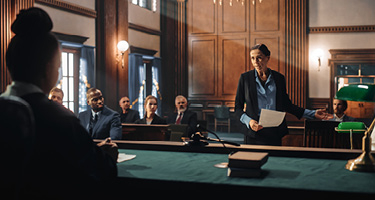
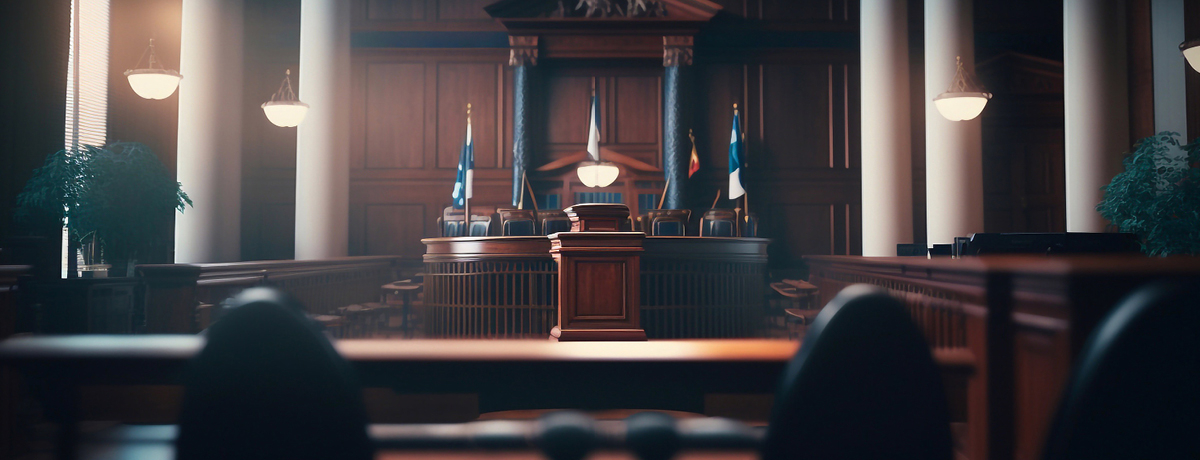
View of courtroom judges stand from the lawyer bench
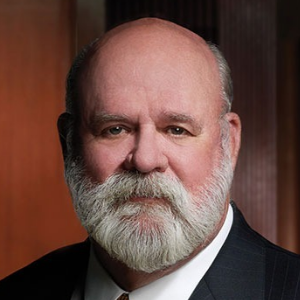
Frank L. Branson

Frank L. Branson

May 18, 2023 09:17 AM

LET’S TALK about persuasion. We learn to exercise this important attribute almost as soon as we’re out of the womb. We persuade our mother (without our knowing it) to feed us, keep us warm and change our diapers. As we get older, we persuade our parents to give us new freedom and forgive both the dent we put in the car and the C we got on our report card. We persuade others to befriend us. We want to persuade our enemies to stay away or come forward, depending on our mood at the time.

In adulthood, when you become a lawyer, you want to persuade a firm to hire you. You want to persuade a partner to let you work with them on a case, then eventually to try a case on your own. At this point, you need to gather all the things you’ve learned throughout life about persuasion, to marshal your forces. And you use the same persuasive methods you’ve used before. Such persuasion must be real—it must be natural and cannot appear contrived.

I’ve always felt that persuasion of jurors starts with your earliest contact with them. Generally, that’ll be either out in the hall as you enter or when you’re introduced to the panel. Before you can persuade that jury to help your client, a few things need to happen. The jury must like you, trust you and be interested in the story of the client that has brought you here.

If you think about it, we’re all pretty much the same. If you go to a seminar and meet a lawyer, you’re not going out of your way to get to know or work with him unless you like him and he’s credible to you. At that point, you’re amenable to listening to him. Jury panels are like that.

How to become likeable and credible? Let’s start with being comfortable in your own skin. Whoever you are—whether your personality is good, bad or ugly—you need to be yourself and get comfortable with yourself before you speak with the jury. The more open and receptive you are, the more they’ll return the favor. To gain credibility, you first must tell them the truth.

Here’s an example that hurts lawyers on voir dire. You say to the panel, “All I want is 12 fair and impartial jurors.” Within 20 minutes, a member of the panel offers information that makes you think he or she would be a juror for your opponent. You immediately do everything you can to disqualify him or her. That’s not necessarily the jury’s idea of your wanting fairness and impartiality. Instead, say “Ladies and gentlemen, both sides would like to find jurors who are more like our clients and who are likely to respond well to them. And we want a fair trial. But there are going to be panel members here whose background might lead them to have biases against my client. One of our jobs is to ferret those out during questioning in voir dire and use our strikes to keep them off the jury.”

Another way to maintain credibility is to do what you tell people you’ll do. If the judge says, “Mr. Branson, I need to take a break here. Can you finish in five minutes?” If you reply yes, then you need to move heaven and earth to finish in five minutes, because every minute thereafter, the jury believes you’re lying to the court—and if you’ll lie to the court, you’ll lie to them.

Once you’ve established yourself as likeable and credible, and convinced the jurors that your client has an interesting story, remember as you progress through the trial that the jury wants the lawyers to be themselves. If they see a different person than the one they came to know during jury selection, it’ll deal a blow to your credibility. An example: I was once trying a case, and a lawyer portrayed himself as Mr. Goody Two Shoes, playing up to the jury. We had a break. I came back to the courtroom to find the lawyer harshly dressing down his paralegal. I turned and saw that two jurors had come into the back of the courtroom without the lawyer seeing them. Thereafter, he wasn’t able to schmooze with the jury and it was quite obvious he had lost credibility with them. Whatever your personality, it needs to be consistent from beginning to end. There will be times it’s necessary to get fussy with a witness, but you don’t need to do that in the beginning. The jury will often get angry before you have to.

Another thing to beware: gilding the lily. Your lawsuit has good points and bad points. You need to do your best to emphasize the former and make the jury understand the latter. If you try to turn a sow’s ear into a silk purse, you’ll likely end up losing the value of even the sow’s ear.

I also see lawyers agree with everything a witness says by nodding, or disagreeing with a head shake. If it’s your witness, you don’t need to tell the jurors you agree. They already know you do. If it’s the other side’s witness, most jurors will also know what you think. Remember, too, that not every witness called by the other side needs to be cross-examined. Before you decide to cross-examine, think about what the witness has done to hurt your case, if anything—and if they haven’t, it might be better not to give them another opportunity to do just that.

As for persuasion during a trial, I like to pick a witness order that starts the day with a strong witness, has another one before lunch and a third strong one at the end of the day. After several decades of trying lawsuits, I’ve decided I probably should have more closely followed all those suggestions to “hurry along, Mr. Branson.” There’s a lot to be said for making your point by getting in and getting out. I’ve found that both judge and jury seem happier if I can get what I need in less time.

I’ve seen emotions run the gamut in the courtroom. Sometimes a good laugh, particularly if it’s at your own expense, is worth it. Crying can be appropriate if it’s a true expression of emotion by your witnesses (or by you). Jurors unanimously react negatively if they think any emotion is being faked. Authenticity and persuasion are closely linked.

Remember that as a young lawyer you sometimes don’t get to choose the cases you try. But I’ve never seen a lawyer win a case in which the jury didn’t think he believed in his case and his client 100%. It looks and sounds hollow when a lawyer doesn’t believe in the client. A great trial lawyer of old named Warren Burnett used to say he considered himself a knight clad in the shining armor of his client’s cause. I think Warren had it right.

Frank Branson has been trying personal injury lawsuits since 1969. He has been fortunate to receive a number of honors for his ethics, professionalism and capability in the courtroom, resulting in recoveries for many deserving clients. He has also been President of the local ABOTA chapter and been inducted into the International Academy of Trial Lawyers and the International Society of Barristers. His firm recently tried a product liability lawsuit where the jury awarded $242 million, which was reduced by the Court of Appeals to $200 million, and settled to the satisfaction of all parties while pending in the Supreme Court of Texas. He and his wife, Debbie, have practiced law together for 40 years and still very much enjoy trying lawsuits and representing clients in the courtroom.

Click to Explore the full Injury & Malpractice Legal Guide button

Headline Image: Abobe Stock/Andrii

Related Articles

IN PARTNERSHIP

Six Tips for a Successful Mediation


by Judge Michael E. Riley and Pullman & Comley

Mediation encourages open dialogue and allows parties to express their concerns, fostering a collaborative atmosphere to reach resolutions efficiently.

Two animated figures with puzzle piece speech bubbles

IN PARTNERSHIP

Trial Lawyers Protect Employees, Make Workplaces Safer


by Esquire Bank

Trial lawyers Jeffrey Laffey and Sean Flaherty fight hard for injured workers because of their own personal experiences with the aftermath of workplace injuries.

Workplace safety trial lawyers Jeffrey Laffey of LBDRR and Sean Flaherty of KLG

IN PARTNERSHIP

How a Trial Lawyer Overcame Adversity and Is Paying It Forward


by Esquire Bank

After fighting to take the bar exam, Matt Nakajima continues to beat the odds for his clients as a personal injury trial lawyer, winning millions in settlements.

Matt Nakajima, a personal injury attorney at Rittgers Rittgers & Nakajima

IN PARTNERSHIP

Civil Litigation: How Trial Lawyers’ Efforts Help Communities


by Esquire Bank

There are many upfront costs when trying cases on a contingency fee model. However, Reza Torkzadeh is willing to fight to get the justice his clients deserve.

Civil case attorney, Reza Torkzadeh of TorkLaw

IN PARTNERSHIP

Trial Lawyers Fight to Protect Individuals from Abuse


by Esquire Bank

With Esquire Bank's financial support, Elise Sanguinetti was able to challenge and end the Forced Arbitration Act. Her legislation continues to help other trial lawyers attain justice for abuse survivors.

Trial attorney, Elise R. Sanguinetti shapes laws such as the Ending Forced Arbitration Act

IN PARTNERSHIP

Proving Negligence in a South Carolina Personal Injury Case


by Wyche

In South Carolina, as in other states, there are specific elements of negligence that must be established for a successful personal injury claim.

Person Receiving Form at Sight of Car Accident

IN PARTNERSHIP

3 Ways Contingency Fee Law Firms Provide Equal Access to Justice


by Esquire Bank

Laffey Bucci and TorkLaw Attorneys posing on a black background

The Role of Medical Experts in Catastrophic Injury Cases


by Timothy A. Loranger

When catastrophic injury is the result of an accident, medical experts can play a crucial role in the legal process, providing transparency for all involved.

Doctor and nurse discussing X-ray scan

Is Premises Liability the Same as Negligence?


by Jeremy Wilson and Taylor Rodney Marks

In today's age, we are always on the move, often inhabiting spaces we don't own. But what happens when someone else's property injures you or someone you know?

A pair of silhouetted legs falling down a hole with yellow background

Preventing Malpractice Issues in Pediatric Practice. A Lawyer's Perspective.


by Sean M. Cleary

Despite medical breakthroughs and patient care, hospitals often act as a source of medical malpractice claims, leaving patients in dire need of legal counsel.

Sketch of doctor providing medical care to child

The Push and Pitfalls of New York’s Attempt to Expand Wrongful Death Recovery


by V. Christopher Potenza and Elizabeth M. Midgley

The New York State Legislature recently went about updating certain wrongful death provisions and how they can be carried out in the future. Here's the latest.

Red tape blocking off a section of street

Things to Do Before a Car Accident Happens to You


by Ellie Shaffer

In a car accident, certain things are beyond the point of no return, while some are well within an individual's control. Here's how to stay legally prepared.

Car dashcam recording street ahead

Combating Nuclear Verdicts: Empirically Supported Strategies to Deflate the Effects of Anchoring Bias


by Sloan L. Abernathy

Sometimes a verdict can be the difference between amicability and nuclear level developments. But what is anchoring bias and how can strategy combat this?

Lawyer speaking in courtroom with crowd and judge in the foreground

IN PARTNERSHIP

Advancing Positive Change: How Trial Lawyers Are Closing the Justice Gap


by Esquire Bank

All citizens in the United States are equal in the eyes of the law, but access to justice is only sometimes so equitable.

Two trial attorneys looking at the distance with black and white filter

IN PARTNERSHIP

Redefining Trial Advocacy


by John Fields

Morelli Law Firm’s exceptional trial skills and landmark victories have reshaped the landscape of civil litigation, having represented victims of negligence, discrimination and harassment.

Morelli Law Firm Three Attorneys

IN PARTNERSHIP

Choosing the Right Medical Malpractice Attorney


by Cohen & Blostein

Key factors to consider when selecting a medical malpractice lawyer, from experience and resources to trial readiness.

Wooden stick figure wrapped and entangled in a doctor’s stethoscope

Trending Articles

The Family Law Loophole That Lets Sex Offenders Parent Kids


by Bryan Driscoll

Is the state's surrogacy framework putting children at risk?

family law surrogacy adoption headline

Algorithmic Exclusion


by Bryan Driscoll

The Workday lawsuit and the future of AI in hiring.

Workday Lawsuit and the Future of AI in Hiring headline

Best Lawyers 2026: Discover the Honorees in Brazil, Mexico, Portugal, South Africa and Spain


by Jamilla Tabbara

A growing international network of recognized legal professionals.

Map highlighting the 2026 Best Lawyers honorees across Brazil, Mexico, Portugal, South Africa and Sp

Unenforceable HOA Rules: What Homeowners Can Do About Illegal HOA Actions


by Bryan Driscoll

Not every HOA rule is legal. Learn how to recognize and fight unenforceable HOA rules that overstep the law.

Wooden model houses connected together representing homeowners associations

Holiday Pay Explained: Federal Rules and Employer Policies


by Bryan Driscoll

Understand how paid holidays work, when employers must follow their policies and when legal guidance may be necessary.

Stack of money wrapped in a festive bow, symbolizing holiday pay

Reddit’s Lawsuit Could Change How Much AI Knows About You


by Justin Smulison

Big AI is battling for its future—your data’s at stake.

Reddit Anthropic Lawsuit headline

Florida Rewrites the Rules on Housing


by Laurie Villanueva

Whether locals like it or not.

Florida Rewrites the Rules on Housing headline

US Tariff Uncertainty Throws Canada Into Legal Purgatory


by Bryan Driscoll

The message is clear: There is no returning to pre-2025 normalcy.

US Tariff Uncertainty Throws Canada Into Legal Purgatory headline

Alimony Explained: Who Qualifies, How It Works and What to Expect


by Bryan Driscoll

A practical guide to understanding alimony, from eligibility to enforcement, for anyone navigating divorce

two figures standing on stacks of coins

Can a Green Card Be Revoked?


by Bryan Driscoll

Revocation requires a legal basis, notice and the chance to respond before status can be taken away.

Close-up of a U.S. Permanent Resident Card showing the text 'PERMANENT RESIDENT'

UnitedHealth's Twin Legal Storms


by Bryan Driscoll

ERISA failures and shareholder fallout in the wake of a CEO’s death.

United healthcare legal storm ceo murder headline

The 2026 Best Lawyers Awards in Chile, Colombia and Puerto Rico


by Jamilla Tabbara

The region’s most highly regarded lawyers.

Map highlighting Chile, Colombia and Puerto Rico for the 2026 Best Lawyers Awards

New Texas Family Laws Transform Navigating Divorce, Custody


by Bryan Driscoll

Reforms are sweeping, philosophically distinct and designed to change the way families operate.

definition of family headline

What Is the Difference Between a Will and a Living Trust?


by Bryan Driscoll

A practical guide to wills, living trusts and how to choose the right plan for your estate.

Organized folders labeled “Wills” and “Trusts” representing estate planning documents

Why Skechers' $9.4B Private Equity Buyout Sparked Investor Revolt


by Laurie Villanueva

Shareholder anger, a lack of transparency and a 'surprising' valuation.

Skechers shareholder lawsuit headline

How Far Back Can the IRS Audit You?


by Bryan Driscoll

Clear answers on IRS statutes of limitations, recordkeeping and what to do if you are under review.

Gloved hand holding a spread of one-hundred-dollar bills near an IRS tax document