Insight

Gowling WLG Attorneys Discuss Aboriginal Law in Canada

Gowling WLG won the 2019 "Law Firm of the Year" award for Aboriginal Law in Canada.

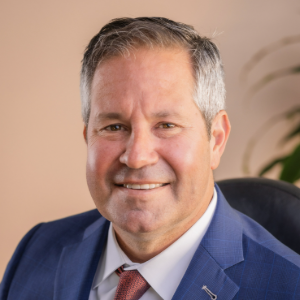
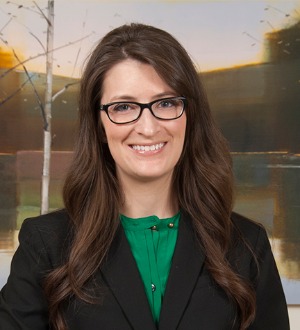
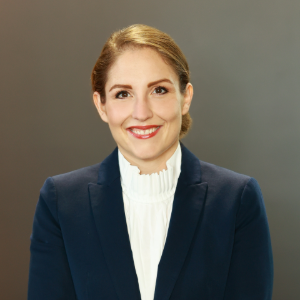
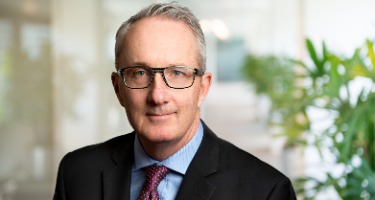
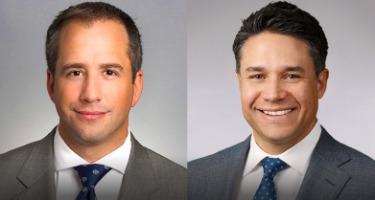
Gowling WLG Law Firm Of The Year, with Jaimie Lickers and Maxime Faille
Best Lawyers

Best Lawyers

January 18, 2019 10:15 AM

Jaimie Lickers and Maxime Faille, attorneys specializing in Aboriginal Law at Gowling WLG in Canada, discuss the changing national attitude to Indigenous people’s history across the country and their firm’s significant cases in 2017 and 2018. The pair discusses their 2019 “Law Firm of the Year” award with Best Lawyers CEO Phillip Greer in the interview below.

What inspired you to focus your expertise in Aboriginal law?

Jaimie Lickers: That's an interesting question because it's not something that was a foregone conclusion for me. I actually started my practice at a Bay Street law firm and did a general corporate commercial litigation practice for a number of years. And then I realized, with everything that was happening in the field of Indigenous law, and being Indigenous myself, I knew that there was a significant opportunity there to make real change for the First Nation communities in Canada. And I just couldn't fight the temptation anymore. I had to make the move over to Gowling and change my practice area.

Maxime Faille: I had a sort of a varied career, I guess, before getting into this line of work about 15 years ago. I've done all kinds of things, including medical malpractice and some competition law, but I always had fairly significant practice in public law and constitutional law. I hadn't specifically been involved in Aboriginal law. And that's something that came to me by serendipity. I was brought in on a case by our senior mentor, Brian Crane, who's one of the top Aboriginal lawyers in Canada. And just fell in love with the area and really decided that that's what I was going to focus my career on going forward. Best decision I've ever made, professionally.

What achievements are you most proud of from this past year?

Maxime Faille: One is the decision of the Supreme Court of Canada in the Chippewas of the Thames and Clyde River case. We weren’t lead counsel on the Supreme Court level, although we had, on behalf of the Chippewas of the Thames, been counsel of record at the National Energy Board level. And both Jaimie and I were counsel in the Supreme Court of Canada as interveners for the Chiefs of Ontario in that case. This was a very significant case on the issue of the duty to consult First Nations. The second major case for our team is the Tsleil-Waututh Nation decision of the Federal Court of Appeal in regard to the Trans Mountain Expansion pipeline expansion challenge. This decision has had major reverberations throughout our country. It was argued last year in the Federal Court of Appeal, in a two-week appellate hearing, which is the longest appeals hearing in the history of our Federal Court of Appeal, involving multiple parties and multiple issues. Very, very complex. It was a herculean task and the result of which was of great significance. So that was a major accomplishment for the members of our team.

Jaimie Lickers: I was honored this year to represent a nonprofit corporation that was formed to speak out about some injustices that were perpetrated against a number of individuals in Canada that were applying for membership in a brand new First Nation, which was established on the East Coast, in Newfoundland,. As you can imagine it's a pretty rare situation, anymore, for new First Nations to be created in Canada. And so, it's quite a complex process, whereby the criteria for membership in that Nation has to be somehow established and then applied to the individuals who apply for membership and Indian status.

The way in which the process was handled, largely by the federal government, resulted in a number of injustices and unfairness to the applicants, in our view. We were retained on behalf of the nonprofit corporation that was representing the applicants to the band who felt that they had been wronged throughout this process. And we litigated that in the Federal Court, and to a large extent the Federal Court agreed with us that there was unjustifiable unfairness in the way that the applications were processed and so we were successful in that case.

Are there any important policy changes that are affecting this practice locally or globally?

Maxime Faille: The Federal Government has undergone a fundamental rethinking of its approach to these issues. Now, I would say this process is not fully complete. We saw that in this recent decision that I mentioned, the Trans Mountain case, in which Canada received a fairly strong rebuke by the Federal Court of Appeal in terms of its handling of indigenous consultation. So, it's a reflection of the fact that there's still a ways to go and that there's still lessons to be learned.

But, in fairness, and I've certainly noticed it particularly at the negotiations table, and to some degree in litigation as well, the Federal Government has done a fundamental rethink of its policies relating to its relationship with indigenous people, has taken a much more proactive, much more favorable and friendly approach. And, one of the, I think, important policy decisions in that regard, and there are many, has in fact been to eschew some of the existing policies that had been on the books for many years, and that have the effect of really, severely constraining government's ability to negotiate with indigenous nations on a number of key areas.

Are there any trends you guys are witnessing in Aboriginal law, maybe in the last year, and what trends do you, or changes do you see happening over the course of the next few years?

Maxime Faille: I think there are a number of trends that have really started to emerge, I would say in the last five years, in which this area of law has really exploded because of the rising tide of all the various court decisions, creating a much greater consciousness on the part of the Canadian public. Generally, there's been a sea change in public attitude toward our history and our relationship with Indigenous peoples in Canada. And that is a result of a number of factors not least being the Truth and Reconciliation Commission's report that dealt with the tragedy of the residential school experience in Canada. I think you could probably liken to the awakening that occurred in the 1960's in the United States around issues of civil rights. We are undergoing that kind of transformation when it comes to a sudden understanding on the part of the broader Canadian population that we have this fairly ugly history that we need to deal with and address in a meaningful way.
Lawyers in Columbus, Ohio

Related Articles

Announcing the 2022 Best Lawyers™ in Australia


by Best Lawyers

Celebrating standout lawyers and firms across 94 practice areas in Australia’s 14th edition.

The Australian flag for Announcing the 2022 Best Lawyers in Australia

The 2021 Best Lawyers in Canada


by Best Lawyers

Featuring the top legal talent in Canada.

Red and white Canadian flag with a red maple leaf in the center

The 2021 "Law Firm of the Year" Awards in Canada


by Best Lawyers

We are excited to announce the recipients of the 2021 "Law Firm of the Year" awards in Canada.

Award for The 2021 "Law Firm of the Year" in Canada

Working With Changes


by Best Lawyers

Carolyn Pugsley, the Joint Global Head of Practice for Corporate, Australia at Herbert Smith and Freehills, discusses policy changes affecting the M&A market in Australia as well as the impact of the pandemic on the practice.

portrait of Carolyn Pugsley from  Australia’s 2021 “Law Firm of the Year” in Mergers and Acquisition

The Buyout Brigade


by Best Lawyers

Neill May, John Connon, and David Matlow discuss what’s ahead for private equity—and why dealmakers of all stripes have more leverage than ever.

Neill May, John Connon, and David Matlow discuss Goodmans which was named “Law Firm of the Year"

Leading the Evolution in Workplace Law


by Best Lawyers

Colin G.M. Gibson discusses workplace safety, issues such as raising the minimum wage, and job-protected leaves. 

Colin G.M. Gibson discusses workplace safety

What the Seller-Friendly Market Means for Private Equity


by Best Lawyers

JP Bogden and Kurt Sarno of 2019 Canadian "Law Firm of the Year" award-winner Blakes discuss trends in the private equity sector.

Blakes 2019 "Law Firm of the Year", Kurt Sarno and John-Paul Bogden

Davies Points to “Groupthink” as Contributor to Industry Stagnation


by Best Lawyers

The 2019 Canaidan "Law Firm of the Year" honoree for Competitions/Antitrust Law shares the keys to their success.

Davies 2019 "Law Firm of the Year", George Addy

Fasken Attorneys on Their 2019 "Law Firm of the Year" Award Win


by Best Lawyers

Lawyers from the Canadian firm discus their employment law practice and the changes coming to the Canadain legal market.

Fasken Law Firm Q&A, Karen Sargeant, Claire Vachon, and Martin Denyes

IN PARTNERSHIP

Breaking Down Criminal Conviction in Canada


by Mass Tsang

Statistics Canada’s annual breakdown of adult criminal court data provides an eye-opening review of how the country’s court system resolves its hundreds of thousands of cases annually.

Silhouettes of Officer walking with two men on a strip of concert

2026 Best Lawyers Awards in Canada: Marking 20 Years of Excellence


by Jamilla Tabbara

Honoring Canada’s most respected lawyers and spotlighting the next generation shaping the future of law.

Shining Canadian map marking the 2026 Best Lawyers awards coverage

Introducing the 2026 Best Lawyers Awards in Australia, Japan, New Zealand and Singapore


by Jennifer Verta

This year’s awards reflect the strength of the Best Lawyers network and its role in elevating legal talent worldwide.

2026 Best Lawyers Awards in Australia, Japan, New Zealand and Singapore

ESG Backlash on the Border


by Bryan Driscoll

A warning and opportunity for Canadian business and law.

Three figures stand in forest with refinery ahead

Canadian Federal Government Faces $1.1 Billion Lawsuit Over First Nations' Right to Clean Drinking Water


by Gregory Sirico

Canada's argument that it has "no legal obligation" to provide First Nations with clean drinking water has sparked a major human rights debate.

Individual drinking water in front of window

"Lawyer of the Year"


Lawyer dressed professionally poses for headshot

Roslyn M. Tsao

Family Law

Toronto, ON, CA

2025

The Future of Canadian Law. Insights from Best Lawyers: Ones to Watch Honorees


by Jennifer Verta

Emerging leaders in Canada share their perspectives on the challenges and opportunities shaping the future of Canadian law

Digital eye with futuristic overlays, symbolizing legal innovation and technology

Trending Articles

The Family Law Loophole That Lets Sex Offenders Parent Kids


by Bryan Driscoll

Is the state's surrogacy framework putting children at risk?

family law surrogacy adoption headline

Best Lawyers 2026: Discover the Honorees in Brazil, Mexico, Portugal, South Africa and Spain


by Jamilla Tabbara

A growing international network of recognized legal professionals.

Map highlighting the 2026 Best Lawyers honorees across Brazil, Mexico, Portugal, South Africa and Sp

Unenforceable HOA Rules: What Homeowners Can Do About Illegal HOA Actions


by Bryan Driscoll

Not every HOA rule is legal. Learn how to recognize and fight unenforceable HOA rules that overstep the law.

Wooden model houses connected together representing homeowners associations

Holiday Pay Explained: Federal Rules and Employer Policies


by Bryan Driscoll

Understand how paid holidays work, when employers must follow their policies and when legal guidance may be necessary.

Stack of money wrapped in a festive bow, symbolizing holiday pay

Florida Rewrites the Rules on Housing


by Laurie Villanueva

Whether locals like it or not.

Florida Rewrites the Rules on Housing headline

US Tariff Uncertainty Throws Canada Into Legal Purgatory


by Bryan Driscoll

The message is clear: There is no returning to pre-2025 normalcy.

US Tariff Uncertainty Throws Canada Into Legal Purgatory headline

Can a Green Card Be Revoked?


by Bryan Driscoll

Revocation requires a legal basis, notice and the chance to respond before status can be taken away.

Close-up of a U.S. Permanent Resident Card showing the text 'PERMANENT RESIDENT'

The 2026 Best Lawyers Awards in Chile, Colombia and Puerto Rico


by Jamilla Tabbara

The region’s most highly regarded lawyers.

Map highlighting Chile, Colombia and Puerto Rico for the 2026 Best Lawyers Awards

New Texas Family Laws Transform Navigating Divorce, Custody


by Bryan Driscoll

Reforms are sweeping, philosophically distinct and designed to change the way families operate.

definition of family headline

What Is the Difference Between a Will and a Living Trust?


by Bryan Driscoll

A practical guide to wills, living trusts and how to choose the right plan for your estate.

Organized folders labeled “Wills” and “Trusts” representing estate planning documents

How Far Back Can the IRS Audit You?


by Bryan Driscoll

Clear answers on IRS statutes of limitations, recordkeeping and what to do if you are under review.

Gloved hand holding a spread of one-hundred-dollar bills near an IRS tax document

Uber’s Staged Accidents Lawsuit a Signal Flare for Future of Fraud Litigation


by Bryan Driscoll

Civil RICO is no longer niche, and corporate defendants are no longer content to play defense.

Uber staged car crash headline

Anthropic Class Action a Warning Shot for AI Industry


by Bryan Driscoll

The signal is clear: Courts, not Congress, are writing the first rules of AI.

authors vs anthropic ai lawsuit headline

Can You File Bankruptcy on Credit Cards


by Bryan Driscoll

Understanding your options for relief from overwhelming debt.

Red credit card on point-of-sale terminal representing credit card debt

Do You Need a Real Estate Attorney to Refinance?


by Bryan Driscoll

When and why to hire a real estate attorney for refinancing.

A couple sitting with a real estate attorney reviewing documents for refinancing their mortgage

Canadian Firms Explore AI, But Few Fully Embrace the Shift


by David L. Brown

BLF survey reveals caution despite momentum.

Canadian Firms Explore AI, But Few Fully Embrace the Shift headline