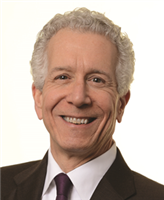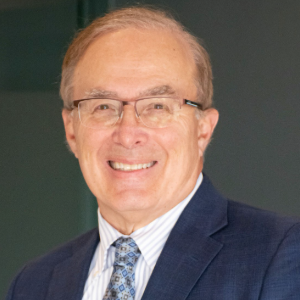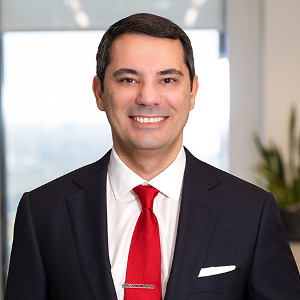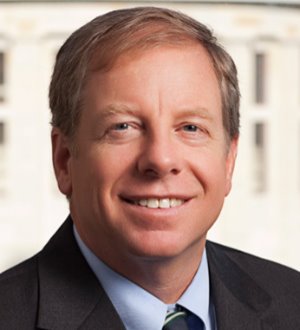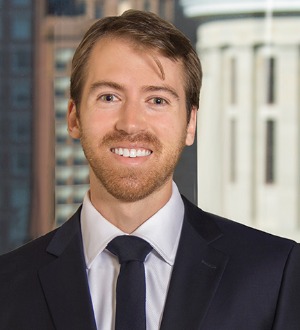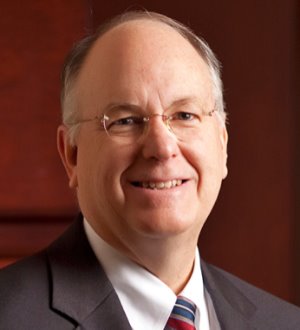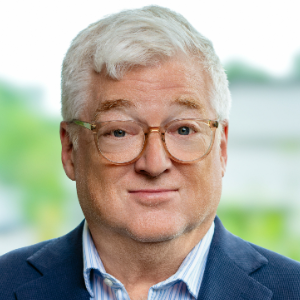

A decade after a punishing global recession—and amid concern that public markets’ extraordinary froth is at last beginning to subside—the space in which private equity operates seems especially roomy and comfortable. Taking full advantage is Goodmans, the renowned Toronto transactions outfit recently named “Law Firm of the Year” in Canada for Leveraged Buyouts. In the fall of 2019, Goodmans partners Neill May, John Connon, and David Matlow sat down with Best Lawyers CEO Phillip Greer to talk about what’s ahead for private equity—and why dealmakers of all stripes have more leverage, so to speak, than ever.
What does it mean to you to have Goodmans recognized by its peers as Canada’s LBO and private equity Law Firm of the Year?
Neill May: Obviously, it’s flattering. At Goodmans, we take a lot of pride in our history and culture. We’re not a firm that historically grew up with the pillars of the Canadian economy—the big six banks and the four insurance companies, and the massive infrastructure companies. We grew up with entrepreneurs. Because of Eddie Goodman’s and, more recently Dale Lastman’s, leadership, we have a strong entrepreneurial culture. We’re also unique in this marketplace among our peers, many of whom have multiple offices across the country or in other national jurisdictions. We are a Toronto office, and so of necessity, we play nice in the sandbox. What does it feel like to be recognized? It’s tremendously encouraging.
Are there any cases in particular that you feel contributed to this distinction?
NM: Some transactions get more notoriety because of the participants, the industry, the scale. The WestJet transaction [the airline was acquired by Toronto investment firm Onex in May 2019] naturally received a fair bit of attention. Onex is a high-profile purchaser. Aviation is a highly regulated industry. It was an extraordinarily scrutinized and complicated transaction. So that may have contributed to the attention it received. Hudson’s Bay, an iconic company in Canada, was another high-profile transaction. We acted for Abrams Capital on that one. These transactions reflect something we’re going to touch on further, which is the trend away from public-market capitalization toward this private-equity space.
Another example is enterprise software maker Coveo. Coveo was all over the Canadian press this week because, for obvious reasons, Canadians tout our stake in the AI space and in the IT space more generally, because that’s where the money and the sexy growth is. Although the transaction got press because of [the Ontario municipal employee pension fund’s] investment in it. The largest institutional investor is Evergreen, which is the private-equity arm of Elliott [Management], the giant U.S. investment firm. We’ve acted for Evergreen on every stage of its investment in Coveo.
John Connon: I think the WestJet transaction attracted an enormous amount of ink and attention from our peers. When a group like Onex seeks to buy a company like WestJet, it speaks to the depth of our practice that they would choose us to represent them. Obviously, they’d have their pick of the litter across Canada. That’s a great vote of confidence, and we very much appreciate it. We’ve done a lot of work for years with Clairvest, and my partner David Matlow can speak to some of the work that we’ve done for them on fund formation. But we also act for them on acquisitions, both primary and secondary investments. They’ve retained us on a number of occasions in connection with U.S. acquisitions. So notwithstanding that the target investment is located in the U.S., they value our skillset sufficiently that they’ve elected to go with us even though it’s not our jurisdiction.
What are the most prominent trends you’ve noticed emerging throughout your field?
NM: We’ve hinted at this before, but the rate of growth of private-equity activity continues to be remarkable. We’ve looked at a variety of metrics. They vary because there’s a different methodology, but the rate of private-equity capital is simply outpacing [public markets]. In part, that’s not an emerging trend; it’s an enduring trend. We work hand in hand with our finance group, and the reality is that capital is readily available for these clients: the Onexes, the Clairvests, the Northern Private Capitals, and Searchlights, to name a few.
JC: In terms of how the LBO field has changed, I think for the last several years it’s been a real seller’s market. There are lots of buyers with lots of dry powder, and cash is easily available in the form of debt financing. Given all that, sellers are really well-positioned to extract favorable deal terms. So there are more dollars chasing deals, which is great for sellers. And the deals themselves are changing. Now in Canada, we’re seeing a lot more U.S.-style transactions for public-market deal terms with no indemnities, no survival, no—or negligible—escrows, because of the prevalence of representation and warranty insurance. Ten years ago, rep and warranty insurance were essentially unknown in Canada. Five years ago, you started to see more of it, but it was still relatively niche. And now, rep and warranty insurance are used routinely even in smaller deals, as small as $20 million to $25 million, because the policy premiums are more attractively priced than even just a year or two ago. The public-market exit is less attractive for private-equity sponsors. So you’re seeing a lot more sponsor-to-sponsor transactions than you would have a decade ago. Even when they have dual-track processes, for the most part, it seems like the exit is a private exit, as opposed to going down the public-market route.
David Matlow: And in all private-equity fund offering memorandums, there’s a risk factor. These are not liquid. They’re not registered. You can’t get out of them. Notwithstanding that, there’s a very lively market in terms of liquidity. They’re not transferable over a stock exchange, because there are tax implications both in Canada and the United States for that kind of public trading. Yet among sophisticated investors, there’s a very active market. We’ve acted on perhaps a hundred of these private-equity transfers from one holder to another. It’s an M&A transaction. It’s not a trade over an exchange. But there are many of these transactions in the marketplace. That might be unknown to people who invest in these private-equity funds and simply read the risk factor, which suggests that they have to hold it for the 10- or 12- or 14-year term of the funds.
To continue in that vein: What has changed in the LBO space in the decade since the global recession?
DM: One thing we’re seeing is a private-equity fund transferring an interest in a business to another private-equity fund. That goes to the point John made, that there’s so much liquidity floating around. It used to be that a private-equity fund would purchase an interest in an investment, grow it, build it, consolidate other businesses, and either take it public or transfer it to a strategic [partner]. But now we’re seeing much more of a private-equity fund transferring it to another private-equity fund. So it’s liquidity for fund A and deployment of capital for fund B. That’s something we wouldn’t have seen 10 years ago.
NM: The other reality is that these activities are increasingly global. There’s a lot of talk about governments reducing red-tape bureaucracy and facilitating transactions. But the truth of the matter is, we live in an era of America First, suspicion of sovereign funds, national-security considerations, and political agendas that are focused on fostering local growth and local wealth creation.
Take the example of Northern Private Capital acquiring MDA from Maxar Technologies. These funds, when they’re investigating the regulatory implications domestically, need to look back to their investors and co-investors. It’s a much more complicated exercise. The involvement of these private-equity funds, which have sponsors with loud voices, makes those exercises if anything more complicated. The involvement in other transactions of co-investors from Chinese sovereign funds or Gulf State sovereign funds creates regulatory and political concern. It complicates these deals. But I guess the market is mature to the point where we can manage those complexities, weather those extended regulatory-scrutiny exercises, and achieve success.
Are there any upcoming projects you’re particularly excited about?
NM: The pipeline is full. In terms of what’s keeping us busy, we can discuss the way that some of our clients work. They invest in sectors, so Clairvest, we’ve done a lot of alternative-power deals for them and a lot of what they would call media deals: outdoor billboards or lead generation, and billboard ads on a website. For Evergreen, there’s a lot of focus on the AI space. We see a lot of activity in the more obvious sectors, and we expect a robust activity to continue.
This interview has been edited for length and clarity.
Access top-rated lawyers through the Best Lawyers Find a Lawyer tool to help with your legal matters.