Insight

Davies Points to “Groupthink” as Contributor to Industry Stagnation

The 2019 Canaidan "Law Firm of the Year" honoree for Competitions/Antitrust Law shares the keys to their success.

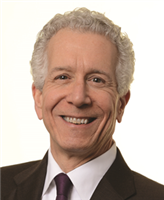
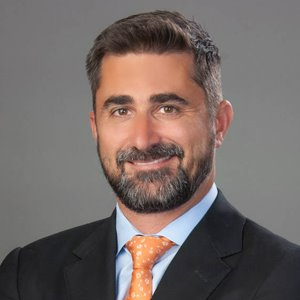
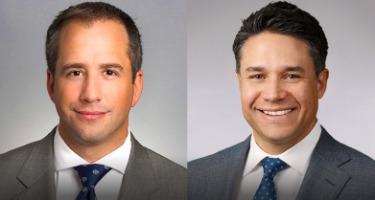
Davies 2019 "Law Firm of the Year", George Addy
Best Lawyers

Best Lawyers

January 24, 2019 04:40 PM

George N. Addy, senior counsel at the Canadian law firm Davies Ward Phillips & Vineberg LLP and former head of the Canadian Competition Bureau, talks with Best Lawyers CEO Phillip Greer on the evolving nature of Competition and Antitrust law both locally and globally. The winner of the 2019 “Law Firm of the Year Award” for that practice in Canada, Addy discusses how his firm remains competitive in a changing field.

Are there any trends that you’ve witnessed within the competition and antitrust law sectors in the past year, and do you see these trends continuing to change in Canada in the future?

On the issue of the global or international competition law environment, I think there are a couple of notable trends of concern. The first is the growing deliberate extraterritorial reach of remedies that essentially use competition law as a trade tool. Frankly, I think the European Commission’s numerous investigations of the Silicon Valley high-tech sector are more trade-oriented as opposed to pure competition law–oriented. I find that trend quite worrisome, and I hope it doesn’t spread.

The second trend, somewhat related to the first or perhaps building on it, is the extensive mimicking in the antitrust enforcement community. If one antitrust agency decides to explore an issue, then they all have to start their own reviews or studies on the same issue. It’s like a domino effect with little appearance that there’s a lot more behind these initiatives other than “We should do it because the others are doing it.” It seems there’s something of a “groupthink” at play as opposed to agencies doing their job under their legislation, deciding the matter and issuing a decision. Often today with international mergers, you’ll have several countries looking at a transaction and analyzing it, but even though country A has finished its examination, it won’t issue its decision because country B or C or D is still looking at it. They sometimes seem more preoccupied with coordinating the timing of press releases than telling parties what they’ve decided when they’ve completed their analysis. I’m worried about that behavior diluting the focus of national agencies on their national law. It can also be unfair to the parties.

Another example of the groupthink issue can be seen in the “privacy” space. I doubt you can find an antitrust agency in the world that doesn’t have some review going on now regarding the competitive implications of privacy. I’m worried that there’s a lot of mandate confusion and extensive resources being spent by agencies on issues outside the antitrust space because privacy is perhaps more interesting than the usual files or because privacy is catching media attention—a new Y2K frenzy of sorts.

If one antitrust agency decides to explore an issue, then they all have to start their own reviews or studies on the same issue. It’s like a domino effect with little appearance that there’s a lot more behind these initiatives...

Another trend that has increasingly been the subject of commentary is timeliness of decision-making by competition authorities and Canada is no exception. Experience and judgment often seem to have lost ground to an analysis by checklists and blind adherence to process. This has led to merger reviews taking longer and longer, often outside agency guidelines or performance measures—again at significant costs to the parties.

Those are some of the trends that concern me.

Are there any policy changes on the government level, either locally or globally, that you’re also seeing affecting competition or antitrust law?

Globally, there are increased market uncertainties flowing from some of President Trump’s initiatives and from initiatives elsewhere around the world: trade wars, political instability, and protectionist policies to name a few—all of which are affecting and chilling capital investment decisions. In Canada, those concerns were compounded by uncertainty in 2018 regarding NAFTA and infrastructure projects and recently about relations with China. Good examples are the pipeline files and concerns about the ability of investors in the resource sector to actually get deals done and capital investments completed. Whether warranted or not, investor concerns over whether you can get your pipeline built, for example, or whether infrastructure spending will actually show up at some point create a layer of uncertainty that is driving the business sector to be quieter and hold back on growth and investment plans, as it waits to figure out what the lay of the land is going to be.

In what way has technology impacted your firm’s work in antitrust law?

We are all aware of the benefits of technology in providing easy access to information needed in the practice of law. One of the other things technology has done is allow us to deal with multinational issues more easily. In real terms, if you’re dealing with multinational conduct files or mergers, you actually don’t spend much face time with clients. You’re working with other firms around the globe and coordinating filings with various agencies to ensure consistency and that regulatory submissions accurately reflect market conditions. It’s easy to communicate collaboratively with counterparts. A lot of the practice today is global, and technology has allowed us to deal with that. I joke with colleagues that my office is my briefcase. It really doesn’t matter where I am physically. I’ve got my laptop. I can get online. I’ve got my smartphone, and I can deal with clients anywhere in the world, 24/7. So technology has had that impact. Some people resent it, but frankly, I embrace it because it allows me to do my job more efficiently.

How does Davies stay agile against competitors in antitrust law?

To start, there is our laser focus on our strategy to be the firm that clients go to for business-critical work. We’re also laser-focused on excellence, which I think give us the edge. And then, the third component of our success, is our promotion of thought leadership, the way we work as a firm, the culture here, a flat organizational structure and how young lawyers are encouraged and mentored. All of that is critical to attract and build the right team and be the best at what we do.

I’ll just close with a little anecdote that reflects several of the key features of our firm’s success. At the height of the “patent wars,” we undertook an internal study focused on the intersection of antitrust and IP laws and policies because of my concerns about the lack of discourse in Canada on those issues. I enlisted a young associate in the group to help me and she spent several months of intense work on the project. The study caught the attention of the government of Canada, which commissioned a more in-depth analysis to assist in its review of IP policy. The associate was so enthralled with these issues that with my full support and that of the firm, she left Davies to pursue an MA at Stanford in law and the Internet. Since then, she’s worked with a national U.S. firm in Silicon Valley and is now a professor at Temple University. While we lost a valuable member of the team, I’m proud that we provided an environment for somebody to blossom and to feel comfortable enough to take on a new challenge and just follow her passion. I think that type of environment is a terrific example of one of the real attractions of our firm and that keeps us ahead of our competition.

Related Articles

The 2021 Best Lawyers in Canada


by Best Lawyers

Featuring the top legal talent in Canada.

Red and white Canadian flag with a red maple leaf in the center

The 2021 "Law Firm of the Year" Awards in Canada


by Best Lawyers

We are excited to announce the recipients of the 2021 "Law Firm of the Year" awards in Canada.

Award for The 2021 "Law Firm of the Year" in Canada

The Buyout Brigade


by Best Lawyers

Neill May, John Connon, and David Matlow discuss what’s ahead for private equity—and why dealmakers of all stripes have more leverage than ever.

Neill May, John Connon, and David Matlow discuss Goodmans which was named “Law Firm of the Year"

Leading the Evolution in Workplace Law


by Best Lawyers

Colin G.M. Gibson discusses workplace safety, issues such as raising the minimum wage, and job-protected leaves. 

Colin G.M. Gibson discusses workplace safety

What the Seller-Friendly Market Means for Private Equity


by Best Lawyers

JP Bogden and Kurt Sarno of 2019 Canadian "Law Firm of the Year" award-winner Blakes discuss trends in the private equity sector.

Blakes 2019 "Law Firm of the Year", Kurt Sarno and John-Paul Bogden

Staying Competitive in Competitions and Antitrust Law


by Best Lawyers

Igor Svechkar of Asters talks with Best lawyers about his firm's 2019 Antitrust "Law Firm of the Year" award for Ukraine.

2019 Antitrust "Law Firm of the Year", Igor Svechkar

Gowling WLG Attorneys Discuss Aboriginal Law in Canada


by Best Lawyers

Gowling WLG won the 2019 "Law Firm of the Year" award for Aboriginal Law in Canada.

Gowling WLG Law Firm Of The Year, with Jaimie Lickers and Maxime Faille

Fasken Attorneys on Their 2019 "Law Firm of the Year" Award Win


by Best Lawyers

Lawyers from the Canadian firm discus their employment law practice and the changes coming to the Canadain legal market.

Fasken Law Firm Q&A, Karen Sargeant, Claire Vachon, and Martin Denyes

IN PARTNERSHIP

Breaking Down Criminal Conviction in Canada


by Mass Tsang

Statistics Canada’s annual breakdown of adult criminal court data provides an eye-opening review of how the country’s court system resolves its hundreds of thousands of cases annually.

Silhouettes of Officer walking with two men on a strip of concert

2026 Best Lawyers Awards in Canada: Marking 20 Years of Excellence


by Jamilla Tabbara

Honoring Canada’s most respected lawyers and spotlighting the next generation shaping the future of law.

Shining Canadian map marking the 2026 Best Lawyers awards coverage

Canadian Federal Government Faces $1.1 Billion Lawsuit Over First Nations' Right to Clean Drinking Water


by Gregory Sirico

Canada's argument that it has "no legal obligation" to provide First Nations with clean drinking water has sparked a major human rights debate.

Individual drinking water in front of window

The Future of Canadian Law. Insights from Best Lawyers: Ones to Watch Honorees


by Jennifer Verta

Emerging leaders in Canada share their perspectives on the challenges and opportunities shaping the future of Canadian law

Digital eye with futuristic overlays, symbolizing legal innovation and technology

Unveiling the 2025 Best Lawyers Awards Canada: Celebrating Legal Excellence


by Jennifer Verta

Presenting the 19th edition of The Best Lawyers in Canada and the 4th edition of Best Lawyers: Ones to Watch in Canada.

Digital map of Canadathis on illuminated by numerous bright lights

Vanguards of Victory: Best Lawyers: Ones to Watch in Canada 2024


by Best Lawyers

The third edition of Best Lawyers: Ones to Watch in Canada™ has been announced, and the lawyers showcased by these awards are rising to the challenge each day as advocates for clients all across the country.

Blue and black background with small squares connected by lines

A Celebration of Excellence: The Best Lawyers in Canada 2024 Awards


by Best Lawyers

As we embark on the 18th edition of The Best Lawyers in Canada™, we are excited to highlight excellence and top legal talent across the country.

Abstract image of red and white Canada flag in triangles

IN PARTNERSHIP

How Long Can You Stay On Long-Term Disability?


by Michael Walter

Walter Law Group's team of long-term disability lawyers explains qualifications and coverage length for LTD.

Image of wheelchair accessible sign white on blue background

Trending Articles

2026 Best Lawyers Awards: Recognizing Legal Talent Across the United States


by Jamilla Tabbara

The 2026 editions highlight the top 5% of U.S. attorneys, showcase emerging practice areas and reveal trends shaping the nation’s legal profession.

Map of the United States represented in The Best Lawyers in America 2026 awards

Gun Rights for Convicted Felons? The DOJ Says It's Time.


by Bryan Driscoll

It's more than an administrative reopening of a long-dormant issue; it's a test of how the law reconciles the right to bear arms with protecting the public.

Firearms application behind jail bars

2026 Best Lawyers Awards in Canada: Marking 20 Years of Excellence


by Jamilla Tabbara

Honoring Canada’s most respected lawyers and spotlighting the next generation shaping the future of law.

Shining Canadian map marking the 2026 Best Lawyers awards coverage

Revealing the 2026 Best Lawyers Awards in Germany, France, Switzerland and Austria


by Jamilla Tabbara

These honors underscore the reach of the Best Lawyers network and its focus on top legal talent.

map of Germany, France, Switzerland and Austria

Best Lawyers 2026: Discover the Honorees in Brazil, Mexico, Portugal, South Africa and Spain


by Jamilla Tabbara

A growing international network of recognized legal professionals.

Map highlighting the 2026 Best Lawyers honorees across Brazil, Mexico, Portugal, South Africa and Sp

How to Sue for Defamation: Costs, Process and What to Expect


by Bryan Driscoll

Learn the legal standards, costs and steps involved when you sue for defamation, including the difference between libel and slander.

Group of people holding papers with speech bubbles above them

Build Your Legal Practice with Effective Online Networking


by Jamilla Tabbara

How thoughtful online networking supports sustained legal practice growth.

Abstract web of connected figures symbolizing online networking among legal professionals

Algorithmic Exclusion


by Bryan Driscoll

The Workday lawsuit and the future of AI in hiring.

Workday Lawsuit and the Future of AI in Hiring headline

Blogging for Law Firms: Turning Content into Client Connections


by Jamilla Tabbara

How law firms use blogs to earn trust and win clients.

Lawyer typing blog content on laptop in office

Reddit’s Lawsuit Could Change How Much AI Knows About You


by Justin Smulison

Big AI is battling for its future—your data’s at stake.

Reddit Anthropic Lawsuit headline

How to Choose a Good Lawyer: Tips, Traits and Questions to Ask


by Laurie Villanueva

A Practical Guide for Your First-Time Hiring a Lawyer

Three professional lawyers walking together and discussing work

The 2026 Best Lawyers Awards in Chile, Colombia and Puerto Rico


by Jamilla Tabbara

The region’s most highly regarded lawyers.

Map highlighting Chile, Colombia and Puerto Rico for the 2026 Best Lawyers Awards

Common-Law Marriage in Indiana: Are You Legally Protected?


by Laurie Villanueva

Understanding cohabitation rights and common-law marriage recognition in Indiana.

Married Indiana couple in their home

Why Jack Dorsey and Elon Musk Want to 'Delete All IP Law'


by Bryan Driscoll

This Isn’t Just a Debate Over How to Pay Creators. It’s a Direct Challenge to Legal Infrastructure.

Elon Musk and Jack Dorsey standing together Infront of the X logo

AI Tools for Lawyers: How Smithy AI Solves Key Challenges


by Jamilla Tabbara

Understand the features and benefits within the Best Lawyers Digital Marketing Platform.

Legal professional editing profile content with Smithy AI

Alimony Explained: Who Qualifies, How It Works and What to Expect


by Bryan Driscoll

A practical guide to understanding alimony, from eligibility to enforcement, for anyone navigating divorce

two figures standing on stacks of coins