
Insight

What's Wrong with WhatsApp?

A court in Brazil temporarily blocked access to WhatsApp on the basis that its owner had shown “total disrespect for Brazilian laws." What happens now?

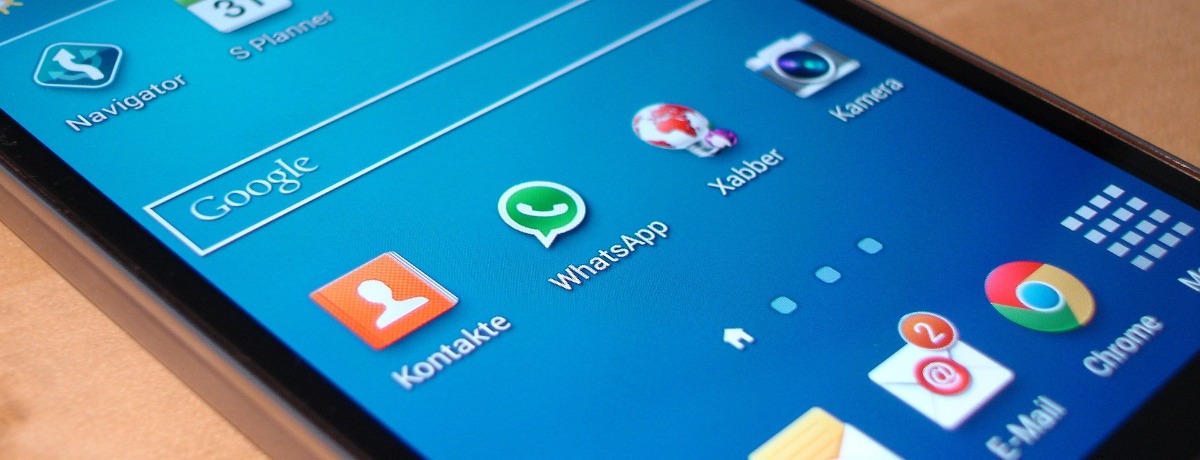
Unlocked Phone Screen with WhatsApp Pulled up on the home page
Matthew Critchley

Matthew Critchley

November 22, 2016 12:00 AM

On 20 July 2016, a court in Brazil temporarily blocked access to WhatsApp on the basis that its owner, Facebook, had shown “total disrespect for Brazilian laws." Hours later, the decision was overturned by Brazil’s Supreme Court for being “scarcely reasonable or proportional."

Communicating through online services other than email and SMS is on the rise, and for many people, it is now the norm. WhatsApp, owned by Facebook Inc, is a service used by 1 billion people worldwide, with 2.4 million users in Australia. Facebook itself has 1.65 billion users, with more than 900 million users on its own Messenger service.

This month’s ban on WhatsApp marks the third time such a ban has occurred in Brazil – the longest being in place for 72 hours. This most recent ban arose from Facebook’s refusal to provide chat logs from WhatsApp related to a criminal investigation. Facebook declined to provide the requested chat logs because it claimed not to have access to WhatsApp users’ messages.

WhatsApp's end-to-end encryption ensures that only its customer and the person its customer is communicating with can read a message. Nobody in between, not even WhatsApp, can access that message. End-to-end encryption means that encrypted communications are only decipherable when viewed on the recipient’s device. Therefore, only those with access to the recipient’s device can see the message in readable form.

End-to-end encryption is now the only way to communicate using WhatsApp – that is, you cannot opt in or out. WhatsApp describes its service in its Privacy Notice as follows:

Users type their messages, which are sent via data service to our servers, and routed to the intended recipient (who must also be a WhatsApp user), if that recipient is online. If the recipient is not online, the undelivered message is held in WhatsApp’s server until it can be delivered. If the message is undelivered for thirty (30) days, the undelivered message is deleted from our servers. Once a message has been delivered, it no longer resides on our servers. The contents of any delivered messages are not kept or retained by WhatsApp — the only records of the content of any delivered messages reside directly on the sender’s and recipient’s mobile devices (and which may be deleted at the user’s option)…

Files that are sent through the WhatsApp Service will reside on our servers after delivery for a short period of time, but are deleted and stripped of any identifiable information within a short period of time in accordance with our general retention policies.

In July 2016, it was reported that Facebook began testing end-to-end encryption on Messenger and will be rolling out the encryption technology soon. It is possible that other online messaging services will also implement end-to-end encryption as a default on their services. If this is the way the market is moving, it may be that free email service providers start to do the same.

From an Australian perspective, the use of end-to-end encryption represents a real risk for preserving, obtaining and presenting evidence of communications.

Ordinarily, where it is suspected that evidence in digital form existed but has not been discovered by a party, it is possible to obtain that evidence by obtaining a court order for production against a third party who holds that information. For example, in the case of email accounts, a subpoena may be issued to the service provider for all emails kept on its servers for a particular email address.

Legislative reforms aimed at WhatsApp and other encrypted messaging services are being debated overseas, primarily in the context of national security issues. It remains to be seen how Australian courts will respond to the rise of these services and their impact on the evidentiary process. We will watch any such developments with keen interest.

For guidance on legal issues involving digital communications or privacy, use the Best Lawyers Find a Lawyer tool to connect with experienced attorneys.

Related Articles

Is it Illegal to Use a Smartphone App to 'TapeACall?’


by Richard Leder

Is it a problem to use an app on your phone, such as TapeACall or Automatic Call Recorder, to record a call?

Detailed view of a classic tape recorder

Unveiling the 2025 Best Lawyers Editions in Brazil, Mexico, Portugal and South Africa


by Jennifer Verta

Best Lawyers celebrates the finest in law, reaffirming its commitment to the global legal community.

Flags of Brazil, Mexico, Portugal and South Africa, representing Best Lawyers countries

Best Lawyers Expands 2024 Brazilian Awards


by Best Lawyers

Best Lawyers is honored to announce the 14th edition of The Best Lawyers in Brazil™ and the first edition of Best Lawyers: Ones to Watch in Brazil™.

Image of Brazil city and water from sky

The Best Lawyers in Brazil™ 2022


by Best Lawyers

The 2022 Best Lawyers in Brazil™ honors 2,157 lawyers across 62 practice areas, including 91 “Lawyer of the Year” and 18 “Law Firm of the Year” awards.

The flag of Brazil

Facebook Whistleblower Testimony Shines A Light On Credibility Factor


by Justin Smulison

Landmark whistleblower testimony was provided on Capitol Hill which may have a national—and even worldwide—effect on how governments regulate Big Tech companies.

Facebook logo Infront of a black silhouette of a woman

Summer Voting Season Is Here!


by Best Lawyers

Summer 2021 voting is open to all lawyers listed in Best Lawyers in Chile, Colombia, Peru, Brazil, Mexico, Portugal, South Africa and Spain.

Illustration of a ballot box with photographs of candidates displayed

Announcing the 2021 Best Lawyers in Brazil


by Best Lawyers

Featuring the top firms and lawyers in Brazil.

2021 Best Lawyers in Brazil title

Internet Speech in the Crosshairs


by Ari Holtzblatt and Jamie Gorelick

Charges of anti-right bias notwithstanding, online platforms are on solid ground when they defend their policies and procedures as neutral and protected by the First Amendment.

Black background with blue text bubble and red text bubble with silhouettes

ACLU Says Facebook's Targeted Advertising Is Discriminatory


by Donald L. Sapir

By letting advertisers target men in job postings, Facebook may be contributing to gendered discrimination.

Facebook Logo background with two red figures one female and one male speaking

Q&A with Ricardo Coelho and Júlio César Bueno of 2018 Brazilian “Law Firm of the Year” Pinheiro Neto Advogados’ Project Finance and Development Practice


by Best Lawyers

Can you tell me about the characteristics that make up your law firm and the project finance in development practice that led to being recognized as a “Law Firm of the Year”?

Q&A with Pinheiro Neto Advogados Project Final

Paris Agreement on Climate Change: Overview and Update


by Beatriz Paulo de Frontin and Márcio Pereira

An overview of the Paris Climate Agreement.

Cartoon brunette man looks at screen with data and super computers

Social Media and Other Innovations Are Jarring the Judiciary


by Michelle V. Rafter

Judge Shira A. Scheindlin means it when she says social media is “totally disrupting the court system.”

White lines all connected with dots surrounding them and white silhouettes overlaying a city

My Data My Rules: An Overview of Data Protection in Brazil


by Fábio Pereira

Technology pixels on a biometric hand scanner with fingerprints at the top

Panama Papers: Evasion and Avoidance


by Best Lawyers

Attorneys from across the world consider what the future holds for businesses and individuals with foreign holdings and investments.

Panama Papers being spread all over a large city

Trending Articles

2026 Best Lawyers Awards: Recognizing Legal Talent Across the United States


by Jamilla Tabbara

The 2026 editions highlight the top 5% of U.S. attorneys, showcase emerging practice areas and reveal trends shaping the nation’s legal profession.

Map of the United States represented in The Best Lawyers in America 2026 awards

Gun Rights for Convicted Felons? The DOJ Says It's Time.


by Bryan Driscoll

It's more than an administrative reopening of a long-dormant issue; it's a test of how the law reconciles the right to bear arms with protecting the public.

Firearms application behind jail bars

2026 Best Lawyers Awards in Canada: Marking 20 Years of Excellence


by Jamilla Tabbara

Honoring Canada’s most respected lawyers and spotlighting the next generation shaping the future of law.

Shining Canadian map marking the 2026 Best Lawyers awards coverage

Revealing the 2026 Best Lawyers Awards in Germany, France, Switzerland and Austria


by Jamilla Tabbara

These honors underscore the reach of the Best Lawyers network and its focus on top legal talent.

map of Germany, France, Switzerland and Austria

Best Lawyers 2026: Discover the Honorees in Brazil, Mexico, Portugal, South Africa and Spain


by Jamilla Tabbara

A growing international network of recognized legal professionals.

Map highlighting the 2026 Best Lawyers honorees across Brazil, Mexico, Portugal, South Africa and Sp

How to Sue for Defamation: Costs, Process and What to Expect


by Bryan Driscoll

Learn the legal standards, costs and steps involved when you sue for defamation, including the difference between libel and slander.

Group of people holding papers with speech bubbles above them

Build Your Legal Practice with Effective Online Networking


by Jamilla Tabbara

How thoughtful online networking supports sustained legal practice growth.

Abstract web of connected figures symbolizing online networking among legal professionals

Algorithmic Exclusion


by Bryan Driscoll

The Workday lawsuit and the future of AI in hiring.

Workday Lawsuit and the Future of AI in Hiring headline

Blogging for Law Firms: Turning Content into Client Connections


by Jamilla Tabbara

How law firms use blogs to earn trust and win clients.

Lawyer typing blog content on laptop in office

Reddit’s Lawsuit Could Change How Much AI Knows About You


by Justin Smulison

Big AI is battling for its future—your data’s at stake.

Reddit Anthropic Lawsuit headline

How to Choose a Good Lawyer: Tips, Traits and Questions to Ask


by Laurie Villanueva

A Practical Guide for Your First-Time Hiring a Lawyer

Three professional lawyers walking together and discussing work

The 2026 Best Lawyers Awards in Chile, Colombia and Puerto Rico


by Jamilla Tabbara

The region’s most highly regarded lawyers.

Map highlighting Chile, Colombia and Puerto Rico for the 2026 Best Lawyers Awards

Common-Law Marriage in Indiana: Are You Legally Protected?


by Laurie Villanueva

Understanding cohabitation rights and common-law marriage recognition in Indiana.

Married Indiana couple in their home

Why Jack Dorsey and Elon Musk Want to 'Delete All IP Law'


by Bryan Driscoll

This Isn’t Just a Debate Over How to Pay Creators. It’s a Direct Challenge to Legal Infrastructure.

Elon Musk and Jack Dorsey standing together Infront of the X logo

AI Tools for Lawyers: How Smithy AI Solves Key Challenges


by Jamilla Tabbara

Understand the features and benefits within the Best Lawyers Digital Marketing Platform.

Legal professional editing profile content with Smithy AI

Alimony Explained: Who Qualifies, How It Works and What to Expect


by Bryan Driscoll

A practical guide to understanding alimony, from eligibility to enforcement, for anyone navigating divorce

two figures standing on stacks of coins