
Insight

U.S. Business Immigration: Year-in-Review

For more reasons than are probably appropriate to include here today, 2017 will be forever be burned into the memories of everybody in the U.S. immigration industry, and all HR and legal professionals who were involved in hiring and/or employing foreign workers in the U.S. No matter your political persuasion, 2017 turned out to not be anything like we all expected at the beginning of the year, fol

Man in red suit looks out of portable telescope on a boat with multiple businesspeople on the boat
Christian S. Allen

Christian S. Allen

March 2, 2018 03:12 PM

For more reasons than are probably appropriate to include here today, 2017 will be forever be burned into the memories of everybody in the U.S. immigration industry, and all HR and legal professionals who were involved in hiring and/or employing foreign workers in the U.S. No matter your political persuasion, 2017 turned out to not be anything like we all expected at the beginning of the year, following a historic presidential election result.

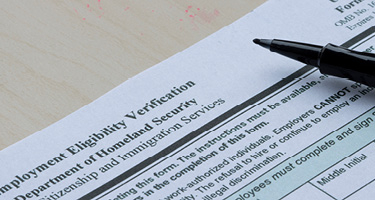
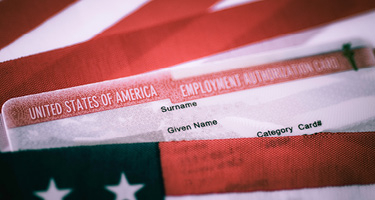
The year actually started out with some fairly good immigration news for businesses. We got a new I-9 Employment Eligibility Verification form from the U.S. Citizenship and Immigration Services agency ( USCIS). The new form included some long-overdue changes, making it much more user-friendly for busy HR people. Simultaneous immigration regulation changes also tweaked several parts of the underlying employment verification rules. Those changes allowed for simple things like temporary work card extensions to be treated more reasonably, thereby avoiding common short-term (but always costly) gaps in work authorization for otherwise lawful workers in the U.S.

We all had our own opinions on the new president’s positions about a southern border wall, the danger posed by illegal immigrants in the U.S., and the problems with so-called “sanctuary cities.” Nobody was naïve enough to believe that the new administration wouldn’t attempt some changes to the U.S. immigration system (e.g., President Obama’s DACA program was squarely in their crosshairs). However, most business people also assumed that only Congress would change the core immigration laws and effect substantive change on the U.S. business community.

That “stay calm and hire (legally) on” message within the HR community was essentially how everybody felt going into the annual legal circus that is the H-1B cap lottery filing season on April 1. Few people in the immigration community had given much serious concern to yet another one of the president’s several executive orders: Buy American and Hire American. The order didn’t change any immigration laws (again, only Congress could), nor was it a regulation formally changing the government’s implementation of the existing laws. In fact, the small parts of the order referring to immigration at all simply consisted of general policy directives to federal agencies to ensure that they were enforcing existing laws (which many agencies initially took as an offensive insinuation that they’d somehow not been doing their jobs). However, by the end of the summer it became apparent that those same agencies had received directives to, in fact, alter long-standing processes and practices, the relative certainty of which U.S. business had come to rely on in a healthy economy, with significant skilled and professional labor shortages, across many industries.

Almost without warning, employers started seeing routine temporary work visa applications being suddenly denied by U.S. consulates across the globe. If any rationale was provided for these denials at all, it was usually just a vague reference to an undefined hire American preference for U.S. workers, which has never been a requirement in the U.S. law for those types of visas. Employers with European operations were particularly blindsided by a sharp uptick in denials of E and L class work visas for top managers and critical technical personnel being temporarily transferred to the U.S. Similar results were being reported from the U.S. borders and international airports. And then, a deluge of so-called requests for evidence started arriving from the USCIS immigration agency, in connection with those H-1B cap lottery petitions employers had filed on April 1.

After celebrating the “good luck” of having their petition selected in the Kafkaesque one-in-three odds of the H-1B cap lottery, many well-intentioned companies were hit with long, rambling 10-page letters from the USCIS demanding copious amounts of additional evidence to prove that the company was a genuine employer with a valid professional job offer. Also included in those requests were lengthy arguments that entry-level but still entirely professional workers were somehow no longer eligible for H-1B work visa sponsorship; this again, despite no changes in the immigration laws or regulations at all. Employers and their attorneys have been scrambling for months to respond to these queries, wasting an enormous amount of time, energy, and resources on something that would have been virtually unheard of in the two prior decades. Informal estimates of the number of such novel USCIS requests this summer were in the thousands, and many of those H-1B petitions are still not yet resolved today. A Wall Street Journal article last month summed up the situation well, including this quote: “The goal of the administration seems to be to grind the process to a halt or slow it down so much that they achieve a reduction in legal immigration through implementation rather than legislation.”

So, what does all of this mean for employers and legal professionals in 2018? The short answer is that nobody knows. Until Congress takes up meaningful immigration reform legislation, it’s likely the various federal agencies will continue to take actions that make the U.S. immigration system effectively unusable for many employers. The economic impacts of that on U.S. industry are obvious. For the busy HR professionals in the day-to-day trenches, that translates to a need to be hyper-diligent about their company’s immigration compliance, to be significantly more proactive about routine work visa sponsorships than they’ve ever been in the past, and to work even more closely with competent immigration counsel and help business units and their critical foreign workers to navigate an ever-changing landscape of unwritten government rules. It remains to be seen if Congress will finally wade back into the immigration reform debate. Either way, it will definitely be another interesting year in global mobility.

------------------

Christian Allen is a senior attorney in Dickinson Wright’s Troy office, where he practices exclusively in the area of immigration law. He has extensive experience guiding employers of all sizes and in all industries through the maze that is the U.S. immigration system. Chris can be reached at 248-433-7299 or CAllen@dickinsonwright.com.


Related Articles

The Rise and Fall of the H-1B Worker


by Kathleen Saenz Poppenger

Until recently, most people were unfamiliar with the H-1B visa, except for those seeking to take advantage of this temporary worker category.

Six cartoon people with white papers and a red stamp to mark the papers

The New Business Immigration Regime


by Corporate Immigration Partners

Five things executives and HR should do.

Red and white stripes on the side of a building with black dots on the building

Visa Options for Employees Who Lose the H-1B Lottery


by Kristal Ozmun and Stephen Yale-Loehr

Green Statue of Liberty with a cloudy sky

Is Time Running Out for DC’s Sanctuary City Law?


by Bryan Driscoll

The Capitol is battling the White House in a dangerous game.

DC sanctuary city law headline

Do I Really Need an Immigration Attorney? Key Factors to Consider


by Best Lawyers

Immigrating to the U.S. can be a complex and lengthy experience. In this article, Best Lawyers evaluates how an immigration attorney can help along the way.

Department of Homeland Security logo with American flag in the backdrop

Maximizing Your Chances of Approval with an Immigration Attorney


by Best Lawyers

Tips for choosing the right immigration attorney and navigating the complex path to citizenship.

View of Statue of Liberty with birds in backrop

The Price of Admission


by Janice Zhou

States and the federal government are engaged in a pitched battle over immigration and refugee settlement—with the legal profession caught in the middle, taking fire from both sides.

Three black silhouettes, one of a father and two of children

Cost of Entry


by Best Lawyers

As naturalization fees increase, a local nonprofit provides financial relief for immigration

Close of the statue of liberty in red and dollar signs in the back

Traversing the Immigration Frontier


by Best Lawyers

Brian Graham 2019 “Lawyer of the Year” award in Texas’ Best Lawyers.

Photo of Brian Graham 2019 Lawyer of the Year Honoree

Issue Spotting Guide for Assessing Inbound to U.S. Travel Issues


by Kathleen M. Peregoy

Essential guidance for management and HR on assessing U.S. travel and work visa issues to ensure immigration compliance and smooth workforce mobility.

Flight attendants and pilot silhouettes walk in the airport with construction in the back

Make the Workforce American Again


by Michael J. Wildes

The H-1B visa program allows U.S. companies to temporarily employ foreign workers in specialty occupations, including jobs in technology, engineering, science, architecture, accounting, and business.

Check mark over man with beard, X's over women with striped shirt and man with blue suit

U.S. Steps up Efforts to Review Social Media Use by Immigrants and Visitors


by Bradley L. Ortman

Last month, the DHS implemented a new rule to systematize its efforts to monitor social media use of intending immigrants and travelers to the United States.

Blurred man walks past circle of American flag and magnifying glass

The Inside Wall


by Charla Truett

Are bricks being stacked up against employment-based immigration?

Red wall being built brick by brick with city behind it

Employment-based U.S. Immigration


by Matthew T. Phillips

A look back at 2017 and what to expect in 2018.

Man stands in the one in 2018 as a silhouette with a blue sky with white clouds

Buy American, Hire American Takes Its Toll on Business Immigration


by Rosanna M. Fox and Karen Gabriel Moss

USCIS is considering the reinterpretation of “may grant” language contained in the statute deeming it discretionary rather than mandatory.

Red data bars in a line on a blue background with a blue hand pressing down on a red bar

Trends in EB1 Self-Sponsored Extraordinary Ability Permanent Residence Cases for Researchers


by Douglas J. Halpert

Both the “mirror test” and the USCIS regulatory standard impose exacting standards subject to interpretation.

Multiple snow whites with yellow skirt and blue top with red bow

Trending Articles

2026 Best Lawyers Awards: Recognizing Legal Talent Across the United States


by Jamilla Tabbara

The 2026 editions highlight the top 5% of U.S. attorneys, showcase emerging practice areas and reveal trends shaping the nation’s legal profession.

Map of the United States represented in The Best Lawyers in America 2026 awards

Gun Rights for Convicted Felons? The DOJ Says It's Time.


by Bryan Driscoll

It's more than an administrative reopening of a long-dormant issue; it's a test of how the law reconciles the right to bear arms with protecting the public.

Firearms application behind jail bars

2026 Best Lawyers Awards in Canada: Marking 20 Years of Excellence


by Jamilla Tabbara

Honoring Canada’s most respected lawyers and spotlighting the next generation shaping the future of law.

Shining Canadian map marking the 2026 Best Lawyers awards coverage

Revealing the 2026 Best Lawyers Awards in Germany, France, Switzerland and Austria


by Jamilla Tabbara

These honors underscore the reach of the Best Lawyers network and its focus on top legal talent.

map of Germany, France, Switzerland and Austria

Best Lawyers 2026: Discover the Honorees in Brazil, Mexico, Portugal, South Africa and Spain


by Jamilla Tabbara

A growing international network of recognized legal professionals.

Map highlighting the 2026 Best Lawyers honorees across Brazil, Mexico, Portugal, South Africa and Sp

How to Sue for Defamation: Costs, Process and What to Expect


by Bryan Driscoll

Learn the legal standards, costs and steps involved when you sue for defamation, including the difference between libel and slander.

Group of people holding papers with speech bubbles above them

Build Your Legal Practice with Effective Online Networking


by Jamilla Tabbara

How thoughtful online networking supports sustained legal practice growth.

Abstract web of connected figures symbolizing online networking among legal professionals

Algorithmic Exclusion


by Bryan Driscoll

The Workday lawsuit and the future of AI in hiring.

Workday Lawsuit and the Future of AI in Hiring headline

Blogging for Law Firms: Turning Content into Client Connections


by Jamilla Tabbara

How law firms use blogs to earn trust and win clients.

Lawyer typing blog content on laptop in office

Reddit’s Lawsuit Could Change How Much AI Knows About You


by Justin Smulison

Big AI is battling for its future—your data’s at stake.

Reddit Anthropic Lawsuit headline

How to Choose a Good Lawyer: Tips, Traits and Questions to Ask


by Laurie Villanueva

A Practical Guide for Your First-Time Hiring a Lawyer

Three professional lawyers walking together and discussing work

The 2026 Best Lawyers Awards in Chile, Colombia and Puerto Rico


by Jamilla Tabbara

The region’s most highly regarded lawyers.

Map highlighting Chile, Colombia and Puerto Rico for the 2026 Best Lawyers Awards

Common-Law Marriage in Indiana: Are You Legally Protected?


by Laurie Villanueva

Understanding cohabitation rights and common-law marriage recognition in Indiana.

Married Indiana couple in their home

Why Jack Dorsey and Elon Musk Want to 'Delete All IP Law'


by Bryan Driscoll

This Isn’t Just a Debate Over How to Pay Creators. It’s a Direct Challenge to Legal Infrastructure.

Elon Musk and Jack Dorsey standing together Infront of the X logo

AI Tools for Lawyers: How Smithy AI Solves Key Challenges


by Jamilla Tabbara

Understand the features and benefits within the Best Lawyers Digital Marketing Platform.

Legal professional editing profile content with Smithy AI

Alimony Explained: Who Qualifies, How It Works and What to Expect


by Bryan Driscoll

A practical guide to understanding alimony, from eligibility to enforcement, for anyone navigating divorce

two figures standing on stacks of coins