Insight

Victory for The Slants and Redskins

On June 19, 2017, the United States Supreme Court settled the issue of whether an offensive name—in this case, an Asian-American rock band called “The Slants”—can properly be registered as a trademark.

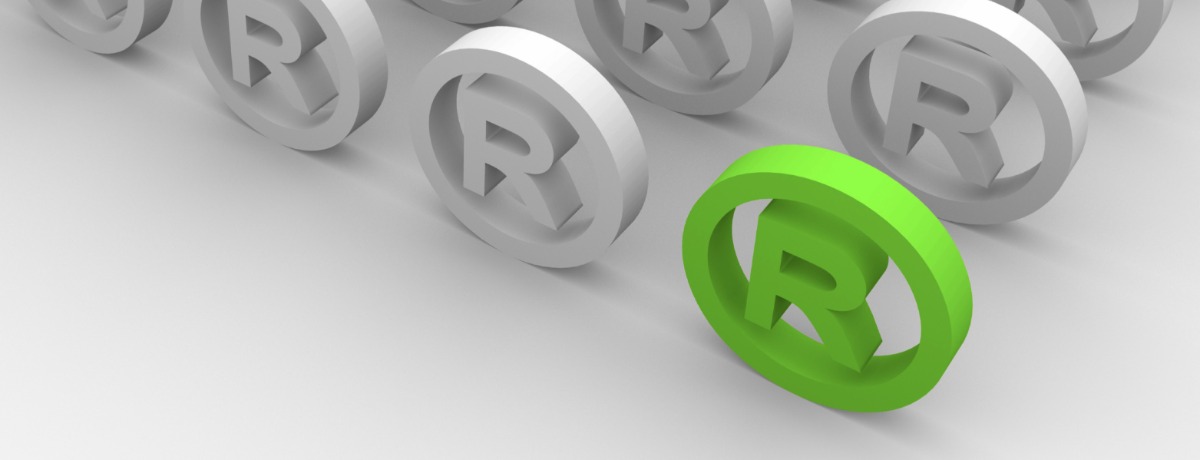
Multiple white trademark logos with one green trademark logo
CH

Written by Carol Steinour Young and Emily Hart

Published: July 11, 2017

On June 19, 2017, the United States Supreme Court settled the issue of whether an offensive name—in this case, an Asian-American rock band called “The Slants”—can properly be registered as a trademark. The Court’s conclusion? Offensive trademark registrations can be registered, regardless of how offensive they may be.

This issue reached the Supreme Court after a nearly eight-year legal battle between The Slants and the United States Patent and Trademark Office (USPTO). The effects of Monday’s unanimous ruling in Matal v. Tam will spread beyond the walls of the next Slants concert, as the Supreme Court held that the disparagement clause of the federal Lanham Act violates the Free Speech Clause of the First Amendment. The fundamental constitutional principle that private speech may not be denied or banned because it expresses offensive ideas is now extended to trademark registrations.

A brief background on the dispute: in 2011, Simon Tam, the founder of The Slants, applied for federal trademark registration for the band’s name. The band acknowledged that it chose the name to “reclaim” and “drain [the] denigrating force” of the word “slant” as a derogatory term for Asian persons. The USPTO denied the application under the disparagement clause, which (at the time) prohibited the registration of trademarks that disparage “any persons, living or dead, institutions, beliefs, or national symbols.” The USPTO concluded that there was a substantial group of people who could find the trademark offensive, and canceled the mark. The United States Court of Appeals for the Federal Circuit held that the disparagement clause was unconstitutional, prompting the appeal by the government.

The Supreme Court first had to decide whether federal trademark registration fell under the label of “government speech,” as the government claimed. The Court held that federal trademark registration does not fall into the category of government speech. To the contrary, the Court held that trademarks are private speech rather than government or even commercial speech. Thus, the registration, regardless of its offensive nature, is fully protected by the Free Speech Clause of the First Amendment, and the restrictions of the disparagement clause of the Lanham Act are unconstitutional.

The Justices were clearly concerned about the government’s claim that a trademark is “government speech” and can, therefore, be regulated. Justice Alito wrote, “If private speech could be passed off as government speech by simply affixing a government seal of approval, government could silence … the expression of disfavored viewpoints.” Justice Alito also remarked that that Section 2(a) of the Lanham Act is “not an anti-discrimination clause; it is a happy-talk clause.”

A similar and highly publicized case concerning the 2014 cancellation of the Washington Redskins’ trademark registration was stayed pending the outcome of Matal v. Tam. Many believe this decision will pave the way for the Redskins to successfully regain its trademark registration. With this decision, bands like The Slants and football teams like the Redskins may no longer have an issue registering or maintaining their trademarks, regardless of whether those trademarks are considered “disparaging” by some (or even most).

Additionally, in light of this ruling on the disparagement clause of the Lanham Act, many now expect a future challenge to the constitutionality of the “immoral or scandalous” clause of the Lanham Act.

While companies and individuals seeking trademark registration are now free to register offensive marks, they should still remain mindful of the court of public opinion. If the goal in registering your mark is to protect your brand, you should make sure your brand is worth the effort.

--------------------

Carol Steinour Young is a member in the litigation, injunction, and intellectual property practice groups of McNees Wallace & Nurick LLC. She is based in Harrisburg, Pennsylvania, and can be reached at csteinouryoung@mcneeslaw.com.

Emily Hart is an associate in the intellectual property practice group at McNees Wallace & Nurick LLC. She is based in Harrisburg, Pennsylvania, and can be reached at ehart@mcneeslaw.com.

Alex Snell is a summer associate with McNees Wallace & Nurick LLC and assisted with writing this article.


Learn More About:

Supreme Court

Patents

Related Articles

How Patents Will Change Under the "New" Supreme Court


by Jamie L. Graham

Patent law is one more area up for debate with changes coming to the Supreme Court.

Human brain icon with a lightbulb and blue background with a checkmark and four xs

US Tariff Uncertainty Throws Canada Into Legal Purgatory


by Bryan Driscoll

The message is clear: There is no returning to pre-2025 normalcy.

US Tariff Uncertainty Throws Canada Into Legal Purgatory headline

How to Get a Patent


by Bryan Driscoll

A comprehensive guide to understanding patents, the application process and strategies to protect your invention in the U.S.

Illustration of a person with an idea next to a lawyer holding patent documents

Supreme Court Opens New Door for Personal Injury Claims Under RICO


by Bryan Driscoll

The litigation landscape is rapidly shifting

Personal injury RICO claims marijuana hed

Anna Inventing: The Importance of Diversity in Innovation


by Emily C. Peyser

A patent from 1887 by female inventor Anna Connelly not only revolutionized fire safety, but highlighted the need for diversity in innovation. Our world is facing big problems that need diverse voices at the table to find solutions that work for everyone. Building diverse teams and encouraging diversity in innovation is a beneficial step forward in resolving our collective challenges.

Graphic of a red microscope examining a sample overlayed with stick figures representing genders and

Destiny Fulfilled


by Sara Collin

Was Angela Reddock-Wright destined to become a lawyer? It sure seems that way. Yet her path was circuitous. This accomplished employment attorney, turned mediator, arbitrator and ADR specialist nonpareil discusses her career, the role of attorneys in society, the new world of post-pandemic work and why new Supreme Court Justice Ketanji Brown Jackson represents the future.

Angela Reddock-Wright an ADR Specialist

An Army of Nancy


by Rachel Shrewsbury

The horrific stories out of Guantánamo Bay almost caused them to lose faith in the American principles of liberty and justice. Nancy Hollander became the ray of hope they needed.

Nancy Hollander looks over her notebook sitting in a chair

Learn How to Value Your Company's IP Portfolio as a Source of Income with Patent Scorecarding


by Troy A. Groetken

It’s imperative that intellectual property counsel, especially those responsible for the protection of innovation in the electrical, chemical, pharmaceutical and life-science arenas, regularly audit their company’s IP portfolio. Here’s the best way to do it.

Folder with the words "PATENTED" on the front with a pencil and a paperclip on the desk

Ketanji Brown Jackson Becomes Joe Biden’s Nominee for Vacant SCOTUS Seat


by Gregory Sirico

President Joe Biden has nominated former lawyer Ketanji Brown Jackson for the Supreme Court of the United States.

Biden Nominates Ketanji Brown Jackson

Biden’s History-Making SCOTUS Nominees


by Gregory Sirico

The promise of the first Black female Supreme Court Justice in history is on the verge of reality as the top three candidates for the most recent vacant seat are announced.

Portraits of Supreme Court of the United States Nominees

What Entrepreneurs Should Know About Intellectual Property


by Todd Fichtenberg

With the growing rates of entrepreneurs and startups during 2020, applications for EINs and intellectual property protections should grow proportionately.

Multiple DNA fingerprints of different colors

The State of Women Inventors


by Amanda Hermans and Kate Rockwood

What’s being done to improve the gender patent gap—and how attorneys can help.

White background with off white circle and smaller blue circle in the middle

Property Protectors


by Best Lawyers

Georg Schönherr and Thomas Adocker discuss the theft of trade secrets, patent infringement, and strategies to combat fake goods.

Georg Schönherr and Thomas Adocker discuss the theft of trade secrets

Protect Your Intellectual Property From Patent Trolls


by Best Lawyers

Michael Ritscher discusses how he advises clients to better protect their trade secrets.

Attorney Michael Ritscher advises clients protecting trade secrets

Don’t Fall Asleep at the Wheel


by Paul Goatley

Identify Exhaustion or Risk Waiving a Defense.

Woman with hands folded with a EFOC sign

What New York's Child Victims Act Means for Public Schools


by Anastasia M. McCarthy

The new Child Victims Act is expected to have a profound and long-lasting impact on public school systems.

Little girl with backpack holds hand with mother while walking outside

Trending Articles

What AI Visibility Means for Lawyers


by Josh Rupall and Bryan Driscoll

AI tools increasingly interpret lawyers public information. Clear, consistent and credible sources help ensure they describe legal expertise accurately.

AI dashboard visualizing a lawyer's online profile, reputation, and practice information across mult

Recognizing Legal Leaders: The 2027 Best Lawyers Awards in Australia, Japan and Singapore


by Jamilla Tabbara

Market drivers, diversity trends and the elite practitioners shaping the legal landscape.

Illustrated maps of Australia, Japan and Singapore displayed with their national flags, representing

The Best Lawyers in Canada 2027: Recognizing the Nation's Top Legal Talent


by Jamilla Tabbara

Honoring established leaders and rising practitioners across Canada's legal profession.

3D model of Canada textured with the Canadian flag.

2027 Best Lawyers Awards: Honoring Excellence in the Legal Profession


by Jamilla Tabbara

Recognizing the outstanding attorneys leading top practice areas nationwide.

United States with American flag representing The Best Lawyers in America 2027 awards

Musk v. Altman: The Lawyers Behind the Case


by Jamilla Tabbara

Meet the Trial Lawyers Shaping One of AI's Biggest Legal Disputes.

Portrait photos of Elon Musk and Sam Altman positioned in front of the OpenAI logo.

Announcing the 2027 Best Lawyers Awards: Austria, Germany and Switzerland


by Jamilla Tabbara

Celebrating the legal professionals throughout Central Europe.

Graphic displaying three-dimensional map cutouts of Austria, Germany and Switzerland.

The Legal Teams Behind the Blake Lively–Justin Baldoni Settlement


by Grace Greer

A closer look at the legal teams and attorneys involved in the Blake Lively–Justin Baldoni litigation and its resolution.

Split-screen image of Blake Lively and Justin Baldoni

The Best Lawyers in France 2027: Peer-Reviewed Excellence


by Jamilla Tabbara

Seventeen editions of peer trust, a growing profession and a dynamic legal market.

3D Map of France with National Flag Graphic

New England's Climate Litigation Surge


by Bryan Driscoll

What law firms need to know

New England's Climate Litigation Surge: What Firms Must Know headline

What Is a Quitclaim Deed? Uses, Risks and When to Get Help


by Bryan Driscoll

A quitclaim deed can be one of the fastest ways to transfer property but knowing when it's the right tool and when it isn't, can save you from serious legal and financial headaches down the road.

One hand holding a wooden house model and another holding house keys.

Rules on Gifting Money to Family: What to Know


by Bryan Driscoll

Generosity often runs ahead of paperwork. Here's how to give to loved ones without surprising the IRS, your estate plan or your relationships.

An open gift box filled with US $100 bills next to a lid tied with a red bow.

An Employee's Guide to Non-Disclosure Agreements (NDA)


by Bryan Driscoll

Before you sign anything, here's what you need to know about non-disclosure agreements.

Figure stands before an open giant book, holding a large key, facing a keyhole on the inner page.

How to Optimize Your Best Lawyers Profile for AI Search


by Everett Sizemore

Learn how a complete, well-structured Best Lawyers profile can strengthen your visibility and accuracy across AI search platforms.

A laptop screen displaying the Best Lawyers profile dashboard showing customizable sections.

Best Lawyers Launches ChatGPT App


by Jennifer Verta

Expanding Trusted Legal Guidance Into AI-Driven Search

A glowing digital network overlay on a person typing on a laptop, representing AI in legal search.

Who Can Override a Power of Attorney?


by Bryan Driscoll

A power of attorney carries real legal authority, but it isn't absolute. Here's who can step in to revoke, restrict or set it aside.

Close-up of a power of attorney document, symbolizing legal authority, revocation rights, guardiansh

Turn Client Questions Into Content That AI Search Can Find


by Bryan Driscoll and Manny Candal

Client questions are becoming search inputs. Your firm’s content should answer them clearly.

Pile of question marks with a single bright yellow question mark in the center, representing search.
Smithy AI Tap to expand

Welcome to Smithy AI the Best Lawyers Assistant

I can help you find attorneys, compare firms, explore practice areas, and surface rankings curated from the Best Lawyers methodology.

Not legal advice This assistant provides general information only. For guidance on your specific situation, please consult a licensed attorney.
Learn about Best Lawyers Research Process
Suggested prompts
Chat limit reached
You've reached the message limit for this chat. To keep exploring, browse Best Lawyers directly or come back later to start a fresh conversation.
Browse Best Lawyers