Insight

Ketanji Brown Jackson Becomes Joe Biden’s Nominee for Vacant SCOTUS Seat

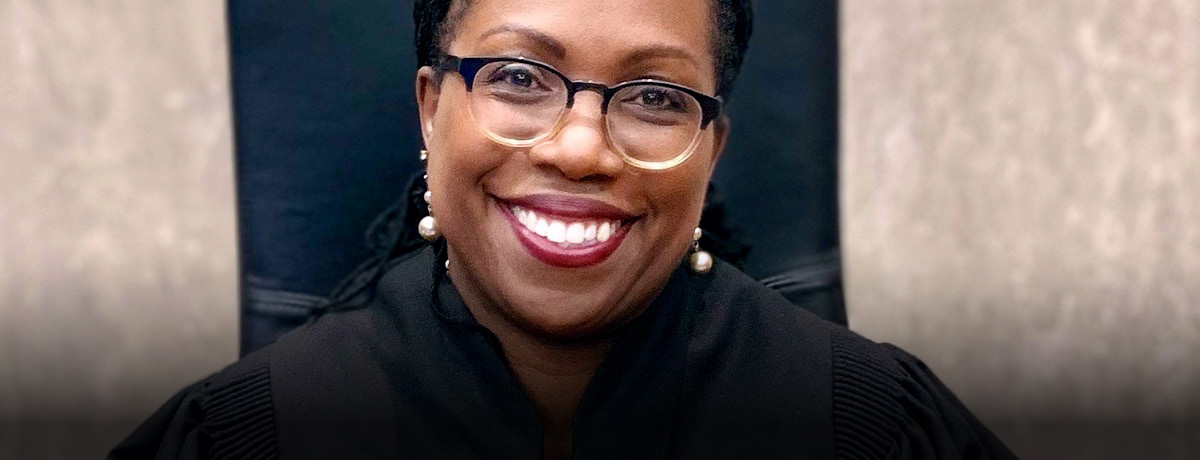
President Joe Biden has nominated former lawyer Ketanji Brown Jackson for the Supreme Court of the United States.

Biden Nominates Ketanji Brown Jackson
GS

Gregory Sirico

March 1, 2022 12:30 PM

On February 25, 2022, President Joe Biden announced Ketanji Brown Jackson, a former public defender and current U.S. Circuit Court of Appeals judge with over a decade of legal experience, as his nominee to replace the vacant seat left by retiring Justice Stephen Breyer. If confirmed, Jackson would become the first Black woman to ever sit on the Supreme Court as well as the second justice in history to have criminal defense experience. The first was Thurgood Marshall. Additionally, at age 51, if confirmed, Jackson will become the second youngest justice in history behind Amy Coney Barrett.

Currently, with the Supreme Court holding a conservative majority of six to three, Jackson’s extensive resume and historically bipartisan approach to law could make her an even more likely candidate for confirmation. With a decision fast approaching, it’s important to know more about Ketanji Brown Jackson and see what she brings to the Supreme Court during one of America’s most polarizing political eras to date.

“As I have pursued this professional path, and if I’m fortunate enough to be confirmed as the next associate justice of the Supreme Court of the United States, I can only hope that my life and career, my love of this country and the Constitution, and my commitment to upholding the rule of law and the sacred principles upon which this great nation was founded, will inspire future generations of Americans,” stated Jackson during a White House event on Friday, February 25.

A two-time Harvard graduate and former clerk to retiring Justice Breyer, Jackson started her career working as a junior litigator in theWashington D.C. area, where she was successful in acquiring compensatory funds for victims of terrorism and other disasters. Highly regarded throughout the legal community, Jackson is considered a leading expert on federal sentencing policy, having served as both the Vice Chair and Commissioner of the U.S. Sentencing Commission. During her time there, Jackson actively worked to reduce sentences for a variety of low-level drug offenders, permitting 12,000 incarcerated individuals to seek reduced sentences as well as securing the immediate release of roughly 1,800 inmates.

Last year, President Biden elevated Jackson to serve on the U.S. Court of Appeals for the D.C. Circuit, a position which is widely viewed as the second most powerful judicial role in the country. Jackson is a more than qualified candidate to assume the role of Supreme Court Justice, but in America’s current political landscape, ideology reigns supreme. As a Democratic leaning bipartisan judge, Jackson will have to face a primarily Republican controlled Senate, who currently hold no outspoken objections towards her ascension to the high court.

From here, the nomination process now transitions to a vote in the Senate, where Democrats are currently working to enlist members on both sides for support. According to the White House and Senate Judiciary Committee, a voting deadline has been set for the process to be completed by April 9, 2022. With an already history-making nomination, the possible confirmation of Ketanji Brown Jackson remains to be seen, but will no doubt have the eyes of a nation looking on.


Related Articles

Biden’s History-Making SCOTUS Nominees


by Gregory Sirico

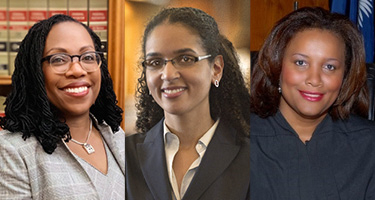
The promise of the first Black female Supreme Court Justice in history is on the verge of reality as the top three candidates for the most recent vacant seat are announced.

Portraits of Supreme Court of the United States Nominees

Destiny Fulfilled


by Sara Collin

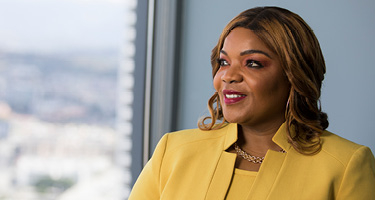
Was Angela Reddock-Wright destined to become a lawyer? It sure seems that way. Yet her path was circuitous. This accomplished employment attorney, turned mediator, arbitrator and ADR specialist nonpareil discusses her career, the role of attorneys in society, the new world of post-pandemic work and why new Supreme Court Justice Ketanji Brown Jackson represents the future.

Angela Reddock-Wright an ADR Specialist

Supreme Court Opens New Door for Personal Injury Claims Under RICO


by Bryan Driscoll

The litigation landscape is rapidly shifting

Personal injury RICO claims marijuana hed

Compelled to Compete


by Ashish Mahendru

Courts and legislatures—and now the White House—are taking an increasingly dim view of noncompete employment agreements, a development the pandemic has quickened. What can employers do to protect their confidential information?

A silhouette of a man thinking with another man walking up the steps

Biden Targets Non-Competes, But They Still Have Their Place


by John Ettorre

Limitations on non-compete agreements are increasing, aided by an executive order by President Biden in July.

Non-Compete Agreement with a red and blue separation line going down the center

Don’t Fall Asleep at the Wheel


by Paul Goatley

Identify Exhaustion or Risk Waiving a Defense.

Woman with hands folded with a EFOC sign

What New York's Child Victims Act Means for Public Schools


by Anastasia M. McCarthy

The new Child Victims Act is expected to have a profound and long-lasting impact on public school systems.

Little girl with backpack holds hand with mother while walking outside

Decisions, Decisions


by Boris Bershteyn

Leading cases on the Supreme Court’s 2018 business docket.

Logo of the Supreme Court of the United States with a blue and white background

RTO Tariffs and Market Protocols–Will the Supreme Court Limit Chevron Deference?


by Lyle D. Larson

Looking at the future of Chevron deference following Kennedy's unexpected departure.

Supreme Court building well-lit with a series of lines all connecting to each other

Justice Gorsuch’s Strange Detour in Alien Tort Statute Case


by Motley Rice

Justice Neil Gorsuch wasn’t a member of the U.S. Supreme Court back in 2004, when the justices ruled in Sosa v. Alvarez-Machain (124 S.Ct. 2739) that in certain limited circumstances, foreign nationals can use a 1789 law, the Alien Tort Statute, to sue in U.S. courts for violations of the law of nations.

Justice Neil Gorsuch in a black and white photo

Supreme Court Decision Will Play Important Role in Shaping Defendant Privacy Rights


by Gus Kostopoulos

The primary question will likely come down to whether or not cell phone data and location records are protected interests under the Fourth Amendment.

Cell Phone image with person with multiple locations and city background with multiple circles and c

Send, Serve, or Both


by Holly M. Polglase and Matthew E. Bown

The Supreme Court decides the meaning of Article 10(A) of the Hague Service Convention.

Businessman slips Hague service convention letter through a slot

Victory for The Slants and Redskins


by Carol Steinour Young and Emily Hart

On June 19, 2017, the United States Supreme Court settled the issue of whether an offensive name—in this case, an Asian-American rock band called “The Slants”—can properly be registered as a trademark.

Multiple white trademark logos with one green trademark logo

Bristol-Myers Squibb Co. v. Superior Court of California, San Francisco


by Clifford J. Zatz and Josh Thomas Foust

The decision “may make it impossible to bring certain mass actions at all."

Map of California with blue ocean and balance scale symbol in the middle

Obtaining Cell Phone Records in Civil Litigation


by Jeff S. Korek

You might think that cell phone records could help put a distracted driver behind bars. But getting them isn't so simple.

Girl wearing long sleeves with cell phone texts on it while driving

Post-Conviction Relief


by Douglas Trant

In these post-conviction cases, we look for Constitutional violations that deprived the defendant of a fair trial and undermined confidence in the outcome.

Blue DNA spiral with prison cell opens black ground

Trending Articles

2026 Best Lawyers Awards: Recognizing Legal Talent Across the United States


by Jamilla Tabbara

The 2026 editions highlight the top 5% of U.S. attorneys, showcase emerging practice areas and reveal trends shaping the nation’s legal profession.

Map of the United States represented in The Best Lawyers in America 2026 awards

Gun Rights for Convicted Felons? The DOJ Says It's Time.


by Bryan Driscoll

It's more than an administrative reopening of a long-dormant issue; it's a test of how the law reconciles the right to bear arms with protecting the public.

Firearms application behind jail bars

2026 Best Lawyers Awards in Canada: Marking 20 Years of Excellence


by Jamilla Tabbara

Honoring Canada’s most respected lawyers and spotlighting the next generation shaping the future of law.

Shining Canadian map marking the 2026 Best Lawyers awards coverage

Revealing the 2026 Best Lawyers Awards in Germany, France, Switzerland and Austria


by Jamilla Tabbara

These honors underscore the reach of the Best Lawyers network and its focus on top legal talent.

map of Germany, France, Switzerland and Austria

Best Lawyers 2026: Discover the Honorees in Brazil, Mexico, Portugal, South Africa and Spain


by Jamilla Tabbara

A growing international network of recognized legal professionals.

Map highlighting the 2026 Best Lawyers honorees across Brazil, Mexico, Portugal, South Africa and Sp

How to Sue for Defamation: Costs, Process and What to Expect


by Bryan Driscoll

Learn the legal standards, costs and steps involved when you sue for defamation, including the difference between libel and slander.

Group of people holding papers with speech bubbles above them

Build Your Legal Practice with Effective Online Networking


by Jamilla Tabbara

How thoughtful online networking supports sustained legal practice growth.

Abstract web of connected figures symbolizing online networking among legal professionals

Algorithmic Exclusion


by Bryan Driscoll

The Workday lawsuit and the future of AI in hiring.

Workday Lawsuit and the Future of AI in Hiring headline

Blogging for Law Firms: Turning Content into Client Connections


by Jamilla Tabbara

How law firms use blogs to earn trust and win clients.

Lawyer typing blog content on laptop in office

Reddit’s Lawsuit Could Change How Much AI Knows About You


by Justin Smulison

Big AI is battling for its future—your data’s at stake.

Reddit Anthropic Lawsuit headline

How to Choose a Good Lawyer: Tips, Traits and Questions to Ask


by Laurie Villanueva

A Practical Guide for Your First-Time Hiring a Lawyer

Three professional lawyers walking together and discussing work

The 2026 Best Lawyers Awards in Chile, Colombia and Puerto Rico


by Jamilla Tabbara

The region’s most highly regarded lawyers.

Map highlighting Chile, Colombia and Puerto Rico for the 2026 Best Lawyers Awards

Common-Law Marriage in Indiana: Are You Legally Protected?


by Laurie Villanueva

Understanding cohabitation rights and common-law marriage recognition in Indiana.

Married Indiana couple in their home

Why Jack Dorsey and Elon Musk Want to 'Delete All IP Law'


by Bryan Driscoll

This Isn’t Just a Debate Over How to Pay Creators. It’s a Direct Challenge to Legal Infrastructure.

Elon Musk and Jack Dorsey standing together Infront of the X logo

AI Tools for Lawyers: How Smithy AI Solves Key Challenges


by Jamilla Tabbara

Understand the features and benefits within the Best Lawyers Digital Marketing Platform.

Legal professional editing profile content with Smithy AI

Alimony Explained: Who Qualifies, How It Works and What to Expect


by Bryan Driscoll

A practical guide to understanding alimony, from eligibility to enforcement, for anyone navigating divorce

two figures standing on stacks of coins