
This interview was conducted as part of the 2020 Edition of The Best Lawyers in Switzerland “Law Firm of the Year” award recognitions. Our partner Handelsblatt, also published these awards on June 27, 2019, online and in print in their June 2019 edition.
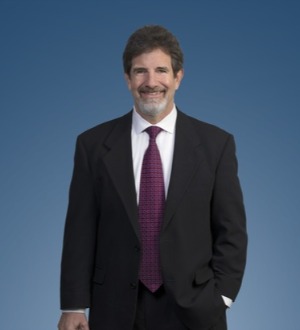
From Meyerlustenberger Lachenal Ltd.—Switzerland's 2020 “Law Firm of the Year” in Intellectual Property Law—Michael Ritscher joins Phillip Greer, CEO of Best Lawyers, to discuss how their firm advises clients to protect their intellectual property better and the importance of filing patent applications.
Trade secrets have become an area of discussion in recent years. It's been one of the points of contention in the US-China trade war. How prevalent is theft of trade secrets and what do you advise clients to do to better protect info?
Michael Ritscher: I am following the development worldwide very closely, both as head of our IP & IT litigation team as well as president of INGRES, which is the most active IP association in Switzerland. I'm chairing several conferences and I'm responsible for the concept of these conferences—two of them being international conferences.
I have started including trade secrets into the patent part of these international conferences. I'm very aware of the importance of the topic in the U.S., and in the E.U. up to now, and the new directives and regulations on trade secrets.
In Switzerland, however, this topic has not really touched the courts. There are basically no cases yet which indicates a shift of the approaches taken. Our recommendation to our clients is to increase their awareness.
Many small and mid-sized companies are just not aware of the fragility of trade secrets and are behaving in a very naive way, basically assuming that nobody's interested in what they're doing. They are not aware of the technical means which are available these days to systematically search and collect valuable data from industry.
Awareness is our point number one. Point number two, we advise our clients to implement technical protection. Technical means protection of barriers to entry and security control; making sure that confidential, valuable information is put in two places where access is difficult and controlled.
Measure number three is to clearly mark everything—what is valuable or potentially valuable—as confidential. Because in the Swiss courts, if it comes to patent or unfair competition disputes, they look heavily to what extent the alleged owner or the owner of alleged trade secrets considers to be secret. Under Swiss law, we differentiate between objective and subjective confidentiality. So even if something is objectively confidential, if the owner of the information does not consider it to be valuable then we might have a problem.
Number four is one of my favorite topics. I don't believe in nondisclosure agreements because I'm involved very often as a litigator in court and arbitration proceedings. But I’m also an arbitrator in cases where there is a dispute about nondisclosure agreements. Almost always the reason for the dispute is the lack of the object of the agreement.
I strongly advise clients if they insist on having an NDA to clearly identify the object of confidentiality. The next step, which is the alternative to NDAs, is if you do the work, if you really try to define what the trade secret is, why not file a patent application? The additional costs are marginal. And the client then, as you know, has 18 months within, which they can decide if they want to have the application published or not. If they don't want to have the information application published, then they can withdraw the application. If they want to go forward, they can continue the patent route and get a patent. At least in a selected number of territories, which are very important for the business.
I don't believe too much in trade secret protection as provided by the law and really strongly advise, personally, in favor of filing patent applications.
Some people believe that patent trolls are becoming a significant problem, especially in the technology space. What has been your experience with that?
Being a lawyer, you will not be surprised to hear that “it all depends,” is the answer. On the definition of a troll, people are trying to avoid this term and use non-practicing entities instead. But even this notion is not really clear because evidently a troll has a polemic connotation that indicates that somebody is doing something terribly bad or even illegal. I think in the end it's really a question of validity. Talking about patents now, not copyright or trademark trolls, which also exist.
But about patent trolls, I think it's all about if there is a valid patent that is infringed. If validity is examined thoroughly, and if the infringement is examined thoroughly, and if a legal authority comes to the conclusion that a valid patent has been infringed, I think one should not look too much at the background of the owner. Personally, I am a defender of injunctions. I think if there is a valid patent that has been infringed, there must be an injunction. There are exceptions evidently in the area of telecom patents, standard essential patents. This is a huge problem, and I follow very closely the development, the new ideas about coming up with collecting societies or standard-essential patents. So I'm following this closely.
As to Switzerland, however, we have not had one single case yet except one where my team, our team, has been involved where we represented a non-practicing entity. In that case, I can assure you this was by no means a troll. He has a patent, and it has been examined by the Swiss patent courts; it was considered to be valid. It was considered to be infringed. I don't see why one should not give this patentee the right, which he deserves according to the law.
This patent troll development or phenomenon, in particular in Europe, is basically focused on big markets. If you look at the patent portfolios of the so-called patent trolls in the telecom business, most of them are not validated in Switzerland.
This shows that Switzerland is probably not an interesting market enough, business-wise. Maybe also because of what I said before, that different from Germany, a patentee, if he wants to enforce the patent, has to undergo a serious examination as to the validity by the same court which also examines infringement. In Germany, so-called infringement courts are much faster and patentee friendly than the court, the patent court, which is the court responsible for the assessment of validity. That's why I think, in particular, in Germany, this is a phenomenon which has to be taken seriously, but in Switzerland, this has not really, so far, become a serious problem.
So fake goods have always been around, but they seem to thrive in the eCommerce environment. What strategies have you used for your clients to protect them?
Very traditionally, we try to stop at the source where the counterfeit products are manufactured, which is quite difficult because this is very often China. It's difficult to enforce IP rights in China. Second, we are quite successfully using border seizures, i.e., to stop the counterfeit from exporting or from importing. So use border instruments for the seizure mechanisms and personnel.
We are doing a lot of international work, as you see, for, in particular, Swiss clients but also for foreign clients. Because we have acquired huge experience in IP, not only in Switzerland but also in other jurisdictions. So seizures on trade fairs are usually very effective and not expensive and have a deterrent effect in many cases. Then, takedowns are usually run by the clients themselves. So usually, we advise clients to do it themselves because this is less expensive and they usually prefer doing it in-house.
And last but not least, and most importantly, we have started for clients to enforce IP rights against intermediaries. We have filed suit against Google because of Google shopping based on the trademark rights of our client recently in Germany. We're still waiting for the statement of claim to be served upon Google. As you know Google is not domicile of Germany, so serving has to take place in the U.S., which takes a couple of weeks. But we're quite optimistic that we are going to get, not only an injunction in this case, but also very sure is the amount of money, and we'll see how Google will react on that.
This interview has been edited for length and clarity.
Access top-rated lawyers through the Best Lawyers Find a Lawyer tool to help with your legal matters.