
Insight

A Sea Change on Land

Autonomous vehicles will revolutionize almost every area of the law. Here’s a look at what’s rapidly approaching.

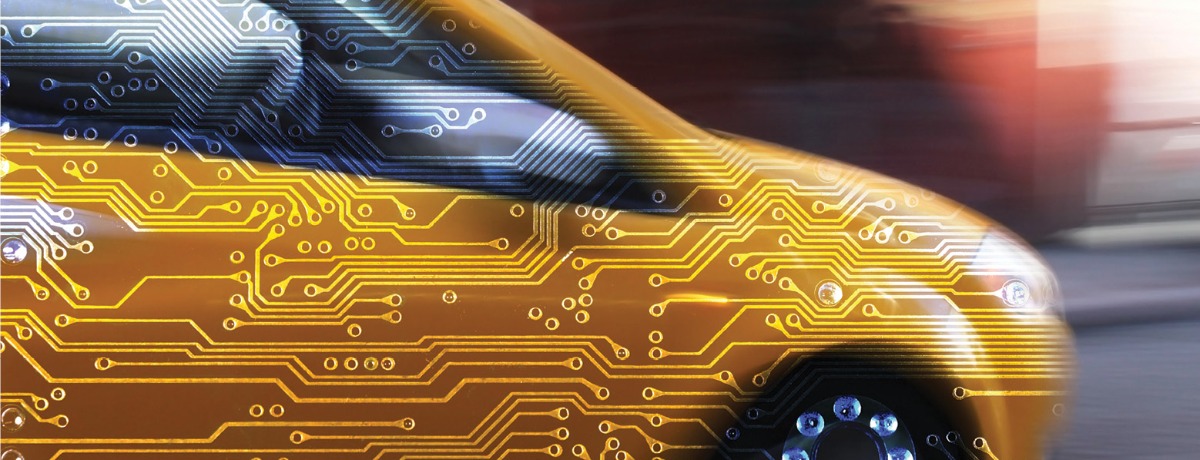
Yellow car with technology lines blurring the car
SG

Suneel Gupta and Linda A. Klein

December 10, 2019 08:00 AM

The main question concerning autonomous vehicles is “when,” not “if.” They’re coming. And traversing the on-ramp to Level 5 SAE autonomy will likely put one in mind of the explosion of the internet in the late 1990s. (The Society of Automotive Engineers has established five levels of vehicular autonomy; Level 5, at which the car completely drives itself, is the highest.) The transformation will be fast and furious, so to speak, and the law will have to chase after and catch up.

What will be affected won’t just be one or two obvious areas of the law, such as product liability and regulatory oversight. The impact will be greater than that—which is why our firm, Baker Donelson, has assembled a multidisciplinary team of attorneys to address virtually every legal facet that autonomous vehicles (AVs) will affect. Among them:

Telecom

Next-gen 5G cellular connectivity is just starting to roll out across major U.S. cities. Because AVs will need to “talk” to a variety of infrastructure—traffic lights, toll readers, other vehicles—5G coverage is critical. Current 4G LTE connectivity is simply not fast enough to transmit and receive the massive amount of data necessary to make a system of AVs operable.

Telecoms will need to hasten the rollout of their 5G networks to support AVs and other “Internet of Things” components, all of which will compete for bandwidth. As such, these companies must look beyond their current tower-based coverage models toward distributed networks—which then raises the question of infrastructure itself.

Infrastructure

Government at all levels, from Washington down to local municipalities, will have to work with private companies to build out the infrastructure required for AVs to communicate. There will be antennae everywhere, almost literally—atop streetlights, telephone poles, and traffic signals, even embedded in roads—to ensure no dead zones. Governments simply don’t have the funds to cover this colossal expense. Public-private partnerships make the most sense for this piece of the puzzle, so governments will have to permit such collaboration—and then encourage it.

Automakers will for the first time be sitting on a trove of valuable information with many potential buyers.


Data Privacy and Hacking

AVs are essentially computers on wheels. Even non-autonomous vehicles have been hacked; consider the now-famous example of a Jeep being shut down on a highway in St. Louis (in a controlled experiment, it bears mentioning) in 2015. One of the biggest hurdles for carmakers and component suppliers, then, will be reassuring customers that the vehicles they’re riding in cannot be hacked.

That will require a tight partnership between telecom companies and infrastructure providers, as well as mandates that customers religiously update their cars’ software (preferably over the air, rather than having to bring a vehicle into a dealership).

Data privacy is a second concern. AVs will generate enormous amounts of data about vehicle locations, which creates a golden marketing opportunity. Say you’re in an AV that knows you stop at a certain coffee shop every morning on the way to work. On this day, though, it suggests you stop at a different place, and offers you a $2 coupon. Some might appreciate this; others will surely find it intrusive.

There are implications for the insurance industry as well. Although insurers have tried to lure customers with tracking devices in exchange for discounts (with little success), cars will now themselves generate granular data about time of use, miles driven, routes taken, and more. Will customers want to trade this information for lower premiums?

Automakers, on the other hand, will for the first time be sitting on a trove of valuable information with many potential buyers. Car companies will therefore need easily comprehensible privacy and data-sharing agreements for their customers to opt into or out of.

Real Estate

Beyond the obvious considerations presented by connectivity-boosting antennae in ever more numerous locations, both public and private, in the long term people’s real estate needs will change, and thus so will zoning and land-use laws.

At present, most car owners use their vehicle for only a small portion of the day. Did you drive to work today? If so, what’s your car doing? Sitting in a garage for eight hours or so. As AVs become more popular, the great American tradition of car ownership will dwindle. Autonomous vehicles will likely be owned primarily by large fleet companies and summoned at will—similar to what happens now with car-sharing companies, but with far more availability and consistency.

When fewer people own cars, there will be a greater shift toward drop-off and pickup lanes (like the ride-share lanes increasingly common at airports today), rather than expansive parking lots whose sizes are based on the square footage of the establishment they serve. Parking decks in office buildings and multi-family residential complexes will begin to be repurposed; fewer homes will have a garage. This exciting transformation in land use will be managed largely at the local level, and cities at the forefront will be the first to reap the true benefits of the AV revolution.

Liability

The National Safety Council estimates that in 2018, about 40,000 people died in the U.S. in car accidents, the vast majority of which are caused by human error. Remove the human risk factor, and the incidence of car accidents and deaths will plummet. Until every last AV achieves Level 5—and even after, of course—accidents will occur. While today the question of who or what is liable for a wreck is relatively straightforward, it gets blurry with AVs.

Assume, for instance, that your AV (which you aren’t driving) runs a red light and hits a pedestrian in a crosswalk. Are you at fault, like a dog owner whose pooch bites the mailman? Is the carmaker? Or is it the Tier 1 supplier of the AV software and components, which the automaker bought off the shelf and installed in its vehicle? What if the car company specified what kind of AV software it wanted, down to the lines of code, and the software developer simply provided it without real-world testing? Right now, in most states, the assignment of liability would be left to the courts, as the federal government hasn’t spoken on the issue.

All these questions, to be worked out in the years ahead, will affect the law in ways great and small. The journey is only beginning—and lawyers who stay keenly attuned to these developments will be best equipped to help provide directions.

Linda Klein is senior managing shareholder at Baker Donelson and is a past president of the American Bar Association. She regularly counsels on business dispute prevention and resolution, contract law, professional liability, risk and crisis management, ethics, and governance. She is particularly experienced in advising the construction, pharmaceutical, and higher-education industries.

Neel Gupta represents clients in liability defense and litigation, including trucking/transportation, products liability, premises liability, medical malpractice defense, general property and casualty liability, and insurance litigation. Neel leads Baker Donelson’s autonomous vehicles initiative and is building a multi-disciplinary team to advise OEMs and Tier 1s, as well as insurance companies, telecoms, and other industry players in this evolving field.

photo: ISTOCK.COM/OONAL

Related Articles

Best Lawyers Through the Ages: Our Past. Our Today. Our Future.


by Best Lawyers

With over 168,000 recognized legal professionals across 150 practice areas in 76 countries, Best Lawyers remains the original trusted source for legal awards.

Skyscrapers against evening sky with water

Combating Nuclear Verdicts: Empirically Supported Strategies to Deflate the Effects of Anchoring Bias


by Sloan L. Abernathy

Sometimes a verdict can be the difference between amicability and nuclear level developments. But what is anchoring bias and how can strategy combat this?

Lawyer speaking in courtroom with crowd and judge in the foreground

Connecticut Attorney General Releases Status Update on Data Privacy Act


by Gregory Sirico

Connecticut's attorney general recently released a report on the current status of the Data Privacy Act, focusing in on some keys areas of enforcement.

Animated woman's face with code scattered everywhere

Privacy Practice


by Casey Waughn

Data protection is all the rage among tech companies and state, national (and even transnational) governments alike. Is it a passing fad or here to stay? And how should businesses and groups of all sizes handle compliance with a blizzard of new laws?

Data protected inside of a bubble requiring multiple identification processes

Announcing the 7th Annual Women in the Law Publication


by Best Lawyers

The 7th Annual Women in the Law publication is a celebration of all the female legal talent across the country, honoring every woman listed in The Best Lawyers in America and Best Lawyers: Ones to Watch in America.

Cover title page of Best Lawyers Business Edition of Women in the Law; Spring 2022

All Together With Pride: The Best Lawyers Team Volunteers During Pride Month


by Megan Edmonds

Offering time, muscle power, donations and more, the Best Lawyers team supports local advocacy groups’ events.

Hands holding pride flags near the Best Lawyers logo

Announcing the 2022 Best Lawyers in Japan


by Best Lawyers

Recognizing Japan’s elite legal professionals and top law firms across key practice areas in the 2022 edition.

The Japanese flag on a black background

Hey, Big Lender


by Latif Zaman and Catherine M. Brennan

A contentious proposed federal rule would establish “true lender” guidelines for banks and third parties. Does Colorado show the way forward?

Financial Institution

Patricia Brown Holmes: A Story of Resilience and Empowerment


by Patricia Brown Holmes

Native Chicagoan Patricia Brown Holmes has built an astonishingly varied career through sheer determination and an undimmed survival instinct. Throughout, she’s been determined to help others like her do the same.

Chicago skyline

A Decade of Excellence


by Joseph Begonis

Nine firms weigh in on issues that will shape the legal industry in 2020.

Black and white filter of a man and woman walking up the stairs with a golden circle in the center

A Global Approach to Settlement


by Gretchen M. Wolf, Bradley A. Klein, Mayra C. Suárez and Peter Y. Cheun

The Department of Justice, in pursuit of companies whose transgressions cross borders, increasingly credits other countries’ fines to avoid “piling on.”

Six businessmen discuss around a glass table with pie charts

Supportive Organizational Leadership


by J. Henry Walker IV

Those at the pinnacle of the profession owe it to their law firms—and themselves—to support talented attorneys in ways that ensure success.

Leader presents to a boardroom of attorneys in a glass room

Property Rights...and Wrongs


by Steven S. Kaufman and Chad Cooper

Winning a legal battle often boils down to finding and targeting the weakest part of an opponent’s case. Four recent real estate disputes in northeast Ohio are good examples.

Glass staircases in business building with blurred people walking

Uninsured Flying Objects


by Marialuisa S. Gallozzi, Laura Beth Cohen and Claire O'Rourke

As drones and other “unmanned aerial vehicles” increasingly crowd the skies, the law—and insurance policies—will have to figure out how best to bring them back safely to terra firma.

Drone flying in the blue blurred sky

Up To the Challenge


by Justin Smulison

Leading the Litigation for the 2016 Silver Spring Apartment Explosion

Regan Zambri Long Law Firm smiles for a group photo

The Best Defense Against FLSA Lawsuits for Unpaid Overtime


by Maureen E. Carr

Six strategies to avoid costly liability.

Three white papers with accounts on each of them

Trending Articles

2026 Best Lawyers Awards: Recognizing Legal Talent Across the United States


by Jamilla Tabbara

The 2026 editions highlight the top 5% of U.S. attorneys, showcase emerging practice areas and reveal trends shaping the nation’s legal profession.

Map of the United States represented in The Best Lawyers in America 2026 awards

Gun Rights for Convicted Felons? The DOJ Says It's Time.


by Bryan Driscoll

It's more than an administrative reopening of a long-dormant issue; it's a test of how the law reconciles the right to bear arms with protecting the public.

Firearms application behind jail bars

2026 Best Lawyers Awards in Canada: Marking 20 Years of Excellence


by Jamilla Tabbara

Honoring Canada’s most respected lawyers and spotlighting the next generation shaping the future of law.

Shining Canadian map marking the 2026 Best Lawyers awards coverage

Revealing the 2026 Best Lawyers Awards in Germany, France, Switzerland and Austria


by Jamilla Tabbara

These honors underscore the reach of the Best Lawyers network and its focus on top legal talent.

map of Germany, France, Switzerland and Austria

Best Lawyers 2026: Discover the Honorees in Brazil, Mexico, Portugal, South Africa and Spain


by Jamilla Tabbara

A growing international network of recognized legal professionals.

Map highlighting the 2026 Best Lawyers honorees across Brazil, Mexico, Portugal, South Africa and Sp

How to Sue for Defamation: Costs, Process and What to Expect


by Bryan Driscoll

Learn the legal standards, costs and steps involved when you sue for defamation, including the difference between libel and slander.

Group of people holding papers with speech bubbles above them

Build Your Legal Practice with Effective Online Networking


by Jamilla Tabbara

How thoughtful online networking supports sustained legal practice growth.

Abstract web of connected figures symbolizing online networking among legal professionals

Algorithmic Exclusion


by Bryan Driscoll

The Workday lawsuit and the future of AI in hiring.

Workday Lawsuit and the Future of AI in Hiring headline

Blogging for Law Firms: Turning Content into Client Connections


by Jamilla Tabbara

How law firms use blogs to earn trust and win clients.

Lawyer typing blog content on laptop in office

Reddit’s Lawsuit Could Change How Much AI Knows About You


by Justin Smulison

Big AI is battling for its future—your data’s at stake.

Reddit Anthropic Lawsuit headline

How to Choose a Good Lawyer: Tips, Traits and Questions to Ask


by Laurie Villanueva

A Practical Guide for Your First-Time Hiring a Lawyer

Three professional lawyers walking together and discussing work

The 2026 Best Lawyers Awards in Chile, Colombia and Puerto Rico


by Jamilla Tabbara

The region’s most highly regarded lawyers.

Map highlighting Chile, Colombia and Puerto Rico for the 2026 Best Lawyers Awards

Common-Law Marriage in Indiana: Are You Legally Protected?


by Laurie Villanueva

Understanding cohabitation rights and common-law marriage recognition in Indiana.

Married Indiana couple in their home

Why Jack Dorsey and Elon Musk Want to 'Delete All IP Law'


by Bryan Driscoll

This Isn’t Just a Debate Over How to Pay Creators. It’s a Direct Challenge to Legal Infrastructure.

Elon Musk and Jack Dorsey standing together Infront of the X logo

AI Tools for Lawyers: How Smithy AI Solves Key Challenges


by Jamilla Tabbara

Understand the features and benefits within the Best Lawyers Digital Marketing Platform.

Legal professional editing profile content with Smithy AI

Alimony Explained: Who Qualifies, How It Works and What to Expect


by Bryan Driscoll

A practical guide to understanding alimony, from eligibility to enforcement, for anyone navigating divorce

two figures standing on stacks of coins