Insight

A Global Approach to Settlement

The Department of Justice, in pursuit of companies whose transgressions cross borders, increasingly credits other countries’ fines to avoid “piling on.”

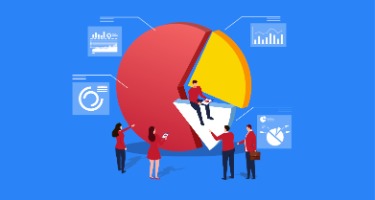
Six businessmen discuss around a glass table with pie charts
Gretchen M. Wolf

Gretchen M. Wolf, Peter Y. Cheun, Bradley A. Klein and Mayra C. Suárez

January 13, 2020 08:00 AM

In May 2018, the United States Department of Justice announced that its official policy in corporate investigations would henceforth be to “endeavor, as appropriate, to coordinate with and consider the amount of fines, penalties, and/or forfeiture paid to other federal, state, local, or foreign enforcement authorities that are seeking to resolve a case with a company for the same misconduct.”

This notice that it would attempt to avoid “piling on” had twin goals: to promote fairness while simultaneously encouraging DOJ attorneys to cooperate with other domestic and foreign enforcement authorities. Recent resolutions of DOJ investigations seem consistent with these goals and reflect that cooperation—developments that serve to remind corporations in cross-border investigations of the importance of coordinating their own response efforts.

Recent Developments

The DOJ has articulated several non-exhaustive factors for applying its policy against piling on, including the seriousness of the company’s alleged conduct and the adequacy and timeliness of its disclosures and cooperation. The agency’s agreement with TechnipFMC, a global oil-and-gas services company headquartered in London, Houston, and Paris, is a case in point. In June 2019, the DOJ and Technip settled charges that arose out of bribery schemes in Brazil and Iraq. The DOJ assessed a fine of over $296 million but required the company to pay only about $81 million while crediting $214 million paid to Brazilian authorities. Notably, despite the fact that the DOJ deemed Technip to be a recidivist, having settled in 2010 regarding a similar bribery scheme in Nigeria, it appears to have credited Technip for payment of the Brazilian fines.

The DOJ’s April 2019 agreement with Standard Chartered Bank, also based in London, is another example. In that settlement, arising from an investigation into sanctions involving Iran, the DOJ assessed a fine of $480 million, but initially required SCB to pay only about $54 million while crediting nearly $427 million in monetary penalties paid to state, federal, and U.K. enforcement authorities.[7] The DOJ contemplated full credit for those penalties despite taking the position that SCB made “inadequate disclosures . . . prior to entering the [original] 2012 [Deferred Prosecution Agreement] of known deficiencies in SCB’s sanctions compliance program.” Other recent resolutions, including agreements with Fresenius Medical Care and Petrobras, similarly appear to signal the DOJ’s willingness not to pile on.

The department’s policy is consistent with the overall trend toward more global anticorruption enforcement and multinational information sharing and coordination. In 2017 alone, the DOJ reportedly received cooperation from approximately 20 countries in cases brought under the Foreign Corrupt Practices Act (FCPA). In certain circumstances, this cooperation may lead to the DOJ’s deference to foreign enforcement authorities. For example, on August 20, 2018, the DOJ informed Güralp Systems Limited, a British engineering firm, that it would not prosecute the company for possible FCPA and money-laundering violations involving alleged corrupt payments to an earthquake official in South Korea. The DOJ indicated that “notwithstanding evidence of violations of the FCPA,” it had closed its inquiry, in part because of “the fact that GSL, a U.K. company with its principal place of business in the U.K., is the subject of an ongoing parallel investigation by the U.K.’s Serious Fraud Office for violations of law relating to the same conduct and has committed to accepting responsibility for that conduct with the SFO.”[13]

Another matter suggests that the U.S. Securities and Exchange Commission may be taking a similar approach. On September 4, 2018, ING Groep N.V., a Netherlands-based financial-services company, announced that it had agreed to pay a fine of €675 million ($780 million) and disgorgement of €100 million ($115 million) to the Dutch Public Prosecution Service to resolve “investigations regarding various requirements for client on-boarding and the prevention of money laundering and corrupt practices.”[14] ING indicated that as a result of the settlement agreement, it expected to resolve an investigation by the SEC “without further payment or the imposition of further conditions.”[15] Indeed, the following day, ING announced that it had received a formal notification from the SEC that the agency had closed its investigation into the bank without enforcement action.[16]

Takeaways

These recent resolutions with Technip, SCB, and others seem to indicate that the DOJ is applying its policy against piling on and that companies facing cross-border investigations have a greater opportunity to reach final, comprehensive resolutions of those matters in a fair and coordinated fashion. In any investigation, businesses should account for the high likelihood that enforcement authorities across jurisdictions are sharing information and that the company may face simultaneous requests from multiple jurisdictions. Although some countries, including in Europe, generally will not prosecute a person or company for conduct that was already prosecuted elsewhere,[17] there is no internationally recognized principle of double jeopardy, so the possibility of successive investigations by multiple authorities remains.

Still, in the DOJ context, companies should consider the potential benefits of encouraging investigators, as early as possible, to coordinate with other interested authorities. In particular, timing may be crucial. In his speech unveiling the policy against piling on, then–Deputy Attorney General Rod Rosenstein said that the DOJ would not “look kindly” on companies that came to the department “only after making inadequate disclosures to secure lenient penalties with other agencies or foreign governments.” While it remains to be seen how the policy will continue to develop, it is clear that a piecemeal defense of uncoordinated investigations around the globe wastes corporate resources and could compromise a company’s position if and when the time comes for settlement discussions.

----------

Bradley A. Klein Litigation partner in Skadden's Washington, D.C. and Hong Kong offices, has extensive experience representing clients in Asia and the U.S. in internal investigations, regulatory enforcement actions and compliance matters involving the U.S. Foreign Corrupt Practices Act (FCPA), and other aspects of U.S. law. He has represented companies and their boards in active investigations by federal regulators, internal company investigations, and reviews of company compliance policies and internal controls.

Gretchen M. Wolf is a litigation partner in Skadden's Chicago office, has extensive experience managing multijurisdictional and cross-border matters with investigation and litigation components, and regularly assists clients in navigating related discovery issues. She has represented corporations and individuals in many regulatory and government enforcement matters, including matters before the SEC, CFTC, the DOJ, and state Attorneys General, among others.

Peter Y. Cheun, litigation associate in Skadden's Chicago office, represents clients in all stages of litigation, from applying cutting-edge e-discovery capabilities to trials. He works with other Skadden litigators to address all important aspects of a client’s problem and to handle numerous cases in multiple jurisdictions and forums.

Mayra Suárez, litigation associate in Skadden's Washington, D.C. office, conducts internal investigations on behalf of U.S. and foreign corporations, audit committees, and individuals in the U.S., Europe, and Latin America. She also defends clients in connection with allegations of unlawful antitrust practices and in investigations by the Department of Justice and the Securities and Exchange Commission related to the Foreign Corrupt Practice Act.


Related Articles

Effect of Anti-Suit Injunction in Cross Border Litigation


by Cariola, Díez, Pérez-Cotapos

What is the purpose of an anti-suit injunction, and how can it work with cases in different countries?

Chilean Supreme Court covers an anti-suit injunction

UnitedHealth's Twin Legal Storms


by Bryan Driscoll

ERISA failures and shareholder fallout in the wake of a CEO’s death.

United healthcare legal storm ceo murder headline

Supreme Court Opens New Door for Personal Injury Claims Under RICO


by Bryan Driscoll

The litigation landscape is rapidly shifting

Personal injury RICO claims marijuana hed

Best Lawyers Through the Ages: Our Past. Our Today. Our Future.


by Best Lawyers

With over 168,000 recognized legal professionals across 150 practice areas in 76 countries, Best Lawyers remains the original trusted source for legal awards.

Skyscrapers against evening sky with water

The Litigation Finance Mass Tort Gold Rush


by Justin Smulison

Third-party litigation funding is transforming mass torts, propelling the high-risk area into a multi-billion-dollar industry

Gold coins with data chart backdrop

IN PARTNERSHIP

Trial Lawyers Fight to Protect Individuals from Abuse


by Esquire Bank

With Esquire Bank's financial support, Elise Sanguinetti was able to challenge and end the Forced Arbitration Act. Her legislation continues to help other trial lawyers attain justice for abuse survivors.

Trial attorney, Elise R. Sanguinetti shapes laws such as the Ending Forced Arbitration Act

Combating Nuclear Verdicts: Empirically Supported Strategies to Deflate the Effects of Anchoring Bias


by Sloan L. Abernathy

Sometimes a verdict can be the difference between amicability and nuclear level developments. But what is anchoring bias and how can strategy combat this?

Lawyer speaking in courtroom with crowd and judge in the foreground

Protecting Small Business Owners: Trial Experts Connick Law LLC Notoriously Successful with Fire Litigation


by Justin Smulison

When small business owners become the target of insurance companies in fire-related lawsuits, hiring a firm with a reputation for understanding the science of fire suppression trials can save their livelihoods.

Gold Indoor Sprinkler Heads on Red Background

Will Recent Boeing Settlements Create Tailwinds In Corporate Law?


by Justin Smulison

Prominent litigation against Boeing is setting a precedent of accountability, professionalism and commitment among company boards as well as ushering ESG further into the courtroom to help monitor and prevent safety issues.

Boeing plane tilts upright overlayed a group of people in the control room

Colorado's Best Lawyers 2022


by Best Lawyers

Our 2022 Colorado's Best Lawyers publication features top-ranked legal talent in Boulder, Denver and Western Colorado.

Colorado's Best Lawyers 2022 Cover photo

Look for the Zoom Label


by Matthew C. Lonergan and Anne R. Yuengert

Will the virtual platforms that got such a boost during the pandemic replace how you interact with your employees, unions, and lawyers?

COVID-19 Zoom trial call

Busting a Trust


by Joseph Marrs

The rules governing trusts and asset distribution are often much more flexible than many might assume. Here’s a primer.

Attorney looking over trust and estate papers

The Next Chapter


by Patrick M. Shelby

Among its uncountable other disruptions, the pandemic upended U.S. bankruptcy procedures. Congressional relief, legislative changes, amended legal provisions: What lies ahead for those looking to file?

Economic technology lines Infront of a black screen

Phoning It In


by Crystal S. Wildeman, Ashley C. Pack and Alyson M. St. Pierre

It’s not easy for employers to weigh requests from employees to work from afar, even in the wake of the pandemic. Considerations include COVID-19, vaccinations, the Americans with Disabilities Act and the nature of the job itself.

Remote worker stretches in the morning

Compelled to Compete


by Ashish Mahendru

Courts and legislatures—and now the White House—are taking an increasingly dim view of noncompete employment agreements, a development the pandemic has quickened. What can employers do to protect their confidential information?

A silhouette of a man thinking with another man walking up the steps

Meeting Halfway


by Julia B. Meister

To resolve family and business disputes including wills, trusts, estates and more, mediation is often a more effective, gentler and cheaper option than litigation.

Two women sit down to discuss mediation

Trending Articles

2026 Best Lawyers Awards: Recognizing Legal Talent Across the United States


by Jamilla Tabbara

The 2026 editions highlight the top 5% of U.S. attorneys, showcase emerging practice areas and reveal trends shaping the nation’s legal profession.

Map of the United States represented in The Best Lawyers in America 2026 awards

Gun Rights for Convicted Felons? The DOJ Says It's Time.


by Bryan Driscoll

It's more than an administrative reopening of a long-dormant issue; it's a test of how the law reconciles the right to bear arms with protecting the public.

Firearms application behind jail bars

2026 Best Lawyers Awards in Canada: Marking 20 Years of Excellence


by Jamilla Tabbara

Honoring Canada’s most respected lawyers and spotlighting the next generation shaping the future of law.

Shining Canadian map marking the 2026 Best Lawyers awards coverage

Revealing the 2026 Best Lawyers Awards in Germany, France, Switzerland and Austria


by Jamilla Tabbara

These honors underscore the reach of the Best Lawyers network and its focus on top legal talent.

map of Germany, France, Switzerland and Austria

Best Lawyers 2026: Discover the Honorees in Brazil, Mexico, Portugal, South Africa and Spain


by Jamilla Tabbara

A growing international network of recognized legal professionals.

Map highlighting the 2026 Best Lawyers honorees across Brazil, Mexico, Portugal, South Africa and Sp

How to Sue for Defamation: Costs, Process and What to Expect


by Bryan Driscoll

Learn the legal standards, costs and steps involved when you sue for defamation, including the difference between libel and slander.

Group of people holding papers with speech bubbles above them

Build Your Legal Practice with Effective Online Networking


by Jamilla Tabbara

How thoughtful online networking supports sustained legal practice growth.

Abstract web of connected figures symbolizing online networking among legal professionals

Algorithmic Exclusion


by Bryan Driscoll

The Workday lawsuit and the future of AI in hiring.

Workday Lawsuit and the Future of AI in Hiring headline

Blogging for Law Firms: Turning Content into Client Connections


by Jamilla Tabbara

How law firms use blogs to earn trust and win clients.

Lawyer typing blog content on laptop in office

Reddit’s Lawsuit Could Change How Much AI Knows About You


by Justin Smulison

Big AI is battling for its future—your data’s at stake.

Reddit Anthropic Lawsuit headline

How to Choose a Good Lawyer: Tips, Traits and Questions to Ask


by Laurie Villanueva

A Practical Guide for Your First-Time Hiring a Lawyer

Three professional lawyers walking together and discussing work

The 2026 Best Lawyers Awards in Chile, Colombia and Puerto Rico


by Jamilla Tabbara

The region’s most highly regarded lawyers.

Map highlighting Chile, Colombia and Puerto Rico for the 2026 Best Lawyers Awards

Common-Law Marriage in Indiana: Are You Legally Protected?


by Laurie Villanueva

Understanding cohabitation rights and common-law marriage recognition in Indiana.

Married Indiana couple in their home

Why Jack Dorsey and Elon Musk Want to 'Delete All IP Law'


by Bryan Driscoll

This Isn’t Just a Debate Over How to Pay Creators. It’s a Direct Challenge to Legal Infrastructure.

Elon Musk and Jack Dorsey standing together Infront of the X logo

AI Tools for Lawyers: How Smithy AI Solves Key Challenges


by Jamilla Tabbara

Understand the features and benefits within the Best Lawyers Digital Marketing Platform.

Legal professional editing profile content with Smithy AI

Alimony Explained: Who Qualifies, How It Works and What to Expect


by Bryan Driscoll

A practical guide to understanding alimony, from eligibility to enforcement, for anyone navigating divorce

two figures standing on stacks of coins