
Insight

Not too Broken to Fix

How to improve the H1-B lottery and protect wages now.

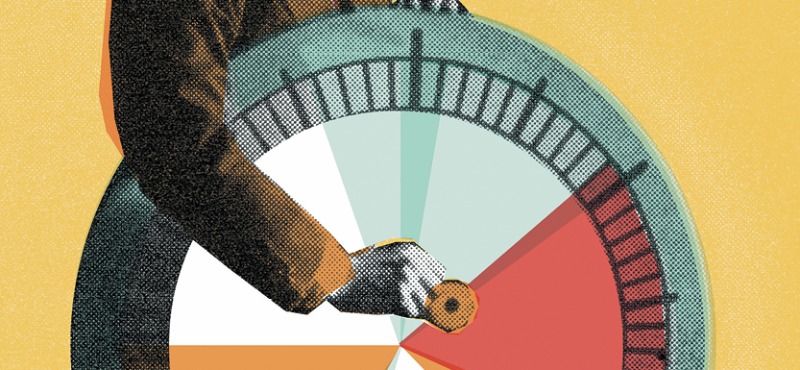
Man with brown suit jacket holds a wheel with different chance opportunities and the circle is in th
Brian Graham

K&L Gates LLP

December 22, 2016 12:00 AM

Technology employers well understand that the H-1B visa system is broken. It’s been broken since 2004, when the annual quota of H-1Bs plummeted from 195,000 to 65,000, leading to chronic shortages and implementation of a random “H-1B lottery” every April to determine which employees could work and which had to go home. The H-1B lottery has only aggravated the uncertainty for employers seeking to hire the best and brightest college graduates from our campuses.

The frustration level has grown to the point where the H-1B lottery is now the subject of a class action lawsuit. Numerous legislative efforts to restore the H-1B quota to pre-2004 levels have failed, largely over concerns about its impact on U.S. workers’ wages. These two interests are often portrayed as irreconcilable opposites: increasing the number of H-1Bs, the argument goes, would only further repress wages. Most technology employers counter that additional wage protections are irrelevant because the top-quality technology workers they hire are in such high demand that wages remain very competitive. A number of recent studies give support to both sides.

But wage protections and increased H-1Bs don’t have to be mutually exclusive. Perhaps the main problem with the H-1B is that U.S. Citizenship and Immigration Services (USCIS), the federal agency in charge of H-1B processing, isn’t doing enough to protect wages. Significantly enhanced wage protection is possible with relatively simple procedural changes in the way USCIS processes H-1B petitions.

“The Department of Labor, which sets most prevailing wage rates, uses a four-level wage system.”

USCIS regulations at 8 CFR 214.2(h)(11)(iii)(A)(2) authorize revocation of an H-1B petition upon notice if, among other things, the facts in the labor condition application (LCA) are not true and correct. The LCA is where the employer lists the correct prevailing wage rate for the H-1B worker. By law, employers are required to pay H-1B workers at or above this prevailing wage rate. The Department of Labor, which sets most prevailing wage rates, uses a four-level wage system. The lowest wage level, Level One, is reserved for entry-level, trainee, and intern positions. Qualified employees fall under Level Two or higher, which, as expected, corresponds to higher wage requirements.

The trouble is that USCIS isn’t routinely checking whether employers are using Level One wages for jobs that are not really entry-level, trainee, or intern positions. Such review, authorized by its own regulations, wouldn’t have to be time-consuming or complex; the employer need only show that the wage level is more likely than not correct. That can be as simple as providing a copy of the prevailing wage data used for the LCA, and if the employer is relying on a Level One wage, further proof showing that the position is truly entry-level could also be supplied.

A 2007 study by the Center for Immigration Studies claimed that using Level One wages was “by far the most significant reason for low prevailing wage claims using the OES data.” CIS pointed out in its study that “employers need only assert that a worker is in the Level One category … and pay according to that prevailing wage.”1 Although most technology employers never use Level One wages, they aren’t the only ones using the H-1B. Additional scrutiny of Level One wage-based LCAs would help reserve more H-1Bs for technology employers who pay higher wages, removing more of the uncertainty. It could also help remove the main obstacle to restoring the H-1B cap to its prior level of 195,000.

---------------------------------

1 John Miano, “Low Salaries for Low Skills: Wage and Skill Levels for H-1B Computer Workers” (CIS April 2007).

Related Articles

H-1B Planning for Fiscal Year 2019


by Lisa Koenig

Employers should be prepared to pivot.

Group of people sitting in wooden chairs watching a sand timer run out

The Global Employer: Strategies and Best Practices for an International Workforce


by Garfinkel Immigration Law Firm

Developing and retaining an international workforce is essential to competing in the global marketplace.

Black background with Earth in the center and employers surrounding the planet

Visa Options for Employees Who Lose the H-1B Lottery


by Kristal Ozmun and Stephen Yale-Loehr

Green Statue of Liberty with a cloudy sky

The Price of Admission


by Janice Zhou

States and the federal government are engaged in a pitched battle over immigration and refugee settlement—with the legal profession caught in the middle, taking fire from both sides.

Three black silhouettes, one of a father and two of children

Issue Spotting Guide for Assessing Inbound to U.S. Travel Issues


by Kathleen M. Peregoy

Essential guidance for management and HR on assessing U.S. travel and work visa issues to ensure immigration compliance and smooth workforce mobility.

Flight attendants and pilot silhouettes walk in the airport with construction in the back

H-1B Applications: Proactive Steps in 2018


by Brad J. Hendrick

Last year, USCIS received approximately 199,000 applications for the 85,000 H-1B visas allocated each year.

Man in red suit runs out of blue file organizer trying to avoid three men in blue suits chasing

The President’s Quiet Attacks on Lawful Employment-Based Immigration


by Michael P. Nowlan

H-1B RFEs with an image of a man on a card with an employment authorization card behind it

Trump and Immigration: Separating Truth from Fiction


by Harlan G. York

Deportations aren’t up, but the people who are being deported are more “newsworthy.”

American flag with a blue spotlight and a black background with a black wire fence in front of it

Stroock Partners with New York Lawyers for Public Interest to Develop Critical Guide for Nonprofits on Immigration Enforcement


by Stroock & Stroock & Lavan

Marked increases in immigration arrests, especially in and around courts, schools, places of worship, and health care facilities, have generated fear and uncertainty among immigrant communities and left many non-profit service providers questioning how to continue effectively assisting their immigrant clients.

Stroock Partners with New York Lawyers with American flag in the background and people in a room

Employers Must Soon Use Yet Another New I-9 Form


by Fisher Phillips

New document could be liability trap for unsuspecting employers.

Department of Homeland Security I-9 Form

Immigration Due Diligence in Mergers and Acquisitions


by Martha J. Schoonover and Nataliya Binshteyn Dominguez

An Overview

Five businesspeople walk into a conference building

What about the Legal Immigrants?


by Michael P. Nowlan

The difference between a Visa, H-1B, and a Permanent resident card

Is Time Running Out for DC’s Sanctuary City Law?


by Bryan Driscoll

The Capitol is battling the White House in a dangerous game.

DC sanctuary city law headline

Do I Really Need an Immigration Attorney? Key Factors to Consider


by Best Lawyers

Immigrating to the U.S. can be a complex and lengthy experience. In this article, Best Lawyers evaluates how an immigration attorney can help along the way.

Department of Homeland Security logo with American flag in the backdrop

Maximizing Your Chances of Approval with an Immigration Attorney


by Best Lawyers

Tips for choosing the right immigration attorney and navigating the complex path to citizenship.

View of Statue of Liberty with birds in backrop

Cost of Entry


by Best Lawyers

As naturalization fees increase, a local nonprofit provides financial relief for immigration

Close of the statue of liberty in red and dollar signs in the back

Trending Articles

2026 Best Lawyers Awards: Recognizing Legal Talent Across the United States


by Jamilla Tabbara

The 2026 editions highlight the top 5% of U.S. attorneys, showcase emerging practice areas and reveal trends shaping the nation’s legal profession.

Map of the United States represented in The Best Lawyers in America 2026 awards

Gun Rights for Convicted Felons? The DOJ Says It's Time.


by Bryan Driscoll

It's more than an administrative reopening of a long-dormant issue; it's a test of how the law reconciles the right to bear arms with protecting the public.

Firearms application behind jail bars

2026 Best Lawyers Awards in Canada: Marking 20 Years of Excellence


by Jamilla Tabbara

Honoring Canada’s most respected lawyers and spotlighting the next generation shaping the future of law.

Shining Canadian map marking the 2026 Best Lawyers awards coverage

Revealing the 2026 Best Lawyers Awards in Germany, France, Switzerland and Austria


by Jamilla Tabbara

These honors underscore the reach of the Best Lawyers network and its focus on top legal talent.

map of Germany, France, Switzerland and Austria

Best Lawyers 2026: Discover the Honorees in Brazil, Mexico, Portugal, South Africa and Spain


by Jamilla Tabbara

A growing international network of recognized legal professionals.

Map highlighting the 2026 Best Lawyers honorees across Brazil, Mexico, Portugal, South Africa and Sp

How to Sue for Defamation: Costs, Process and What to Expect


by Bryan Driscoll

Learn the legal standards, costs and steps involved when you sue for defamation, including the difference between libel and slander.

Group of people holding papers with speech bubbles above them

Build Your Legal Practice with Effective Online Networking


by Jamilla Tabbara

How thoughtful online networking supports sustained legal practice growth.

Abstract web of connected figures symbolizing online networking among legal professionals

Algorithmic Exclusion


by Bryan Driscoll

The Workday lawsuit and the future of AI in hiring.

Workday Lawsuit and the Future of AI in Hiring headline

Blogging for Law Firms: Turning Content into Client Connections


by Jamilla Tabbara

How law firms use blogs to earn trust and win clients.

Lawyer typing blog content on laptop in office

Reddit’s Lawsuit Could Change How Much AI Knows About You


by Justin Smulison

Big AI is battling for its future—your data’s at stake.

Reddit Anthropic Lawsuit headline

How to Choose a Good Lawyer: Tips, Traits and Questions to Ask


by Laurie Villanueva

A Practical Guide for Your First-Time Hiring a Lawyer

Three professional lawyers walking together and discussing work

The 2026 Best Lawyers Awards in Chile, Colombia and Puerto Rico


by Jamilla Tabbara

The region’s most highly regarded lawyers.

Map highlighting Chile, Colombia and Puerto Rico for the 2026 Best Lawyers Awards

Common-Law Marriage in Indiana: Are You Legally Protected?


by Laurie Villanueva

Understanding cohabitation rights and common-law marriage recognition in Indiana.

Married Indiana couple in their home

Why Jack Dorsey and Elon Musk Want to 'Delete All IP Law'


by Bryan Driscoll

This Isn’t Just a Debate Over How to Pay Creators. It’s a Direct Challenge to Legal Infrastructure.

Elon Musk and Jack Dorsey standing together Infront of the X logo

AI Tools for Lawyers: How Smithy AI Solves Key Challenges


by Jamilla Tabbara

Understand the features and benefits within the Best Lawyers Digital Marketing Platform.

Legal professional editing profile content with Smithy AI

Alimony Explained: Who Qualifies, How It Works and What to Expect


by Bryan Driscoll

A practical guide to understanding alimony, from eligibility to enforcement, for anyone navigating divorce

two figures standing on stacks of coins