Insight

2020 Vision

What Does Corporate Environmental Concern Look Like in 2020?

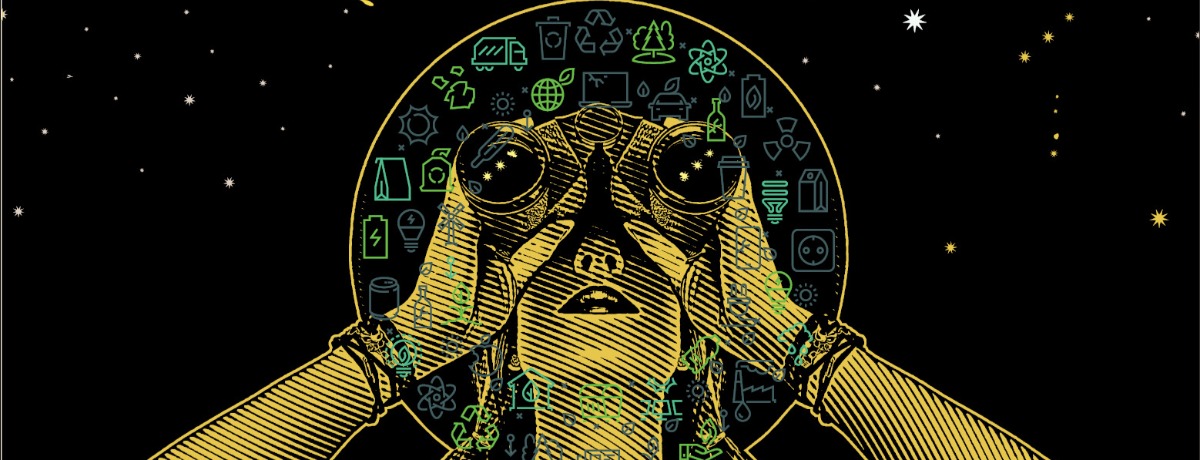
Woman with binoculars looks into the sky with symbols behind her head
SD

Sean Devlin

October 17, 2019 01:30 PM

The new year is just around the corner, and 2020 will see the further entrenchment of a world in which labor, quality of life, and environmental issues are major societal—and indeed corporate—concerns. Depending on who wins, the U.S. presidential election next year could bring about new policies that may guide companies in different directions in regards to sustainability. In many cases, large corporations have taken on sustainability goals that they’re aiming for a number of reasons to hit in 2020 and—depending on political and market influences over the next year—going forward.

Consider Coca-Cola. In 2015, the ubiquitous soft-drink giant established a series of goals across seven categories, aiming to “[drive] system-wide change beyond small operational improvements.” As of last year, Coke had successfully achieved some of its aims, but much work remained. Last year, the company reported that it had exceeded its goal of returning 100 percent of the water it uses to make its beverages back to the communities it came from; in 2017, it returned 150 percent. Coke’s strategy, it says, includes protecting the watersheds from which its water comes, providing infrastructure for safe water access, and providing water for productive use such as irrigation in farming. It also exceeded its goal of donating 1 percent of annual operating income back to local communities every year since 2015.

So far, though, Coke has yet to make progress on the share of its bottles that get recycled; it has been stuck at 59 percent since 2015, well below its desired 75 percent. With the election nearing, it’ll be interesting to see whether the stricter environmental policies championed by Democrats or looser ones backed by Republicans will most affect Coca-Cola’s sustainability actions going forward.

One major marketing component of corporate sustainability is the business’s environmental impact. What can be said by and about companies, particularly luxury brands, whose business model necessarily incorporates carbon emissions? Consider Carnival Cruise Line. The largest cruise company in terms of passengers carried annually, Carnival arranges its sustainability targets in three sectors: environmental, safety, and labor/social.

According to a report in Forbes, cruise ships are among the worst offenders in terms of environmental impact. Another study cited in Popular Science indicated that a person’s carbon footprint can increase threefold when on a cruise. How, then, can a company in the business of building and sailing these floating cities commit to making an environmental difference through sustainable practices?

"Hard-to-reach goals are important for a reason: If a company falls just short, they're still making an impact."

In its most recent sustainability report, released at the end of the 2018 fiscal year, Carnival said it achieved its goal of reducing its carbon footprint by 25 percent—three years ahead of schedule, no less. As part of that, Carnival in 2018 delivered the world’s first cruise ship powered by liquefied natural gas, both at sea and in port. As public attention regarding human influence on climate change increases, it remains to be seen whether cruise lines in general will need to up their environmental game to keep passengers onboard and profits healthy.

Another interesting study concerns Diageo, the British conglomerate that’s one of the globe’s largest producers of alcoholic beverages. Owner of Crown Royal, Johnnie Walker, and innumerable other brands, Diageo is notable because its products in many cases aren’t just spirits but cultural icons, readily identifiable with their regions of origin.

According to Diageo’s 2020 sustainability report for Guinness, it takes 65 liters of water and 175 grams of carbon dioxide to create one pint of the black stuff. The company says it’s aiming for 50 percent improvement in water efficiency and a 30 percent carbon-emissions reduction throughout its supply chain. However, one of Diageo’s sustainability goals goes beyond typical environmental targets: The company has a stated commitment to promoting “positive drinking.”

The ill effects of excess drinking are well known, and Diageo has aligned its aims with the United Nations’ Sustainable Development Goals mission of cutting problem drinking by 10 percent worldwide. Diageo and some of its larger competitors have also partnered to work with the International Alliance for Responsible Drinking. Among the IARD’s goals: strengthening marketing to more accurately warn of the dangers of alcohol, reducing drunk driving, and preventing underage drinking. Diageo’s sustainability goals paint a compelling picture because the company isn’t simply trying to make its products more environmentally responsible but to mitigate their social toll as well.

Corporate sustainability in all its guises has become a major factor in the way big companies behave. Consumers are more aware and educated than ever, so it’s important for companies at least to set goals that show they recognize the need to do their part to improve their workplaces, the processes through which they create their products, and the environment more broadly.

Achieving those stated ambitions isn’t even necessarily imperative. Hard-to-reach goals are important for a reason: If a company falls just short, it’s still making an impact. The attention paid to better labor practices and environmental and societal standards will only increase in the years ahead. Smart companies will look hard at how their sustainability goals will affect their public image—and their bottom line—going forward. Likewise, they’ll also be able to read the market, societal, and political influences that might pose challenges to these goals in the future.

Sean Devlin is a journalist and communications professional based in New York City. He's written for the New York Daily News, the Irish Echo, Brownstoner Magazine, and more. A 2015 graduate of the CUNY Graduate School of Journalism, Sean has extensive experience writing about real estate, business, arts and culture, and local news.


Use Best Lawyers to find a lawyer experienced in corporate, environmental and regulatory law to guide your business.


Related Articles

The Generals’ Next War


by Alison Torbitt and Gayatri Joshi

Businesses’ Sense of Corporate Social Responsibility Is Increasingly Driving Long-Term Growth. Here’s How General Counsel Can Best Confront CSR’s Numerous Challenges and Opportunities.

Desk with laptop and a notepad with glasses and a green grass background

9 Ways Lawyers Are Addressing Climate Change Through Environmental Law


by Best Lawyers

To combat climate change and protect depleting resources, Best Lawyers assesses how lawyers play a pivotal role in addressing ongoing environmental problems.

Animated sky polluted by smoke

A Climate Duty


by Samantha Daly and Lara Douvartzidis

Converging trends in Australia and the Netherlands: reasonable foreseeability in climate change law and other novel developments.

Giant dirt road filled with dust and smoke and a truck and steam pike

Easy Being Green


by Best Lawyers

Markus Deutsch discusses the impact of climate change on the firm and its clients.

Photo of Lawyers from Dolde Mayen & Partner

Motion Sustained


by Elise Scott, Madalyn Brown, and Bob DeMott

Corporate social responsibility isn’t just good for the planet—increasingly, it’s good for business, too.

Green and beige land with two people on each side and an icon of the earth with a green leaf

Hotter and More Intense


by Lori Tripoli

Multiple Category 5 hurricanes. Drought. Wildfires. Climate change isn’t just damaging the environment and our health. It’s impacting the bottom line.

Temperature increases on a scale causing iceberg to sink

Going Global


by Joseph K. Reinhart, Esq. and Meredith Odato Graham, Esq.

Expanding the scope of environmental review for the energy sector.

Land with two giant steam turnpikes with two purple triangles and two white triangles

Paris Agreement on Climate Change: Overview and Update


by Beatriz Paulo de Frontin and Márcio Pereira

An overview of the Paris Climate Agreement.

Cartoon brunette man looks at screen with data and super computers

U.S. Withdrawal from the Paris Agreement


by Violaine du Pontavice

What will be the future for the world’s climate issue?

Low blue temperature, green temperature with mid-level, and red temperature near the top

A Better Bottom Line


by Margaret Pierce

How Benefit Corporations are leading the charge to save the world.

Corporation sitting around a table working on plans for the future

Water Futures


by John Ettorre

By themselves, desalination, conservation, and system re-engineering won't solve our water puzzle. But together, they just might work.

Abstract spiral design representing the movement of water

US Commercial Litigation Trends for 2025


by Bryan Driscoll

As Business Priorities Evolve, So Too Does the Role of Litigation in the Corporate Playbook.

Two commercial litigation lawyers discuss the future of the practice

Colorado Cleans Up Toxic Drinking Water With New Mining Pollution Law


by Gregory Sirico

Landmark Environmental Legislation Took 25 Years

According to the Colorado Division of Reclamation, Mining and Safety, a government organization that

"Lawyer of the Year"


Lawyer poses for legal headshot in purple dress

Eva Davis

Corporate Law

Los Angeles, CA

2025

Treacherous Waters, Uncharted Territory


by Bryan Driscoll

Political shifts around the globe this year are forcing international law and business to navigate a more intricate compliance landscape

Man in suit with telescope stands on deserted boat

Critical Period


by Armelle Royer and Maryne Gouhier

How the green-energy raw materials chase is rewriting geopolitics

Overhead shot of mineral extraction plant

Trending Articles

How to Sue for Defamation: Costs, Process and What to Expect


by Bryan Driscoll

Learn the legal standards, costs and steps involved when you sue for defamation, including the difference between libel and slander.

Group of people holding papers with speech bubbles above them

The Family Law Loophole That Lets Sex Offenders Parent Kids


by Bryan Driscoll

Is the state's surrogacy framework putting children at risk?

family law surrogacy adoption headline

Best Lawyers 2026: Discover the Honorees in Brazil, Mexico, Portugal, South Africa and Spain


by Jamilla Tabbara

A growing international network of recognized legal professionals.

Map highlighting the 2026 Best Lawyers honorees across Brazil, Mexico, Portugal, South Africa and Sp

Algorithmic Exclusion


by Bryan Driscoll

The Workday lawsuit and the future of AI in hiring.

Workday Lawsuit and the Future of AI in Hiring headline

Unenforceable HOA Rules: What Homeowners Can Do About Illegal HOA Actions


by Bryan Driscoll

Not every HOA rule is legal. Learn how to recognize and fight unenforceable HOA rules that overstep the law.

Wooden model houses connected together representing homeowners associations

Holiday Pay Explained: Federal Rules and Employer Policies


by Bryan Driscoll

Understand how paid holidays work, when employers must follow their policies and when legal guidance may be necessary.

Stack of money wrapped in a festive bow, symbolizing holiday pay

Reddit’s Lawsuit Could Change How Much AI Knows About You


by Justin Smulison

Big AI is battling for its future—your data’s at stake.

Reddit Anthropic Lawsuit headline

US Tariff Uncertainty Throws Canada Into Legal Purgatory


by Bryan Driscoll

The message is clear: There is no returning to pre-2025 normalcy.

US Tariff Uncertainty Throws Canada Into Legal Purgatory headline

Florida Rewrites the Rules on Housing


by Laurie Villanueva

Whether locals like it or not.

Florida Rewrites the Rules on Housing headline

Alimony Explained: Who Qualifies, How It Works and What to Expect


by Bryan Driscoll

A practical guide to understanding alimony, from eligibility to enforcement, for anyone navigating divorce

two figures standing on stacks of coins

The 2026 Best Lawyers Awards in Chile, Colombia and Puerto Rico


by Jamilla Tabbara

The region’s most highly regarded lawyers.

Map highlighting Chile, Colombia and Puerto Rico for the 2026 Best Lawyers Awards

UnitedHealth's Twin Legal Storms


by Bryan Driscoll

ERISA failures and shareholder fallout in the wake of a CEO’s death.

United healthcare legal storm ceo murder headline

Can a Green Card Be Revoked?


by Bryan Driscoll

Revocation requires a legal basis, notice and the chance to respond before status can be taken away.

Close-up of a U.S. Permanent Resident Card showing the text 'PERMANENT RESIDENT'

New Texas Family Laws Transform Navigating Divorce, Custody


by Bryan Driscoll

Reforms are sweeping, philosophically distinct and designed to change the way families operate.

definition of family headline

Why Skechers' $9.4B Private Equity Buyout Sparked Investor Revolt


by Laurie Villanueva

Shareholder anger, a lack of transparency and a 'surprising' valuation.

Skechers shareholder lawsuit headline

What Is the Difference Between a Will and a Living Trust?


by Bryan Driscoll

A practical guide to wills, living trusts and how to choose the right plan for your estate.

Organized folders labeled “Wills” and “Trusts” representing estate planning documents