
Insight

The Trump Administration’s Attack on Legal Immigration

The adjudication strategy achieved the change the Trump administration wanted to make to the H-1B program without having to amend the regulations.

Businesswoman sits on suitcase with a filtered image of the world
Bennett R. Savitz

Bennett R. Savitz

January 31, 2018 01:54 PM

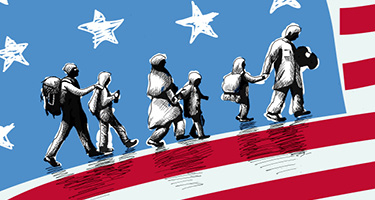
President Trump campaigned heavily on an anti-immigration platform. While there is currently a great deal of focus on illegal immigration and specifically the impending deadline for the Deferred Action for Childhood Arrivals (DACA) program, the Trump administration has made equally significant changes to curtail legal immigration that have largely gone under the radar. The main focus of this attack on legal immigration surrounds the H-1B program, which allows U.S. employers to hire 85,000 foreign professionals each year. This remarkably small number of jobs has created a disproportionately large backlash against the entire program by the Trump administration.

Since the H-1B category is both statutory and regulatory, much of the program can’t be altered without congressional action. However, the Trump administration has taken steps to make it as difficult as possible for employers to use the program. The demand for the 85,000 H-1Bs far exceeds the supply, so there is a lottery every year to determine which employers will have their applications adjudicated. Once the 85,000 cap has been reached, the rest of the applications are rejected and returned unadjudicated. Thus far, the lottery has been truly random, but the Trump administration wants to change the random lottery system to a process that selects applications for employers willing to pay the highest wages for the highest skill level positions.

In order to try to combat the random lottery, the Trump administration implemented a strategy regarding the way the Immigration Service would adjudicate H-1B applications. A new phenomenon cropped up with last year’s H-1B applications: the Immigration Service issued requests for evidence (RFEs) for H-1B petitions where either the employer chose an entry-level wage, claiming that it was not appropriate given the complexity of the duties described in the H-1B filing, or questioning whether a position was professional because the selection of an entry-level wage, along with the proposed job duties and requirements, purportedly indicated that the position was not sufficiently complex to meet the professional requirements for an H-1B. The RFEs were issued in cases covering a wide array of occupations, including software developers, computer systems analysts, engineers (civil, mechanical, industrial, etc.), dentists, teachers, physicians, and accountants/auditors, all of which had routinely been approved every year since the H-1B category was created in 1990. Moreover, many of these cases were later denied despite responses that addressed all of the issues raised in the RFEs.

Thus, the adjudication strategy achieved the change the Trump administration wanted to make to the H-1B program without having to amend the regulations.

The Trump administration is now turning its attention to other legal immigration categories it wants to curtail, such as work authorization for certain spouses of people with green card cases languishing in multi-year backlogs, work authorization for foreign students who graduate from a U.S. university with a degree in a science, technology, engineering, or math (STEM) field, and limiting or eliminating many of the family immigration categories that have served to reunite families for decades.

While we can debate the merits of the various legal immigration categories the Trump administration is attacking, there is no denying that the Trump administration is employing a deliberate, comprehensive strategy to curtail legal immigration to the extent possible without changing the laws themselves. For those who still believe that the United States should continue to be a nation of immigrants, these recent developments should be alarming.

----------------------------------

Bennett Savitz has practiced exclusively in the area of immigration law since 1994 and founded Savitz Law Offices (ImmigrationOptions.com) in 2000. He has served as the chapter chair of the New England Chapter of the American Immigration Lawyers Association (AILA) as well as on several local and national AILA committees, helping shape policies and procedures for the entire Immigration Bar. He is a frequent speaker and writer on various aspects of immigration law. Since 2008, Bennett Savitz has been selected as one of Boston’s Best Lawyers in immigration law by The Best Lawyers of America©.


Related Articles

The Price of Admission


by Janice Zhou

States and the federal government are engaged in a pitched battle over immigration and refugee settlement—with the legal profession caught in the middle, taking fire from both sides.

Three black silhouettes, one of a father and two of children

Loophole or Fatal Flaw?


by Joseph Begonis

Canada's Best Lawyers share their thoughts on the Safe Third Country Agreement

Line cues with the words "Immigration" written on them and a blue and red filter

Chain Migration Solutions Desperately in Search of a Problem


by Aaron C. Hall

The White House insists that any new law giving Dreamers a permanent place in the United States also stop what it refers to as the chain migration problem.

Family with red and blue background with six stick figures

Immigration Compliance at the Worksite


by Fausta M. Albi

Construction workers working on scaffolding with a sunset in the background

Employment-based U.S. Immigration


by Matthew T. Phillips

A look back at 2017 and what to expect in 2018.

Man stands in the one in 2018 as a silhouette with a blue sky with white clouds

Buy American, Hire American Takes Its Toll on Business Immigration


by Rosanna M. Fox and Karen Gabriel Moss

USCIS is considering the reinterpretation of “may grant” language contained in the statute deeming it discretionary rather than mandatory.

Red data bars in a line on a blue background with a blue hand pressing down on a red bar

The Stealth Assault on Work-Related Immigration


by Ester Greenfield

Man blurred fiddles with computer with a long line of computers and a yellow and red filter

H-1B Applications: Proactive Steps in 2018


by Brad J. Hendrick

Last year, USCIS received approximately 199,000 applications for the 85,000 H-1B visas allocated each year.

Man in red suit runs out of blue file organizer trying to avoid three men in blue suits chasing

Interagency Cooperation: Raising the Bar for Immigration Adherence


by Kathleen Campbell Walker

Doctor sits around a table and discusses with nurses with one red and three blue blocks overlayed

Trump Administration’s Termination of DACA, TPS, and H-4 EAD Immigration Programs Could Leave Employers in a Lurch


by Ann Massey Badmus

Several immigration programs that have authorized over a million immigrant workers are expected to end in 2018 and 2019.

Silhouettes of people on a white background with a blue global map of the world

Immigration Worksite Compliance Issues for Employers


by Maria I. Casablanca

Immigration worksite enforcement has become a balancing act between verifying eligibility to work and avoiding discrimination; thus it has merged two fields of law: labor and employment law with immigration and nationality law.

Green background with school supplies and a white paper with a picture of a person with a magnifying

Smart Policy and Compassion: Protecting Dreamers


by David P. Berry

Why it makes sense to protect the Dreamers.

Silhouette of the Statue of Liberty with the American flag flying high in the background

H-1B Planning for Fiscal Year 2019


by Lisa Koenig

Employers should be prepared to pivot.

Group of people sitting in wooden chairs watching a sand timer run out

The President’s Quiet Attacks on Lawful Employment-Based Immigration


by Michael P. Nowlan

H-1B RFEs with an image of a man on a card with an employment authorization card behind it

Trump and Immigration: Separating Truth from Fiction


by Harlan G. York

Deportations aren’t up, but the people who are being deported are more “newsworthy.”

American flag with a blue spotlight and a black background with a black wire fence in front of it

Dilip Patel, 2018 "Lawyer of the Year" for Immigration Law


by Nicole Ortiz

Dilip Patel of Dilip Patel Law Firm was named 2018 "Lawyer of the Year" in Tampa for Immigration Law.

Immigration Lawyer of the Year Dilip Patel of Dilip Patel Law Firm

Trending Articles

2026 Best Lawyers Awards: Recognizing Legal Talent Across the United States


by Jamilla Tabbara

The 2026 editions highlight the top 5% of U.S. attorneys, showcase emerging practice areas and reveal trends shaping the nation’s legal profession.

Map of the United States represented in The Best Lawyers in America 2026 awards

Gun Rights for Convicted Felons? The DOJ Says It's Time.


by Bryan Driscoll

It's more than an administrative reopening of a long-dormant issue; it's a test of how the law reconciles the right to bear arms with protecting the public.

Firearms application behind jail bars

2026 Best Lawyers Awards in Canada: Marking 20 Years of Excellence


by Jamilla Tabbara

Honoring Canada’s most respected lawyers and spotlighting the next generation shaping the future of law.

Shining Canadian map marking the 2026 Best Lawyers awards coverage

Revealing the 2026 Best Lawyers Awards in Germany, France, Switzerland and Austria


by Jamilla Tabbara

These honors underscore the reach of the Best Lawyers network and its focus on top legal talent.

map of Germany, France, Switzerland and Austria

Best Lawyers 2026: Discover the Honorees in Brazil, Mexico, Portugal, South Africa and Spain


by Jamilla Tabbara

A growing international network of recognized legal professionals.

Map highlighting the 2026 Best Lawyers honorees across Brazil, Mexico, Portugal, South Africa and Sp

How to Sue for Defamation: Costs, Process and What to Expect


by Bryan Driscoll

Learn the legal standards, costs and steps involved when you sue for defamation, including the difference between libel and slander.

Group of people holding papers with speech bubbles above them

Build Your Legal Practice with Effective Online Networking


by Jamilla Tabbara

How thoughtful online networking supports sustained legal practice growth.

Abstract web of connected figures symbolizing online networking among legal professionals

Algorithmic Exclusion


by Bryan Driscoll

The Workday lawsuit and the future of AI in hiring.

Workday Lawsuit and the Future of AI in Hiring headline

Blogging for Law Firms: Turning Content into Client Connections


by Jamilla Tabbara

How law firms use blogs to earn trust and win clients.

Lawyer typing blog content on laptop in office

Reddit’s Lawsuit Could Change How Much AI Knows About You


by Justin Smulison

Big AI is battling for its future—your data’s at stake.

Reddit Anthropic Lawsuit headline

How to Choose a Good Lawyer: Tips, Traits and Questions to Ask


by Laurie Villanueva

A Practical Guide for Your First-Time Hiring a Lawyer

Three professional lawyers walking together and discussing work

The 2026 Best Lawyers Awards in Chile, Colombia and Puerto Rico


by Jamilla Tabbara

The region’s most highly regarded lawyers.

Map highlighting Chile, Colombia and Puerto Rico for the 2026 Best Lawyers Awards

Common-Law Marriage in Indiana: Are You Legally Protected?


by Laurie Villanueva

Understanding cohabitation rights and common-law marriage recognition in Indiana.

Married Indiana couple in their home

Why Jack Dorsey and Elon Musk Want to 'Delete All IP Law'


by Bryan Driscoll

This Isn’t Just a Debate Over How to Pay Creators. It’s a Direct Challenge to Legal Infrastructure.

Elon Musk and Jack Dorsey standing together Infront of the X logo

AI Tools for Lawyers: How Smithy AI Solves Key Challenges


by Jamilla Tabbara

Understand the features and benefits within the Best Lawyers Digital Marketing Platform.

Legal professional editing profile content with Smithy AI

Alimony Explained: Who Qualifies, How It Works and What to Expect


by Bryan Driscoll

A practical guide to understanding alimony, from eligibility to enforcement, for anyone navigating divorce

two figures standing on stacks of coins