Insight

3 Strategies to Frame Your Medical Malpractice Case

For success in any trial, jury selection and case framing are key.

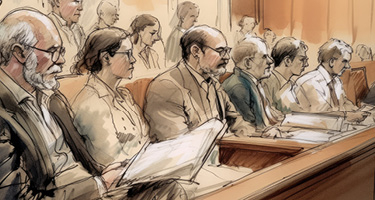
Diverse jury stares out at courtroom with a filter over the jury
LB

Lloyd Bell

November 14, 2018 11:35 AM

Jury selection is the single most important phase of trial. Securing an open and honest jury can be challenging, but failure to do so often makes the likelihood of obtaining a favorable verdict nonexistent. It is critical to frame a case through voir dire questions, not only to help reveal favorable and unfavorable jurors, but also to set the favorable jurors on a cognitive path that most closely aligns with the values of your case and puts you in the best position to obtain a just verdict.

Summary prepared by
  • For practicing lawyers: Jury selection shapes verdict outcomes; framing your case effectively during voir dire is crucial.
  • Understand emotional triggers and system failures within the litigation scope to sway the jury's perception.
  • Questions crafted around themes like 'Do Your Job' and 'Know Your Limits' connect jurors to your case narrative.
  • Prepare diligently on case frames for all trial phases to guide the jury toward a favorable decision for your client.

The term “framing” is often tossed around by law professionals but can mean different things to different people. Framing can be used interchangeably with words such as “heuristic,” “schema,” and “theme.” In his book, Case Framing, Rhode Island trial lawyer Mark Mandell describes a case frame as “the fundamental principle that gives meaning to a case.” He identifies two essential qualities of a case frame—first it must be relevant to the facts of the case, and second, it must be a principle that has near universal application to society.

How then do legal professionals frame the jury during voir dire to ensure a plaintiff has the best chance of receiving a favorable verdict?

Before addressing how to effectively frame a jury, it’s important to recognize that experienced defense counsel also attempts to frame the jury against the plaintiff. It’s common for defense counsel to ask some version of this question: How many people think that just because a plaintiff has filed a lawsuit, she is entitled to get some money? By asking this seemingly innocuous question, counsel is communicating several negative case frames—this is a frivolous lawsuit, she’s out to get money—as a counter to whatever beneficial frames were previously put in place for the plaintiff.

To frame the jury during voir dire, you must first identify emotional triggers, what Mark Mandell refers to as the “I just can’t get over issues,” in the case. For example, a case may involve an on-call doctor who did not care enough for his patient to come to their bedside in a timely manner when called. The frame is then a medical professional who puts his own interests above those of his patients. This may lead to the following voir dire questions.

  • How many folks have been to see a doctor in the past year?
  • How many folks think that the level of care you receive from doctors today has gotten better than the care you received from doctors 20 years ago? How many think the care has gotten worse? Stayed the same?

Ideally, the jury will then consider their own experience with a doctor and move into alignment with the plaintiff who also went to the doctor. Not only do trial attorneys learn valuable information about the juror’s personal experience by asking these questions, but they are also framing the jury in a way that causes them to focus on the defendant doctor. This while exploring feelings around medical professionals not caring as much about patients now in the age of managed care as they did in the past.

Do Your Job

One of the most powerful case frames a trial lawyer can implement is Do Your Job. It doesn’t matter what profession the defendant is in—truck driver, safety manager, or a neurosurgeon—it is a universal principle that everyone must do their job. When you have a radiologist, for example, that misreads a CT image and fails to note a blood clot in the brain, on the basest level he did not do his job. During voir dire, you’ll want to begin framing the jury by introducing the Do Your Job frame through your questions.

System Failure

Another important, perhaps most important, case frame is System Failure. It’s common for jurors to forgive simple mistakes like failing to look in the right direction at the right time, or in a medical malpractice case, nicking an organ with the scalpel or over-tightening a screw. They’ll often tend to fall back on the idea that “everyone makes mistakes.” Jurors are less forgiving, however, if they perceive there are widespread system failures that endanger not just the plaintiff, but every other patient as well. For example, a system failure might be a hospital lacking adequate policies and procedures to ensure proper hand-off communications during nursing shift changes, so that critical information is not passed along and the patient, in turn, suffers harm.

Know Your Limits

Know Your Limits is another powerful case frame that has application in all types of cases. In medical malpractice cases specifically, it is increasingly common to see family care physicians working as hospitalists, gatekeepers at hospitals who admit patients from the emergency department to the mailroom floor. In my own experience, these hospitalists often do not have the neurological training to recognize stroke signs and symptoms, which can have disastrous consequences for the patient. Know Your Limits can be an effective case frame to underscore the importance of calling for a specialist consult when a patient shows neurological signs consistent with a stroke. In a trucking case, where the defendant driver is accused of driving while fatigued, the Know Your Limits frame might revolve around knowing when to pull over and rest. Again, the Know Your Limits frame has universal application and will resonate with just about every potential juror.

In the end, success at trial is a function of the preparation that takes place long before you show up to trial. It is critical to put in the work to identify the case frames for all phases of the trial, liability, and damages. Once these case frames are identified, carefully craft questions for voir dire to introduce chosen frames and set the jury down the intended path, ultimately leading to a just verdict for your client.

-------------------

With more than 25 years of legal experience, Lloyd Bell has built a sterling courtroom record and recovered millions of dollars for medical malpractice victims. A veteran of the U.S. Army JAG Corps, Bell founded his own law firm in 1999, and he is consistently recognized as one of the top attorneys in his field. In 2018, Bell Law Firm was recognized as Personal Injury Litigation Team of the Year by The Daily Report, the leading source of legal news in Atlanta.



Related Articles

Colorado’s 2026 Water Rights Battles


by Bryan Driscoll

A new era of conflict begins.

Colorado Water Rights 2026: A New Era of Conflict headline

UnitedHealth's Twin Legal Storms


by Bryan Driscoll

ERISA failures and shareholder fallout in the wake of a CEO’s death.

United healthcare legal storm ceo murder headline

Supreme Court Opens New Door for Personal Injury Claims Under RICO


by Bryan Driscoll

The litigation landscape is rapidly shifting

Personal injury RICO claims marijuana hed

"Lawyer of the Year"


Man in suit and tie smiling for professional headshot

Dylan D. Rudolph

Litigation - ERISA

San Francisco, CA

2025

The Litigation Finance Mass Tort Gold Rush


by Justin Smulison

Third-party litigation funding is transforming mass torts, propelling the high-risk area into a multi-billion-dollar industry

Gold coins with data chart backdrop

Building a Greener Future on Unsolid Ground


by William S. Thomas

As climate change only intensifies, natural disasters are becoming more frequent and shifting how construction legal professionals conduct litigation.

Mutli-level house in the process of being built

ERISA Reaches Its Turning Point


by Bryan Driscoll

ERISA litigation and the laws surrounding are rapidly changing, with companies fundamentally rewriting their business practices.

Beach chair and hat in front of large magnify glass

IN PARTNERSHIP

Civil Litigation: How Trial Lawyers’ Efforts Help Communities


by Esquire Bank

There are many upfront costs when trying cases on a contingency fee model. However, Reza Torkzadeh is willing to fight to get the justice his clients deserve.

Civil case attorney, Reza Torkzadeh of TorkLaw

IN PARTNERSHIP

Trial Lawyers Fight to Protect Individuals from Abuse


by Esquire Bank

With Esquire Bank's financial support, Elise Sanguinetti was able to challenge and end the Forced Arbitration Act. Her legislation continues to help other trial lawyers attain justice for abuse survivors.

Trial attorney, Elise R. Sanguinetti shapes laws such as the Ending Forced Arbitration Act

IN PARTNERSHIP

Intellectual Property Audit: General Guide


by Vincent J. Allen

Man on his phone clicks an app with different silver cogs and on green cog

Key Developments and Trends in U.S. Commercial Litigation


by Justin Smulison

Whether it's multibillion-dollar water cleanliness verdicts or college athletes vying for the right to compensation, the state of litigation remains strong.

Basketball sits in front of stacks of money

IN PARTNERSHIP

Dedicated Advisors and Advocates


by John Fields

Best Lawyers recipient Joseph F. Brophy continually instills confidence in his clients, representing a wide range of individuals and businesses in Austin.

Man in suit posing for lawyer headshot

IN PARTNERSHIP

Coffey Burlington: A Culture of Excellence


by John Fields

Coffey Burlington, a Florida law firm poses for picture

IN PARTNERSHIP

Taking an Important Case to Trial: Jury Research


by Steven F. Molo and Sara Margolis

MoloLamken LLP partners Steven Molo and Sara Margolis discuss a critical step in preparing for high-stakes trials: jury research.

A Watercolor Illustration of Twelve Jurors in a Courtroom

Combating Nuclear Verdicts: Empirically Supported Strategies to Deflate the Effects of Anchoring Bias


by Sloan L. Abernathy

Sometimes a verdict can be the difference between amicability and nuclear level developments. But what is anchoring bias and how can strategy combat this?

Lawyer speaking in courtroom with crowd and judge in the foreground

IN PARTNERSHIP

The Immeasurable Impact of Advocacy


by Justin Smulison

Burg Simpson founder Michael S. Burg discusses how the firm’s results transcend the courtroom to improve life for consumers and professionals nationwide.

Lawyer posing in a checker suit

Trending Articles

The Family Law Loophole That Lets Sex Offenders Parent Kids


by Bryan Driscoll

Is the state's surrogacy framework putting children at risk?

family law surrogacy adoption headline

Algorithmic Exclusion


by Bryan Driscoll

The Workday lawsuit and the future of AI in hiring.

Workday Lawsuit and the Future of AI in Hiring headline

Best Lawyers 2026: Discover the Honorees in Brazil, Mexico, Portugal, South Africa and Spain


by Jamilla Tabbara

A growing international network of recognized legal professionals.

Map highlighting the 2026 Best Lawyers honorees across Brazil, Mexico, Portugal, South Africa and Sp

Unenforceable HOA Rules: What Homeowners Can Do About Illegal HOA Actions


by Bryan Driscoll

Not every HOA rule is legal. Learn how to recognize and fight unenforceable HOA rules that overstep the law.

Wooden model houses connected together representing homeowners associations

Holiday Pay Explained: Federal Rules and Employer Policies


by Bryan Driscoll

Understand how paid holidays work, when employers must follow their policies and when legal guidance may be necessary.

Stack of money wrapped in a festive bow, symbolizing holiday pay

Reddit’s Lawsuit Could Change How Much AI Knows About You


by Justin Smulison

Big AI is battling for its future—your data’s at stake.

Reddit Anthropic Lawsuit headline

Florida Rewrites the Rules on Housing


by Laurie Villanueva

Whether locals like it or not.

Florida Rewrites the Rules on Housing headline

US Tariff Uncertainty Throws Canada Into Legal Purgatory


by Bryan Driscoll

The message is clear: There is no returning to pre-2025 normalcy.

US Tariff Uncertainty Throws Canada Into Legal Purgatory headline

Alimony Explained: Who Qualifies, How It Works and What to Expect


by Bryan Driscoll

A practical guide to understanding alimony, from eligibility to enforcement, for anyone navigating divorce

two figures standing on stacks of coins

UnitedHealth's Twin Legal Storms


by Bryan Driscoll

ERISA failures and shareholder fallout in the wake of a CEO’s death.

United healthcare legal storm ceo murder headline

Can a Green Card Be Revoked?


by Bryan Driscoll

Revocation requires a legal basis, notice and the chance to respond before status can be taken away.

Close-up of a U.S. Permanent Resident Card showing the text 'PERMANENT RESIDENT'

The 2026 Best Lawyers Awards in Chile, Colombia and Puerto Rico


by Jamilla Tabbara

The region’s most highly regarded lawyers.

Map highlighting Chile, Colombia and Puerto Rico for the 2026 Best Lawyers Awards

New Texas Family Laws Transform Navigating Divorce, Custody


by Bryan Driscoll

Reforms are sweeping, philosophically distinct and designed to change the way families operate.

definition of family headline

Why Skechers' $9.4B Private Equity Buyout Sparked Investor Revolt


by Laurie Villanueva

Shareholder anger, a lack of transparency and a 'surprising' valuation.

Skechers shareholder lawsuit headline

What Is the Difference Between a Will and a Living Trust?


by Bryan Driscoll

A practical guide to wills, living trusts and how to choose the right plan for your estate.

Organized folders labeled “Wills” and “Trusts” representing estate planning documents

How Far Back Can the IRS Audit You?


by Bryan Driscoll

Clear answers on IRS statutes of limitations, recordkeeping and what to do if you are under review.

Gloved hand holding a spread of one-hundred-dollar bills near an IRS tax document