Insight

Helpful Hints & Avoidable Mistakes

I’ve picked up a lot in the courtroom in five decades of practice. Here are some strategies, tips and other pointers to help make your trial experience smoother—and successful.

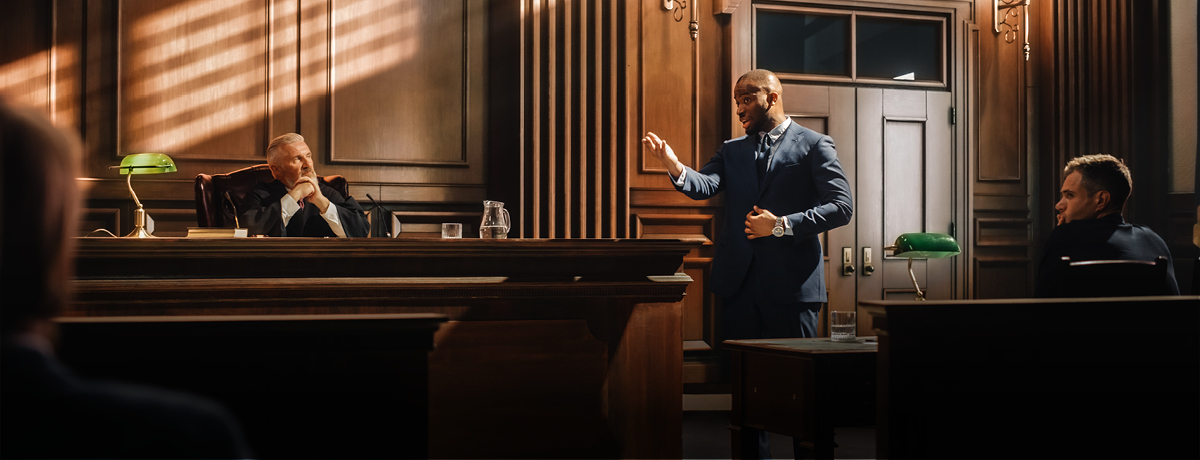
Frank Branson trying a personal injury case in a court setting
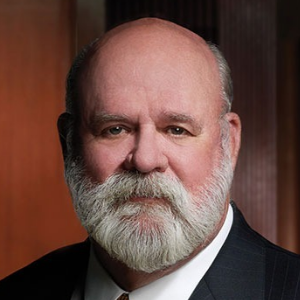
Frank L. Branson

Frank L. Branson

March 31, 2022 09:00 AM

ACROSS MORE THAN five decades of practice, I’ve learned some helpful trial tips and strategies, many of them firsthand in the courtroom, that have proven important at one time or another. What follows is by no means an exhaustive list but rather a collection of simple suggestions you can put to work immediately.

For anyone preparing to step into the courtroom, it’s often best to hire a lawyer who has the experience and preparation habits to put these strategies into practice.

Preparation, Preparation, Preparation

It’s the key to being successful at trial. Intensive prep—working full days and weekends—must start well in advance of the trial, far enough out that you’ll be certain to be ready.

The time you need to properly prepare a case for trial obviously depends on the size and nature of the case—the number of witnesses, the complexity of the subject matter, the anticipated legal issues at hand and plenty more—but it’s always better to start early than to leave it for the last minute. Unexpected things will always come up on the eve of trial that will eat into the amount of time you thought you had. Get ahead of the curve by starting early.

If you’re preparing to retry a case, keep in mind that you don’t remember it as well as you think you do. Often, months or years have passed since the original trial. You’ve forgotten more than you realize. My tip: Start your prep work early and plan to attack it every bit as thoroughly as you did the first time.

How the Jury Sees You, Your Client, the Witnesses and Your Case

The jury needs to like and respect both you and your client. Constantly fussing with the judge will usually hurt your case. Even if you’re winning objections, the jury might not understand and may not like it. Be sure you really need that objection before you make it.

Make sure as well that your client and witnesses cannot be impeached on veracity. I do not remember ever seeing a lawyer win a trial in which his or her witnesses were perceived as untruthful. In addition, all your witnesses and your client must be aware of the motions in limine so there’s no wrangling in front of the jury about inappropriate testimony.

Screen your plaintiffs. Don’t take on a client you do not believe and don’t like, even if it’s the judge’s nephew. Jurors can sense when you’re not onboard with your client, and it never serves them or you well.

Do not gild the lily. The facts and damages in your case are what they are. Use them to put the case’s best foot forward without overstating it. A lot of drama over a small injury generally doesn’t work; your approach needs to be commensurate with the specific injuries.

Finally, a lesson learned the hard way: When making your jury argument, I recommend always fully opening. If not, defense counsel may elect not to argue, in which case the judge has the option to deny your closing argument, at least in Texas.

Jury Selection Tips

The key to effective voir dire is to get jury panel talking. For them to talk, they must like you and trust you enough to share. If you begin a voir dire by telling the panel you’re trying to get a “fair jury” and then work hard to disqualify a potential defendant juror, the rest of the panel will see that, and your voir dire might not go as well as you had hoped.

It can be better to tell the jury that it’s necessary to ask questions to see if they possess any relevant biases and explaining that we all have biases. For example, my grandmother always fed me castor oil; therefore, I’m biased against castor oil. Be careful of stereotyping panel members. In his day, Clarence Darrow was fond of saying, “For a lawyer whose client is in the dock, it would be malpractice for that lawyer to strike an Irishman.” As great a lawyer as he was, I think the process of jury selection has improved considerably since Mr. Darrow’s day.

Handling Witnesses

All depositions ought to be videotaped. Sometimes that’s impractical for one reason or another, but if you can’t tape them all, be sure at least to tape all depositions of experts, in particular those of physicians and engineers. You never know when an expert will try to change his or her opinion—or get hit by the proverbial bus. Neither is welcome from the lawyer’s standpoint. A taped deposition gives you options.

Some mistakes to avoid: Don’t get too aggressive with live witnesses from the get-go; start out pleasantly with all of them. Give the jurors a chance to get to know the witness. Let the witness throw rocks first. Try not to start a cross-examination angry either, even if the witness was an ass at the deposition.

If a witness was aggressive at the deposition, it helps to use part of his or her video deposition when questioning other witnesses before the aggressive witness takes the stand. This will give you more leeway with the jury in dealing with the potentially problematic witness.

Before impeaching an adverse expert, consider first whether you need to do so. Impeachment is not the only useful and productive purpose of cross-examination. A well-planned and executed cross-examination can potentially accomplish far more than simply discrediting the testimony of the defendant’s expert—and the defense.

Occasionally you can get the expert to modify or reverse his or her opinions wholesale. Artful, precise questioning can often extract concessions and favorable collateral opinions from the opponent’s expert. You may also establish that, given the particular facts and circumstances of your case, the expert’s opinions aren’t harmful. In this instance, there’s no need to impeach a witness who has been rendered, at most, irrelevant. You can save the thunder for another occasion, and the court and jury will appreciate your giving back the time.

Courtroom Tips

Be sure your clients and witnesses are dressed appropriately for the occasion. This doesn’t necessarily mean they must wear a suit and tie, but it does mean that very casual attire and loud jewelry should be left at home.

Make sure you take the time to lay the proper predicate for your demonstrative aids and there are no other admissibility problems. Nothing derails an otherwise effective witness examination like having to duke it out with opposing counsel in front of the jury over the use of demonstrative aids or admissibility of other evidence. Have audiovisual technical support professionals visit the courtroom pretrial to ensure that everything you need works properly and to check for practical concerns like making sure the demonstrative aid fits behind the rail of the courtroom.

Be yourself in the courtroom. Juries don’t like split personalities from either lawyers or witnesses. When dealing with your firm’s employees in the courtroom and around the courthouse, treat them with the same kindness as you would if they were jurors. Should a juror walk by you in the hall while you chew out an employee, the jury will sour quickly.

Juror comfort goes a long way. Use the time you need for argument or witness examinations, but consider the jury’s feelings in terms of the length of those aspects of the trial. Jurors who need a break are, at minimum, not fully listening to your case; at worst, they’re mad at you about it. If the court asks how much longer you need with a witness, give a time you can meet and do not exceed it.

If the court will allow, agree with the other side to provide the jury with sodas and water. It keeps jurors alert and happier. Splitting the cost of their lunches with your opponent helps, too.

Conclusion

Preparation and critical thinking can help you avoid many land mines during a trial. Be yourself, believe in your case and your client, and the jury should come along with you.

Frank Branson has been trying personal injury lawsuits since 1969. He has been fortunate to receive a number of honors for his ethics, professionalism and capability in the courtroom, resulting in recoveries for many deserving clients. He has also been President of the local ABOTA chapter and been inducted into the International Academy of Trial Lawyers and the International Society of Barristers. His firm recently tried a product liability lawsuit where the jury awarded $242 million, which was reduced by the Court of Appeals to $200 million, and settled to the satisfaction of all parties while pending in the Supreme Court of Texas. He and his wife, Debbie, have practiced law together for 40 years and still very much enjoy trying lawsuits and representing clients in the courtroom.

Related Articles

IN PARTNERSHIP

Six Tips for a Successful Mediation


by Judge Michael E. Riley and Pullman & Comley

Mediation encourages open dialogue and allows parties to express their concerns, fostering a collaborative atmosphere to reach resolutions efficiently.

Two animated figures with puzzle piece speech bubbles

IN PARTNERSHIP

Proving Negligence in a South Carolina Personal Injury Case


by Wyche

In South Carolina, as in other states, there are specific elements of negligence that must be established for a successful personal injury claim.

Person Receiving Form at Sight of Car Accident

The Role of Medical Experts in Catastrophic Injury Cases


by Timothy A. Loranger

When catastrophic injury is the result of an accident, medical experts can play a crucial role in the legal process, providing transparency for all involved.

Doctor and nurse discussing X-ray scan

IN PARTNERSHIP

Common Personal Injury Claims and the Importance of Hiring a Lawyer


by Joshua Michael Palmintier

The Palmintier Law Group sheds light on why it's crucial for individuals to hire legal representation when facing one of many different personal injury claims.

Hard hat on the floor with person in the background

Understanding Statute of Limitations in Personal Injury Cases


by Best Lawyers

In personal injury cases, the statute of limitations can vary depending on several factors. To navigate the process, consider hiring a legal professional.

Animated woman holding a clock and coin while balancing on plank

IN PARTNERSHIP

Mastering the Art of Trial Practice


by John Fields

With its billion-dollar track record, Morelli Law Firm has earned a reputation as one of the country's most successful trial firms.

Morelli team reviewing papers at desk with windows behind

IN PARTNERSHIP

Salvi & Maher, LLP: Illinois and Wisconsin's Personal Injury Firm


by Justin Smulison

For over 35 years, Salvi & Maher LLP has represented clients across Illinois and Wisconsin in personal injury cases, including medical malpractice, auto accidents and trucking litigation.

Skyline of Chicago with green river and blue background

IN PARTNERSHIP

Emroch & Kilduff: Virginia's Personal Injury & Medical Malpractice Attorneys


by Emroch & Kilduff

For over 40 years, the award-winning Virginia-based firm Emroch & Kilduff has worked to represent their personal injury clients in both state and federal courts.

Skyline with blur background and wide view of park

IN PARTNERSHIP

Five Decades of Success | Neil Dymott Hudson, APLC


by Neil Dymott Hudson

For over five decades, Neil Dymott Hudson, APLC has been dedicated to handling personal injury cases in San Diego, California.

Shaking hands in light

IN PARTNERSHIP

Experienced Personal Injury & Aviation Accident Lawyers | Robb & Robb LLC


by Robb & Robb

Since 1984, Kansas City-based personal injury firm Robb & Robb LLC has been dedicated to getting the best result for their clients.

Plane flying over buildings in Kansas City

IN PARTNERSHIP

Sugarman and Sugarman, P.C.: Serving Massachusetts for Over 6 Decades


by Sugarman and Sugarman

For over 60 years and counting, the attorneys at SUGARMAN have devoted their careers to prosecuting some of Boston’s most complex personal injury cases.

Front door of James Building with gold framed doors

Crash Course


by Paige Cerulli

A bad car accident left me reeling, but my worst symptoms wouldn’t appear until two weeks after. If it weren’t for excellent legal representation, there’s no way I’d have made it through—or with anything close to the settlement I got.

Giant bridge with multiple cars going in different lanes

How Being a Client Almost Made Me Quit Law School


by Paula Birch Billingsley

Suddenly becoming a personal injury client gave one law school student a new appreciation for clients’ needs and concerns. Here are some considerations even experienced lawyers ought to keep in mind.

EMT doctor assisting a woman near her car on the scene of a accident

Wax On, Wax Off


by Aria Gmitter

An unfortunate episode with a rogue body waxer left me itching like mad, in pain and wondering what sort of recourse I might have. A journey through the hairy underbelly of a sometimes dicey industry.

Brown wax with a wood stick with a yellow background

Claims on a Canine


by Lawrence J. Buckfire

Which factors will most influence the settlement amount in a case involving a dog attack? Here’s an overview.

Big black dog barking on a blue leash with blurred background

Head Games


by Paul D. Friedman

How the science of traumatic brain injuries has improved in recent decades—and what those advances might mean for victims of these horrific ailments in the courtroom.

Brain cut in half with half of the brain red and half black with white background

Trending Articles

The Family Law Loophole That Lets Sex Offenders Parent Kids


by Bryan Driscoll

Is the state's surrogacy framework putting children at risk?

family law surrogacy adoption headline

Algorithmic Exclusion


by Bryan Driscoll

The Workday lawsuit and the future of AI in hiring.

Workday Lawsuit and the Future of AI in Hiring headline

Best Lawyers 2026: Discover the Honorees in Brazil, Mexico, Portugal, South Africa and Spain


by Jamilla Tabbara

A growing international network of recognized legal professionals.

Map highlighting the 2026 Best Lawyers honorees across Brazil, Mexico, Portugal, South Africa and Sp

Unenforceable HOA Rules: What Homeowners Can Do About Illegal HOA Actions


by Bryan Driscoll

Not every HOA rule is legal. Learn how to recognize and fight unenforceable HOA rules that overstep the law.

Wooden model houses connected together representing homeowners associations

Holiday Pay Explained: Federal Rules and Employer Policies


by Bryan Driscoll

Understand how paid holidays work, when employers must follow their policies and when legal guidance may be necessary.

Stack of money wrapped in a festive bow, symbolizing holiday pay

Reddit’s Lawsuit Could Change How Much AI Knows About You


by Justin Smulison

Big AI is battling for its future—your data’s at stake.

Reddit Anthropic Lawsuit headline

Florida Rewrites the Rules on Housing


by Laurie Villanueva

Whether locals like it or not.

Florida Rewrites the Rules on Housing headline

US Tariff Uncertainty Throws Canada Into Legal Purgatory


by Bryan Driscoll

The message is clear: There is no returning to pre-2025 normalcy.

US Tariff Uncertainty Throws Canada Into Legal Purgatory headline

Alimony Explained: Who Qualifies, How It Works and What to Expect


by Bryan Driscoll

A practical guide to understanding alimony, from eligibility to enforcement, for anyone navigating divorce

two figures standing on stacks of coins

UnitedHealth's Twin Legal Storms


by Bryan Driscoll

ERISA failures and shareholder fallout in the wake of a CEO’s death.

United healthcare legal storm ceo murder headline

Can a Green Card Be Revoked?


by Bryan Driscoll

Revocation requires a legal basis, notice and the chance to respond before status can be taken away.

Close-up of a U.S. Permanent Resident Card showing the text 'PERMANENT RESIDENT'

The 2026 Best Lawyers Awards in Chile, Colombia and Puerto Rico


by Jamilla Tabbara

The region’s most highly regarded lawyers.

Map highlighting Chile, Colombia and Puerto Rico for the 2026 Best Lawyers Awards

New Texas Family Laws Transform Navigating Divorce, Custody


by Bryan Driscoll

Reforms are sweeping, philosophically distinct and designed to change the way families operate.

definition of family headline

Why Skechers' $9.4B Private Equity Buyout Sparked Investor Revolt


by Laurie Villanueva

Shareholder anger, a lack of transparency and a 'surprising' valuation.

Skechers shareholder lawsuit headline

What Is the Difference Between a Will and a Living Trust?


by Bryan Driscoll

A practical guide to wills, living trusts and how to choose the right plan for your estate.

Organized folders labeled “Wills” and “Trusts” representing estate planning documents

How Far Back Can the IRS Audit You?


by Bryan Driscoll

Clear answers on IRS statutes of limitations, recordkeeping and what to do if you are under review.

Gloved hand holding a spread of one-hundred-dollar bills near an IRS tax document