
Insight

Phoning It In

It’s not easy for employers to weigh requests from employees to work from afar, even in the wake of the pandemic. Considerations include COVID-19, vaccinations, the Americans with Disabilities Act and the nature of the job itself.

Remote worker stretches in the morning
CW

Crystal S. Wildeman, Ashley C. Pack and Alyson M. St. Pierre

September 24, 2021 07:00 AM

With COVID-19 vaccines now readily available for most adults in the United States, employers are facing legal uncertainty in the form of whether to accommodate continued remote-work requests. Must they provide remote working arrangements under the Americans with Disabilities Act, for example?

Under the ADA, a reasonable accommodation includes “modifications or adjustments to the work environment, or to the manner and circumstances under which [a job] is customarily performed, that enable an individual with a disability . . . to perform the essential functions of that position.” Those modifications “may include making existing facilities . . . readily accessible to and usable by individuals with disabilities” or “job restructuring, part-time, or modified work schedules . . . acquisition or modification of equipment or devices . . . and other similar accommodations for individuals with disabilities.”

Remote working arrangements may qualify as a reasonable accommodation unless an employer can show that another accommodation is effective or that permitting remote work creates an undue hardship for the employer. In fact, the Equal Employment Opportunity Commission, since President George W. Bush announced his New Freedom Initiative in February 2001, has emphasized the importance of remote telework for expanding job opportunities for the disabled. Much more recently, regarding remote work as a result of COVID-19, the EEOC has stated:

When public health measures become unnecessary for COVID-19, employers that permit telework for employees to help slow or stop the spread of COVID-19 do not have to continue to grant telework as a reasonable accommodation to employees with a disability who want to continue the arrangement under the ADA. If such employees do not have a “disability-related limitation” that requires telework, employers do not have to grant such requests. Employers also may be able to effectively address such limitations with other reasonable accommodations in the workplace.

For people without a disability, therefore, employers are not required to extend a remote-work arrangement, regardless of what the employee prefers. However, if a worker suffers from a disability and requires an accommodation to perform his or her duties, the protections of the ADA and antidiscrimination laws must be considered.

Like all potential accommodations, whether remote work constitutes a reasonable one is determined case by case and may depend on whether the employee can perform the essential functions of the job from afar or whether physical presence in the workplace is key to the position (i.e., an essential function). The EEOC has noted, for example, that telecommuting may be appropriate for a proofreader or telemarketer with a medical condition, but it would be impossible for a food server or cashier.

Employers must engage with an employee as soon as possible once he or she has made a request to continue working remotely based on a medical condition. The EEOC advises that companies and workers “are encouraged to use interim solutions” that enable the employee to keep working as much as possible, further urging both parties to be “creative and flexible” in devising and providing reasonable accommodations.

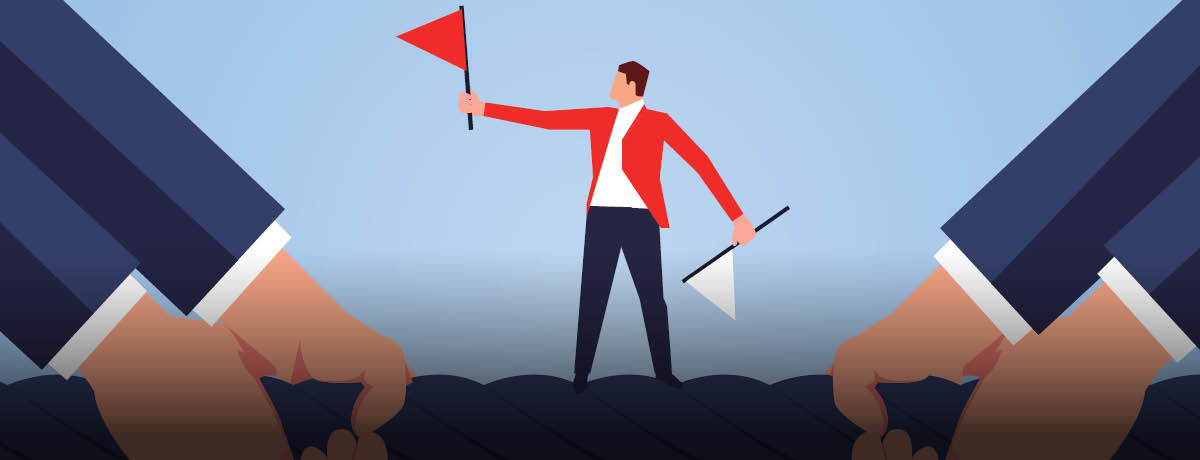
Phoning It In Article Imagery

One recent case from the District Court of Massachusetts offers insight into how one court viewed a similar situation. In Peeples v. Clinical Support Options, Inc., the plaintiff suffered from severe asthma, which made them more vulnerable to COVID-19. When the employer began to bring staffers back to the office, the plaintiff requested to continue working from home.

The employer granted an initial extension of four weeks but ultimately denied the plaintiff’s continued requests, based on the employer’s requirement that all individuals in the plaintiff’s position work in person. The plaintiff sued, seeking injunctive relief, which the court granted, finding that the plaintiff was “entitled to telework as a reasonable accommodation pursuant to the ADA” for an additional 60 days on top of the extension. The court also encouraged both sides to discuss a mutual resolution.

Material to the court’s analysis were the plaintiff’s ability to perform all essential functions remotely and the employer’s failure to engage the plaintiff individually. Interestingly, the court applied a less stringent and COVID-specific standard when deciding the plaintiff’s likelihood of proving that moderate asthma was a disability. The court found that the plaintiff was likely to establish asthma as a disability given the totality of the circumstances related to the pandemic and the plaintiff’s evidence that, because of asthma, they were at higher risk for serious illness or even death if they were to contract COVID-19. Although it’s too early to tell what sort of impact this opinion may have on pandemic-related reasonable-accommodation claims, other courts may take a similar approach in the future.

Telecommuting may be appropriate for a proofreader or telemarketer with a medical condition, but it would be impossible for a food server or cashier.”

Just because an employee has a disability, however, doesn’t mean the employer is legally required to provide any accommodation of the employee’s choice. An employer can deny a staffer’s request to continue working remotely when it creates an undue hardship, defined as “an action requiring significant difficulty or expense,” based on factors including the nature and cost of the accommodation, the overall financial resources of the facility, the overall financial resources of the employer, and the nature of the employer’s operations. Courts have ruled that certain telework arrangements were not reasonable in situations when a job involved teamwork under supervision, access to classified or confidential information, or when the quality of the work would be substantially reduced.

By contrast, when the telework request was limited to a finite period, such as a maternity leave, or when the employee was able to perform all essential functions of the job remotely, telework was considered a reasonable accommodation worthy of consideration by the employer.

Given the current, ever-changing environment and the need for individualized review of accommodation requests, employers should consult with counsel when considering telework as a potential accommodation. Employers might also consider revisiting and updating employee job descriptions to clearly state the essential functions of each position. Having updated and clearly stated essential functions will aid in the analysis of many accommodation requests—and ensure that your workers are doing the best job they can, wherever they happen to be.

Ashley Pack, Dinsmore's office managing partner in Charleston, West Virginia, has significant experience representing employers in a variety of labor and employment matters, including employment litigation, sexual harassment investigations, employment advice and trainings, and labor issues. She leverages a thorough knowledge of employment law to help steer clients through myriad challenges, having represented clients in the banking, health care, retail, energy and natural resources.

Crystal Wildeman, a partner in Dinsmore’s Evansville, Indiana office, represents employers in Indiana, Illinois, and Kentucky in a variety of employment and business disputes. Crystal routinely appears in courts and administrative agencies on behalf of employers in hearings, arbitrations, mediations, and trials. Crystal also provides counseling services to human resources professionals, boards, and management on employment-related issues. She frequently speaks and presents on defensive strategies and proactive measures to assist business owners in avoiding disputes and litigation.

Aly St. Pierre, an associate in Dinsmore’s Indianapolis, Indiana office, represents employers throughout Indiana in an array of business and employment disputes, including employment discrimination, wage and hour, non-competition, and trade secrets litigation. Aly also routinely counsels employers on employment-related issues and legal developments.
Related Articles

Can Employers Legally Require Their Employees to Get a COVID-19 Vaccine?


by Candace E. Johnson

With the COVID-19 vaccine more widely available now, many employers are asking if they can require employees to receive the vaccine and what risks are involved in doing so.

COVID-19 vaccination bottles all in a line

With Reservations: Vaccine Liability and Restaurant Risk in 2021


by Justin Smulison

Navigating vaccine mandates, liability shields and legal risks for eateries in the pandemic recovery era.

Neon lit diner at nighttime called "Ok"

The Employment Pandemic


by Meredith Caiafa and Sarah Greene

The pandemic has had far-reaching effects on employment law since it officially took hold in 2020, but the litigation and lawmaking surrounding it are mutating faster than the variants. Here’s how lawmakers and businesses can keep up.

Lawyer carrying briefcase holding a mask walks int boardroom meeting

Navigating the New Normal


by Jody E. Briandi

The pandemic has upended many law firms’ internal culture and their lawyers’ work habits, in many ways for the better. As we approach 2022, how can we consolidate those positive effects to transform the practice of law (and our personal lives) for the better?

Close-up of Silver Door Handles with a blurred background

Fake Vaccination Card Crackdowns Impact Criminal Law


by Justin Smulison

Those who are making, selling and buying fake COVID-19 vaccine cards are facing federal and state charges.

Close-up of COVID-19 Vaccination Card with a red background

The Next Chapter


by Patrick M. Shelby

Among its uncountable other disruptions, the pandemic upended U.S. bankruptcy procedures. Congressional relief, legislative changes, amended legal provisions: What lies ahead for those looking to file?

Economic technology lines Infront of a black screen

Compelled to Compete


by Ashish Mahendru

Courts and legislatures—and now the White House—are taking an increasingly dim view of noncompete employment agreements, a development the pandemic has quickened. What can employers do to protect their confidential information?

A silhouette of a man thinking with another man walking up the steps

IN PARTNERSHIP

Look Out Below


by Mary Jo Larson

Employee 401(k) and other pension plans that include company stock can be a financial minefield. What’s a responsible fiduciary to do to lessen the risk of a plummeting share price—and the risk of a subsequent “stock-drop” lawsuit from aggrieved workers?

People walking in a building with multiple different train numbers

What Does Workplace Harassment Look Like in 2021?


by Victoria E. Langley

The COVID-19 pandemic reshaped the U.S. workforce. But has it changed harassment on the job?

The COVID-19 pandemic causing empty seats in the workplace

Is It Live . . . Or Is It Virtual?


by Paulo Flores, Adrian L. Bastianelli III, Robert S. Peckar and Kevin J. O'Connor

Mediation via Zoom is just one of the legal-industry oddities the pandemic has wrought. Here’s a cheat sheet for how to make it work for you—and some thoughts on whether it’s here to stay.

Legal mediation occurring on a zoom call with multiple lawyers

How I Adapt to Working From Home


by Alexandria Hurst

With the pandemic still ongoing with no end in sight, one lawyer writes about how she stays sane working from home.

Living room with chair and desk with an open laptop

Is This a Once in a Lifetime Opportunity to Refinance Right Now?


by Roy D. Oppenheim

If you wish to stay in your current home and refinance or buy a new home, now is the time

A new home built with green panels and windows with a blue sky

Millennials


by Joanna Barsh, Lauren Brown, and Kayvan Kian

Burden, blessing, or both?

Giant measuring tape with little people standing on the end

Paid Leave


by Best Lawyers

Eight attorneys from across the country weigh in.

2016 Calendar with rock climber in the background and two days marked off

UnitedHealth's Twin Legal Storms


by Bryan Driscoll

ERISA failures and shareholder fallout in the wake of a CEO’s death.

United healthcare legal storm ceo murder headline

Supreme Court Opens New Door for Personal Injury Claims Under RICO


by Bryan Driscoll

The litigation landscape is rapidly shifting

Personal injury RICO claims marijuana hed

Trending Articles

2026 Best Lawyers Awards: Recognizing Legal Talent Across the United States


by Jamilla Tabbara

The 2026 editions highlight the top 5% of U.S. attorneys, showcase emerging practice areas and reveal trends shaping the nation’s legal profession.

Map of the United States represented in The Best Lawyers in America 2026 awards

Gun Rights for Convicted Felons? The DOJ Says It's Time.


by Bryan Driscoll

It's more than an administrative reopening of a long-dormant issue; it's a test of how the law reconciles the right to bear arms with protecting the public.

Firearms application behind jail bars

2026 Best Lawyers Awards in Canada: Marking 20 Years of Excellence


by Jamilla Tabbara

Honoring Canada’s most respected lawyers and spotlighting the next generation shaping the future of law.

Shining Canadian map marking the 2026 Best Lawyers awards coverage

Revealing the 2026 Best Lawyers Awards in Germany, France, Switzerland and Austria


by Jamilla Tabbara

These honors underscore the reach of the Best Lawyers network and its focus on top legal talent.

map of Germany, France, Switzerland and Austria

Best Lawyers 2026: Discover the Honorees in Brazil, Mexico, Portugal, South Africa and Spain


by Jamilla Tabbara

A growing international network of recognized legal professionals.

Map highlighting the 2026 Best Lawyers honorees across Brazil, Mexico, Portugal, South Africa and Sp

How to Sue for Defamation: Costs, Process and What to Expect


by Bryan Driscoll

Learn the legal standards, costs and steps involved when you sue for defamation, including the difference between libel and slander.

Group of people holding papers with speech bubbles above them

Build Your Legal Practice with Effective Online Networking


by Jamilla Tabbara

How thoughtful online networking supports sustained legal practice growth.

Abstract web of connected figures symbolizing online networking among legal professionals

Algorithmic Exclusion


by Bryan Driscoll

The Workday lawsuit and the future of AI in hiring.

Workday Lawsuit and the Future of AI in Hiring headline

Blogging for Law Firms: Turning Content into Client Connections


by Jamilla Tabbara

How law firms use blogs to earn trust and win clients.

Lawyer typing blog content on laptop in office

Reddit’s Lawsuit Could Change How Much AI Knows About You


by Justin Smulison

Big AI is battling for its future—your data’s at stake.

Reddit Anthropic Lawsuit headline

How to Choose a Good Lawyer: Tips, Traits and Questions to Ask


by Laurie Villanueva

A Practical Guide for Your First-Time Hiring a Lawyer

Three professional lawyers walking together and discussing work

The 2026 Best Lawyers Awards in Chile, Colombia and Puerto Rico


by Jamilla Tabbara

The region’s most highly regarded lawyers.

Map highlighting Chile, Colombia and Puerto Rico for the 2026 Best Lawyers Awards

Common-Law Marriage in Indiana: Are You Legally Protected?


by Laurie Villanueva

Understanding cohabitation rights and common-law marriage recognition in Indiana.

Married Indiana couple in their home

Why Jack Dorsey and Elon Musk Want to 'Delete All IP Law'


by Bryan Driscoll

This Isn’t Just a Debate Over How to Pay Creators. It’s a Direct Challenge to Legal Infrastructure.

Elon Musk and Jack Dorsey standing together Infront of the X logo

AI Tools for Lawyers: How Smithy AI Solves Key Challenges


by Jamilla Tabbara

Understand the features and benefits within the Best Lawyers Digital Marketing Platform.

Legal professional editing profile content with Smithy AI

Alimony Explained: Who Qualifies, How It Works and What to Expect


by Bryan Driscoll

A practical guide to understanding alimony, from eligibility to enforcement, for anyone navigating divorce

two figures standing on stacks of coins