Top 100 U.S. law firm Akerman LLP, in partnership with Disability Rights Florida, Inc. and the Justice Department, secured a historic settlement for Ability Housing that will protect the rights of persons with disabilities to live in the neighborhood of their choosing. The outcome is precedent-setting across Florida and affirms the importance of federal civil rights laws in protecting disabled persons from discrimination in local land use decisions.
Under the settlement, which was approved by the Jacksonville City Council on May 23, 2017, the City is required to end discriminatory housing practices and amend its zoning code to ensure compliance with the Fair Housing Act (FHA) and Americans with Disabilities Act (ADA). The City will pay $400,000 to Ability Housing and $25,000 to Disability Rights Florida to cover a portion of their expenses. Following a competitive bid process, the City will award a $1.5 million grant for the development of permanent supportive housing for individuals with disabilities. A consent decree was also reached in a related case with the DOJ, which levies a $25,000 civil penalty against the City.
"This is a watershed moment for persons with disabilities in Jacksonville. Today's outcome allows Ability Housing to successfully carry on its mission — ensuring people with disabilities receive supportive housing and services where both they and their families want them to live," said real estate and land use lawyer Thomas Ingram, who led the Akerman team representing Ability Housing. "This entire process has been a community education on the rights and well-being of the disabled, and now the City has agreed to take important steps that will protect people for generations to come."
"Ability Housing would not have been able to proceed with this action without the pro bono service of the Akerman firm," said Ability Housing executive director, Shannon Nazworth. "They invested greatly in the successful resolution of this litigation, and should be commended for their efforts to protect the civil rights of persons with a disability. This case is important for the City of Jacksonville and the State of Florida. We hope this outcome will demonstrate to other communities how costly it is to discriminate against housing for persons with disabilities. The staff and board of Ability Housing want to especially thank Tom Ingram, Edward Cole and Allison Stocker for their many hours of dedicated service; and their passionate commitment to defending the rights of our most vulnerable neighbors."
The dispute arose in March 2014, when Ability Housing, a nonprofit provider of housing to homeless and disabled individuals, was awarded a grant by the Florida Housing Finance Corporation (FHFC) to revitalize a twelve-unit, multifamily apartment building in the historic neighborhood of Springfield in Jacksonville for the purpose of creating permanent supportive housing for homeless veterans with a disability. As part of the grant application process, City officials agreed in writing that the planned housing was allowed under existing zoning requirements. After receiving significant pressure from neighborhood opposition, the City subsequently reversed its interpretation of its Zoning Code and denied Ability Housing's requests to proceed with the development. The City asserted that although the apartment building was zoned for multifamily use, Ability Housing's proposal was illegal because the residents would have disabilities, including mental illness, and receive services for their health care needs as part of the permanent supportive housing program. The City argued that this type of use for the building was prohibited in the neighborhood under a zoning overlay district. Ability Housing and its attorneys repeatedly asserted that distinguishing this project from a regular multifamily dwelling on the basis of the residents' disabilities and their related needs was illegal under the FHA and ADA. The City repeatedly affirmed its decision and its rationale, blocking the project.
Without permission to proceed with the project, Ability Housing lost the FHFC grant. Akerman filed a federal lawsuit against the City on Ability Housing's behalf in November of 2015, declaring the City's actions and specific zoning provisions illegal and enjoining the City from violating the FHA and ADA. Disability Rights Florida, the statewide designated protection and advocacy system for individuals with disabilities, filed a similar lawsuit shortly thereafter, and eventually the two suits were consolidated. During that time, the DOJ initiated an investigation, culminating in its own lawsuit against the City in December 2016. According to the lawsuit filed by the United States, the City of Jacksonville also instructed another nonprofit organization to withhold funds from Ability Housing in retaliation for its lawsuit against the City.
Ability Housing was represented pro bono by Akerman. A cross-practice team of Akerman lawyers in the Jacksonville office was led by real estate and land use lawyer Thomas Ingram, and the litigation was handled by Allison Stocker. Their efforts were supported by David Boyer, Chief of Investigations and lead attorney for Disability Rights Florida, the DOJ's Civil Rights Division and the U.S. Attorney's Office for the Middle District of Florida.
Akerman Represents Ability Housing in Historic Fair Housing Settlement
Pro Bono Victory Protects Future Housing Development for Disabled and Homeless in Jacksonville


Related Articles
How To Find A Pro Bono Lawyer
by Best Lawyers
Best Lawyers dives into the vital role pro bono lawyers play in ensuring access to justice for all and the transformative impact they have on communities.

Access to Justice: Pro Bono, Pro Client
by MaKenli Ladd-Sellars
Lawyers are encouraged to provide at least 50 hours of free representation a year. Doing so can help vastly increase access to justice for the underserved.

IN PARTNERSHIP
How Long Can You Stay On Long-Term Disability?
by Michael Walter
Walter Law Group's team of long-term disability lawyers explains qualifications and coverage length for LTD.

Accommodation Reigns
by Kara E. Shea and J. Lott Warren
A recent 6th Circuit Court decision could have big implications for employers who don’t follow reasonable-accommodation standards within disability and medical-leave law to the letter.

What the Courts Say About Recording in the Classroom
by Peter Zawadski and Christina Henagen Peer
Students and parents are increasingly asking to use audio devices to record what's being said in the classroom. But is it legal? A recent ruling offer gives the answer to a question confusing parents and administrators alike.

Can Employers Legally Require Their Employees to Get a COVID-19 Vaccine?
by Candace E. Johnson
With the COVID-19 vaccine more widely available now, many employers are asking if they can require employees to receive the vaccine and what risks are involved in doing so.

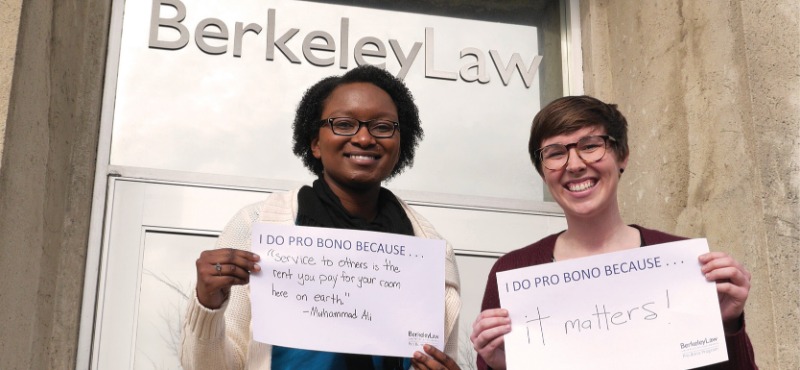
Helping Berkeley Law Train the Next Generation
by Best Lawyers
The attorneys at Gillin, Jacobson, Ellis, Larsen and Lucey
Proposed Rules Could Change Medication Options for Injured Workers in North Carolina
by David E. Vtipil
Injured workers in North Carolina would be limited in the amounts of opioids that they could be prescribed under proposed Commission rules.

Stroock Partners with New York Lawyers for Public Interest to Develop Critical Guide for Nonprofits on Immigration Enforcement
by Stroock & Stroock & Lavan
Marked increases in immigration arrests, especially in and around courts, schools, places of worship, and health care facilities, have generated fear and uncertainty among immigrant communities and left many non-profit service providers questioning how to continue effectively assisting their immigrant clients.

Centro Mexicano Pro Bono, A.C.
by Ivette Montero and Paulina Bojalil
Among other important features, ProBono.MX encourages pro bono work by defining a policy for each law firm, according to its areas of expertise, preferred social causes, and by filtrating cases through a scrupulous study in which they verify the vulnerability of the beneficiary and if pro bono work is needed.

Must Your Stadium, Theater, or Museum Offer Complimentary Admission to Personal Care Providers?
by David Raizman and Amber L. Roller
Whatever type of business or public accommodation you operate, you may want to have a policy or protocol in place to evaluate, on a case-by-case basis, any requests for complimentary admission for a PCA.

Trending Articles
What AI Visibility Means for Lawyers
by Josh Rupall and Bryan Driscoll
AI tools increasingly interpret lawyers public information. Clear, consistent and credible sources help ensure they describe legal expertise accurately.

The Best Lawyers in Canada 2027: Recognizing the Nation's Top Legal Talent
by Jamilla Tabbara
Honoring established leaders and rising practitioners across Canada's legal profession.

2027 Best Lawyers Awards: Honoring Excellence in the Legal Profession
by Jamilla Tabbara
Recognizing the outstanding attorneys leading top practice areas nationwide.

Musk v. Altman: The Lawyers Behind the Case
by Jamilla Tabbara
Meet the Trial Lawyers Shaping One of AI's Biggest Legal Disputes.

Announcing the 2027 Best Lawyers Awards: Austria, Germany and Switzerland
by Jamilla Tabbara
Celebrating the legal professionals throughout Central Europe.

The Legal Teams Behind the Blake Lively–Justin Baldoni Settlement
by Grace Greer
A closer look at the legal teams and attorneys involved in the Blake Lively–Justin Baldoni litigation and its resolution.

The Best Lawyers in France 2027: Peer-Reviewed Excellence
by Jamilla Tabbara
Seventeen editions of peer trust, a growing profession and a dynamic legal market.

Rules on Gifting Money to Family: What to Know
by Bryan Driscoll
Generosity often runs ahead of paperwork. Here's how to give to loved ones without surprising the IRS, your estate plan or your relationships.

Who Can Override a Power of Attorney?
by Bryan Driscoll
A power of attorney carries real legal authority, but it isn't absolute. Here's who can step in to revoke, restrict or set it aside.

How to Get an Eviction Off Your Record
by Bryan Driscoll
Whether an eviction can be removed, sealed or corrected depends on your state, your case and where the record appears.

How to Optimize Your Best Lawyers Profile for AI Search
by Everett Sizemore
Learn how a complete, well-structured Best Lawyers profile can strengthen your visibility and accuracy across AI search platforms.

How Peer Review Works: Best Lawyers Methodology Explained
by Jamilla Tabbara
Understanding the independent, data-driven framework that defines professional legal standing.

Best Lawyers Launches ChatGPT App
by Jennifer Verta
Expanding Trusted Legal Guidance Into AI-Driven Search

Google Is Losing Major Antitrust Cases. Is This the End of Big Tech’s Winning Streak?
by Justin Smulison
Legal experts say the remedies and appeals, not the liability findings, will determine if Google's losses reshape the tech industry.