Insight

When the Levy Breaks

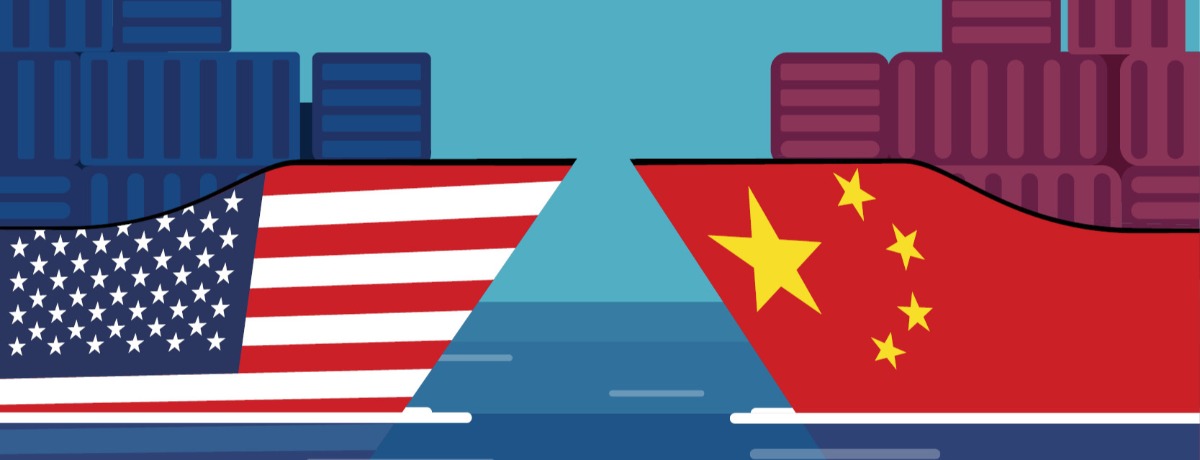
Tariffs against China on construction materials are capricious, unpredictable, and often spectacularly ill-timed. How can the industry prepare?

U.S. Tariffs on China Hurt U.S. Construction
WF

Warren E. Friedman

December 21, 2018 10:43 AM

Twice this year—in March and May—President Trump issued proclamations imposing tariffs on American imports of steel (a 25 percent levy) and aluminum (10 percent). Initially, these charges applied only narrowly, but they’ve since been extended to nearly every country with which the U.S. trades.

Also this spring, Trump imposed a 25 percent tariff on a variety of Chinese products, part of a measure to penalize China for its trade practices; as the year has progressed, more Chinese goods have been added.

Most recently, on September 24 the Office of the United States Trade Representative (USTR), at the president’s direction, released a list of roughly $200 billion worth of Chinese imports subject to still more tariffs. They went into effect immediately at 10 percent but will jump to 25 percent on January 1, 2019.

On September 17, a week before, the U.S. Department of Commerce had announced the preliminary determination of its countervailing-duty investigation of the import of Chinese quartz surface products, noting that exporters received subsidies ranging from 34.4 to 178.5 percent. Commerce therefore instructed U.S. Customs and Border Protection to collect cash deposits from importers of these goods; it is scheduled to issue a final determination next January 28.

The construction industry, like any other, is greatly affected by commodity price fluctuations. Typical supply-and-demand cost adjustments are to be expected, and construction companies have a number of mechanisms to deal with them. The imposition of tariffs, however, cannot be planned for, because it represents direct government intervention that makes a nearly immediate impact on the price of the targeted goods. How can the industry cope?

Of prime importance, as contractors and subcontractors enter into new contracts, is to negotiate an appropriate “tariff clause,” or price-escalation provision, that counteracts the effects of such levies. For existing contracts without safety valves, however, recovery is a greater challenge, given that price increases sparked by tariffs are typically part of the contractor’s accepted risk inherent to lump-sum or guaranteed-maximum price contracting. Tariffs’ very nature, though, means some potential avenues for relief nonetheless remain.

Tax Provisions

Construction contracts may contain a provision allowing for recovery because of newly implemented taxes. The Federal Acquisition Regulation (FAR), for example, is incorporated into many federal procurement contracts, and FAR 52.229-3(c) specifically provides that “the contract price shall be increased by the amount of any after-imposed Federal tax, provided the contractor warrants in writing that no amount for such newly imposed Federal excise tax or duty or rate increase was included in the contract price, as a contingency reserve or otherwise.”

Similarly, Section 3.6 of the American Institute of Architects AIA A201 (2017) General Conditions of the Contract for Construction states that “[t]he Contractor shall pay sales, consumer, use, and similar taxes for the Work provided by the Contractor that are legally enacted when bids are received or negotiations concluded, whether or not yet effective or merely scheduled to go into effect.” Under this provision, arguably, if a contractor remains obligated only to pay taxes that are legally enacted when bids are received or negotiations concluded, it is not obligated to pay any such taxes that emerge after the fact—such as Trump’s recent tariffs. In these circumstances, the contractor may be able to shift the burden of the new taxes to the project owner.

Force Majeure

Force-majeure clauses in construction contracts are another means of recovery for tariffs’ price increases, but relief will largely depend on the terms negotiated for force majeure itself.

Generally speaking, the concept refers to an unexpected event that prevents someone from doing or completing a task he or she had agreed to perform, and may excuse the party from having to do so altogether. Many standard construction agreements limit force-majeure recovery merely to an extension of the contract time—and while an extension might help, it certainly won’t solve the price disparities the tariffs impose.

Instead, provided an appropriate force-majeure provision exists, a contractor may be able to argue that its performance should be excused entirely. To succeed under this theory, however, the contractor would be required to prove that the cost increases made performance impossible or commercially impracticable.

Delay Damages

Another means of recovery may be a contract provision entitling a contractor to damages because of an owner-caused delay. This requires the contractor to prove that the owner’s delay in design or material selection prevented the contractor from timely ordering of materials—which got more expensive in the interim once tariffs were imposed. A claim of this sort will necessitate a detailed review of project schedules and an assessment of when materials should (or could) have been ordered.

Other Provisions

Frequently, construction contracts contain provisions that shift risk to other parties (including subcontractors), and these should also be examined to determine whether another party ought to bear the risk of price increases spurred by tariffs. From a practical standpoint, though, in some cases the increases are so significant that enforcement of these terms might lead to a host of other issues, including failed performance.

Ultimately, the starting point for any lawyer should be the negotiation and inclusion of an appropriate price-escalation clause that contemplates price increases resulting from tariffs—but if this is not an option, or if the contract has already been executed, a close look at other provisions may provide avenues for recovery or for excused performance.

-----------

Warren E. Friedman focuses his practice on construction law and real estate counseling and litigation. He places particular emphasis on providing strategic business counseling to his clients designed to prevent costly disputes before they arise. However, when disputes do arise, Mr. Friedman’s extensive litigation experience ensures a cost-effective and aggressive solution. His clients include contractors, construction managers, owner/developers, institutions, lenders, and sureties on both private and public projects. Mr. Friedman also has extensive experience with licensure issues, surety relations, negotiating and drafting various contract documents, monitoring the construction process during construction, regulatory compliance, and counseling clients through project administration.
Related Articles

Uncertainty, Construction, and Withstanding Tariffs


by Warren Friedman

The impact of Trump's tariffs on the construction industry cannot be understated. Make sure your construction and real estate contracts are protected from the volatility sweeping through the industry.

Trump's tariffs on construction with Chinese crates and United States crates

How Trade War Tariffs Threaten the U.S. Real Estate Market


by Roy D. Oppenheim

Political pressures between the United States and China have led to a trade war and tariffs on aluminum and steel, which are driving up the cost of construction back home.

Flag split in half between China and the United States

Florida Rewrites the Rules on Housing


by Laurie Villanueva

Whether locals like it or not.

Florida Rewrites the Rules on Housing headline

Building a Greener Future on Unsolid Ground


by William S. Thomas

As climate change only intensifies, natural disasters are becoming more frequent and shifting how construction legal professionals conduct litigation.

Mutli-level house in the process of being built

IN PARTNERSHIP

Heroes Among Men: How Adam Leitman Bailey, P.C. Saved Lives of the Lifesaving


by Rebecca Blackwell

Unsafe construction threatened a New York 911 Center and Fortune 500 company until Adam Leitman Bailey, P.C. forced a halt.

Danger construction site no trespassing sign on fence

A Look Ahead


by Jarred Boyer

The future of U.S. rental markets may seem uncertain as we continue to grapple with the after-effects of COVID-19, but renters and landlords alike can look toward a more hopeful few years as inflation already begins to recede and the promise of stabilization is on the horizon.

Paper houses and money sitting amongst coins and money

Out of the Sky: What Construction Workers Can Do if Injured on the Job


by Justin Smulison

Construction zones with unsafe working conditions have long been the sites of injuries for workers. The Perecman Firm, P.L.L.C. fights for victims in New York City and Long Island.

Silhouette of construction man standing near skyscrapers with construction nearby

Contracts and Translations


by Christian Ray Pilares

Working with manufacturers in China can be profitable but challenging. Third party services like law firms and translation services can be helpful.

Yellow background with two black silhouettes with two white message bubbles connecting

Property Rights...and Wrongs


by Chad Cooper and Steven S. Kaufman

Winning a legal battle often boils down to finding and targeting the weakest part of an opponent’s case. Four recent real estate disputes in northeast Ohio are good examples.

Glass staircases in business building with blurred people walking

Wearing a Hard Hat Significantly Reduces Risk of Injury, Death on NYC Construction Sites


by Michele Mirman

Construction workers gather around building plans wearing hardhats

Sharpening the Sword: What You Need to Know About CASPA


by Eric B. Smith

How the Contractor and Subcontractor Payment Act (CASPA) can radically change the stakes of how you build. Learn what CASPA means for your construction projects and contract disputes.

Green background of man holding a Contractor and Subcontractor Payment Act

Teamwork and Strategy


by Justin Smulison

In 2018, Block O'Toole & Murphy continued to secure multimillion-dollar results for injured victims and workers.

Block O'Toole & Murphy, Personal Injury Litigators

Legal Highlights from Georgia: Noteworthy 2018 Recognitions


by Nicole Ortiz

A summary of newsworthy content from Georgia lawyers and law firms.

A cartoon version of the city of Atlanta, Georgia

Evolution of the U.S. Construction Market


by Steven M. Charney

This strong return to activity, in both public and private works, has taken place in an environment marked by an equally striking evolution.

Orange background with blue construction lightbulb with puzzle pieces

Compliance Confidence


by Jeffrey E. Stone, John Huang, and Michelle Gon

Turning risk into opportunity.

Rainbow background with multiple Asian landmarks

Will the Year of the Fire Monkey Burn Corporate Australia's Ambitions in 2016?


by Stephanie Daveson

The ancient Chinese belief is that the characteristics of the prevailing animal and element in a lunar year will heavily influence people’s behaviour and wider events in that year.

Close-up of a baby monkey holding onto its mother

Trending Articles

2026 Best Lawyers Awards: Recognizing Legal Talent Across the United States


by Jamilla Tabbara

The 2026 editions highlight the top 5% of U.S. attorneys, showcase emerging practice areas and reveal trends shaping the nation’s legal profession.

Map of the United States represented in The Best Lawyers in America 2026 awards

Gun Rights for Convicted Felons? The DOJ Says It's Time.


by Bryan Driscoll

It's more than an administrative reopening of a long-dormant issue; it's a test of how the law reconciles the right to bear arms with protecting the public.

Firearms application behind jail bars

2026 Best Lawyers Awards in Canada: Marking 20 Years of Excellence


by Jamilla Tabbara

Honoring Canada’s most respected lawyers and spotlighting the next generation shaping the future of law.

Shining Canadian map marking the 2026 Best Lawyers awards coverage

Revealing the 2026 Best Lawyers Awards in Germany, France, Switzerland and Austria


by Jamilla Tabbara

These honors underscore the reach of the Best Lawyers network and its focus on top legal talent.

map of Germany, France, Switzerland and Austria

Best Lawyers 2026: Discover the Honorees in Brazil, Mexico, Portugal, South Africa and Spain


by Jamilla Tabbara

A growing international network of recognized legal professionals.

Map highlighting the 2026 Best Lawyers honorees across Brazil, Mexico, Portugal, South Africa and Sp

How to Sue for Defamation: Costs, Process and What to Expect


by Bryan Driscoll

Learn the legal standards, costs and steps involved when you sue for defamation, including the difference between libel and slander.

Group of people holding papers with speech bubbles above them

Build Your Legal Practice with Effective Online Networking


by Jamilla Tabbara

How thoughtful online networking supports sustained legal practice growth.

Abstract web of connected figures symbolizing online networking among legal professionals

Algorithmic Exclusion


by Bryan Driscoll

The Workday lawsuit and the future of AI in hiring.

Workday Lawsuit and the Future of AI in Hiring headline

Blogging for Law Firms: Turning Content into Client Connections


by Jamilla Tabbara

How law firms use blogs to earn trust and win clients.

Lawyer typing blog content on laptop in office

Reddit’s Lawsuit Could Change How Much AI Knows About You


by Justin Smulison

Big AI is battling for its future—your data’s at stake.

Reddit Anthropic Lawsuit headline

How to Choose a Good Lawyer: Tips, Traits and Questions to Ask


by Laurie Villanueva

A Practical Guide for Your First-Time Hiring a Lawyer

Three professional lawyers walking together and discussing work

The 2026 Best Lawyers Awards in Chile, Colombia and Puerto Rico


by Jamilla Tabbara

The region’s most highly regarded lawyers.

Map highlighting Chile, Colombia and Puerto Rico for the 2026 Best Lawyers Awards

Common-Law Marriage in Indiana: Are You Legally Protected?


by Laurie Villanueva

Understanding cohabitation rights and common-law marriage recognition in Indiana.

Married Indiana couple in their home

Why Jack Dorsey and Elon Musk Want to 'Delete All IP Law'


by Bryan Driscoll

This Isn’t Just a Debate Over How to Pay Creators. It’s a Direct Challenge to Legal Infrastructure.

Elon Musk and Jack Dorsey standing together Infront of the X logo

AI Tools for Lawyers: How Smithy AI Solves Key Challenges


by Jamilla Tabbara

Understand the features and benefits within the Best Lawyers Digital Marketing Platform.

Legal professional editing profile content with Smithy AI

Alimony Explained: Who Qualifies, How It Works and What to Expect


by Bryan Driscoll

A practical guide to understanding alimony, from eligibility to enforcement, for anyone navigating divorce

two figures standing on stacks of coins