Insight

Dress Codes

Bill 21 enforces secularism by banning religious symbols for new public sector hires, drawing sharp legal and social controversy in Québec.

Religious Symbols
JZ

Janice Zhou

December 10, 2020 08:00 AM

In June 2019, the Coalition Avenir Québec government passed a controversial bill that would ban religious symbols among public servants. This applies to those in the public sector like police officers, judges, teachers, and more. Bill 21, also known as “An Act Respecting the Laicity of the State”, only applies to new hires or personnel who have changed jobs within an organization.

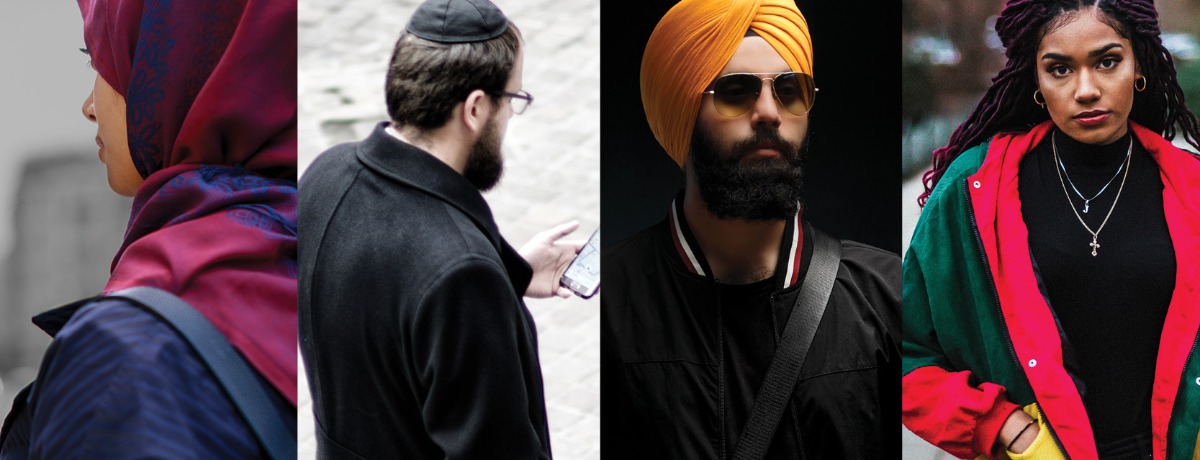
Québec is the first state/province in North America to ban religious symbols such as Muslim head scarves, Jewish kippahs, Sikh turbans, and Christian crosses. Although the bill does not contain language specifying a single religion, some argue that the legislation targets Muslim women who wear head coverings, according to BBC.

Although the first in North America. Québec is not the first place in the world to enact legislation banning religious symbols. In 2011. France banned Muslim veils that cover the face. According to CBS News, the ban on burqa, niqabs, and other full-face coverings in public is still in effect even as France mandates masks in public areas due to COVID-19.

The name of the bill points out that Québec is a lay state, meaning that it is a secular state. This is the first Québec law to state that it is neutral when it comes to religion. But even with the law trying to remain broad, some argue that it targets Muslim women who wear head scarves, according to BBC. The National Council of Canadian Muslims and the Canadian Civil Liberties Association filed a lawsuit right when the legislation became official.

We talked to three Best Lawyers-recognized lawyers based in Québec to discuss the legality and the aftermath of this polarizing law.

Guy Tremblay
BCF
Recognized for Labour and Employment Law Since 2006


Marc-André Groulx
BCF


What are the legal loopholes in this to avoid being classified as discriminatory?

These provisions, a priori, could be qualified as discriminatory under the Canadian and Québec charters. However, in order to avoid any court challenge, the legislator used the mechanism provided for in Article 33 of the Canadian Charter and in Article 52 of the Québec Charter, according to which Bill 21 applies despite the provisions prohibiting discrimination.

Was there a specific political party that supported it and a different political party that was against it?

Several civil liberties groups, including Amnesty International, have vigorously opposed this law and are taking legal action against the government of Québec before the Superior Court of the province. Several Canadian provinces, as well as the federal government, have expressed their strong disagreement with this Québec law. The Liberal Party, which is the official opposition party in the National Assembly of Québec, and Québec Solidaire, a third party, have opposed this legislation.

Less than 24 hours after this legislation became official, the National Council of Canadian Muslims and the Canadian Civil Liberties Association filed a lawsuit. Do you think this lawsuit will go to court?

A five-week trial began [Nov. 2, 2020] at the Montréal Courthouse in this matter. A decision could be rendered in early 2021.

With Québec’s history and how it views itself compared to the rest of the country, will this legislation further divide them from the rest of Canada?

We could say that this is another element that makes Québec different from the rest of Canada. Canada has always promoted diversity among unity. This legislation is a living example. However, since COVID-19 appeared, this debate was relayed to the backstage. That being said, the federal government and other Canadian provinces disagree fundamentally with this law.

Some Québécois fear that multiculturalism will erase their distinct identity as a French-speaking province. Is that the reasoning behind this legislation?

The reasoning behind this legislation comes from a desire of the government of Québec to affirm the primacy of the secularism of the state in Québec. And this debate has been going on for many decades. Since the 1960s, we have observed this desire of the Québec state to free itself from religions in the public sphere. Of course, this law goes against the grain of Canadian multiculturalism.

Francois-Nicolas Fleury
Monette Barakett
Recognized for Labour and Employment Law Since the 15th Edition


For those who cannot remove religious symbols because of how strictly they follow their religion (ex: head scarves), what avenues can they take if they do want to pursue a job as a public servant?

There are no other options. Bill 21 makes no exceptions. There is, however, an acquired right clause for those in function on March 27, 2019.

According to The Atlantic, 63 percent of Québécois support a ban on judges, police officers, and prison guards, and 59 percent support a restriction on teachers, too. What has been the overall reaction to the legislation in Québec?

Very mixed reactions in the greater Montréal area. Québec City and most other regions are in favor.

Do you think that other provinces in Canada will follow suit and implement something like this?

No. Multiculturalism seems to be the approach in English Canada.

How is this religious ban impacting employers? Are they finding that they have fewer candidates to choose from?

So far, I have heard nothing from employers, and I do have school boards as clients.

Will this religious ban deter people from moving to Québec for fear of discrimination?

I hope not, but the future will tell.

Jean R. Allard
Me Jean Allard
Recognized for Workers' Compensation Law Since 2006


Are jobs as a public servant not an option for those who cannot remove religious symbols?

Effectively, these jobs would not be an option. [One example is] the Sikh truck drivers who were refusing to wear a safety hat in Canadian harbors, alleging their religious belief and their right to wear only their head turban.

How does this not fall under discrimination?

It technically does, but the Québec government has used the notwithstanding clause of the Canadian Charter of Rights and Freedoms to bypass, at least temporarily, certain rights.

What was the reaction from the other provinces in Canada?

This is a very interesting question because the other provinces do not have the same philosophy about immigration and integration of people from abroad. Québec has not had and will never have the same capability to melt people in the mainstream like for instance you have in the U.S. Québec culture and perspective is, hence, different than English Canada who tends to follow the multiculturalism approach, like in the U.K., while lots of Québec people wish people from abroad adopt their values even though their culture is accepted. We call this interculturalism.

Are employers finding that they have fewer candidates to choose from?

I did not see data on this, but some people have resigned or refuse to propose their candidacy following the ban. The trial on the merit of the law started [in November] and so witnesses testified they felt rejected and discriminated against at work.

The idea of multiculturalism is one that is perpetuated through Canada except Québec. With it being a French-speaking province versus the rest of English-speaking Canada, do you think this legislation reinforced the different language identities?

It’s not about language, I dare to say, but more about the history of Québec with religion and the power the Catholic Church had on Québécois in the past. As you might know, Québec went from one of the most religious society after WW II, to one of the least religious society in the ‘70s . . . So, some people in Québec dislike seeing religion coming back in their school with their kids having to face religious symbols they taught were gone for good.


Headline Image: ISTOCK.COM/DAMIRCUDIC & UNSPLASH.COM / JAMES-BARR & ISTOCK.COM / AJAYKAMPANI & ISTOCK.COM / PESKYMONKEY

Related Articles

IN PARTNERSHIP

Breaking Down Criminal Conviction in Canada


by Mass Tsang

Statistics Canada’s annual breakdown of adult criminal court data provides an eye-opening review of how the country’s court system resolves its hundreds of thousands of cases annually.

Silhouettes of Officer walking with two men on a strip of concert

2026 Best Lawyers Awards in Canada: Marking 20 Years of Excellence


by Jamilla Tabbara

Honoring Canada’s most respected lawyers and spotlighting the next generation shaping the future of law.

Shining Canadian map marking the 2026 Best Lawyers awards coverage

Canadian Federal Government Faces $1.1 Billion Lawsuit Over First Nations' Right to Clean Drinking Water


by Gregory Sirico

Canada's argument that it has "no legal obligation" to provide First Nations with clean drinking water has sparked a major human rights debate.

Individual drinking water in front of window

The Future of Canadian Law. Insights from Best Lawyers: Ones to Watch Honorees


by Jennifer Verta

Emerging leaders in Canada share their perspectives on the challenges and opportunities shaping the future of Canadian law

Digital eye with futuristic overlays, symbolizing legal innovation and technology

Unveiling the 2025 Best Lawyers Awards Canada: Celebrating Legal Excellence


by Jennifer Verta

Presenting the 19th edition of The Best Lawyers in Canada and the 4th edition of Best Lawyers: Ones to Watch in Canada.

Digital map of Canadathis on illuminated by numerous bright lights

A Celebration of Excellence: The Best Lawyers in Canada 2024 Awards


by Best Lawyers

As we embark on the 18th edition of The Best Lawyers in Canada™, we are excited to highlight excellence and top legal talent across the country.

Abstract image of red and white Canada flag in triangles

Vanguards of Victory: Best Lawyers: Ones to Watch in Canada 2024


by Best Lawyers

The third edition of Best Lawyers: Ones to Watch in Canada™ has been announced, and the lawyers showcased by these awards are rising to the challenge each day as advocates for clients all across the country.

Blue and black background with small squares connected by lines

IN PARTNERSHIP

How Long Can You Stay On Long-Term Disability?


by Michael Walter

Walter Law Group's team of long-term disability lawyers explains qualifications and coverage length for LTD.

Image of wheelchair accessible sign white on blue background

Canadian Women in the Legal Profession: From Non-‘Persons’ to Chief Justices


by Sara Collin

We take an in-depth look at the challenges and optimistic future of women in the Canadian legal sector.

Purple background with green lines and lady liberty in the center

IN PARTNERSHIP

How To Prepare a Strong Personal Injury Claim in Canada


by Best Lawyers

If you suffer injuries due to an accident or other incident, you should take several steps to prepare a solid personal injury claim in Canada.

Broken bike and helmet in the middle of the road

Announcing the 2022 Canada's Best Lawyers Publication


by Best Lawyers

Featuring the top legal talent in Canada.

Title page of 2022 Canada's Best Lawyers Publication

The Inaugural Best Lawyers: Ones to Watch in Canada


by Justin Smulison

Best Lawyers: Ones to Watch in Canada's inaugural edition is here. We talk with Kristen Greer, Best Lawyers Senior Research Manager, on the prestige of these awards.

Man with a red shirt standing on a compass with a telescope

The 2021 Best Lawyers in Canada


by Best Lawyers

Featuring the top legal talent in Canada.

Red and white Canadian flag with a red maple leaf in the center

The 2021 "Law Firm of the Year" Awards in Canada


by Best Lawyers

We are excited to announce the recipients of the 2021 "Law Firm of the Year" awards in Canada.

Award for The 2021 "Law Firm of the Year" in Canada

The Buyout Brigade


by Best Lawyers

Neill May, John Connon, and David Matlow discuss what’s ahead for private equity—and why dealmakers of all stripes have more leverage than ever.

Neill May, John Connon, and David Matlow discuss Goodmans which was named “Law Firm of the Year"

How to Digitally Market Your Law Firm


by dNovo Group

In the digital age, everyone is online. So it's important to make sure your results pop up first. This digital marketing agency gives SEO tips specifically for lawyers.

Multiple websites, one with google, one with Facebook, one with Instagram with the words SEO display

Trending Articles

2026 Best Lawyers Awards: Recognizing Legal Talent Across the United States


by Jamilla Tabbara

The 2026 editions highlight the top 5% of U.S. attorneys, showcase emerging practice areas and reveal trends shaping the nation’s legal profession.

Map of the United States represented in The Best Lawyers in America 2026 awards

Gun Rights for Convicted Felons? The DOJ Says It's Time.


by Bryan Driscoll

It's more than an administrative reopening of a long-dormant issue; it's a test of how the law reconciles the right to bear arms with protecting the public.

Firearms application behind jail bars

2026 Best Lawyers Awards in Canada: Marking 20 Years of Excellence


by Jamilla Tabbara

Honoring Canada’s most respected lawyers and spotlighting the next generation shaping the future of law.

Shining Canadian map marking the 2026 Best Lawyers awards coverage

Revealing the 2026 Best Lawyers Awards in Germany, France, Switzerland and Austria


by Jamilla Tabbara

These honors underscore the reach of the Best Lawyers network and its focus on top legal talent.

map of Germany, France, Switzerland and Austria

Best Lawyers 2026: Discover the Honorees in Brazil, Mexico, Portugal, South Africa and Spain


by Jamilla Tabbara

A growing international network of recognized legal professionals.

Map highlighting the 2026 Best Lawyers honorees across Brazil, Mexico, Portugal, South Africa and Sp

How to Sue for Defamation: Costs, Process and What to Expect


by Bryan Driscoll

Learn the legal standards, costs and steps involved when you sue for defamation, including the difference between libel and slander.

Group of people holding papers with speech bubbles above them

Build Your Legal Practice with Effective Online Networking


by Jamilla Tabbara

How thoughtful online networking supports sustained legal practice growth.

Abstract web of connected figures symbolizing online networking among legal professionals

Algorithmic Exclusion


by Bryan Driscoll

The Workday lawsuit and the future of AI in hiring.

Workday Lawsuit and the Future of AI in Hiring headline

Blogging for Law Firms: Turning Content into Client Connections


by Jamilla Tabbara

How law firms use blogs to earn trust and win clients.

Lawyer typing blog content on laptop in office

Reddit’s Lawsuit Could Change How Much AI Knows About You


by Justin Smulison

Big AI is battling for its future—your data’s at stake.

Reddit Anthropic Lawsuit headline

How to Choose a Good Lawyer: Tips, Traits and Questions to Ask


by Laurie Villanueva

A Practical Guide for Your First-Time Hiring a Lawyer

Three professional lawyers walking together and discussing work

The 2026 Best Lawyers Awards in Chile, Colombia and Puerto Rico


by Jamilla Tabbara

The region’s most highly regarded lawyers.

Map highlighting Chile, Colombia and Puerto Rico for the 2026 Best Lawyers Awards

Common-Law Marriage in Indiana: Are You Legally Protected?


by Laurie Villanueva

Understanding cohabitation rights and common-law marriage recognition in Indiana.

Married Indiana couple in their home

Why Jack Dorsey and Elon Musk Want to 'Delete All IP Law'


by Bryan Driscoll

This Isn’t Just a Debate Over How to Pay Creators. It’s a Direct Challenge to Legal Infrastructure.

Elon Musk and Jack Dorsey standing together Infront of the X logo

AI Tools for Lawyers: How Smithy AI Solves Key Challenges


by Jamilla Tabbara

Understand the features and benefits within the Best Lawyers Digital Marketing Platform.

Legal professional editing profile content with Smithy AI

Alimony Explained: Who Qualifies, How It Works and What to Expect


by Bryan Driscoll

A practical guide to understanding alimony, from eligibility to enforcement, for anyone navigating divorce

two figures standing on stacks of coins