Insight

Are Cell Phones to Blame for a Rise in Rear-End Car Accidents?

Distracted Driving Is Causing More Accidents

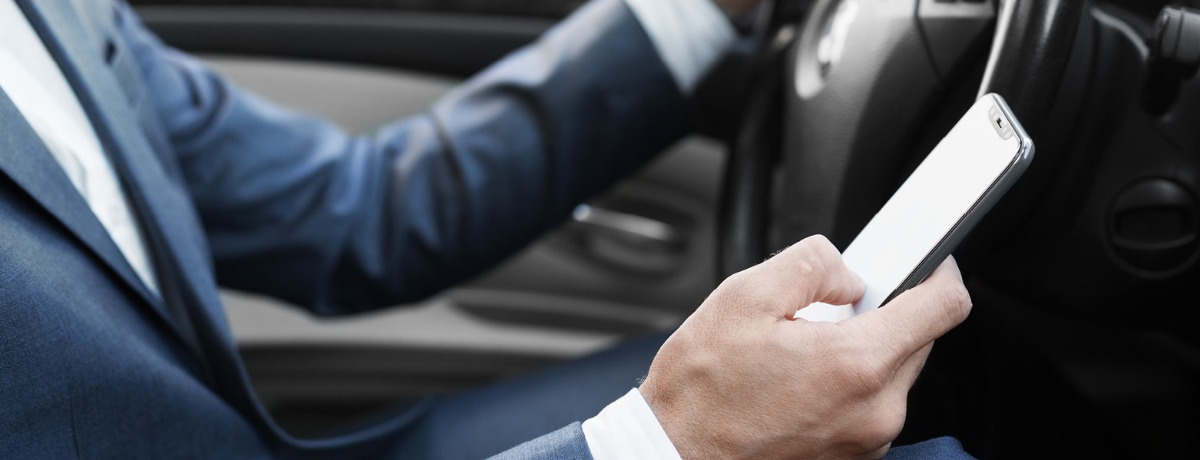
A man in a suit using his phone while driving
MM

Written by Michele Mirman

Published: November 20, 2019

Rear-end car accidents happen a lot in New York City. In 2012, the NHTSA reported that rear-end collisions accounted for about 28 percent of all car accidents in the United States. Just two years later, the NTSB said that its own study of crash data between 2012 and 2014 revealed that about half of all two-car accidents involved a rear-end collision.

Summary prepared by
  • Rear-end collisions are rising, accounting for about half of all two-car crashes. Cell phones are a major distraction, with 88% of drivers using them while driving, increasing these accidents in cities like New York.
  • Distracted driving can reduce your chance of claiming compensation, as cell phone use shifts traditional fault presumptions in rear-end crashes.
  • Any accident, especially rear-end collisions, requires thorough investigation, as changes in driver behavior might alter liability and compensation.
  • Seek legal advice promptly post-crash to safeguard your rights and enhance recovery potential — an urgent necessity in today's distracted driving era.

Are rear-end car accidents happening more frequently? Crash statistics appear to indicate that this might be the case. Why? It might not be a coincidence that rear-end accidents have increased as cell phones have become more popular.

Distractions Are Increasingly Responsible For Car Accidents

Distracted driving has become a serious issue on American roads. Every year, more than 3,000 people are killed in accidents involving a distracted driver. While cell phones aren’t the only reason drivers are distracted, they do play a huge role.

A recent study revealed that 88 percent of American drivers use their cell phones at some point in time behind the wheel. The average driver logs about 3.5 minutes of screen time for each hour on the road.

At first, three and a half minutes might not seem like a lot. However, consider this. Let’s say you get a text. It’ll only take a second to check it, right? Maybe 5, at most? So, you glance down at your screen for 5 seconds. If you’re driving at a speed of 55 MPH, you can cover the length of a football field in that short period of time. That’s a lot of distance to cover with your eyes somewhere other than the road.

Research shows that a two-second distraction can increase the chances of getting into an accident by 20 percent. Imagine what the chances are if you’re focused on your phone for double that amount of time.

Why Cell Phones May Contribute to Rear-End Crashes

Using a cell phone while driving anywhere can be dangerous. That’s certainly true in places like New York City, where bumper-to-bumper traffic is the norm. Commuters and residents, alike, are in a rush to get to their intended destination. A typical NYC traffic jam can make any driver want to pull their hair out.

Maybe some drivers pull out their phones to let their bosses or families know that they’re running later. Others might get bored and decide to see what’s happening on social media while they wait for the light to change. Some might even check the Waze or the maps app to see if there’s a faster way to get wherever it is they’re going.

All of these behaviors take drivers’ eyes away from the road where they belong. This poses a serious threat, even in standstill traffic conditions. You don’t have to be driving 55 MPH to cause a serious accident. In fact, many rear-end collisions happen at low speeds. A lot of times, they happen at intersections because someone in line isn’t paying attention when the light changes.

That seems to be happening more frequently with the rise in popularity of cell phones. It seems particularly in congested cities like New York.

Traditional Presumptions About Rear-End Collisions Might Shift

There’s a common belief that, generally speaking, the rear driver in a rear-end crash is usually liable for the accident. Why? The rear driver should’ve been able to stop their vehicle and prevent an accident from ever happening. It’s generally thought that the driver of the vehicle at the front of the line doesn’t have much control over the situation.

Cell phone use might change that common presumption of fault. Drivers may now be contributing to rear-end collisions by holding up traffic because they’re focused on their phone, rather than the traffic around them. At the very least, the driver who crashes into the rear of another vehicle might be able to say that the other driver is at least partly responsible for the accident. Sharing fault for an accident can seriously impair - or even destroy - a victim’s opportunity to recover compensation. In that way, cell phones might play a huge role in shifting the way we view rear-end collisions.

That’s why it’s essential to make sure that any accident - including seemingly straightforward rear-end crashes - are subject to a thorough, independent investigation. That investigation might reveal interesting information that changes the way the accident is perceived. Anyone involved in an accident should hire a lawyer and seek legal advice as soon as possible after a crash.

About the Author: Michele Mirman is an award-winning personal injury lawyer and founder of Mirman, Markovits & Landau, PC, a New York based personal injury law firm. She has over 40 years of experience and has secured over $1 billion in awards and settlements for her clients.
Learn More About:

Car Accident

Related Articles

Do I Need a Lawyer for a Car Accident?


by Bryan Driscoll

Deciding whether to hire an attorney after a crash depends on injuries, insurance disputes and financial risk.

Shattered windshield and damaged interior of a car after a collision

How a New Maryland Bike Safety Law Honors a Client’s Legacy


by Justin Smulison

Four-time Lawyer Of The Year Patrick Regan discusses how a client’s bicycling tragedy led to a result that improved Maryland traffic law to protect riders.

Group of lawyers posing for a photo

IN PARTNERSHIP

Battle-Tested Dedication for Truck Wreck Victims


by The Law Offices of Frank L. Branson

Courtroom legend Frank L. Branson and his team give a voice to the voiceless, representing victims of catastrophic trucking and motor vehicle accidents.

Man in suit stands with hands on chair

Things to Do Before a Car Accident Happens to You


by Ellie Shaffer

In a car accident, certain things are beyond the point of no return, while some are well within an individual's control. Here's how to stay legally prepared.

Car dashcam recording street ahead

Your Fault or My Fault, It All Goes Through No-Fault


by Michael L. Taub

The No-Fault System, which helps victims receive payment for accident-related medical bills, does not always regard minor accidents on court dockets.

Man at steering wheel leaning forward grasping sore neck

Hit by a Truck? Here’s What Victims Need to Know


by Jeffrey A. Block

If you’re a driver or passenger in a car involved (or, especially, injured) in an accident with a much larger, heavier vehicle, it can seem Sisyphean just to get your life back on track. But you can do it, armed with this critical information.

Car turned on its side in grass after collision with truck

IN PARTNERSHIP

7 Things to Never Do After a Car Accident


by J.L. King

The actions you take after a car accident could determine the injury compensation you stand to receive. Learn seven things to never do after a car accident.

Cartoon of person with big pencil and check list

IN PARTNERSHIP

5 Things To Consider When Choosing a Car Accident Lawyer in Nevada


by Justin Watkins

There are many things to consider when hiring a car accident lawyer, including skill, experience and cost. Read on to learn more.

Woman on phone looking at cracked windshield

Crash Course


by Paige Cerulli

A bad car accident left me reeling, but my worst symptoms wouldn’t appear until two weeks after. If it weren’t for excellent legal representation, there’s no way I’d have made it through—or with anything close to the settlement I got.

Giant bridge with multiple cars going in different lanes

Head Games


by Paul D. Friedman

How the science of traumatic brain injuries has improved in recent decades—and what those advances might mean for victims of these horrific ailments in the courtroom.

Brain cut in half with half of the brain red and half black with white background

Think Inside the Box


by David M. Carter

Black box data retrieval after a serious accident—it’s not just for commercial airplanes anymore.

The mechanics inside of a box with computer technology behind it

Crash Avoidance Technologies and the Litigation Landscape


by Jaime D. Jackson

Crash Avoidance Technology is now becoming widely implemented in production vehicles.

Graphic of a futuristic car technology

How to Handle Your Medical Bills After a Car Accident


by Craig D. Rosenbaum

Receiving medical attention after a car accident can be expensive. One personal injury lawyer details the steps to take when seeking medical attention after the accident.

Car Accident

Why It's a Bad Idea to Admit Fault After an Accident in Georgia


by Stephen Hasner

Car accidents are complicated. Here's why you should avoid admitting fault.

Close up of damaged car after accident

Why You Should Never Admit Fault After a Car Accident in Philadelphia


by Ryan Zavodnick

Admitting fault in Philadelphia can undermine your insurance claim and limit your ability to recover damages.

Two drivers exchanging phone numbers after a car accident

A Texas-Sized Reputation


by Justin Smulison

Dan Sciano’s proven record of success and leadership has made him a highly sought-after plaintiff’s litigator in the Lone Star State.

Daniel J.T. Sciano of personal injury litigation

Trending Articles

Recognizing Legal Leaders: The 2027 Best Lawyers Awards in Australia, Japan and Singapore


by Jamilla Tabbara

Market drivers, diversity trends and the elite practitioners shaping the legal landscape.

Illustrated maps of Australia, Japan and Singapore displayed with their national flags, representing

Musk v. Altman: The Lawyers Behind the Case


by Jamilla Tabbara

Meet the Trial Lawyers Shaping One of AI's Biggest Legal Disputes.

Portrait photos of Elon Musk and Sam Altman positioned in front of the OpenAI logo.

The Best Lawyers in France 2027: Peer-Reviewed Excellence


by Jamilla Tabbara

Seventeen editions of peer trust, a growing profession and a dynamic legal market.

3D Map of France with National Flag Graphic

Announcing the 2027 Best Lawyers Awards: Austria, Germany and Switzerland


by Jamilla Tabbara

Celebrating the legal professionals throughout Central Europe.

Graphic displaying three-dimensional map cutouts of Austria, Germany and Switzerland.

The Legal Teams Behind the Blake Lively–Justin Baldoni Settlement


by Grace Greer

A closer look at the legal teams and attorneys involved in the Blake Lively–Justin Baldoni litigation and its resolution.

Split-screen image of Blake Lively and Justin Baldoni

How AI Is Changing the Way Clients Find Lawyers


by Jamilla Tabbara

Best Lawyers CEO Phil Greer explains how AI-driven search tools are reshaping legal marketing and why credibility markers matter.

AI chat bubble icon with stars representing artificial intelligence transforming client-lawyer conne

When Is It Too Late to Stop Foreclosure?


by Bryan Driscoll

Understanding the foreclosure timeline, critical deadlines and the legal options that may still protect your home.

Miniature house model on orange background surrounded by thumbtacks representing foreclosure

Colorado’s 2026 Water Rights Battles


by Bryan Driscoll

A new era of conflict begins.

Colorado Water Rights 2026: A New Era of Conflict headline

Can You Go to Jail at an Arraignment?


by Bryan Driscoll

Understanding What Happens at Your First Court Appearance.

A heavy chain lying on the ground in the foreground with a blurred figure standing in the background

How to Choose a Personal Injury Lawyer


by Bryan Driscoll

Finding the right legal representation after an injury is a critical decision that requires careful evaluation. 

3D scene representing the deliberative process of choosing a personal injury attorney

What Happens if You Don't File Taxes


by Bryan Driscoll

The penalties are real, but so are your options. Here's what the IRS can do and what you can do about it.

A torn dollar bill revealing a watchful eye, surrounded by flying documents

When to Get a Lawyer for Work Injury


by Bryan Driscoll

Understanding your rights and navigating the complexity of workers’ compensation claims.

Injured worker receiving medical attention at workplace

What Disqualifies You From Filing Bankruptcies


by Bryan Driscoll

A guide to navigating eligibility, the means test and the legal hurdles of declaring bankruptcy.

A silhouette of a large hand pushing over a row of falling dominos toward a small figure standing be

When to Hire a Tax Attorney


by Bryan Driscoll

Understand the legal triggers, professional differences and strategic benefits of seeking legal counsel for your tax matters.

Flying tax documents symbolizing the stress and urgency of mortgage and foreclosure-related paperwor

Why Original Profiles Matter in Legal Marketing


by Jamilla Tabbara

How original, up-to-date profiles improve visibility and client trust.

Multiple web browser windows displaying lawyer profile pages

New England's Climate Litigation Surge


by Bryan Driscoll

What law firms need to know

New England's Climate Litigation Surge: What Firms Must Know headline