Insight

Insuring the Future

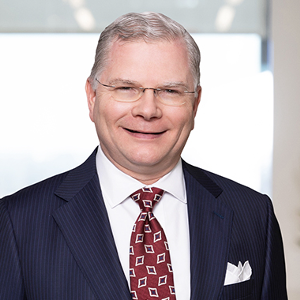
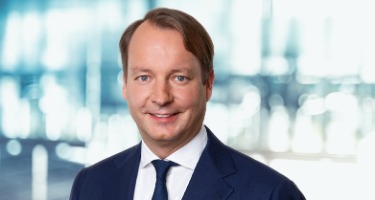
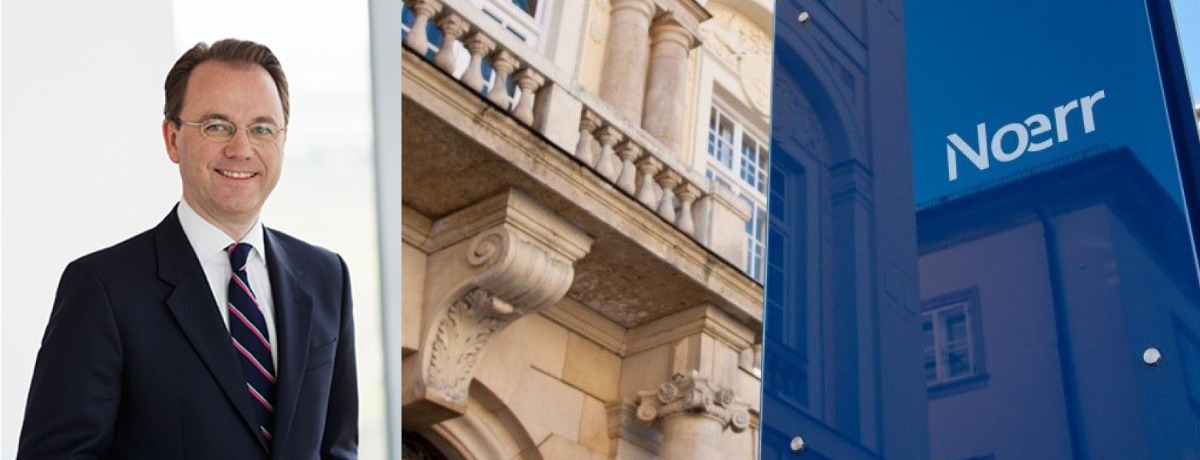
Thomas Heitzer discusses how new technology advancements are impacting the insurance realm.

Attorney Thomas Heitzer speaks on Noerr LLP's, 2020 “Law Firm of the Year” recognition
Best Lawyers

Best Lawyers

February 17, 2020 08:00 AM

This interview was conducted as part of the 2020 Edition of The Best Lawyers in Germany “Law Firm of the Year” award recognitions. Our partner Handelsblatt, also published these awards on June 27, 2019, online and in print in their June 2019 edition.

With new technologies come new risks—so, so many new risks to guard against. With all that risk, naturally, comes new insurance opportunities. Munich-based Noerr LLP was recently named the 2020 “Law Firm of the Year” in Germany for Insurance Law by its industry peers, and partner Thomas Heitzer—a 48-year-old who specializes in all manner of insurance and reinsurance litigation—sat down with Best Lawyers CEO Phillip Greer to talk about self-driving cars, the future of fraud, and the prospect of Alexa as your new insurance broker.

Your award indicates that your peers are saying you guys are on top of your game.

Thomas Heitzer: That’s very good to hear. In the end, it reflects strategic development to focus not only on work for the insurance industry but on being a full-service law firm. [We] offer not only transactional or litigation advice but also advice in IE, IT law, cyber, digitalization, employment law, antitrust law.

There’s often a lot of pressure on investment and financial firms to generate outsize returns, so they leverage themselves to the hilt. What steps do you take to protect those investments from downside risk?

Let me start with Germany. Under EU law, insurers are strictly bound when it comes to investment decisions. So, you don’t see insurers with hyper-leveraged positions. After the subprime crisis and the Lehman [Brothers] crisis, you’ve seen a narrowing of interest rates, which is critical for the insurance industry. This is one of the major threats at the moment. In the life insurance business, we’ve been advising two main groups in “death investing”—selling their licensures to specialized runoff entities funded by private-equity money. For example, ARAG, a German-leading legal protection insurer in Europe, sold entirely their shares in life insurance entities. Life insurers are bound by strict rules like how they are allowed to invest their capital. The disadvantage is that they have no opportunity to go into promising but riskier investments, which makes it hard for them to generate the contractually guaranteed returns.

Self-driving cars still appear to be a few years away. How does the insurance industry view these vehicles?

The obvious change is on the liability side: If I have a self-driving car, is the driver or the owner of the car liable in an accident or the manufacturer? Or the IT expert who created the program? In Germany, you have mandatory third party-liability insurance already in place. Then you have insurance coverage usually taken out for new cars, for damages, and then you have product liability for the manufacturer.

So, if you look at the full scope of insurance coverage already in place in Germany, one could say, “OK, there might be a shift. There might be a stronger liability for accidents due to a failure in the IT system.” And then one could argue, “OK, then that might necessitate an increase of the insurance sum, which is necessary when the manufacturer is liable.”

Supposedly self-driving cars are safer than a human driving. When it comes to the premium, one could say, “OK, fewer claims, damages, accidents. On the pro, this would lead to a reduction of premiums. However, on the negative side—and this is what [CEO Oliver Bäte] from Allianz has said: “Look, those cars are stuffed with IT, which is very costly in the event of an accident.” So, in the end, this is what our clients assume and expect: There will be no major change in insurance premiums only from self-driving cars.

With regard to cybersecurity and data privacy, how is insurance keeping up?

The EU has implemented strict regulatory regimes under which insurers are obliged to observe high cybersecurity standards. This is a sensitive issue, as you know from Facebook, Google, and all those companies, which face penalties in Europe.

On the second side—and this is more of a business opportunity for the insurance industry—around two or three years ago everyone talked about cybersecurity, cyber-insurance, cyber-protection. But had you asked any of the major insurance entities, “Have you taken out insurance coverage for cybersecurity?” they’d [say no]. Nowadays, after some attacks, this picture has totally changed.

Critical infrastructure is not only the financial industry, such as insurance and banks. Think of the energy supply: You have nuclear power plants. You have pipelines. You have hospitals. This is where the insurance industry jumps in to provide solutions.

Imagine a global banking institution is injected by some spam. This will have consequences for the customers, for the clients of the banks. This is a high risk when only one failure, one attack, goes through—such a massive risk for the insurance industry that it is quite difficult to assess. Some insurers are quite reluctant to take such major risks.

Insurance fraud is still a problem, but how people and companies conduct it is changing. What steps do you take to prepare your clients?

We have experience where we can say, “this is very strange from a logical or a life-experience perspective,” and we have corporations with special firms that provide investigation services. How can we prevent [fraud], and what are insurers doing, though? I see a lot of new technology in this area: With artificial intelligence, you can run huge amounts of data from the current claim to data from comparable claims. Such systems can identify whether this claim shows the correct signs for a claim of its kind. This is how insurers expect to deal with insurance fraud in the future. They’re armoring themselves up.

Do you see any of the major emerging technologies—blockchain, the internet of things, smart contracts, chat bots—as beneficial to the insurance industry?

Let’s take the perspective of the consumer. The new generation is growing up with iPad, iPhone—they do not want to see an insurance broker in their living room. The consumer expectation is “I want it quick, not much time, not much effort. I want to buy everything online.” However, insurance is a [legally complex] product. Under German and European law, insurers and brokers have to provide the client with tailor-made protection. This means you need some kind of interaction. We’re advising digital insurers already on chat bots—with Amazon’s Alexa, for example, there’s no human being intermediating the policy to the customers. It goes automatically. But it’s a very narrow line to meet regulatory requirements and issues like data and consumer protection. In the end, this might be a big challenge for the old insurers compared to the startups that can quickly set up an IT structure.

As you look ahead, are there any upcoming projects you’re especially excited about?

I’m looking forward to the rapid changes. This is a mega-trend for the insurance industry: Every day is challenging; every day you have to reinvent yourself. This is also what I look forward to for Noerr—making ourselves better every day in very demanding times.

This interview has been edited for length and clarity.

Use the Best Lawyers Find a Lawyer tool to locate qualified lawyers for expert legal guidance.
Lawyers in Columbus, Ohio

Related Articles

The Future of German Technology


by Best Lawyers

How Germany's 2020 Law Firm of the Year in Information Technology is leading the way.

Black background with lock being unlocked with information symbols protruding from the lock

Thomas Thalhofer of Noerr on the Future of German IT Law


by Best Lawyers

Noerr received the 2019 "Law Firm of the Year" award for Information Tehcnology Law in Germany.

Thomas Thalhofer of "Law Firm of the Year" winner Noerr discusses his Digital Business practice

An Interview With Walter Uebelhoer of Allen & Overy, 2019 "Law Firm of the Year" Award-Winner for Banking Law in Germany


by Best Lawyers

Best Lawyers CEO Phillip Greer in conversation with the leading attorney at the Allen & Overy, a 2019 "Law Firm of the Year" winner.

An interview with a leading attorney at the law firm Allen & Overy, banking lawyer Walter Uebelhoer

Announcing The Best Lawyers in Germany™ 2023


by Best Lawyers

The results include an elite field of top lawyers and firms from Germany.

Black, red and yellow stripes

Announcing the 2022 Best Lawyers™ in Germany


by Best Lawyers

The results include an elite field of top lawyers and firms, including our inaugural Best Lawyers: Ones to Watch recipients.

The flag of Germany on a black background

The Company They Keep


by Best Lawyers

Thomas Richter discusses the idea of corporate criminal liability.

Thomas Richter discusses the idea of corporate criminal liability

Easy Being Green


by Best Lawyers

Markus Deutsch discusses the impact of climate change on the firm and its clients.

Photo of Lawyers from Dolde Mayen & Partner

Impact of Climate Change on Real Estate Law


by Best Lawyers

Dr. Christian Schede discusses rent in large cities, the effect of Airbnb, and more.

Dr. Christian Schede discusses rent in large cities due to Airbnb

How to Advise Clients in International Arbitration and Mediation


by Best Lawyers

Karl Pörnbacher discusses how his firm stays at the forefront of advising clients.

Birds eye view of a lawyer sitting with clients

This German Firm Protects Their Clients in the Face of Emerging Technologies


by Best Lawyers

Johannes Heselberger discusses theft of trade secrets, the pharmaceutical industry, and fake goods.

Germany's “Law Firm of the Year” Bardehle Pagenberg, Attorney Johannes Heselberger

Hengeler Mueller on How German Firms Can Compete in the Global M&A Arena


by Best Lawyers

Germany's 2020 “Law Firm of the Year” honoree in Mergers and Acquisitions Law

Germany's “Law Firm of the Year” honoree in Mergers and Acquisitions Law, lawyer Hengeler Mueller

An Interview With Gleiss Lutz


by Best Lawyers

Germany's 2020 “Law Firm of the Year” in Labor and Employment Law

Thomas Winzer of Gleiss Lutz, the 2020 German "Law Firm of the Year"

An Interview With Latham & Watkins


by Best Lawyers

Germany's 2020 “Law Firm of the Year” honoree in Banking and Finance Law

Close up of hands checking a document on a clipboard

On the Cutting Edge After a Century in Business


by Best Lawyers

Manuel Carvallo of Estudio Carvallo Abogados discusses his firm's 130-year-old history, adapting to the latest technologies, and its 2019 "Law Firm of the Year" award for Insurance Law in Chile.

A purple shield symbolizing a century in business with a purple background

ECIJA on Revolutions in Spanish Information Technology Law


by Best Lawyers

Alejandro Touriño looks at the policy changes impacting information technology law in Spain in this 2019 "Law Firm of the Year" interview with Phillip Greer.

Close up of hands holding a phone with graphics around it

Why Cariola Díez Pérez-Cotapos Developed Its Own Legal Tech


by Best Lawyers

Juan Pablo Matus of Cariola Díez Pérez-Cotapos, 2019 "Law Firm of the Year" award for Corporate and M&A Law in Chile, discusses his firm's joint venture with Cognitiva in creating Lexnova, a legal AI system.

Two small figures on a surface reaching toward a puzzle piece held by a hand above them

Trending Articles

The Family Law Loophole That Lets Sex Offenders Parent Kids


by Bryan Driscoll

Is the state's surrogacy framework putting children at risk?

family law surrogacy adoption headline

Algorithmic Exclusion


by Bryan Driscoll

The Workday lawsuit and the future of AI in hiring.

Workday Lawsuit and the Future of AI in Hiring headline

Best Lawyers 2026: Discover the Honorees in Brazil, Mexico, Portugal, South Africa and Spain


by Jamilla Tabbara

A growing international network of recognized legal professionals.

Map highlighting the 2026 Best Lawyers honorees across Brazil, Mexico, Portugal, South Africa and Sp

Unenforceable HOA Rules: What Homeowners Can Do About Illegal HOA Actions


by Bryan Driscoll

Not every HOA rule is legal. Learn how to recognize and fight unenforceable HOA rules that overstep the law.

Wooden model houses connected together representing homeowners associations

Holiday Pay Explained: Federal Rules and Employer Policies


by Bryan Driscoll

Understand how paid holidays work, when employers must follow their policies and when legal guidance may be necessary.

Stack of money wrapped in a festive bow, symbolizing holiday pay

Reddit’s Lawsuit Could Change How Much AI Knows About You


by Justin Smulison

Big AI is battling for its future—your data’s at stake.

Reddit Anthropic Lawsuit headline

Florida Rewrites the Rules on Housing


by Laurie Villanueva

Whether locals like it or not.

Florida Rewrites the Rules on Housing headline

US Tariff Uncertainty Throws Canada Into Legal Purgatory


by Bryan Driscoll

The message is clear: There is no returning to pre-2025 normalcy.

US Tariff Uncertainty Throws Canada Into Legal Purgatory headline

Alimony Explained: Who Qualifies, How It Works and What to Expect


by Bryan Driscoll

A practical guide to understanding alimony, from eligibility to enforcement, for anyone navigating divorce

two figures standing on stacks of coins

UnitedHealth's Twin Legal Storms


by Bryan Driscoll

ERISA failures and shareholder fallout in the wake of a CEO’s death.

United healthcare legal storm ceo murder headline

Can a Green Card Be Revoked?


by Bryan Driscoll

Revocation requires a legal basis, notice and the chance to respond before status can be taken away.

Close-up of a U.S. Permanent Resident Card showing the text 'PERMANENT RESIDENT'

The 2026 Best Lawyers Awards in Chile, Colombia and Puerto Rico


by Jamilla Tabbara

The region’s most highly regarded lawyers.

Map highlighting Chile, Colombia and Puerto Rico for the 2026 Best Lawyers Awards

New Texas Family Laws Transform Navigating Divorce, Custody


by Bryan Driscoll

Reforms are sweeping, philosophically distinct and designed to change the way families operate.

definition of family headline

Why Skechers' $9.4B Private Equity Buyout Sparked Investor Revolt


by Laurie Villanueva

Shareholder anger, a lack of transparency and a 'surprising' valuation.

Skechers shareholder lawsuit headline

What Is the Difference Between a Will and a Living Trust?


by Bryan Driscoll

A practical guide to wills, living trusts and how to choose the right plan for your estate.

Organized folders labeled “Wills” and “Trusts” representing estate planning documents

How Far Back Can the IRS Audit You?


by Bryan Driscoll

Clear answers on IRS statutes of limitations, recordkeeping and what to do if you are under review.

Gloved hand holding a spread of one-hundred-dollar bills near an IRS tax document