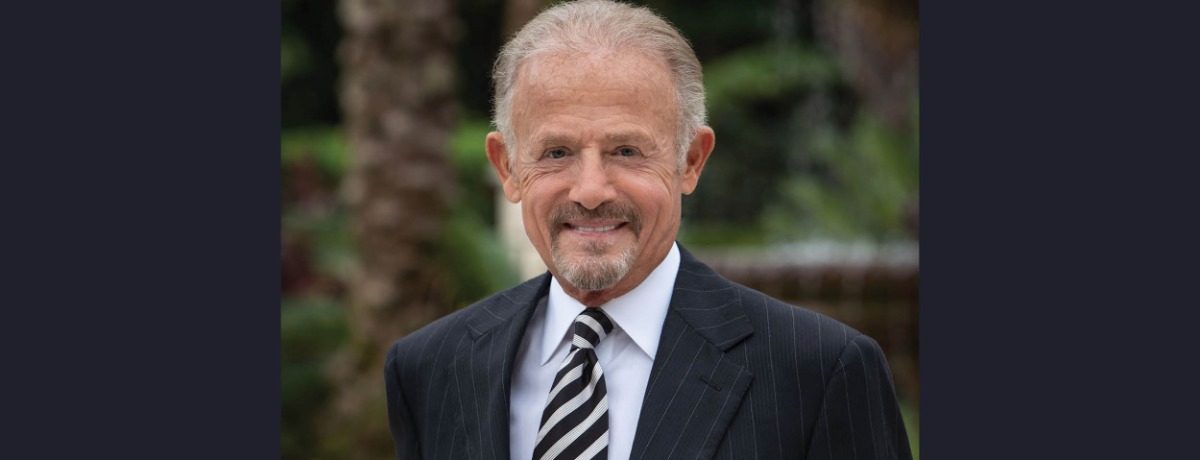

Student-athletes train to be warriors on the field. But tragedies and injuries can occur on those same fields due to negligence. As a result, victims and families sometimes need a warrior in the courtroom. Steve Yerrid, founder of The Yerrid Law Firm, P.A. has repeatedly proven to be that warrior. For decades, he and his firm have effectuated improved safety protocols and procedures in a number of areas and many are still making a difference.
- Learn how The Yerrid Law Firm is transforming student-athlete safety through impactful legal outcomes that serve as a national model.
- Discover recent measures taken in Florida schools to ensure athletes' well-being amidst tragedies like heat-related and head injuries.
- Explore how groundbreaking legal advocacy influences state-wide and collegiate policies on crucial issues like sickle cell trait management.
- Understand why immediate action and collaboration matter in preventing future tragedies and promoting safer sporting environments nationwide.
Yerrid’s 40-year career has been highlighted by record-setting verdicts and successful resolutions in countless cases involving catastrophic injury and death, medical malpractice, product liability, maritime disasters, and on occasion, commercial litigation. Most recently, much of his work has been in the area of student-athlete safety and has demonstrated the same results; Yerrid’s advocacy has greatly influenced safety guidelines and set precedents for high school and college athletic programs in Florida, as well as nationally.
Immediate Local Impact
Two of the latest most impactful sports safety results occurred in Hillsborough County, practically within walking distance of the Yerrid Law Firm’s office.
Hezekiah Walters was a Middleton High School freshman in 2019 who wanted to follow in his dad’s footsteps by playing football. The youngest player on the field, a 14-year-old, was participating in the second day of “conditioning drills” when he collapsed and died due to heat-related overexertion. His heartbroken parents contacted The Yerrid Law Firm for justice.
“There were no medical professionals or trainers on-site while ‘Heze’ was suffering with a more than 102-degree body temperature,” Yerrid says. “The conditions of that day were unacceptable and his death was unnecessary. Fortunately, the school district took responsibility shortly afterward. Additionally, and because we have a recognized track record in this area of law, there was a mutual decision to come together rather than become adversaries. Everyone involved was motivated to do the right thing in protecting our young student athletes.”
The Hillsborough County School Board collaborated with Yerrid, the Walters family, and nationally recognized experts in student-athlete safety. Significant steps were taken to prevent similar tragedies from happening again. The board passed a measure requiring the hiring of a full-time athletic trainer to attend every public-school practice, conditioning drill, scrimmage, or official game. Extensive safety protocols (named in honor of Heze Walters) were also instituted, such as regular hydration and safety breaks, along with a requirement that all coaches attend every practice and game.
Florida rightfully takes price in its local football teams, but the top priority must be ensuring the safety of every student athlete entrusted to its care.
The Walters tragedy occurred less than five years after Yerrid represented Wharton High School football player Sean McNamee. McNamee suffered a severe head injury during an October 2013 warm-up that later put the varsity star in a nine-day coma. Following two brain surgeries—which ultimately required a titanium plate to be permanently placed in his skull—McNamee survived but needed significant cognitive and physical therapy. Yerrid’s representation ensured McNamee’s future would also be financially secure when he subsequently obtained more than $2 million in settlement money as well. Yerrid also convinced the board to agree to provide and maintain an additional $1 million in general liability coverage above the very limited cap of $300,000 in total damages allowed under Florida’s Sovereign Immunity Law that “protects” public entities. New safety guidelines concerning potential head injuries, labeled as the “McNamee Protocol,” and modeled after NFL and NCAA concussion guidelines, were instituted throughout the public schools.
“Florida rightfully takes pride in its local football teams, but the top priority must be ensuring the safety of every student-athlete entrusted to its care,” Yerrid says. “We are currently communicating with Florida’s other 66 counties and making efforts to encourage all of their school boards to obtain $1 million in insurance coverage above the statutory cap. We also advocate for using McNamee Protocols, as well as the Walters Protocols, as models to reduce the risks of head injuries, heat strokes, and adverse cardiac events.”
National and Collegiate Change
Over several decades, Yerrid and his firm have established a national reputation for fearless advocacy. He has been named “Lawyer of the Year” in Tampa by The Best Lawyers in America© several times for the quality of his representation of plaintiffs in both medical malpractice and personal injury matters.
Those accomplishments are just a few reasons he has been contacted by families whose members have died of complications related to Sickle Cell Trait while playing college football. SCT are inherited red blood cell traits that are sometimes present at birth. Though carrying the trait does not mean a sickling event will necessarily occur, it does require special accommodations for SCT athletes.
Ereck Plancher was 19 years old and an outstanding student, as well as a talented wide receiver, when he participated in an off-season football conditioning drill in March 2008 for the University of Central Florida (UCF). The exercise was harsh and lacking in proper hydration or rest breaks that it caused Plancher’s body to activate his sickling trait. As his red blood cells turned into sickle shapes, their ability to carry oxygen was lost. Ereck collapsed several times as his organs shut down, and he struggled mightily before finally dying. His autopsy revealed he carried the Sickle Cell Trait, and his UCF medical records showed he also carried it in 2008. Ironically, Plancher’s SCT had been diagnosed by UCF’s own medical staff and was known by UCF’s coaches and trainers even before he joined the team. His parents’ legal team hired Yerrid to take the case to trial. Rather than accept responsibility, UCF’s decision to fight the case every step of the way led to years of litigation, and ultimately, after three weeks of trial, a jury verdict of $10 million was rendered. That verdict was later reduced by the appellate courts and the case ultimately settled after it was argued in the Florida Supreme Court and before Ereck’s father passed on.
Ted Agu was 21 years old when he played football for University of California, Berkeley (UC). The defensive lineman also carried SCT trait, which UC had discovered two years earlier during his annual medical examination. Nevertheless, he needlessly died following an unacceptably harsh team “drill” in which no precautions or accommodations were made for his known SCT condition. Yerrid and Brian Panish, an outstanding L.A. trial lawyer and good friend, filed a wrongful death suit on behalf of Agu’s parents. The lawsuit charged that the steller pre-med student should not have been subjected to such extreme exertion and that the negligence by UC officials caused his easily preventable death.
Shortly after litigation commenced, UC decided to take responsibility rather than litigate against the Agu family. As a result, UC paid $4.75 million in settlement to the parents and immediately effectuated widespread changes in their statewide student athlete protocols and procedures for SCT athletes. True to Yerrid’s mission, he was also able to cause needed change. No sickling deaths have occurred at UC since.
“This result led to critical reforms at all of UC’s 11 campuses, starting with education about athletes that carry sickle cell traits,” Yerrid notes. “Punishments like extra high-risk physical activities cannot be used, and workout and conditioning plans are now thoroughly reviewed and customized. Ted Agu, Ereck Plancher, and several other remarkable youths who lost their lives are forever honored and memorialized with these life-saving steps.”
With experience representing injured and vulnerable players, Yerrid keeps a close watch on the precautions athletic associations at all levels are taking with regard to COVID-19.
“Many of us love sports and football, but no game is worth a young person’s life,” Yerrid says. “As we’ve seen, the COVID-19 virus is highly contagious and dangerous. The ideology of our firm’s work with SCT should be applied to COVID-19 and the institution of safe practices. In the best interests of everyone, proper protocols must be in place well before tragedy strikes. And if those precautions are not taken by corporate or public entities, we will be there to right those wrongs.”