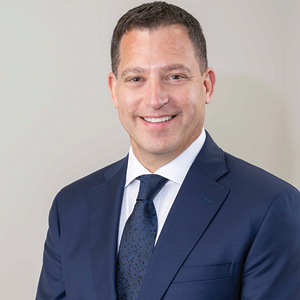

Anthony Sola is a lead trial attorney at famed New York and Long Island medical defense firm Martin Clearwater & Bell LLP. He has a deftness with medicine and law that can only be ascribed to natural talent and his acute perception of all that medical malpractice cases involve gives insight into his impressive track record in medical malpractice defense litigation.
- For practicing litigators: A rare, inside look at how curiosity-driven trial preparation shapes medical malpractice defense over nearly four decades.
- See how one high-stakes case turned on jury psychology, witness credibility and challenging a mediation panel’s findings.
- Learn practical jury selection and trial tactics used to manage sympathy factors and complex medical facts.
- Why this case study still matters today for lawyers seeking sharper trial readiness and courtroom judgment.
Philosophy and Approach
"You have to start each case with real intellectual curiosity," says Sola. "If you’re not curious, you’re not going to understand the nuances involved to the degree that you need to and will not be prepared for anything that could happen at trial. You need to be able to think on your feet and you’re not going to be able to think fast enough—nobody is—unless you truly understand the underlying issues in great depth."
Memorable Cases
In his 39 years in the field, one of Sola’s most memorable cases is one in which his client faced malpractice accusations from a plaintiff widower who was living in extremely sad circumstances. Sola’s client, a renowned neurosurgeon, had removed a benign tumor from a young mother who had recently given birth to her third child. The woman developed a blood clot in her leg and suffered a fatal pulmonary embolism after she was discharged from the hospital.
The trial pivoted upon whether the woman—the plaintiff’s wife—had received appropriate medical attention after the surgery. In an additional tragedy for the family, Sola notes, the plaintiff widower was seriously injured and rendered quadriplegic in a swimming pool accident the year following his wife’s death.
Strategy and Execution
"We had to overcome the incredible sympathy the jury felt for the three young kids and widower in a wheelchair," says Sola. "My adversary was one of the top plaintiffs’ lawyers and, additionally, there had been a Medical Malpractice Mediation Panel recommendation of ‘malpractice’ against my client."
In jury selection, Sola made a concerted effort to desensitize potential jurors to sympathy factors that could bias them unfairly in favor of the plaintiff’s case. The mediation panel system, in which a judgment was first rendered by a panel composed of a lawyer, a judge and another surgeon, had not given the case a fair judgment, Sola showed, because the surgeon on the panel was his client’s competitor. Furthermore, Sola took the necessary steps to show the jury how damaging information from the personnel file of the main expert for the plaintiff’s case disqualified him as a credible witness. In the end, the efforts of Sola and his team were not in vain: the case was decided for their client and the jury awarded no damages.
For those navigating personal injury cases, understanding what makes a strong defense is crucial. How to Choose a Personal Injury Lawyer offers insights into selecting a skilled personal injury lawyer.
Thought Leadership and Recognition
Sola is a frequent lecturer and writer on medical litigation and has written on the subject for The New York Law Journal and Medical Economics. He is a fellow of the American College of Trial Lawyers. He has been rated AV Preeminent by Martindale-Hubbell for more than 25 years and continuously listed in The Best Lawyers in America for personal injury law – defendants and medical malpractice law – defendants since 1999.