
Insight

And Justice for All

Equal opportunity for justice before impartial law is a supposed bedrock of American citizenship. All too often, though, that noble ideal is honored more in the breach than the observance. The legal profession, and the country, must simply do better.

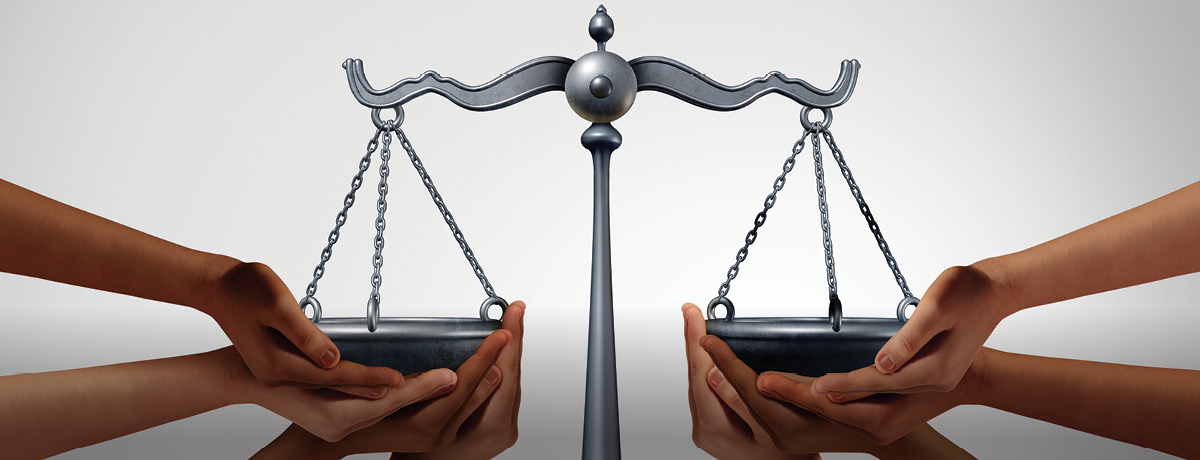
Multiple hands holding each side of a silver balance scale
Harry M. Reasoner

Harry M. Reasoner

November 4, 2021 06:30 AM

The pledge of “Justice for All” in America’s Pledge of Allegiance is one of the highest aspirations of our country and of the legal profession. Practicing lawyers give millions of dollars’ worth of time in pro bono representation. Congress contributes annually to fund Legal Service Corporations that handle tens of thousands of cases across the country. Some states make substantial contributions. Some state Supreme Courts take leadership roles in seeking support for access to justice.

In Texas, our Supreme Court is a national leader in seeking ways to enhance access to justice. It created a Texas Access to Justice Commission to implement improvements, which I have chaired for over 10 years. We have sought reforms in statutes and rules that enhance pro bono representation and make pro se representation more feasible. We have filed pro bono briefs on access to justice issues and raised millions to increase legal aid by lawyers.

I have practiced law as a trial lawyer for almost 60 years. I tried pro bono cases regularly before my appointment to the commission. I have never done anything in the law more rewarding than my work on the commission. However, I was startled to learn how inadequate our support for access to justice is in the United States.

The governmental and pro bono contributions fall far short of our country’s need for assistance in access to justice. The federal government defines the poverty line as $26,500 for a family of four. Over 57 million people are eligible for legal aid using the federal test for eligibility of income of 125 percent of the current poverty line or less. This dramatically understates the need, as a high percentage of the middle class cannot afford lawyers for significant legal problems. For example, in many states, under five percent of the defendants are represented in debt collection or eviction cases. The Legal Services Corporation (www.lsc.gov), a federal agency trying to enhance access to justice, is an excellent source of data showing the need for assistance and the number actually served.

The inability to get legal assistance can often lead to tragic results. For example, many women and children who are victims of domestic violence cannot get free without legal assistance. Without a protective order or child support, they have to live subject to beatings and other abuse.

Many unscrupulous merchants prey on the poor by adding extra charges to a contract price, charging exorbitant interest or selling them shoddy goods. Titles to the homes of many families are lost because they could not afford to go to probate court to clear title on the death of the titled owner. Veterans often need legal help in compelling the Department of Veterans Affairs to honor its legal obligations. The VA is underfunded and often resists aid for mental problems such as post-traumatic stress disorder, or it denies funds to make veterans’ homes livable in the face of crippling injuries.

If we are to honor our country’s values, we must do much better. It is estimated that in many states, one (or less) out of ten citizens in need of legal assistance receives it. Millions are left suffering domestic abuse; defrauded by those who prey on the poor and elderly; deprived improperly of veteran’s medical assistance and the benefits the veteran has earned; or losing the family home because of financial inability to probate the estate of the deceased title holder.

To deal with the great need for access, we need to educate the bar and our country on the consequences of a high percentage of our population having no access to justice. A high percentage of lawyers have no understanding of the great need for legal assistance in obtaining access to justice and the consequences of lack of access. It should be a mandatory bar exam subject.

The ABA strives to support access to justice but only a limited number of lawyers participate. To make progress, the need for access to justice should be a mandatory subject in law school with the opportunity to do pro bono work as a student. Happily, many law schools have started doing this. It should also be part of high school civics. Students who do not learn of the need for access to justice and the consequences of lacking it will be citizens blind to one of the most important problems in our society.

Major foundations and Chambers of Commerce should be informed of the importance of access to justice and the consequences of it not being available to millions. Only if we address the need as an informed citizenry can we hope to provide true access to justice and honor our Pledge of Allegiance.

Harry Reasoner is a Senior Partner at Vinson & Elkins LLP where he has specialized in litigation. He has Chaired the Texas Access to Justice Commission for over 10 years. He attended Rice University; the University of Texas School of Law and the London School of Economics. He clerked for Judge Charles E. Clark on the US Court of Appeals for the Second Circuit before joining Vinson & Elkins.


Related Articles

How to Choose a Good Lawyer: Tips, Traits and Questions to Ask


by Laurie Villanueva

A Practical Guide for Your First-Time Hiring a Lawyer

Three professional lawyers walking together and discussing work

How To Find A Pro Bono Lawyer


by Best Lawyers

Best Lawyers dives into the vital role pro bono lawyers play in ensuring access to justice for all and the transformative impact they have on communities.

Hands joined around table with phone, paper, pen and glasses

Hybrid Work - A Path for Female Lawyers


by Roberta Liebenberg

Remote work, flex time, some combination of both, all the rest of the pandemic’s new office normal: mere hype, or finally a meaningful option for female lawyers?

Half of an image of a desk and half an image of attorneys walking with a black and white filter

An Allied Front Against Ransomware


by Patricia Brown Holmes, Georgia N. Alexakis, Abigail L. Peluso and John K. Theis

With the world ever more digitally entwined—particularly as the pandemic has increasingly driven commerce and ordinary business activity more fully online—the threat of ransomware is here to stay. Here’s a primer on the federal government’s response and how the private sector can help.

Man holding tablet simulating holographic 3D Fish with a neon blue background

Navigating the New Normal


by Jody E. Briandi

The pandemic has upended many law firms’ internal culture and their lawyers’ work habits, in many ways for the better. As we approach 2022, how can we consolidate those positive effects to transform the practice of law (and our personal lives) for the better?

Close-up of Silver Door Handles with a blurred background

Bidding Wars: Understanding Federal Bid Protests


by Lori Ann Lange

Federal government contracting can be convoluted. Here’s a primer on filing a bid protest for parties who think they’ve been wronged.

Businesspeople walking down the street with triangle grey shadows overcast

High Court Merit


by Tracy Collins Ortlieb

In progressive legal circles, the name Robbie Kaplan has emerged as an omnipresent force for equal and human rights.

 Roberta “Robbie” Kaplan cofounded the Time’s Up Legal Defense Fund

Nina T. Pirrotti - New Haven 2020 Lawyer of the Year


by Best Lawyers

Advocating for workplace fairness and protecting individuals from harassment and discrimination in New Haven and beyond.

Nina T. Pirrotti  - New Haven 2020 Lawyer of the Year

A Firm Dedicated to Growth and Knowledge


by Johanna Marmon

The Scarlett Law Group has paved the path toward justice regarding traumatic brain injury cases.

The Scarlett Law Group takes a firm office photo

A Small Firm with Colossal Success


by Regan Zambri Long

Regan Zambri & Long and its attorneys go the distance to deliver justice to all their clients.

Regan Zambri & Long group smiles at camera

Broken Glass


by BAL

BAL Leads by Example: Advancing Diversity and Female Leadership in Corporate Immigration Law

white background with wood pieces and cracks in the wood

Trending Articles

2026 Best Lawyers Awards: Recognizing Legal Talent Across the United States


by Jamilla Tabbara

The 2026 editions highlight the top 5% of U.S. attorneys, showcase emerging practice areas and reveal trends shaping the nation’s legal profession.

Map of the United States represented in The Best Lawyers in America 2026 awards

Gun Rights for Convicted Felons? The DOJ Says It's Time.


by Bryan Driscoll

It's more than an administrative reopening of a long-dormant issue; it's a test of how the law reconciles the right to bear arms with protecting the public.

Firearms application behind jail bars

2026 Best Lawyers Awards in Canada: Marking 20 Years of Excellence


by Jamilla Tabbara

Honoring Canada’s most respected lawyers and spotlighting the next generation shaping the future of law.

Shining Canadian map marking the 2026 Best Lawyers awards coverage

Revealing the 2026 Best Lawyers Awards in Germany, France, Switzerland and Austria


by Jamilla Tabbara

These honors underscore the reach of the Best Lawyers network and its focus on top legal talent.

map of Germany, France, Switzerland and Austria

Best Lawyers 2026: Discover the Honorees in Brazil, Mexico, Portugal, South Africa and Spain


by Jamilla Tabbara

A growing international network of recognized legal professionals.

Map highlighting the 2026 Best Lawyers honorees across Brazil, Mexico, Portugal, South Africa and Sp

How to Sue for Defamation: Costs, Process and What to Expect


by Bryan Driscoll

Learn the legal standards, costs and steps involved when you sue for defamation, including the difference between libel and slander.

Group of people holding papers with speech bubbles above them

Build Your Legal Practice with Effective Online Networking


by Jamilla Tabbara

How thoughtful online networking supports sustained legal practice growth.

Abstract web of connected figures symbolizing online networking among legal professionals

Algorithmic Exclusion


by Bryan Driscoll

The Workday lawsuit and the future of AI in hiring.

Workday Lawsuit and the Future of AI in Hiring headline

Blogging for Law Firms: Turning Content into Client Connections


by Jamilla Tabbara

How law firms use blogs to earn trust and win clients.

Lawyer typing blog content on laptop in office

Reddit’s Lawsuit Could Change How Much AI Knows About You


by Justin Smulison

Big AI is battling for its future—your data’s at stake.

Reddit Anthropic Lawsuit headline

How to Choose a Good Lawyer: Tips, Traits and Questions to Ask


by Laurie Villanueva

A Practical Guide for Your First-Time Hiring a Lawyer

Three professional lawyers walking together and discussing work

The 2026 Best Lawyers Awards in Chile, Colombia and Puerto Rico


by Jamilla Tabbara

The region’s most highly regarded lawyers.

Map highlighting Chile, Colombia and Puerto Rico for the 2026 Best Lawyers Awards

Common-Law Marriage in Indiana: Are You Legally Protected?


by Laurie Villanueva

Understanding cohabitation rights and common-law marriage recognition in Indiana.

Married Indiana couple in their home

Why Jack Dorsey and Elon Musk Want to 'Delete All IP Law'


by Bryan Driscoll

This Isn’t Just a Debate Over How to Pay Creators. It’s a Direct Challenge to Legal Infrastructure.

Elon Musk and Jack Dorsey standing together Infront of the X logo

AI Tools for Lawyers: How Smithy AI Solves Key Challenges


by Jamilla Tabbara

Understand the features and benefits within the Best Lawyers Digital Marketing Platform.

Legal professional editing profile content with Smithy AI

Alimony Explained: Who Qualifies, How It Works and What to Expect


by Bryan Driscoll

A practical guide to understanding alimony, from eligibility to enforcement, for anyone navigating divorce

two figures standing on stacks of coins