Insight

Too Good to Fail

Sandro Abegglen discusses new regulations after financial crises, corruption, and more.

Sandro Abegglen discusses new regulations after financial crises and corruption
Best Lawyers

Best Lawyers

March 30, 2020 08:00 AM

This interview was conducted as part of the 2020 Edition of The Best Lawyers in Switzerland “Law Firm of the Year” award recognitions. Our partner Handelsblatt, also published these awards on June 27, 2019, online and in print in their June 2019 edition.

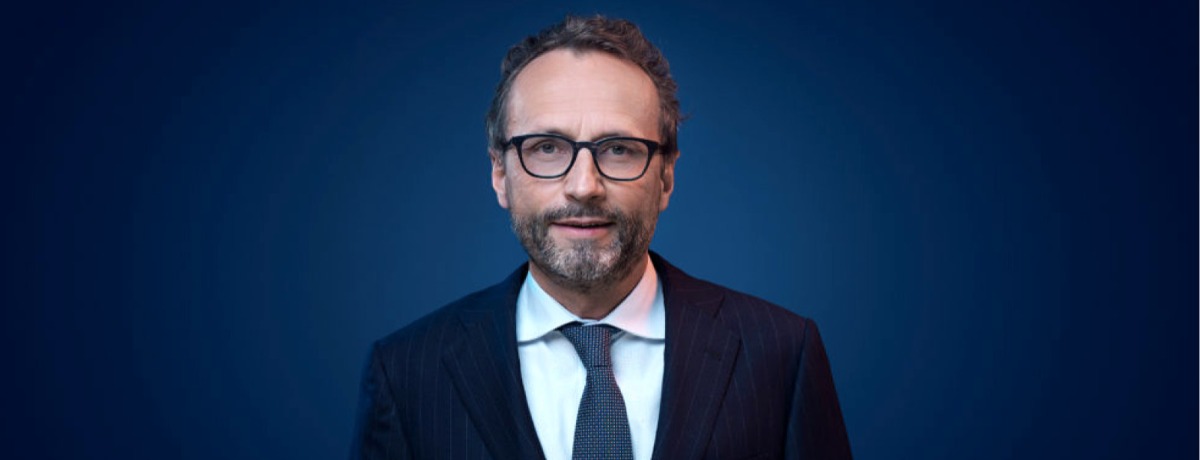
More than a decade later, the scars of the global financial crisis continue to disfigure and complicate the balance sheets of some of the world’s most prominent financial institutions. Helping them heal—and guard against future injury—is Zurich-based Niederer Kraft Frey, recently named Banking and Finance “Law Firm of the Year” in Switzerland. NKF partner Sandro Abegglen—whose bailiwick encompasses banking, finance, regulatory, investigations, enforcement, white-collar crime, and investment funds—sat down with Best Lawyers CEO Phillip Greer to discuss tightened regulations, corruption risks, and why it pays to be wary of sovereign-wealth funds.

What does it mean for you and the firm to be named Banking and Finance Law Firm of the Year by your peers?

Sandro Abegglen: We’re very honored. We believe that for banking, finance, and financial-services regulatory, we’re second to none in Switzerland. But of course, it’s a daily fight to keep that position, and rewards such as this help make that clear to our clients.

There has been a great deal of focus on banking and financial institutions in the wake of various crises over the decades. How have regulations affected your clients, and how confident are they should another crisis arise?

They have massively affected the big financial institutions and banks in Switzerland—UBS, Credit Suisse, CRH, Cantonal Bank, and Raiffeisen Group, which were considered too big to fail. As a consequence of that categorization, these banks are still working to increase their capital buffers and implement substantial measures to ensure that in case of a problem, the core element could continue to work and that the other pieces could be broken away.

That’s a super-complex task, of course, for Credit Suisse and UBS. The vast majority of their operations and capital and risks are abroad. In London or in New York, where these operations are, regulators might have a different view. In addition, the increase in capital requirements has brought those banks’ share prices under pressure. I’m not a financial analyst, but it’s clear that some shareholders wonder whether there is still enough for them on the plate.

The second area is more low-level but very hot at the moment. As a consequence of the financial crisis, a large number of retail clients lost money. Point-of-sale-related financial services in Switzerland were put under scrutiny, and as a result, there’s a new law coming into force January 1, the Financial Services Act, which will introduce point-of-sale conduct duties that apply to any financial services provider in any area. I’m happy that my team and I advise UBS on the implementation of the Financial Services Act. UBS is the largest wealth manager in the world. [Consider] how much work that that involves. On the operative side, the IT side, it also costs a lot of money.

A third area: The increased attention paid to the problem that a number of European Union, United Kingdom, but unfortunately also Swiss banks, are often involved in catering banking services to clients involved in corruption. There are famous cases, like 1MDB, where even Goldman Sachs is involved. But all these scandals that involved money from corruption, some of that money was also poached in Switzerland with some private banks.

That has a substantial impact on the profitability of the business. Meaning that today, a bank is much more likely to turn away the client from Mexico or Argentina, not to speak of Venezuela or Azerbaijan—or clients from Russia or Saudi Arabia. Today you must have much faster doubt about the legality of the funds. Some of these clients, even if they are state funds—1MDB was a state fund—they’re bringing [the problem] to you.

Because the Swiss banks in the wealth-management area are so globally active, they have clients all over the world—including in countries I would not dare vacation with my kids. Like Venezuela: If you have a rich entrepreneur from Venezuela, the chance is that such a guy has to be involved a bit in corruption. Otherwise, you probably cannot be an entrepreneur in Venezuela. The chance is much bigger than when you cater to a dentist in London.

How do global trade wars, tariffs, and protectionism affect your clients? How do you best prepare them for certain outside influences?

Inbound cross-border services provided in the European Union are very protective, politically driven. The European Union tries to shut down the market with regulatory measures against foreign financial institutions. Providing services into those countries from outside the European Union is also a big topic for U.K. banks. We can tell them to lobby with the Swiss government, that the Swiss government tries to obtain better conditions. But their leverage in Switzerland is, of course, limited.

On the other hand, in cooperation with international law firms in Germany, etc., we tell them what they have to do to be able to provide cross-border services under this stricter practice. The fact of that ever-increasing regulatory regime means it’s only possible to cater to clients who are taxed. The rich German entrepreneur who should now bring his taxed money to a Swiss bank: Does the guy still come when he has to do it with taxed money?

Maybe it has the effect that you lose some market share in these markets. The bigger banks can make up for that by setting up operations locally in Germany. But for the smaller ones, that’s not an option. Where do the smaller ones turn? They go to a market where that regulation is not that strict. It’s exaggerated, but then you go to Latin America, you go to Southeast Asia, you go to Africa, you go to some Arab countries. But these are all markets with substantially increased risks from corruption.

Are there any projects or upcoming work you’re particularly excited about?

Very exciting for me is that we appealed against the decree of the Swiss regulator who wanted to disgorge profits a bank made with illegal transactions. Simplified, FINMA [the Swiss Financial Market supervisory body] took the view that the Swiss bank had to pay substantial expenses and penalties to the [Federal Customs Administration]. That means the expenses could not be deducted from the disgorged profits. We’re taking that case to the Swiss Supreme Court, and there are signs that we could win.

When I look at what’s commercially exciting, it’s licensing mandates. We have a big mandate for Bank of New York Mellon—they’re setting up a much bigger presence in Switzerland, and we’re accompanying them, obtaining the relevant license from FINMA. This is exciting because on the U.S. $10 bill is [Alexander Hamilton], the founder of Bank of New York Mellon, and he also happens to be a founder of the United States. I’m proud that we can [cater to] such international institutions.

This interview has been edited for length and clarity.

Use the Best Lawyers Find a Lawyer tool to locate qualified lawyers for expert legal guidance.
Lawyers in Columbus, Ohio

Related Articles

Announcing The Best Lawyers in Switzerland™ 2023


by Best Lawyers

The results include an elite field of top lawyers and firms from Switzerland.

Red flag with white cross

Announcing the 2022 Best Lawyers™ in Switzerland


by Best Lawyers

2022 Switzerland Key Stats

The 2022 Best Lawyers in Switzerland

The Company They Keep


by Best Lawyers

Thomas Richter discusses the idea of corporate criminal liability.

Thomas Richter discusses the idea of corporate criminal liability

A Studied Neutrality


by Best Lawyers

Marcel Meinhardt discusses a new interpretation in competition law, new challenges as technology advances more and more, and other topics.

Marcel Meinhardt, discusses a new interpretation in competition law

Protect Your Intellectual Property From Patent Trolls


by Best Lawyers

Michael Ritscher discusses how he advises clients to better protect their trade secrets.

Attorney Michael Ritscher advises clients protecting trade secrets

An Interview With Bougartchev Moyne Associés


by Best Lawyers

France’s 2020 “Law Firm of the Year” honoree in Criminal Defense Law

France's 2020 “Law Firm of the Year” Bougartchev Moyne Associés in Criminal Defense Law

An Interview With Latham & Watkins


by Best Lawyers

Germany's 2020 “Law Firm of the Year” honoree in Banking and Finance Law

Close up of hands checking a document on a clipboard

How PLMJ's Unique Structure Shapes Its Insolvency Practice


by Best Lawyers

A leading attorney with the 2019 "Law Firm of the Year" winner for Insolvency and Reorganization Law in Portugal speaks to Best Lawyers CEO Phillip Greer.

Colorful Building Illustration Representing PLMJ’s Legacy

How Preventative Counsel Is Changing Criminal Defense


by Best Lawyers

Ayala Gómez discusses Oliva-Ayala's 2019 "Law Firm of the Year" award for criminal defense law in Spain.

Six lawyers all holding multicolored cogs in a circle with a blue background

Olga Prosyanyuk of Aver Lex on Her Criminal Defense Practice


by Best Lawyers

Aver Lex won the 2019 "Law Firm of the Year" award for Criminal Defense in Ukraine.

Olga Prosyanyuk, speaks on Aver Lex winning the 2019 "Law Firm of the Year" award for Criminal Defen

Q&A with Plinio Pinheiro Guimarães of Pinheiro Guimarães


by Best Lawyers

An interview with Brazilian 2018 "Law Firm of the Year" Pinheiro Guimarães.

Brazilian flag with finance buildings and two text bubbles

IN PARTNERSHIP

Breaking Down Criminal Conviction in Canada


by Mass Tsang

Statistics Canada’s annual breakdown of adult criminal court data provides an eye-opening review of how the country’s court system resolves its hundreds of thousands of cases annually.

Silhouettes of Officer walking with two men on a strip of concert

Revealing the 2026 Best Lawyers Awards in Germany, France, Switzerland and Austria


by Jamilla Tabbara

These honors underscore the reach of the Best Lawyers network and its focus on top legal talent.

map of Germany, France, Switzerland and Austria

IN PARTNERSHIP

Managing The Pitfalls of Restitution in Federal White-Collar Cases


by Taft Stettinius & Hollister

While defense attorneys’ primary focus is on their clients serving as little jail time as possible, giving attention to restitution owed is just as important.

Closeup of man carrying a chain tied with balls of money

IN PARTNERSHIP

Bannister, Wyatt & Stalvey: Compassionate Service and Relentless Representation


by Bannister, Wyatt & Stalvey

The attorneys at Bannister, Wyatt & Stalvey, LLC are here to help you navigate your criminal case in South Carolina, specializing in DUIs, Criminal Sexual Conduct, Homicide and Expungement.

Graphic of a women staring at a screen detailing privacy surveillance

The Hidden Constitutional Crisis: Maine’s Mounting Criminal Law Catastrophe


by Gregory Sirico

The number of criminal defendants lacking legal representation in Maine is skyrocketing like nowhere else in the US. Is there any stopping it?

Client in handcuffs sits across from lawyers

Trending Articles

How to Sue for Defamation: Costs, Process and What to Expect


by Bryan Driscoll

Learn the legal standards, costs and steps involved when you sue for defamation, including the difference between libel and slander.

Group of people holding papers with speech bubbles above them

The Family Law Loophole That Lets Sex Offenders Parent Kids


by Bryan Driscoll

Is the state's surrogacy framework putting children at risk?

family law surrogacy adoption headline

Best Lawyers 2026: Discover the Honorees in Brazil, Mexico, Portugal, South Africa and Spain


by Jamilla Tabbara

A growing international network of recognized legal professionals.

Map highlighting the 2026 Best Lawyers honorees across Brazil, Mexico, Portugal, South Africa and Sp

Algorithmic Exclusion


by Bryan Driscoll

The Workday lawsuit and the future of AI in hiring.

Workday Lawsuit and the Future of AI in Hiring headline

Unenforceable HOA Rules: What Homeowners Can Do About Illegal HOA Actions


by Bryan Driscoll

Not every HOA rule is legal. Learn how to recognize and fight unenforceable HOA rules that overstep the law.

Wooden model houses connected together representing homeowners associations

Holiday Pay Explained: Federal Rules and Employer Policies


by Bryan Driscoll

Understand how paid holidays work, when employers must follow their policies and when legal guidance may be necessary.

Stack of money wrapped in a festive bow, symbolizing holiday pay

Reddit’s Lawsuit Could Change How Much AI Knows About You


by Justin Smulison

Big AI is battling for its future—your data’s at stake.

Reddit Anthropic Lawsuit headline

US Tariff Uncertainty Throws Canada Into Legal Purgatory


by Bryan Driscoll

The message is clear: There is no returning to pre-2025 normalcy.

US Tariff Uncertainty Throws Canada Into Legal Purgatory headline

Florida Rewrites the Rules on Housing


by Laurie Villanueva

Whether locals like it or not.

Florida Rewrites the Rules on Housing headline

Alimony Explained: Who Qualifies, How It Works and What to Expect


by Bryan Driscoll

A practical guide to understanding alimony, from eligibility to enforcement, for anyone navigating divorce

two figures standing on stacks of coins

The 2026 Best Lawyers Awards in Chile, Colombia and Puerto Rico


by Jamilla Tabbara

The region’s most highly regarded lawyers.

Map highlighting Chile, Colombia and Puerto Rico for the 2026 Best Lawyers Awards

UnitedHealth's Twin Legal Storms


by Bryan Driscoll

ERISA failures and shareholder fallout in the wake of a CEO’s death.

United healthcare legal storm ceo murder headline

Can a Green Card Be Revoked?


by Bryan Driscoll

Revocation requires a legal basis, notice and the chance to respond before status can be taken away.

Close-up of a U.S. Permanent Resident Card showing the text 'PERMANENT RESIDENT'

New Texas Family Laws Transform Navigating Divorce, Custody


by Bryan Driscoll

Reforms are sweeping, philosophically distinct and designed to change the way families operate.

definition of family headline

Why Skechers' $9.4B Private Equity Buyout Sparked Investor Revolt


by Laurie Villanueva

Shareholder anger, a lack of transparency and a 'surprising' valuation.

Skechers shareholder lawsuit headline

What Is the Difference Between a Will and a Living Trust?


by Bryan Driscoll

A practical guide to wills, living trusts and how to choose the right plan for your estate.

Organized folders labeled “Wills” and “Trusts” representing estate planning documents