Insight

Tribal Sovereignty or Discrimination?

The Indian Child Welfare Act was designed to help keep Native American children from being adopted outside their tribes. Now it’s under threat.

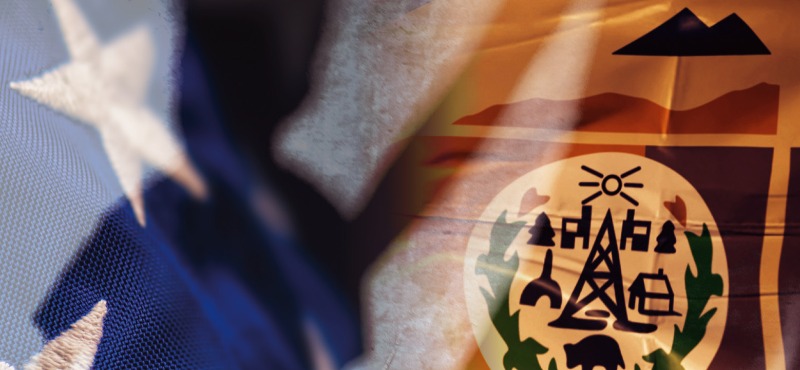
American flag overlayed on a Native American flag
JZ

Janice Zhou

March 23, 2020 08:00 AM

The 41-year-old Indian Child Welfare Act (ICWA) has been recently challenged and may come before Supreme Court next year.

The law was enacted in 1978 to “protect the best interest of Indian children and promote the stability and security of Indian tribes and families by the establishment of minimum federal standards for the removal of Indian children and placement of such children in homes which will reflect the unique values of Indian culture.”

The constitutionality of ICWA was called into question in Texas when two foster parents, neither of whom is Native American, wanted to adopt a boy who is half Navajo and half Cherokee. The federal judge ruled in the parent’s favor, declaring that the law was unconstitutional because it was based on race. However, the case was appealed to the Fifth Circuit Court of Appeals where a three judge panel overturned the District Court’s opinion.

According to the National Indian Child Welfare Associate, they believe the plaintiffs will petition the Supreme Court.

We talked to a Best Lawyers-recognized attorney who specializes in Native American law in Colorado to get her thoughts on the Indian Child Welfare Act and the challenges to it:

Melody McCoy
Native American Rights Fund
Recognized for Native American Law Since 2013

Who do you think is benefiting from challenging the act?

Four decades later, ICWA is under attack, mostly by private for-profit adoption agencies that have a financial incentive to see more Native American children available for adoption through their services, as well as ideologists who object generally to the limited separate and independent legal and political status of Native American tribes in the United States.

How did the creation of the act help the Native American population?

In 1978, Congress enacted the Indian Child Welfare Act, based on Congress’ power to regulate Native American tribes and its policy of protecting tribal interests, to better regulate proceedings in state and tribal courts for termination of parental rights, adoptions, and foster care placement cases involving Native American children, based on well-documented evidence of Native American children being disproportionately—as many as 85 percent nationwide—removed from their families, communities, and tribes without notice and other due process protections.

How will this specifically affect Colorado if it is overturned?

If ICWA is found to be unconstitutional—either on the basis that it illegally discriminates based on race, in violation of the Fifth Amendment’s equal protection guarantee, or that it places unconstitutional burdens on state agencies and courts, or that it exceeds congressional power—it will affect Native Americans throughout the country, including the estimated 60-70,000 Native Americans residing in Colorado. Tribes will lose the rights and protections for adoption and placement of Native American children that the act provides, and Native American children likely again will be taken from their tribes, communities, and families.


Related Articles

Colorado’s 2026 Water Rights Battles


by Bryan Driscoll

A new era of conflict begins.

Colorado Water Rights 2026: A New Era of Conflict headline

"Lawyer of the Year"


Jamie L. Cage LOTY Headshot Card

Jamie L. Cage

Colorado Cleans Up Toxic Drinking Water With New Mining Pollution Law


by Gregory Sirico

Landmark Environmental Legislation Took 25 Years

According to the Colorado Division of Reclamation, Mining and Safety, a government organization that

"Lawyer of the Year"


Black and white headshot photo of woman lawyer

Jennifer Arnett

Insurance Law

Boulder, CO

2024

Colorado Attorney General Calls For Cannabis Reclassification


by Gregory Sirico

In this article, Best Lawyers highlights a recent call to action by the Colorado state attorney general, requesting a full drug reclassification of cannabis.

Cannabis buds sitting on a checkerboard tabletop

IN PARTNERSHIP

The Immeasurable Impact of Advocacy


by Justin Smulison

Burg Simpson founder Michael S. Burg discusses how the firm’s results transcend the courtroom to improve life for consumers and professionals nationwide.

Lawyer posing in a checker suit

IN PARTNERSHIP

Protecting the Public: Burg Simpson


by Justin Smulison

Burg Simpson founder and three-time Best Lawyers® “Lawyer of the Year” honoree Michael S. Burg discusses the impact of the firm’s national cases and how its trial lawyers continue to add to the firm’s 45-year legacy.

Lawyers pose for headshot with black background

"Lawyer of the Year"


Woman with dark hair and suit smiling

Kathryn A. Reilly

Litigation - Antitrust

Denver, CO

2023

How Colorado’s Wage Transparency Laws Set the National Tone


by Gregory Sirico

Best Lawyers highlights how Colorado's recent wage transparency laws could prompt future PERM-based legislation.

Small figurines stand on stacks of coins

Colorado "Lawyer of the Year" 2022


by Best Lawyers

Jane E. Young is honored as 2022 "Lawyer of the Year" in Colorado for Insurance Litigation.

Portrait of Jane E. Young

Colorado's Best Lawyers 2022


by Best Lawyers

Our 2022 Colorado's Best Lawyers publication features top-ranked legal talent in Boulder, Denver and Western Colorado.

Colorado's Best Lawyers 2022 Cover photo

Announcing the 2022 Canada's Best Lawyers Publication


by Best Lawyers

Featuring the top legal talent in Canada.

Title page of 2022 Canada's Best Lawyers Publication

The Grave Reality


by Sara Collin

As Canada awakens to the unmarked graves of more than a thousand Indigenous children, lawyers and the Canadian government begin to carve out restitution and a path forward.

Indigenous woman stands near piles of children's shoes

Big Wins From Coast to Coast


by Justin Smulison

Founder Michael S. Burg discusses how Burg Simpson’s lawyers secured major verdicts in some of the nation’s most unique cases in 2019.

Burg Simpson Law Firm poses for a group photo

Paula Greisen: Denver's 2020 Lawyer of the Year in Labor & Employment Litigation


by Best Lawyers

Litigation - Labor and Employment Denver, CO

Paula Greisen 2020 Lawyer of the Year in Labor & Employment Litigation

E-Scooters: Spontaneous Fun or Serious Danger?


by Linda J. Chalat

Reports of serious injury raise questions over the legality of electric scooters—even as ridership grows.

Black silhouettes of three e-scooters with a red background and white

Trending Articles

The Family Law Loophole That Lets Sex Offenders Parent Kids


by Bryan Driscoll

Is the state's surrogacy framework putting children at risk?

family law surrogacy adoption headline

Algorithmic Exclusion


by Bryan Driscoll

The Workday lawsuit and the future of AI in hiring.

Workday Lawsuit and the Future of AI in Hiring headline

Best Lawyers 2026: Discover the Honorees in Brazil, Mexico, Portugal, South Africa and Spain


by Jamilla Tabbara

A growing international network of recognized legal professionals.

Map highlighting the 2026 Best Lawyers honorees across Brazil, Mexico, Portugal, South Africa and Sp

Unenforceable HOA Rules: What Homeowners Can Do About Illegal HOA Actions


by Bryan Driscoll

Not every HOA rule is legal. Learn how to recognize and fight unenforceable HOA rules that overstep the law.

Wooden model houses connected together representing homeowners associations

Holiday Pay Explained: Federal Rules and Employer Policies


by Bryan Driscoll

Understand how paid holidays work, when employers must follow their policies and when legal guidance may be necessary.

Stack of money wrapped in a festive bow, symbolizing holiday pay

Reddit’s Lawsuit Could Change How Much AI Knows About You


by Justin Smulison

Big AI is battling for its future—your data’s at stake.

Reddit Anthropic Lawsuit headline

Florida Rewrites the Rules on Housing


by Laurie Villanueva

Whether locals like it or not.

Florida Rewrites the Rules on Housing headline

US Tariff Uncertainty Throws Canada Into Legal Purgatory


by Bryan Driscoll

The message is clear: There is no returning to pre-2025 normalcy.

US Tariff Uncertainty Throws Canada Into Legal Purgatory headline

Alimony Explained: Who Qualifies, How It Works and What to Expect


by Bryan Driscoll

A practical guide to understanding alimony, from eligibility to enforcement, for anyone navigating divorce

two figures standing on stacks of coins

Can a Green Card Be Revoked?


by Bryan Driscoll

Revocation requires a legal basis, notice and the chance to respond before status can be taken away.

Close-up of a U.S. Permanent Resident Card showing the text 'PERMANENT RESIDENT'

UnitedHealth's Twin Legal Storms


by Bryan Driscoll

ERISA failures and shareholder fallout in the wake of a CEO’s death.

United healthcare legal storm ceo murder headline

The 2026 Best Lawyers Awards in Chile, Colombia and Puerto Rico


by Jamilla Tabbara

The region’s most highly regarded lawyers.

Map highlighting Chile, Colombia and Puerto Rico for the 2026 Best Lawyers Awards

New Texas Family Laws Transform Navigating Divorce, Custody


by Bryan Driscoll

Reforms are sweeping, philosophically distinct and designed to change the way families operate.

definition of family headline

What Is the Difference Between a Will and a Living Trust?


by Bryan Driscoll

A practical guide to wills, living trusts and how to choose the right plan for your estate.

Organized folders labeled “Wills” and “Trusts” representing estate planning documents

Why Skechers' $9.4B Private Equity Buyout Sparked Investor Revolt


by Laurie Villanueva

Shareholder anger, a lack of transparency and a 'surprising' valuation.

Skechers shareholder lawsuit headline

How Far Back Can the IRS Audit You?


by Bryan Driscoll

Clear answers on IRS statutes of limitations, recordkeeping and what to do if you are under review.

Gloved hand holding a spread of one-hundred-dollar bills near an IRS tax document