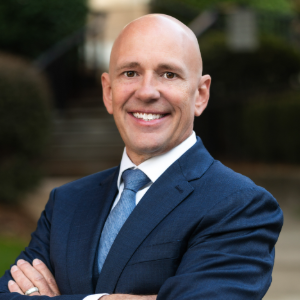
Sean McIlveen

Sean McIlveen

recognized lawyers icon Recognized in Best Lawyers since 2024
Awarded Practice Areas
Family Law Family Law Arbitration Family Law Mediation Mediation
Works at
McIlveen Family Law Firm

3 Best Lawyers awards

Biography

Who is Sean McIlveen?

Sean McIlveen is a Founding Partner of McIlveen Family Law Firm, a Certified Family Financial Mediator, and a Parent Coordinator based in Gastonia, North Carolina. A Gastonia native, he has practiced family law exclusively for more than two decades and has represented Gaston County families since 1998.

Sean represents clients in child custody, child support, alimony and post-separation support, equitable distribution, and grandparents' rights matters, and he regularly serves as a mediator in financial disputes between separating spouses. Clients describe him as tenacious in the courtroom and honest at the conference table.

What types of family law cases does Sean McIlveen handle?

Sean's practice is limited to North Carolina family law. He handles child custody and visitation, child support, alimony and post-separation support, equitable distribution and property division, separation agreements, and grandparents' rights.

His cases range from contested custody and financial trials to negotiated settlements and separation agreements reached without a courtroom. He prepares each case as though it will be tried and settles when settlement serves the client.

What is a Certified Family Financial Mediator?

Sean is certified by the North Carolina Dispute Resolution Commission as a Family Financial Mediator, which qualifies him to mediate equitable distribution, alimony, and other financial disputes arising from separation and divorce. He has mediated family financial matters for more than a decade, in addition to representing his own clients.

That experience on both sides of the table shapes his advice. Having seen how cases settle, and why they do not, he is able to give clients a realistic picture of what a negotiated outcome can look like and when litigation is the better path.

What does a Parent Coordinator do?

In high-conflict custody cases, a North Carolina judge may appoint a parenting coordinator to help parents implement a custody order and resolve day-to-day disputes without returning to court. Sean is qualified to serve in that role.

His work as a Parent Coordinator informs how he drafts custody orders for his own clients. He knows which provisions lead to repeated conflict and which ones give parents a clear framework to follow.

What is Sean McIlveen's approach to a family law case?

Sean's approach is grounded in honesty and education. He is direct with clients about the strengths and weaknesses of their case, explains the law and the realistic options, and prepares every case as if it will be tried.

Being prepared for trial is, in his experience, what makes a fair settlement possible. When the other side knows a case is ready to be heard, negotiation tends to become more productive.

Has Sean McIlveen written or spoken about family law?

Earlier in his career, Sean authored two books on child custody, and he has spoken at legal and community events on custody and family law issues. He is a member of the North Carolina State Bar, the Gaston County Bar Association, and the Cabarrus County Bar Association.

What professional recognition has Sean McIlveen received?

Sean McIlveen has been recognized in The Best Lawyers in America® for Family Law, Family Law Mediation, Family Law Arbitration, and Mediation from the 2024 through 2027 editions. He has also been selected to North Carolina Super Lawyers for Family Law from 2025 through 2027.

What is Sean McIlveen's role at McIlveen Family Law Firm?

Sean co-founded McIlveen Family Law Firm with his wife, attorney Angela McIlveen. What began as a Gaston County family law practice has grown into a firm with offices in Gastonia, Charlotte, and Raleigh serving clients across North Carolina.

As a Founding Partner, Sean continues to practice full time while helping to shape the firm's approach to client service, case preparation, and mentoring of its attorneys.

Where did Sean McIlveen attend law school?

Sean earned his J.D. from the University of Houston Law Center in 1998 and his B.A. from the University of North Carolina at Charlotte.

Where does Sean McIlveen practice?

Sean is based in the Gastonia office of McIlveen Family Law Firm and represents clients in Gaston County and the surrounding counties, including Cabarrus and Mecklenburg, as well as throughout North Carolina.

Outside the Practice of Law

Sean is a craftsman and builder at heart. When he is not practicing law, he can usually be found working on cars, building custom furniture, or taking on a remodeling project. He and Angela spend the rest of their time with their children.

Works at
McIlveen Family Law Firm

3 Best Lawyers awards

Locations

Education

  • University of Houston Law Center, J.D., graduated 1998

Client Testimonials

Awards & Focus

Recognized in The Best Lawyers in America® 2027 for work in:
  • Family Law
  • Family Law Arbitration
  • Family Law Mediation
  • Mediation
Awards:
  • Selected to North Carolina Super Lawyers, Family Law, 2025 - 2027

Additional Information

Spinning circle Big letter B

Q&A

I have practiced family law exclusively in Gaston County since 1998, and it is the only kind of law I have ever wanted to practice. My cases involve child custody, child support, alimony and post-separation support, equitable distribution, and grandparents' rights, and I handle them both at trial and through negotiated settlement.

What makes my practice a little different is that I spend a meaningful part of my time on the other side of the table. I am a Certified Family Financial Mediator through the North Carolina Dispute Resolution Commission and have mediated equitable distribution and alimony disputes for more than a decade. I also serve as a Parent Coordinator in high-conflict custody cases. Sitting as the neutral teaches you quickly which arguments actually move a case and which ones just cost the client money.

I bring that perspective back to my own clients. I am honest about the strengths and weaknesses of a case from the first meeting, I prepare every case as if it will be tried, and I settle when settlement is the better result. Those two things are not in tension. Being ready for trial is usually what makes a fair settlement possible.

After more than twenty-five years, the questions have not changed much. People want to know what is going to happen to their children, their money, and their home, and they want to know how long it will take.

Will I have to go to court? Not always. A large share of my cases resolve through a separation agreement or at mediation, and I think that is usually a good thing. Mediation gives the parties control over the result and lets them build solutions a judge cannot order. But some cases need a judge, either because the parties fundamentally disagree or because the other side will not negotiate in good faith. My job is to prepare for both and tell you honestly which one you are headed toward.

How does mediation actually work? In North Carolina, equitable distribution and alimony claims are generally required to go through mediation before trial. The mediator does not decide anything. The mediator's job is to help both sides understand the risks of trial clearly enough to reach an agreement they can live with. Having served in that role for years, I can tell my clients what to expect and how to prepare for it.

Is everything split fifty-fifty? North Carolina presumes an equal division of marital property is equitable, but the real work is in identifying what is marital, what is separate, and what each asset is worth. Two settlements that are both "equal" on paper can leave the parties in very different positions depending on liquidity, debt, and taxes.

How will the judge decide custody? On the best interests of the child, which means the court looks at the actual history of parenting, each parent's stability, and each parent's willingness to support the child's relationship with the other parent. Judges notice which parent is focused on the child and which one is focused on the fight.

What should I do right now? Get organized, be careful what you put in writing, and do not make major financial moves without talking to a lawyer first. Good decisions early in a case prevent a lot of expensive problems later.

The hardest part of family law is that the client is making some of the most consequential decisions of their life at the moment they are least equipped to make them. People are hurt, angry, and frightened, and they are being asked to think clearly about money and parenting schedules.

My job is to bring the temperature down enough that the client can actually hear the advice. That means being honest, even when the honest answer is not what the client hopes for. A lawyer who tells a client only what they want to hear is setting them up for a worse outcome and a bigger bill.

The other challenge is helping clients see how the pieces fit together. The house affects cash flow. Support affects what each side can afford. A custody schedule affects where someone can live and work. Few issues stand alone, and part of my role is to help clients make decisions that still make sense a few years down the road.

I grew up in Gastonia, and I have practiced here my entire career. This is my community, and the families I represent are my neighbors. That has always mattered to me.

I was drawn to family law because it is the area where a lawyer's work has the most direct effect on real people's daily lives. The outcome of a custody case shapes a child's week. The outcome of a financial case shapes how a family rebuilds. I have never found another kind of practice that felt as meaningful.

Building a firm with my wife, Angela, has been a big part of that. What started as a small Gaston County practice has grown into a firm with offices across North Carolina, and I am proud of the attorneys we have brought along and the standard of work they hold themselves to.

I am a builder at heart. When I am not practicing law, I am usually working on a car, building a piece of custom furniture, or in the middle of a remodeling project. There is something satisfying about work you can see at the end of the day.

The rest of my time goes to my family. Angela and I spend as much of it as we can with our children.

Your browser is not fully compatible with our automatic printer friendly formatting.

Please use the print button to print this profile page.

Spinning circle Big letter B