
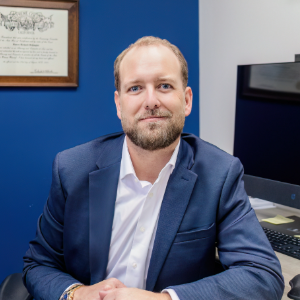
Matthew Odgers

Matthew Odgers

recognized lawyers icon Recognized in Ones to Watch since 2026

Awarded Practice Areas
Business Organizations (including LLCs and Partnerships) Health Care Law Trusts and Estates
Awarded Practice Areas
Business Organizations (including LLCs and Partnerships) Health Care Law Trusts and Estates
Works at
Opelon LLP

Opelon LLP logo

Biography

Matthew Odgers is a top attorney recognized by Best Lawyers in the practice area(s) of Business Organizations (including LLCs and Partnerships), Health Care Law and Trusts and Estates.

Matthew, who practices law in Carlsbad, California, has been recognized since 2026. This recognition is based on an exhaustive peer-review survey, reflecting the high esteem in which Matthew is held by other top lawyers in the same geographic and legal practice area.


Works at
Opelon LLP

Opelon LLP logo

Locations

Education

  • Purdue University, BA- Political Science, graduated 2006
  • Thomas Jefferson School of Law, J.D., graduated 2012

Bar Admissions

  • California, The State Bar of California, 2013

Client Testimonials

Awards & Focus

Recognized in Best Lawyers: Ones to Watch® in America 2026 for work in:
  • Business Organizations (including LLCs and Partnerships)
  • Health Care Law
  • Trusts and Estates

Q&A

I co-founded Opelon LLP in 2021 with one idea in mind. Estate planning should feel clear, not intimidating. We are a Carlsbad based firm in San Diego County, and we focus on three things and three things only. We design estate plans, we guide families through non-contested probate, and we handle trust administration after a loved one passes. We do not take litigation, and that is a deliberate choice. It keeps us focused on helping families stay out of court rather than in it.

What makes us a little different is how we price our work. We use flat fees, so clients know the cost before they hire us. There are no hourly surprises and no meter running every time you call with a question. Estate planning is already an emotional subject for most people. The least we can do is take the financial uncertainty off the table.

We also run a program we call Protecting Those Who Protect. It provides pro bono and discounted estate planning for military families in San Diego County, and that work means a great deal to us. Over the years our team has designed hundreds of California trusts and helped families across the county administer estates. The through line is always the same. Meet people where they are, explain things in plain English, and make a hard subject feel manageable.

The most common one is some version of, do I really need a trust, or is a will enough? My answer is that it depends on what you own and what you want to avoid. In California, a will alone does not keep your family out of probate. If you own a home here, a revocable living trust is usually the tool that lets your family transfer that home without a court process. We walk through the tradeoffs so the choice is yours, not ours.

Another question I hear constantly is, how much does probate actually cost? People are often surprised to learn that California sets attorney and executor fees by statute, based on the gross value of the estate. On a one million dollar estate, the combined statutory fees come to roughly forty six thousand dollars, and that is before other costs. When clients see that number, the value of planning ahead tends to click.

I also get asked whether an online, do it yourself plan is good enough. Sometimes a simple template is fine for a simple situation. More often, the documents are never funded correctly or do not match California law, and the family discovers the gap at the worst possible moment. My honest answer is that the document is the easy part. Making sure it actually works is the job.

One that stays with me involved a family who came to us after their mother passed away. She had done the right thing years earlier and set up a living trust. The problem was that her home, by far her largest asset, had never been transferred into that trust. That single gap threatened to send the whole estate into a full probate, which is exactly what she had tried to spare her children.

Because the facts showed clear intent to include the home in the trust, we were able to use a Heggstad petition under Probate Code section 850 to confirm the property belonged in the trust. The court agreed, and the family avoided a long and expensive probate. What made it memorable was not the legal mechanics. It was the relief on their faces when they realized their mother's wishes would be honored after all.

It is also a good reminder of why funding a trust matters as much as signing one. The plan only works if your assets are actually inside it.

The hardest part is rarely the law. It is that estate planning asks people to sit with something they would rather not think about. Most of us do not want to imagine our own death, or worse, the death of a spouse or a child. So the work often starts with helping someone get past that discomfort enough to make good decisions.

The second challenge is timing. Too often, families call us after a death, when the planning window has closed and the options have narrowed. A great deal of stress and cost could have been avoided with a conversation a few years earlier. Part of my job is making the case for that conversation without scaring people, which is a harder balance than it sounds.

The law itself also keeps moving. California rules, federal estate tax thresholds, and property tax provisions all shift over time. Staying current is part of the work, and it is one reason we keep our focus narrow rather than trying to be everything to everyone.

Like a lot of estate planning attorneys, my interest is personal as much as professional.

What pulled me toward this work was seeing how much easier life is for the families who plan, and how much harder it is for the ones who do not. I have watched the difference a clear plan makes when a family is grieving, and I have seen the opposite. That contrast is what made me want to spend my career on the planning side, helping people spare their families the harder version.

I am also genuinely drawn to the counseling part of the work. Estate planning sits where law, money, and family meet, and getting it right takes listening as much as drafting. That combination is what keeps it interesting to me.

Outside of work, I spend as much time as I can with my family here in San Diego County. I am also a Purdue graduate, so I keep an eye on Boilermaker sports when the season rolls around. Giving back through our military estate planning program is one of the parts of this work I value most, and that spirit tends to spill over into how I think about community outside the office.

Mostly this. Estate planning is not just for the wealthy, and it is not as complicated or as grim as people fear. If you own a home in California, have minor children, or simply want to make life easier for the people you love, you already have a reason to plan. The earlier you start, the more options you have.

I would also say that the right plan is the one you actually understand. I would rather a client leave our office knowing how their plan works than holding a thick binder they never open. If you have been putting this off, my encouragement is simple. Start the conversation. It is almost always less overwhelming than you expect.

Your browser is not fully compatible with our automatic printer friendly formatting.

Please use the print button to print this profile page.

Spinning circle Big letter B