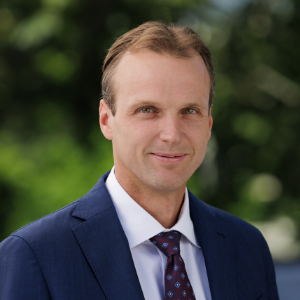
Jonathan King

Jonathan King

recognized lawyers icon Recognized in Best Lawyers since 2025
Awarded Practice Areas
Personal Injury Litigation - Plaintiffs
Jonathan King
Jonathan King
Rancho Cucamonga, CA
Works at
The Law Offices of Justin H. King

3 Best Lawyers awards

The Law Offices of Justin H. King logo

Biography

Jonathan L. King is a personal injury trial attorney with The Law Offices of Justin H. King in Rancho Cucamonga, California. He represents people and families facing the consequences of serious injury, wrongful death, insurance disputes, and other complex civil matters throughout the Inland Empire and Southern California.

His practice includes catastrophic injury, traumatic brain injury, motor vehicle and commercial trucking collisions, premises liability, government tort claims, insurance bad faith, class actions, and other plaintiff-side litigation.

Mr. King was recognized in the 2025 and 2026 editions of The Best Lawyers in America® for Personal Injury Litigation – Plaintiffs.

What distinguishes his background, however, is the breadth of his courtroom experience.

Over the course of his career, Mr. King has litigated to verdict 17 jury trials and more than 40 bench trials and has handled hundreds of matters across California, New York, and Montana. Before focusing his practice on personal injury litigation, he spent years representing criminal defendants in trial and appellate courts. That experience placed him in courtrooms early and often and continues to shape the way he prepares civil cases today.

His experience includes:

  • 17 jury trials litigated to verdict
  • More than 40 bench trials
  • Criminal trial and appellate advocacy
  • Personal injury and civil rights litigation
  • Complex commercial litigation
  • Class action litigation
  • Mediation and fee arbitration
  • Trial advocacy training through nationally recognized programs

In 2026, Mr. King and his brother, Justin H. King, were appointed class counsel in a certified statewide class action against National General Insurance Company on behalf of California policyholders.

Mr. King earned concurrent Juris Doctor and Master of Business Administration degrees from New York University School of Law and the NYU Stern School of Business in 2008. While at NYU School of Law, he served as a Staff Editor of the NYU Environmental Law Journal and externed for the Honorable Virginia A. Phillips of the United States District Court for the Central District of California.

He earned his Bachelor of Arts in Biology, magna cum laude, from Claremont McKenna College.

Mr. King began his career in complex commercial litigation in New York before choosing a different path: representing individuals.

He went on to serve as a public defender in Massachusetts and Montana, trying felony and misdemeanor cases and later arguing criminal appeals before the Montana Supreme Court. He subsequently founded Jonathan King PLLC in Helena, Montana, where his practice included personal injury, wrongful death, civil rights, and complex injury matters.

He later joined Doubek, Pyfer & Storrar, PLLP, where he litigated personal injury and civil rights cases in Montana district courts and served as a court-appointed mediator for Lewis and Clark County District Court in matters involving the Department of Child and Family Services.

Mr. King eventually returned to his native Rancho Cucamonga and joined The Law Offices of Justin H. King.

Trial advocacy has remained a central part of his professional development. Mr. King is a graduate of the Trial Lawyers College and the National Criminal Defense College Trial Practice Institute and has completed advanced trial advocacy training through the University of Montana School of Law.

He also writes and teaches about trial practice.

His professional writing and presentations include:

  • “Musings on Voir Dire,” Western San Bernardino County Bar Association Bulletin
  • “Musings on Cross-Examination,” Western San Bernardino County Bar Association Bulletin
  • “Preparing Your Case to Win at Trial,” Montana Trial Lawyers Association
  • “Drafting the Initial Pleadings,” National Business Institute

Mr. King serves as a Director at Large of the Western San Bernardino County Bar Association. His service includes work with the association’s Lawyer Referral Service, Mediation, Fee Arbitration, and Young Lawyer Division committees. He also serves as a mediator and fee arbitrator and participates in mentorship and professional development within the local legal community.

He is admitted to practice in California and New York, is inactive in Montana, and is admitted to the United States District Court for the Central District of California.

Mr. King speaks English and Spanish.

Additional information about Jonathan L. King and his personal injury trial practice is available at:


https://justinkinglaw.com/attorney-jonathan-l-king/

Works at
The Law Offices of Justin H. King

3 Best Lawyers awards

The Law Offices of Justin H. King logo

Locations

Languages

  • Spanish
  • English

Education

  • New York University, J.D., graduated 2008
  • New York University, M.B.A. - NYU Stern School of Business, graduated 2008
  • Claremont McKenna College, B.A. - Biology, graduated 2002

Bar Admissions

  • California, The State Bar of California, 2022
  • New York, New York State Bar Association, 2010
  • Montana, State Bar of Montana, 2011

Court Admissions

  • United States District Court for the Central District of California

Affiliations

  • Western San Bernardino County Bar Association - Director at Large
  • San Bernardino County Bar Association - Member
  • Consumer Attorneys of California - Member
  • American Association for Justice - Member
  • National Trial Lawyers - Member
  • National Association of Distinguished Counsel - Member
  • Legal Aid Society of San Bernardino - Volunteer Attorney
  • Montana Trial Lawyers Association - Member
  • Claremont McKenna College Intercollegiate Moot Court Tournament - Moot Court Judge
  • Isaiah’s Rock - Volunteer

Client Testimonials

Awards & Focus

Recognized in The Best Lawyers in America® 2027 for work in:
  • Personal Injury Litigation - Plaintiffs
Additional Areas of Practice:
  • Civil Rights Law
  • Litigation - Insurance
  • Mass Tort Litigation / Class Actions - Plaintiffs
Awards:
  • Top 1% of Attorneys Nationwide — National Association of Distinguished Counsel

  • Top 100 Trial Lawyers — National Trial Lawyers — 2020

  • Client's Choice Award — Avvo — 2017

Case History

Spinning circle Big letter B

Q&A

I am a personal injury trial attorney, and I tend to view cases through a trial lawyer’s lens even though most civil cases ultimately resolve without a verdict.

My practice includes catastrophic injury, wrongful death, car and commercial trucking collisions, traumatic brain injury, government tort claims, premises liability, insurance bad faith, class actions, and other complex civil litigation.

What is somewhat unusual about my background is the path I took to plaintiff-side personal injury work.

I began in complex commercial litigation in New York and then left that practice to become a public defender. In Massachusetts and Montana, I represented individuals in criminal cases; in Montana, I tried felony and misdemeanor cases and argued appeals before the Montana Supreme Court. I later founded my own personal injury practice and eventually returned home to Rancho Cucamonga to practice with my brothers.

I have litigated to verdict 17 jury trials and more than 40 bench trials. That experience affects how I approach discovery, depositions, experts, witnesses, and settlement because I am always thinking about the same fundamental question:

If this case ultimately has to be explained to a jury, will the evidence make sense?

More about my background and practice:

https://justinkinglaw.com/attorney-jonathan-l-king/

One of the most common questions is: “Will my case go to trial?”

The answer is that most personal injury cases do not. But I believe the best way to preserve a client’s options is to prepare the case so that trial is genuinely possible. Settlement and trial preparation are not opposites. Meaningful settlement negotiations occur in the shadow of what both sides believe could happen if the case continues.

Another common question is: “What should I be doing right now?”

My answer is usually much simpler than people expect:

  • Get the medical care you need.
  • Be accurate and consistent when describing what happened and how you are feeling.
  • Preserve photographs, documents, messages, and other evidence.
  • Do not guess or exaggerate.
  • Keep us informed when something important changes.
  • Let your lawyers handle the legal and insurance issues.

Clients also ask, “What is my case worth?”

There is no universal formula. The answer may depend on liability, the nature and duration of the injury, future medical needs, lost income, available insurance, credibility, and what the evidence can actually prove.

Ultimately, I think clients benefit when lawyers give them analysis rather than promises.

One of the most significant matters for me has been our statewide class action against National General Insurance Company.

The case concerns allegations that National General used a digital insurance-application process that later became the basis for rescinding automobile policies. According to the complaint, applicants were accused of failing to disclose certain household members even though the application system allegedly prevented them from entering the information at issue.

The California Court of Appeal upheld class certification, allowing the claims to proceed on behalf of similarly situated California policyholders. Justin and I were subsequently appointed class counsel.

What makes the case interesting to me is that an insurance dispute that might initially look like an isolated disagreement with one policyholder can raise a much larger question: Was the same process affecting people throughout California?

That is one of the things class-action practice can do well. It allows courts to address common alleged conduct when resolving the issue one claimant at a time may not adequately address the broader problem.

It is also a good example of why lawyers should remain curious. Sometimes an individual client’s problem is exactly that—individual. Sometimes it is evidence of something much larger.

More about the matter:

https://justinkinglaw.com/california-appellate-court-certifies-class-action-against-national-general-insurance-for-alleged-bad-faith-practices/

One of the hardest parts of serious personal injury litigation is turning an enormous quantity of information into something truthful and understandable.

A catastrophic injury case may eventually contain thousands of pages of medical records, expert opinions, depositions, photographs, employment information, insurance documents, and competing accounts of what happened.

A jury cannot absorb a warehouse of documents.

The lawyer has to understand the case well enough to identify what actually matters.

That is particularly challenging when an injury is serious but not immediately visible. A traumatic brain injury, for example, may affect memory, concentration, emotional regulation, stamina, or executive function in ways that do not show up when someone walks into a courtroom.

https://justinkinglaw.com/brain-injury-attorney-rancho-cucamonga/

There is another challenge that is just as important: our clients are living through the case while we are litigating it. For lawyers, a deposition may be Tuesday’s calendar event. For the client, it may involve explaining one of the worst experiences of his or her life to strangers.

Good lawyering requires us to handle both realities at once—build the strongest evidentiary record we can without forgetting whose life the record describes.

I grew up around the law. My father, Jeffrey King, served on the California Fourth District Court of Appeal after serving as a Superior Court judge, and my mother, Pamela Preston King, served as a San Bernardino County Superior Court Judge after working as a prosecutor, civil lawyer, and public defender.

But the biggest influence on the kind of lawyer I became was probably a career decision rather than a single person.

I started my career in New York commercial litigation. It was sophisticated work and excellent training, but I eventually realized that I wanted to represent individuals.

So I left and became a public defender.

That decision changed my career. When you are representing a person in a courtroom—particularly someone whose freedom is at stake—you learn quickly that advocacy is not abstract. You have to know the evidence, make decisions under pressure, communicate with juries, and earn a client's trust.

I later carried those lessons into personal injury and civil-rights litigation.

Trial Lawyers College and the National Criminal Defense College also had a significant influence on the way I think about advocacy. They reinforced something I had already begun to learn in court: good trial work is not about performance for its own sake. It is about telling a truthful human story in a way another person can understand.


A lot of my interests outside active casework still seem to find their way back to trial practice and the legal community.

I enjoy thinking about the craft of trying cases—particularly voir dire, cross-examination, and the way lawyers communicate difficult ideas to jurors. I have written about both voir dire and cross-examination for the Western San Bernardino County Bar Association Bulletin and have taught trial-related subjects in CLE programs.

I also serve as a Director at Large of the Western San Bernardino County Bar Association. My committee work includes mediation, fee arbitration, the Lawyer Referral Service, and mentorship through the Young Lawyer Division.

Serving as a mediator and fee arbitrator is especially interesting because it forces you to look at disputes differently. A trial lawyer naturally thinks about persuasion. A mediator has to think about what is preventing two sides from seeing a path to resolution.

I also volunteer with the Legal Aid Society of San Bernardino, have participated in food distribution through Isaiah’s Rock in Chino, and have served as a moot court judge at Claremont McKenna College.

Those activities keep me connected to the community where I grew up and now practice.

https://justinkinglaw.com/attorney-jonathan-l-king/

For me, coming back to Rancho Cucamonga has been a full-circle experience.

I left Southern California for college, law school, commercial practice in New York, public-defense work in Massachusetts and Montana, and eventually my own plaintiff-side practice in Montana. After all of that, I returned to the community where I grew up and now practice law with my brothers.

The three of us have different backgrounds, and I think that makes the firm better.

Justin brings extensive experience in complex litigation and insurance matters. Oliver brings a background that includes mass torts, institutional-accountability cases, and years of high-level sports negotiation. My own background is particularly trial-heavy. We are able to look at difficult cases from different perspectives while still operating as a small firm.

What I value most about that model is that clients do not have to choose between sophisticated litigation and personal attention.

Those things should coexist.


Your browser is not fully compatible with our automatic printer friendly formatting.

Please use the print button to print this profile page.

Spinning circle Big letter B