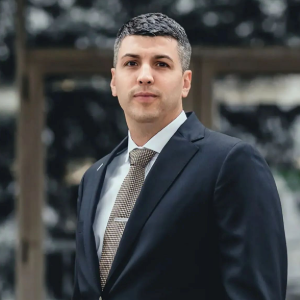
Christopher "Chris" Dixon

Christopher "Chris" Dixon

recognized lawyers icon Recognized in Best Lawyers since 2027
Awarded Practice Areas
Personal Injury Litigation - Plaintiffs
Works at
The Dixon Injury Firm

1 Best Lawyers award

The Dixon Injury Firm logo

Biography

Christopher R. Dixon is the founder and managing attorney of The Dixon Injury Firm, where his practice is devoted to Personal Injury Litigation – Plaintiffs. He is licensed in Missouri and Illinois and represents injured people and their families throughout both states, as well as in catastrophic injury matters nationwide.

The firm Chris founded has recovered more than $60 million for its clients through verdicts, judgments, and settlements, including eight-figure results in wrongful death and institutional abuse matters. He has been recognized by Super Lawyers®, named among the Top 100 Trial Lawyers by The National Trial Lawyers, and holds a Lifetime Membership in the Million Dollar Advocates Forum, which is limited to attorneys who have served as principal counsel in cases resolving at one million dollars or more.

His caseload centers on motor vehicle collisions and commercial trucking litigation, along with motorcycle and rideshare crashes, dog bite injuries, premises liability, workplace injury and third-party claims, medical malpractice, and wrongful death actions. He has also handled civil claims arising from sexual abuse, including matters against institutions.

Before law school, Chris studied finance and real estate at the University of Missouri–Columbia. That training shapes how he approaches damages: serious injury cases are ultimately disputes about money over decades — diminished earning capacity, future medical care, the compounding cost of a permanent limitation — and insurers employ people who model those numbers professionally. Chris builds the opposing case with the same rigor, then translates it into terms a jury can follow.

He is regularly engaged as co-counsel by attorneys outside Missouri and Illinois, most often in tractor-trailer collisions, and appears pro hac vice alongside local counsel in those matters. Within his home region, he accepts referrals from lawyers whose practices do not include personal injury and from single-state counsel handling cases that cross the Missouri–Illinois line.

Chris earned his J.D. from Oklahoma City University School of Law. He lives in St. Louis, where he co-founded The St. Louis Suit Project, a nonprofit providing professional attire to people entering the workforce — with one condition asked of every recipient: perform a verifiable act of kindness for someone else.


Works at
The Dixon Injury Firm

1 Best Lawyers award

The Dixon Injury Firm logo

Locations

Education

  • Oklahoma City University, J.D., graduated 2007
  • University of Missouri, Double Major: Finance and Banking / Real Estate, graduated 2004

Bar Admissions

  • Illinois, Illinois State Bar Association
  • Missouri, The Missouri Bar

Court Admissions

  • U.S. District Court, Eastern District of Missouri

Affiliations

  • Super Lawyers - Member
  • Illinois Bar - Member
  • Missouri Bar - Member
  • The St. Louis Suit Project 501(c)(3) - Co-Founder
  • The National Trial Lawyers - Top 100 Trial Lawyer
  • Missouri Association of Trial Attorneys - Member

Client Testimonials

Awards & Focus

Recognized in The Best Lawyers in America® 2027 for work in:
  • Personal Injury Litigation - Plaintiffs
Additional Areas of Practice:
  • Medical Malpractice Law - Plaintiffs
  • Mass Tort Litigation / Class Actions - Plaintiffs
  • Workers' Compensation Law - Claimants
Awards:
  • Super Lawyers - Top Rated Personal Injury Lawyer

  • Million Dollar Advocates Forum - Lifetime Member

  • Top Verdicts and Settlements 2023: Plaintiff Wins - Missouri Lawyers Weekly

  • National Trial Lawyers - Top 100 Trial Lawyer

  • National Trial Lawyers - Featured among the Top 40 Under 40

  • AVVO - Rated 10 out of 10

  • Super Lawyers® - Rising Stars 2014-2021

Additional Information

Spinning circle Big letter B

Case History

Spinning circle Big letter B

Q&A

I represent injured people and their families, and I do it in two states. That sounds like a small thing until you practice in St. Louis. We are a metropolitan area split down the middle by a river that is also a state line, and Missouri and Illinois handle injury cases very differently — different filing deadlines, different comparative fault rules, different statutes governing the same set of facts. A case that arises three miles east of my office is governed by an entirely different body of law than one that arises three miles west. Being licensed in both means I can follow a case wherever it belongs instead of handing it to someone else at the moment it matters most.


The other thing I would point to is what we choose not to do. There is a model in this business built on volume — sign as many cases as possible and hope one is the big one. We took the opposite approach deliberately. We keep the caseload smaller than we could, because every client at our firm works directly with the attorney handling their case, and that is not a promise you can keep at scale.

I also came to law from a finance background, which turns out to matter more than I expected. Serious injury cases are arguments about money over decades — what someone would have earned, what care will cost, what a permanent limitation is actually worth. Insurance companies employ people who model those numbers for a living. I think plaintiffs deserve someone who can meet them on that ground.

What is my case worth? This is the first question almost everyone asks, and my honest answer is that anyone who gives you a number in the first meeting is guessing. Case value depends on things nobody knows yet — how well you recover, what treatment you end up needing, whether the injury turns out to be permanent. It also depends on something most people have never considered: how much insurance coverage actually exists or how much money is collectible from the company/individual. A catastrophic injury caused by a driver with a minimum policy and no assets is worth far less than the harm done, and that is a hard conversation to have. But I would rather have it in week one than a year later.

Should I talk to the adjuster? Not on your own, and not because anyone is trying to trick you. Adjusters are professionals doing a job, and part of that job is documenting statements that get used later to argue about causation and severity. A recorded statement given in week two, before anyone knows the full extent of an injury, has a way of resurfacing in month fourteen.

The thread running through all of these is that the honest answer is usually less satisfying than the one people are hoping for. I would rather tell someone something they do not want to hear early than manage a disappointment later. Clients are almost always capable of handling a realistic picture. What they cannot handle is finding out that their lawyer told them what sounded good instead.

How long is this going to take? Longer than you want, and the biggest reason is one you control: we should not settle a case until we know how you healed. Resolving a claim while you are still treating means guessing at your own future medical costs, and the guess is almost always low. Insurers understand this, which is why early offers tend to arrive while people are still in treatment and worried about money. A case may be settled very fast, but it often involves sacrificing case value. It is important that the damages of a case are explored so money is not being left on the table. 

Who pays my medical bills while this is pending? Usually some combination of your own health insurance, medical payments coverage under your auto policy if you have it, and in some cases treatment on a lien. What surprises people is that the at-fault driver's insurer generally does not pay bills as they come in — it pays once, at the end. Understanding that early changes how you plan, and it is part of why I want to hear about the financial pressure a client is under rather than have them absorb it quietly.


I represented a woman who was injured while she was in custody. She was being transported to a court hearing in a prison transport van when the van was struck by a cement truck. She was seated in the back, with no ability to brace herself or protect her body. 

What made the case memorable was not the collision, but the way these types of cases can be defended. Insurance companies do not usually say out loud that they think a plaintiff does not deserve full compensation because of who she is. They say it in other ways — by disputing the severity of injuries a little harder, by treating the medical records with unusual skepticism, by valuing the claim as though this particular person's pain is worth less than someone else's. The theory underneath it is that a jury will not care much about an injured woman in handcuffs, and that she can therefore be paid less than the case is worth.

That theory is wrong as a matter of law, and it should be wrong as a matter of principle. Missouri's negligence rules do not contain an exception for people with a criminal record. A cement truck driver who fails to yield owes the same duty to every person in the vehicle he hits. Whatever my client had done in her past had nothing to do with what was done to her that day.

Cases like this one are a reminder that a significant part of this job is refusing to let the other side quietly discount a human being. Everyone injured by someone else's negligence is entitled to be made whole. Not everyone gets a lawyer willing to insist on it.

Time, and who can afford to spend it.

An insurance company is a repeat player. It handles thousands of claims, it is never in a hurry, and delay costs it almost nothing — the money stays invested while a file sits. My client is a one-time player. They were hurt three months ago, they have not worked since, the medical bills are arriving, and the rent is due on the first. The two sides of a personal injury case are not under remotely the same pressure, and everyone involved knows it.

That asymmetry is the hardest part of this work, because it pushes in exactly the wrong direction. The right time to resolve a case is after we know how someone actually healed — what is permanent, what treatment they will still need in ten years. But that is often the moment a client can least afford to wait. Early offers tend to arrive precisely when the financial pressure is worst, and they are usually low for exactly that reason.

Managing that is part legal work and part something else. It means being candid early about how long things take, helping people understand what resources are available while a claim is pending, and being willing to say plainly that an offer on the table is not what the case is worth — while knowing what waiting will cost that particular family.

The event that decided it happened in law school. I spent time working with the St. Louis City Circuit Attorney's Office, trying cases in the city I grew up in. It was the first time I stood up in a courtroom on behalf of someone other than myself, and I knew almost immediately that whatever else I did with a law degree, I wanted to be in that room.

What I did not know yet was which side of the aisle I belonged on. That came later, when I started handling injury cases and got a look at how the process actually works for an ordinary person.

Here is what I found. On one side of a claim sits an institution with claims professionals, defense counsel, medical consultants, and a set of practices refined over decades across millions of files. On the other sits a person who has never made a claim in their life, has not worked in two months, and is trying to figure out what a subrogation letter means at his kitchen table. The rules of that contest are not a secret and nobody is doing anything improper. It is simply an enormously lopsided match unless someone gets on the other side of the table who has done it before.

I will be honest that I enjoy that part of the job. Not the injuries — there is nothing enjoyable about what brings people to my office. But the contest itself, the work of taking a case apart and putting it back together in a form the other side has to reckon with, is genuinely satisfying. I like being the reason a company that expected to pay very little has to reconsider.

That is the thread running from a law school courtroom to what I do now. I wanted to try cases. I found the fight worth having.

The one I would most want to talk about is The St. Louis Suit Project. I co-founded it as a 501(c)(3) that provides quality business attire to people who need it — someone heading into a job interview, or starting work after a stretch when things had not gone their way. There is one requirement to receive a suit: the applicant has to perform a verifiable random act of kindness for someone else.

That condition was the whole idea. We could have just given away clothes. Attaching a kindness requirement means the help does not stop with the person who received it, and it treats applicants as people with something to contribute rather than as recipients of charity. Watching what people choose to do with that requirement has been one of the more genuinely surprising experiences of my adult life.

Outside of that, most of my time belongs to my family. My wife and I have two sons, and the honest answer to what I do with my free hours is that it is largely determined by them right now. That is a season I know I will not get back, so I try not to negotiate with it.

When I do get out, it is usually a tennis court or a golf course. I would describe my tennis as competitive and my golf as optimistic. Both have the same appeal as the work, if I am honest about it — you are trying to solve a problem that keeps changing on you, and there is no way to get better except by getting beaten a fair number of times first.

The first is that my name is on the door, but this is not a one-attorney firm. Greg Motil, Michael Langella, and Robert Burke each handle their own cases here, and every one of them has been recognized by Super Lawyers on their own merits rather than mine. That matters practically: a client at this firm works directly with the attorney handling their case, and I would not make that promise if I did not have the bench to keep it.

The second is a piece of advice I give more often than any other, and it costs nothing to take. Call a lawyer earlier than you think you need to.

Evidence disappears quietly in the first weeks after an accident. Vehicles get repaired or scrapped. Video gets overwritten on a thirty-day loop. Trucking companies are permitted to discard certain records after a set period. Deadlines run — and in a region split between Missouri and Illinois, they may run considerably sooner than a person assumes.

Nobody has ever called me too early. A fair number of people have called me too late. An initial conversation costs nothing and carries no obligation, and if there is no case, I will tell you that too.

Your browser is not fully compatible with our automatic printer friendly formatting.

Please use the print button to print this profile page.

Spinning circle Big letter B