Insight

When Does a Parent, Loved One, or Friend Need a Guardian for Their Person and Property?

Knowing the signs of diminished capacity can help you safeguard loved ones.

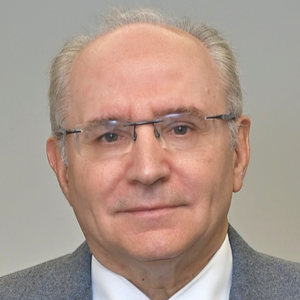
Anthony J. Enea

Written by Anthony J. Enea

Published: August 14, 2025

Unfortunately, as we age, the infirmities associated with the aging process become an ever-increasing reality. Diseases such as Dementia (Alzheimer’s/Lewy Body Dementia), Parkinson’s, and other neurodegenerative illnesses are often the reason why a Guardian may be needed. Additionally, physical infirmities associated with aging (for example, the inability to ambulate, bathe, dress, feed, and attend to one’s personal hygiene) frequently translate to the need for a Guardian. Finally, if one’s physical and neurological infirmities result in one becoming or potentially becoming a victim of physical, emotional, or financial abuse (or scams), the need for a Guardian is significantly heightened.

With proper planning and the use of Advanced Directives (such as a broad Durable General Power of Attorney (POA), Health Care Proxy (HCP), HIPAA form, and Living Will), the need for a Guardian can be reduced. Yet, while these documents can lessen the risk of needing a Guardian, they don’t necessarily eliminate it; especially if the person needing assistance is uncooperative and/or a victim of abuse. In New York, the Guardianship of the person and property of an adult is governed by Article 81 of the Mental Hygiene Law (MHL). Contrary to common misconceptions, the law does not require that the person be “incompetent.” All that is necessary is that the individual be an “incapacitated” person who is unable to manage their personal and/or financial affairs, and that there isn’t any Advanced Directive in place (e.g., POA, HCP, HIPAA) that obviates the need for the proceeding. Unfortunately, a document such as a POA, which would (if properly drafted and executed) be sufficient to meet the financial needs of the Alleged Incapacitated Person (AIP) is often inadequately drafted to meet those needs.

For example, if the POA does not have broad gifting provisions so that it is possible to convey the AIP’s real property (house, condo, etc.), cooperative apartment, and other assets from the AIP to a spouse, child, trust, or other trusted individual so that Medicaid (nursing home and/or home care) can be obtained, then in that event a Guardianship proceeding may still be needed. Under these circumstances, the commencement of the Guardianship proceeding for the property of the AIP may be the least restrictive intervention that the Court would find to be necessary.

Even if the Advanced Directives are sufficient to meet the personal and financial needs of the person, the Court may determine that a Guardian is still needed because the person is being exploited financially or otherwise by the agent under said POA and/or is vulnerable to exploitation.

Sadly, many seniors are vulnerable to financial and personal abuse as well as scams. One of the unstated purposes of a Guardianship proceeding is to help create a safety net for a person who is unable to appreciate the nature and extent of their limitations (mental, physical, or otherwise).

From a practical perspective, one should first take the necessary steps to help ensure that their parent, sibling, loved one, friend, or other family member execute a durable POA, HCP, and HIPAA form while they have the requisite capacity to do so. These documents will be of tremendous value once the individual is incapacitated and no longer able to make their own personal and/or financial decisions. Additionally, every individual should have a Last Will & Testament and/or Trust in place.

If one has become incapacitated before they can execute any of these Advanced Directives and the estate planning documents, as frequently occurs when one is the victim of a heart attack, stroke, or accident, then an Article 81 Guardianship proceeding may be the only viable option to create the appropriate safety net for the individual. It is important in dealing with those who may be of diminished and/or diminishing capacity to look for the signs that said capacity is diminishing in advance. Testing one’s short-term memory is often a good start, as it is often the first type of memory impacted by cognitive decline.

Anthony J. Enea is the managing attorney of Enea, Scanlan and Sirignano, LLP of White Plains, and Somers New York. He focuses his practice on Wills, Trusts, Estates and Elder Law. Anthony is the Past Chair of the Elder Law and Special Needs Section of the New York State Bar Association (NYSBA) and is the past Chair of the 50+ Section of the NYSBA. He is a Past President and Founding member of the New York Chapter of the National Academy of Elder Law Attorneys (NAELA). Anthony is also a Past President of the Westchester County Bar Foundation and a Past President of the Westchester County Bar Association. He is fluent in Italian. He can be reached at (914) 948-1500 or at a.enea@esslawfirm.com.


Trending Articles

What AI Visibility Means for Lawyers


by Bryan Driscoll and Josh Rupall

AI tools increasingly interpret lawyers public information. Clear, consistent and credible sources help ensure they describe legal expertise accurately.

AI dashboard visualizing a lawyer's online profile, reputation, and practice information across mult

Recognizing Legal Leaders: The 2027 Best Lawyers Awards in Australia, Japan and Singapore


by Jamilla Tabbara

Market drivers, diversity trends and the elite practitioners shaping the legal landscape.

Illustrated maps of Australia, Japan and Singapore displayed with their national flags, representing

The Best Lawyers in Canada 2027: Recognizing the Nation's Top Legal Talent


by Jamilla Tabbara

Honoring established leaders and rising practitioners across Canada's legal profession.

3D model of Canada textured with the Canadian flag.

2027 Best Lawyers Awards: Honoring Excellence in the Legal Profession


by Jamilla Tabbara

Recognizing the outstanding attorneys leading top practice areas nationwide.

United States with American flag representing The Best Lawyers in America 2027 awards

Musk v. Altman: The Lawyers Behind the Case


by Jamilla Tabbara

Meet the Trial Lawyers Shaping One of AI's Biggest Legal Disputes.

Portrait photos of Elon Musk and Sam Altman positioned in front of the OpenAI logo.

Announcing the 2027 Best Lawyers Awards: Austria, Germany and Switzerland


by Jamilla Tabbara

Celebrating the legal professionals throughout Central Europe.

Graphic displaying three-dimensional map cutouts of Austria, Germany and Switzerland.

The Legal Teams Behind the Blake Lively–Justin Baldoni Settlement


by Grace Greer

A closer look at the legal teams and attorneys involved in the Blake Lively–Justin Baldoni litigation and its resolution.

Split-screen image of Blake Lively and Justin Baldoni

The Best Lawyers in France 2027: Peer-Reviewed Excellence


by Jamilla Tabbara

Seventeen editions of peer trust, a growing profession and a dynamic legal market.

3D Map of France with National Flag Graphic

New England's Climate Litigation Surge


by Bryan Driscoll

What law firms need to know

New England's Climate Litigation Surge: What Firms Must Know headline

What Is a Quitclaim Deed? Uses, Risks and When to Get Help


by Bryan Driscoll

A quitclaim deed can be one of the fastest ways to transfer property but knowing when it's the right tool and when it isn't, can save you from serious legal and financial headaches down the road.

One hand holding a wooden house model and another holding house keys.

An Employee's Guide to Non-Disclosure Agreements (NDA)


by Bryan Driscoll

Before you sign anything, here's what you need to know about non-disclosure agreements.

Figure stands before an open giant book, holding a large key, facing a keyhole on the inner page.

Rules on Gifting Money to Family: What to Know


by Bryan Driscoll

Generosity often runs ahead of paperwork. Here's how to give to loved ones without surprising the IRS, your estate plan or your relationships.

An open gift box filled with US $100 bills next to a lid tied with a red bow.

How to Optimize Your Best Lawyers Profile for AI Search


by Everett Sizemore

Learn how a complete, well-structured Best Lawyers profile can strengthen your visibility and accuracy across AI search platforms.

A laptop screen displaying the Best Lawyers profile dashboard showing customizable sections.

Best Lawyers Launches ChatGPT App


by Jennifer Verta

Expanding Trusted Legal Guidance Into AI-Driven Search

A glowing digital network overlay on a person typing on a laptop, representing AI in legal search.

Turn Client Questions Into Content That AI Search Can Find


by Bryan Driscoll and Manny Candal

Client questions are becoming search inputs. Your firm’s content should answer them clearly.

Pile of question marks with a single bright yellow question mark in the center, representing search.

Who Can Override a Power of Attorney?


by Bryan Driscoll

A power of attorney carries real legal authority, but it isn't absolute. Here's who can step in to revoke, restrict or set it aside.

Close-up of a power of attorney document, symbolizing legal authority, revocation rights, guardiansh
Smithy AI Tap to expand

Welcome to Smithy AI the Best Lawyers Assistant

I can help you find attorneys, compare firms, explore practice areas, and surface rankings curated from the Best Lawyers methodology.

Not legal advice This assistant provides general information only. For guidance on your specific situation, please consult a licensed attorney.
Learn about Best Lawyers Research Process
Suggested prompts
Chat limit reached
You've reached the message limit for this chat. To keep exploring, browse Best Lawyers directly or come back later to start a fresh conversation.
Browse Best Lawyers