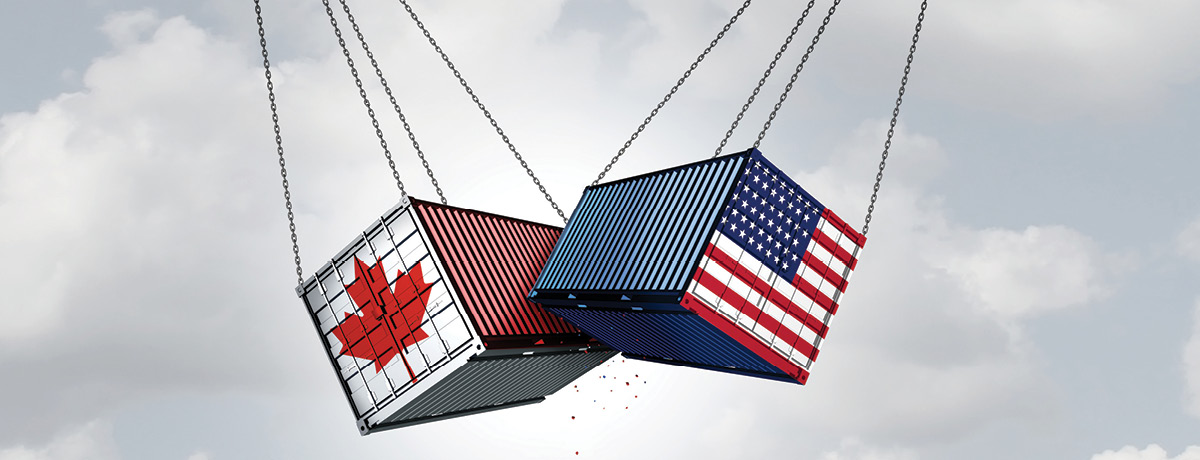

Trade between Canada and the United States has historically been predictable. But within months of returning to office, Donald Trump’s tariff blitz has thrown North American commerce into legal and economic turmoil.
The fallout has now sparked an unprecedented diplomatic crisis, with President Trump announcing the termination of all trade negotiations with Canada. The immediate trigger was a Canadian ad quoting Ronald Reagan speaking against tariffs, an ad Trump denounced as “FAKE,” despite Reagan’s quotes in the ad being accurate. As a result of the ad, Trump announced on October 25 that he would impose an additional 10% tariff on Canadian goods, escalating an already fragile situation with a friend and neighbor.
Trump attempted to justify the tariffs by suggesting Canada’s ad was a “hostile” act against the U.S. In reality, he’s just charging American consumers even more.
For Canada, shipments stall at the border, contracts hang in limbo and entire industries wait for clarity from Washington that is clearly not coming. Business leaders aren’t asking for new deals. They’re begging for a return to stability.
- Trade tensions escalate as Trump's tariffs disrupt U.S.-Canada commerce, sparking legal and economic uncertainty, with key decisions pending from the U.S. Supreme Court.
- Recent U.S. court rulings challenge Trump's tariff authority, potentially reshaping executive power and trade laws that affect all trading partners.
- This legal volatility impacts Canadian businesses; insights are crucial for legal advisors and policymakers to navigate emerging trade risks.
- Understanding these changes now can save time, mitigate risks, and keep you informed on potential shifts in trade dynamics.
Constitutional Crossroads
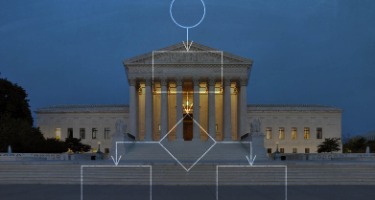
The underlying instability, however, remains judicial. The fate of the entire trade relationship is now dependent on the U.S. Supreme Court, which is set to decide constitutional challenges to Trump’s authority to impose tariffs under emergency powers.
The outcome will determine whether Canada can still rely on the predictability that once underpinned its most important economic relationship, or whether that, too, has become a casualty of America's shifting legal and political landscape.
The termination of trade talks means the conflict, now fueled by a political spat over an ad quoting Reagan, is wholly dependent on the constitutional crossroads.
U.S. Courts Redefine Executive Trade Power
The legal foundation of Trump’s tariff regime collapsed in late August, when the U.S. Court of Appeals for the Federal Circuit declared most of his tariffs illegal in a 7–4 decision. The court found that Trump had stretched the International Emergency Economic Powers Act (IEEPA) far beyond its intent.
Enacted in 1977 to let presidents freeze assets or impose sanctions during genuine national emergencies, the statute says nothing about tariffs. The ruling was blunt: Congress never intended to grant the president unlimited authority to tax imports or dictate trade policy by emergency decree.
The decision upended the centerpiece of Trump’s second-term trade agenda—a sweeping set of so-called reciprocal tariffs that slapped import duties on nearly every U.S. trading partner, including Canada. Trump had justified the levies as a response to trade deficits and fentanyl imports, declaring them national emergencies. But the court rejected that rationale outright, writing that “the statute neither mentions tariffs (or any of its synonyms) nor has procedural safeguards that contain clear limits on the president’s power to impose tariffs.”
For now, the court allowed the tariffs to remain in place until October 14, giving the administration time to appeal. Trump immediately vowed to take the fight to the Supreme Court, posting on Truth Social that “ALL TARIFFS ARE STILL IN EFFECT” and promising to “Make America Rich, Strong, and Powerful Again” through what he called lawful trade measures. His Treasury Secretary, Scott Bessent, echoed that confidence, insisting the Court would uphold Trump’s powers under IEEPA and hinting at a Plan B that could invoke the 1930 Smoot-Hawley Tariff Act to preserve the duties if necessary.
Far-Reaching Implications
For decades, U.S. presidents have used delegated authority from Congress to impose targeted tariffs in specific sectors, such as steel or aluminum under Section 232 of the Trade Expansion Act. Trump’s approach was different: he claimed the right to tax nearly all imports unilaterally, citing a national emergency rooted in economic imbalance.
The court’s rejection of that theory reasserted a crucial boundary. Congress, not the president, controls tariff policy.
This is a rare moment of judicial restraint in an era of expanding executive power. For decades, U.S. presidents have stretched emergency statutes to justify policy by proclamation, but this decision draws a bright line: economic discomfort is not a national emergency. If the president can declare a trade deficit an extraordinary threat, then there’s no meaningful limit to what future administrations can label an emergency to sidestep Congress.
For Canada, the implications reach far beyond tariffs or border logistics. The outcome of this case will determine whether the United States remains a rules-based partner or a political wildcard.
A Supreme Court endorsement of Trump’s interpretation would give any future president a legal blueprint to weaponize tariffs at will—against rivals and allies alike. A rejection, while restoring balance between Congress and the White House, would unleash years of legal and financial fallout as Washington confronts the question of how to unwind billions in contested tariffs. Either path forces Canada to plan for an uncomfortable truth: legal certainty in cross-border trade may no longer be guaranteed.
Canada’s Response
The delicate balance of cautious pragmatism that previously defined Canada’s response has collapsed. President Trump announced in a social media post on October 23 that he was terminating all trade negotiations with Canada.
This dramatic escalation was triggered by an anti-tariff advertisement sponsored by the province of Ontario and aired in U.S. markets. The ad featured clips from a 1987 radio address by former President Ronald Reagan, in which he warned that tariffs “hurt every American worker and consumer” and could lead to the “triggering of fierce trade wars.”
Although Trump denounced the ad as “fraudulent” and “FAKE,” and the Ronald Reagan Presidential Foundation & Institute initially stated the ad misrepresented the former president’s views, Reagan's words and the core message remains factual. Premier Doug Ford’s office defended the ad stating the commercial uses an “unedited excerpt” from a public domain address.
Mission Accomplished
Ford, a conservative politician who calls himself a fan of Reagan and believes he was “just the best president America has ever seen” in his opinion, wanted to “take Ronald Reagan’s words and let’s blast it to the American people.” Reagan’s speech itself was delivered in full support of free and fair trade.
In a move aimed at de-escalation, Ontario Premier Ford announced on October 24 that he would pull the anti-tariff ad which prompted Trump to end trade talks. Ford said he decided to pause the ad so that trade talks between Canada and the U.S. can resume. Despite the pause, the commercials were scheduled to continue running during the first World Series games. Ford stated they achieved their objective, having “reached U.S. audiences at the highest levels.”
Carney confirmed that Canada “can’t control the trade policy of the United States” and acknowledged that U.S. trade policy has “fundamentally changed from the policy in the 1980s, 1990s, the 2000s, and it’s a situation where the United States has tariffs against every one of their trading partners in different countries.” Carney emphasized that Canada is ready to pick up on the trade talks when Trump is ready.
When Legal Ambiguity Becomes Market Instability
The uncertainty surrounding Trump’s tariffs hasn’t just shaken diplomatic relations—it’s battered the fundamentals of Canada’s economy. In a single quarter, Canada’s exports to the United States fell more than 15%, with steel, aluminum, and vehicle exports each collapsing by double digits.
The problem isn’t just the tariffs themselves—it’s the randomness of their application. With policies announced, suspended, and reimposed sometimes within days, companies can’t plan production or pricing. What makes this moment so dangerous isn’t the magnitude of the tariffs but the vacuum of legal certainty around them. Courts are rewriting trade law in real time, and markets hate nothing more than ambiguity.
Even if the U.S. Supreme Court strikes down Trump’s tariff powers, the damage to confidence is done. The precedent that one administration can single-handedly destabilize the world’s largest trading relationship has already changed how Canadian businesses calculate risk.
Canada’s economy has survived recessions, oil shocks, and currency crises—but never a partner that can’t decide what the law means from one month to the next. Until that uncertainty lifts, the invisible tariff on every Canadian business will be hesitation.
An Explosive Question
The fight over Trump’s tariffs now rests with a Supreme Court unlike any in modern memory—one that has shown both deference to executive authority and deep skepticism of expansive statutory interpretations. With a 6–3 conservative majority, the Court’s decision will hinge less on economics than on ideology: how far this bench is willing to let a president stretch old laws to serve new political ends.
The justices face a narrow but explosive question: whether IEEPA gives the president the authority to impose tariffs without congressional approval. On its face, the statute says nothing about tariffs. Yet several justices, particularly those aligned with the Court’s unitary executive philosophy, have signaled comfort with broad readings of presidential power in matters of national security and foreign policy.
The political fallout immediately raises the stakes. The Court is scheduled to hear challenges to Trump’s authority to impose tariffs under emergency powers on Nov. 5. The diplomatic avenue for resolving the conflict has closed for now, meaning the fate of the U.S.-Canada economic relationship now rests entirely on the Court’s decision regarding executive power.
Trump himself even directly linked the Reagan ad to the pending legal challenges, claiming the ad was aired to “interfere with the decision of the U.S. Supreme Court, and other courts.” This accusation immediately formalizes the convergence of the diplomatic spat and the constitutional challenge.
Scenario One: The Court Upholds Trump’s Tariffs
If the justices affirm Trump’s use of IEEPA, the ruling will effectively constitutionalize a new form of executive trade power. It would mean that any U.S. president could invoke an emergency to alter tariffs, quotas, or import rules without congressional approval—a tool once reserved for wartime or sanctions against hostile regimes. Legally, that transforms emergency authority from a safety valve into a standing policy instrument.
For Canada, this outcome would lock in a period of structural unpredictability. Every change in the White House could bring a new trade environment, shaped less by statute than by executive interpretation.
Lawyers advising exporters and investors would need to treat presidential elections as regulatory risk events. Long-term contracts would require emergency reauthorization clauses, and cross-border disputes would increasingly hinge on constitutional arguments rather than tariff schedules.
The political implications would be just as disruptive. Ottawa could no longer assume that negotiated terms under USMCA or future trade pacts are insulated from unilateral action. Each administration could reinterpret national emergency to justify economic leverage. The precedent would not only reshape U.S. trade law. It would rewrite the foundation of rules-based trade, effectively normalizing legal volatility as a feature of commerce.
Scenario Two: The Court Strikes Them Down
A ruling against Trump would deliver short-term economic relief and reaffirm that tariff power belongs to Congress. But the legal and political aftermath would be messy.
The United States would face immediate questions about how to unwind the billions collected under tariffs now deemed unlawful. Importers could flood courts with refund claims, triggering a wave of litigation that might take years to resolve.
At the same time, Congress would be forced to revisit the statutory framework for emergency powers. Lawmakers would need to clarify the boundaries between national security and economic regulation—a debate likely to become partisan and protracted. Until new legislation passes, trade lawyers and clients would be left in limbo: tariffs technically void but no clear process for restitution, and no durable replacement for the executive mechanisms that once governed U.S. trade action.
For Canada, this second path offers breathing room but not certainty. Markets would stabilize, but policymakers would be negotiating with a Congress divided over how to rebuild trade authority. The risk of overcorrection—new, restrictive legislation or retaliatory politics—would remain high.
Both futures share a common truth: there is no return to pre-2025 normalcy. Whether the Court expands or contracts presidential power, the decision will embed legal volatility into the DNA of cross-border trade. The only question left for lawyers and policymakers is how to practice within it.