Insight

The President’s Quiet Attacks on Lawful Employment-Based Immigration

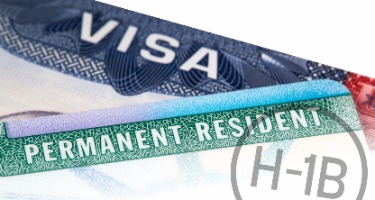
H-1B RFEs with an image of a man on a card with an employment authorization card behind it
Michael P. Nowlan

Michael P. Nowlan

January 10, 2018 01:05 PM

There has been no shortage of news articles in 2017 when it comes to the president’s administration and U.S. immigration. This includes reducing the number of refugees who will be admitted each year, ending the DACA program, and a host of travel bans. But there has been a lot of activity in the business immigration space. It has not been as newsworthy—so far—but has mostly impacted processes that the executive branch has the power to control.

The president cannot unilaterally change immigration laws and regulations currently in place.

Laws take congressional action, and that appears unlikely through 2018. Regulations require following the Administrative Procedures Act, and the notoriously slow notice and comment period to establish, change, or eliminate a regulation.

Below are a few of the more noteworthy process changes we have seen in 2017.

In-person interviews for 85 percent of the 140,000 employment-based green cards approved every year (15 percent are done at U.S. Consulates outside the U.S.).

For decades, only those with a criminal issue have been required to have an in person interview. There are a little over 85 U.S. Citizenship and Immigration Services (USCIS) offices around the U.S., and now these offices must perform time-consuming interviews of every employee, their spouse, and any children. USCIS has confirmed that to comply with this new requirement, family-based green card interviews primarily for spouses/family of a U.S. citizen, and naturalization interviews for persons who want to be U.S. citizens will be given a lower priority. The 140,000 employment-based green cards must be approved every year, or they disappear. Requiring interviews for a population that has never been involved in an act of terrorism in the U.S. seems very hard to justify.

New requests for evidence (RFEs) for H-1B applications.

USCIS reports have confirmed that H-1B RFEs have jumped from 20 percent to over 30 percent for 2017. These result in more delays in a time of heightened employer/employee compliance.

More I-9 Employment Eligibility Verification Form audits for U.S. employers.

This is not surprising, as I-9 audits have gone up with each president since George W. Bush. While these audits do not ensure undocumented workers are discovered and removed from the U.S., it does go a long way to help fund the U.S. Immigration and Customs Enforcement’s (ICE) operations, as fines quickly add up for simple paperwork violations for employers with no undocumented workers.

Hostility toward employment authorization documents, also called EAD cards.

Foreign national F-1 university students who have studied in a science, technology, engineering, or math field (STEM) can qualify for an EAD card for two years. The origins of this STEM EAD rule came into effect under President George W. Bush. Also, spouses of H-1B workers (H-4s), where the H-1B worker has completed several steps in the employment-based green card process, can apply for an EAD card. F-1 STEM and H-4 EAD workers are regulations the administration plans to repeal in 2018. Finally, timing for EAD card production is now well over four months.

Advance parole denials for persons who travel internationally when they file an employment-based green card.

Persons in H-1B or L-1 status have been allowed to travel without an advance parole when they file the last stage of the green card process. All other foreign nationals must wait four or more months for the advance parole to be approved before they may travel internationally. The denials of the advance paroles, for H and L visa holders who travel internationally, rarely have a substantive impact on a person’s application, but are a further irritation.

Lastly, reports abound regarding how the administration plans to change the H-1B rules, which on the whole, require a new law and/or regulation.

All of these actions have added a new level of insecurity to an already nervous population. Is this actually accomplishing anything other than just slowing processes down for persons who are doing everything they can to follow the rules? I have no doubt that change to the processes for those legally present in the U.S. will continue in 2018. What I do hope is that those whose technical and entrepreneurial skill set is in demand globally will not end up finding a path of less resistance in a different country that is more welcoming in their immigration processes.

--------------------------------------

Michael P. Nowlan is a member and immigration practice group co-leader with Clark Hill PLC in Detroit. He is a graduate of Eastern Michigan University and a graduate of the University of Detroit Mercy School of Law. He has served as member of the AILA Future of Immigration Law Practice Task Force (2016–2017); a member of the AILA Business Committee (2015–2016); chair of the AILA Business Committee (2011–2015); and vice chair of the AILA Nebraska Service Center Liaison Committee (2010–2011).


Related Articles

Chain Migration Solutions Desperately in Search of a Problem


by Aaron C. Hall

The White House insists that any new law giving Dreamers a permanent place in the United States also stop what it refers to as the chain migration problem.

Family with red and blue background with six stick figures

Employment-based U.S. Immigration


by Matthew T. Phillips

A look back at 2017 and what to expect in 2018.

Man stands in the one in 2018 as a silhouette with a blue sky with white clouds

Trump Administration’s Termination of DACA, TPS, and H-4 EAD Immigration Programs Could Leave Employers in a Lurch


by Ann Massey Badmus

Several immigration programs that have authorized over a million immigrant workers are expected to end in 2018 and 2019.

Silhouettes of people on a white background with a blue global map of the world

Smart Policy and Compassion: Protecting Dreamers


by David P. Berry

Why it makes sense to protect the Dreamers.

Silhouette of the Statue of Liberty with the American flag flying high in the background

Trump and Immigration: Separating Truth from Fiction


by Harlan G. York

Deportations aren’t up, but the people who are being deported are more “newsworthy.”

American flag with a blue spotlight and a black background with a black wire fence in front of it

South Florida Legal Highlights: 2018 Year in Review


by Compiled by Nicole Ortiz

A summary of newsworthy content from South Florida lawyers and law firms.

Blue hand with red key unlocks gilded cage with small red person inside

The New Business Immigration Regime


by Corporate Immigration Partners

Five things executives and HR should do.

Red and white stripes on the side of a building with black dots on the building

H-1B Applications: Proactive Steps in 2018


by Brad J. Hendrick

Last year, USCIS received approximately 199,000 applications for the 85,000 H-1B visas allocated each year.

Man in red suit runs out of blue file organizer trying to avoid three men in blue suits chasing

H-1B Planning for Fiscal Year 2019


by Lisa Koenig

Employers should be prepared to pivot.

Group of people sitting in wooden chairs watching a sand timer run out

Not too Broken to Fix


by Brian Graham

How to improve the H1-B lottery and protect wages now.

Man with brown suit jacket holds a wheel with different chance opportunities and the circle is in th

The Price of Admission


by Janice Zhou

States and the federal government are engaged in a pitched battle over immigration and refugee settlement—with the legal profession caught in the middle, taking fire from both sides.

Three black silhouettes, one of a father and two of children

Loophole or Fatal Flaw?


by Joseph Begonis

Canada's Best Lawyers share their thoughts on the Safe Third Country Agreement

Line cues with the words "Immigration" written on them and a blue and red filter

Immigration Compliance at the Worksite


by Fausta M. Albi

Construction workers working on scaffolding with a sunset in the background

Buy American, Hire American Takes Its Toll on Business Immigration


by Rosanna M. Fox and Karen Gabriel Moss

USCIS is considering the reinterpretation of “may grant” language contained in the statute deeming it discretionary rather than mandatory.

Red data bars in a line on a blue background with a blue hand pressing down on a red bar

The Stealth Assault on Work-Related Immigration


by Ester Greenfield

Man blurred fiddles with computer with a long line of computers and a yellow and red filter

Interagency Cooperation: Raising the Bar for Immigration Adherence


by Kathleen Campbell Walker

Doctor sits around a table and discusses with nurses with one red and three blue blocks overlayed

Trending Articles

2026 Best Lawyers Awards: Recognizing Legal Talent Across the United States


by Jamilla Tabbara

The 2026 editions highlight the top 5% of U.S. attorneys, showcase emerging practice areas and reveal trends shaping the nation’s legal profession.

Map of the United States represented in The Best Lawyers in America 2026 awards

Gun Rights for Convicted Felons? The DOJ Says It's Time.


by Bryan Driscoll

It's more than an administrative reopening of a long-dormant issue; it's a test of how the law reconciles the right to bear arms with protecting the public.

Firearms application behind jail bars

2026 Best Lawyers Awards in Canada: Marking 20 Years of Excellence


by Jamilla Tabbara

Honoring Canada’s most respected lawyers and spotlighting the next generation shaping the future of law.

Shining Canadian map marking the 2026 Best Lawyers awards coverage

Revealing the 2026 Best Lawyers Awards in Germany, France, Switzerland and Austria


by Jamilla Tabbara

These honors underscore the reach of the Best Lawyers network and its focus on top legal talent.

map of Germany, France, Switzerland and Austria

Best Lawyers 2026: Discover the Honorees in Brazil, Mexico, Portugal, South Africa and Spain


by Jamilla Tabbara

A growing international network of recognized legal professionals.

Map highlighting the 2026 Best Lawyers honorees across Brazil, Mexico, Portugal, South Africa and Sp

How to Sue for Defamation: Costs, Process and What to Expect


by Bryan Driscoll

Learn the legal standards, costs and steps involved when you sue for defamation, including the difference between libel and slander.

Group of people holding papers with speech bubbles above them

Build Your Legal Practice with Effective Online Networking


by Jamilla Tabbara

How thoughtful online networking supports sustained legal practice growth.

Abstract web of connected figures symbolizing online networking among legal professionals

Algorithmic Exclusion


by Bryan Driscoll

The Workday lawsuit and the future of AI in hiring.

Workday Lawsuit and the Future of AI in Hiring headline

Blogging for Law Firms: Turning Content into Client Connections


by Jamilla Tabbara

How law firms use blogs to earn trust and win clients.

Lawyer typing blog content on laptop in office

Reddit’s Lawsuit Could Change How Much AI Knows About You


by Justin Smulison

Big AI is battling for its future—your data’s at stake.

Reddit Anthropic Lawsuit headline

How to Choose a Good Lawyer: Tips, Traits and Questions to Ask


by Laurie Villanueva

A Practical Guide for Your First-Time Hiring a Lawyer

Three professional lawyers walking together and discussing work

The 2026 Best Lawyers Awards in Chile, Colombia and Puerto Rico


by Jamilla Tabbara

The region’s most highly regarded lawyers.

Map highlighting Chile, Colombia and Puerto Rico for the 2026 Best Lawyers Awards

Common-Law Marriage in Indiana: Are You Legally Protected?


by Laurie Villanueva

Understanding cohabitation rights and common-law marriage recognition in Indiana.

Married Indiana couple in their home

Why Jack Dorsey and Elon Musk Want to 'Delete All IP Law'


by Bryan Driscoll

This Isn’t Just a Debate Over How to Pay Creators. It’s a Direct Challenge to Legal Infrastructure.

Elon Musk and Jack Dorsey standing together Infront of the X logo

AI Tools for Lawyers: How Smithy AI Solves Key Challenges


by Jamilla Tabbara

Understand the features and benefits within the Best Lawyers Digital Marketing Platform.

Legal professional editing profile content with Smithy AI

Alimony Explained: Who Qualifies, How It Works and What to Expect


by Bryan Driscoll

A practical guide to understanding alimony, from eligibility to enforcement, for anyone navigating divorce

two figures standing on stacks of coins