Unfortunately, it has become more common for a child, grandchild and/or loved one being to be diagnosed with autism, ADHD, bi-polar, schizophrenia, or suffer from a variety of other diagnosed physical and/or mental disabilities that are severe and chronic. Because of this, the use of a Special Needs Trust (SNT) as a planning tool has become increasingly important and often necessary.
When a parent, grandparent or any family member or friend wishes to provide for the needs of a disabled person in either his or her Last Will and Testament or in a Trust within a Last Will or as a separate document, the vehicle that is most often prepared is a third party SNT. Use of the third party SNT allows the disabled person to continue to receive any federal or state aid and government benefits without said aid or benefits being impacted by the assets and/or income generated by the SNT. Additionally, because a third party SNT (unlike a self-settled SNT) is not funded with the assets of the disabled person (savings/recovery from a suit) but, the assets of a third party (parents/grandparents or others), the law (Estates Powers & Trusts Law EPTL 7-1.12) provides that upon the death of the trust beneficiary, the trust assets can be distributed to anyone without the necessity of the trust assets being utilized to pay back the state or federal government for the dollar value of benefits provided to the disabled person. This rule does not apply to a trust funded with the assets of a disabled person (a first party SNT) which must provide for the payback of the benefits paid to the government entity.
The assets of or received by a disabled person should never be used to fund a third party SNT. Additionally, the spouse of a disabled beneficiary or the parent of a minor disabled beneficiary cannot create and fund an inter-vivos SNT trust (one created during their lifetime) and get the protections provided by EPTL 7-1.12. This is because their spousal and parental obligations of support to their spouse and/or minor child. However, the spouse or parent can fund and create a testamentary trust (one created in their Last Will and Testament) or an inter-vivos SNT which is not funded until they are deceased. For example, their Last Will and Testament and/or Revocable or Irrevocable Trust provides for a distribution to the SNT upon their demise.
A third party SNT can be testamentary, inter-vivos (created during life with the exceptions stated above), revocable and/or irrevocable. There is great flexibility in how the SNT can be drafted.
The funds and income generated by the third party SNT can be used on behalf of the disabled individual to supplement and not supplant government benefits such as Medicaid and SSI (Supplemental Social Security Income). In essence, the trust assets can be used to cover expenses that are not intended to be provided for by Medicaid and/or SSI. For example, they can be used to purchase a home for the beneficiary, provide for special therapies, wheelchairs, handicap accessible vans, recreational and cultural experiences (vacations, etc.) Payments made in the form of in-kind distributions for food or shelter will reduce SSI payments as they are considered unearned income. However, payments for goods and services other than food and shelter will not reduce SSI income.
There is no limit to the amount that can be used to fund the SNT. Additionally, in spite of the restrictions imposed by statute and SSI regulations, third party SNT’s generally give the Trustee(s) the power to make distributions to meet even the basic needs of the beneficiary (food, clothing, and shelter) even if it will diminish the receipt of government benefits.
When considering an SNT for a loved one, it is important to thoroughly review the present and potential future needs of the disabled beneficiary. A thorough analysis by a qualified and experienced attorney who is familiar with the array of federal and state benefits that may be available is advisable.
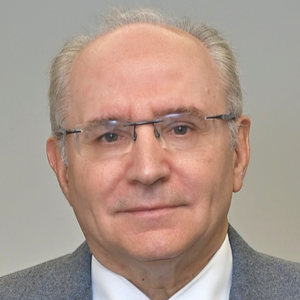
* Anthony J. Enea is a member of Enea, Scanlan & Sirignano, LLP, of White Plains, New York. He focuses his practice on Wills, Trusts, Estates and Elder Law. Anthony is the Past Chair of the Elder Law and Special Needs Section of the New York State Bar Association (NYSBA), and is the past Chair of the 50+ Section of the NYSBA. He is a Past President and Founding member of the New York Chapter of the National Academy of Elder Law Attorneys (NAELA). Anthony is also the Immediate Past President of the Westchester County Bar Foundation and a Past President of the Westchester County Bar Association. He can be reached at 914-200-1256 or at www.esslawfirm.com.