
Texas has long been known as a tough-on-crime state.
Now in one of the most consequential legislative sessions in recent history, lawmakers in Austin enacted a package of criminal justice reforms that overhauled the state’s bail system, granted more rights to victims of sexual abuse and other crimes, and made Texas the first state in the nation to extend civil liability to platforms facilitating nonconsensual deepfake pornography.
How will these reforms shape the future of criminal justice in Texas, and what will they mean for both victims and offenders when they take effect on Sept. 1?
Landmark Bail Overhaul Aims to Improve Public Safety
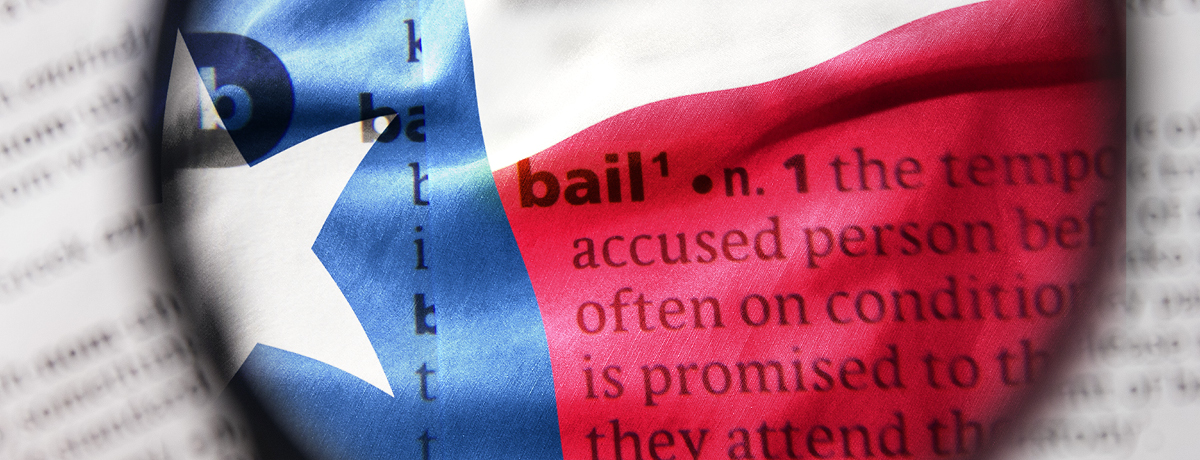
Passed with bipartisan support, the state’s bail reform package—Senate Bill 9, Senate Bill 40 and House Bill 75—was described by Gov. Greg Abbott as “the strongest in Texas history.” Together, the trio of laws make significant changes to how the state’s criminal justice system addresses bail, including:
● Restricting cashless bail eligibility for individuals charged with certain violent crimes or repeat felonies.
● Requiring public safety and flight risk to be prioritized when determining whether someone should be released on bail.
● Barring magistrates from making bail decisions in the most dangerous and high-risk cases, leaving those decisions to elected judges.
● Mandating that judges who release an allegedly violent defendant on bail explain their decision in writing to the public.
● Allowing local prosecutors to challenge bail decisions they consider too lenient.
● Expanding reporting requirements for charitable bail organizations and giving local sheriffs the authority to suspend their operations if they fail to comply.
Supporters—including victims' advocacy groups and law enforcement organizations—say overhauling the Texas bail system will improve public safety by keeping dangerous criminals off the streets and standardizing the bail process.
"This is not a political moment—this is a public safety moment," said Rania Mankarious, CEO of Crime Stoppers of Houston, during a press conference celebrating bail reform, according to Texas Insider. "Texas has sent a clear and unwavering message: Violent criminals will no longer cycle in and out of jail without consequence."
However, civil libertarians have been less enthusiastic, warning the reforms will worsen existing racial and economic disparities already plaguing the pretrial system and disproportionately affect low-income individuals.
"This bill violates basic principles of due process, keeps poor people in jail for being poor, and hands prosecutors a veto over judicial decisions," said Nick Hudson, senior policy and advocacy strategist for the ACLU of Texas, in a statement issued shortly after SB 9 passed the state legislature in April. "Texas families deserve reforms rooted in evidence, fairness, and public safety instead of fear."
Parole and Prosecutorial Reforms Expand Victims’ Rights
Texas lawmakers also passed two laws during the 2025 legislative session—House Bill 2582 and Senate Bill 1120—that expand victims' rights to information and improve transparency across both the parole and prosecutorial processes.
HB 2582 amends the Texas Code of Criminal Procedure to enhance access to parole-related information, guaranteeing crime victims, their guardians or close relatives the right to request and receive a wide range of parole-related information regarding their offender, including:
● Upcoming parole hearings and decisions:
● The parolee's county of residence and any imposed conditions, such as proximity restrictions to the victim or a requirement to complete intervention programs.
● Post-release developments, such as new offenses, arrest warrants or parole revocations. Victims may also submit information for consideration by the parole board.
Prior to the adoption of HBl 2582, crime victims often faced significant hurdles in obtaining timely and detailed updates about an offender's parole status. Notifications were inconsistent, and in some cases, victims learned of an offender's release only after the fact.
"He can look up my name, he can find me. He can do a search, if he wanted to, and see what I'm doing, where I'm located," one rape survivor told the House Committee on Criminal Jurisprudence before the law's passage, according to the Texas Tribune. "And this concerns me that I don't have that same access."
SB 1120 complements HB 2582 by expanding the legal definition of "victim" in Texas to include individuals affected by family violence, sexual assault, stalking or protective-order violations. It also ensures victims have equal access to key procedural rights during criminal proceedings, including the right to confer with prosecutors, receive case status updates and access state-supported victim services. Additionally, the law requires that prosecutors confer with victims over critical decisions, such as plea deals or dismissals.
"As both a former DA and now as a county attorney, I've seen firsthand how including the victim’s voice enhances justice, strengthens cases, and increases safety for victims," said Wilbarger County Attorney Staley Heatly while testifying in support of the bill.
Trey’s Law Aims to Give Victims a Voice
Another bill passed unanimously by the Texas Legislature and signed into law by Gov. Greg Abbott, Senate Bill 834, more commonly known as Trey’s Law, bans the use of nondisclosure agreements to silence victims of sexual abuse.
The law’s namesake, Trey Carlock, was among the many children victimized by Pete Newman, the former director of Camp Kanakuk in Missouri, who is now serving two life sentences plus 30 years following his 2010 conviction for child sexual abuse. As an adult, Carlock pursued a civil lawsuit against the camp but was required to sign a nondisclosure agreement as part of the eventual settlement.
"So you accept the payout, but it feels like a bribe," Elizabeth Carlock Phillips said during testimony before the Texas House. "My brother referred to this as 'blood money.'"
Carlock tragically died by suicide in 2019, at age 28.
"It's no exaggeration for me to claim this as a matter of life and death,” Phillips later told the Texas House. “I think we know what child sexual abuse does to a person's life, does to a kid.”
Advocates for Trey’s Law say organizations use nondisclosure agreements to conceal the true scope of child sexual abuse. Many abuse survivors who eventually settled with Camp Kanakuk later said they would not have agreed to such an arrangement had they known the full extent of Newman’s crimes.
Once the law takes effect, any provision in a nondisclosure agreement intended to silence victims of sexual abuse—including indecency with a child, sexual assault, aggravated sexual assault, sexual performance by a child, human trafficking and compelling prostitution—will be considered “void and unenforceable as against public policy” in Texas.
Trey’s Law also applies retroactively, voiding any existing nondisclosure agreements that have prevented survivors from sharing their stories.
Targeting AI-Generated Deepfake Porn
Two additional Texas laws—Senate Bill 441 and House Bill 581—address the growing issue of AI-generated intimate deepfakes.
More commonly known as "deepfake porn," intimate deepfakes are images or videos that falsely depict someone nude or involved in sexual acts. They are frequently created without the consent of the person being portrayed, many of whom are women and children.
SB 441 significantly expands existing Texas law against nonconsensual intimate imagery to cover AI-generated content. Among other provisions, the new law makes it a Class A misdemeanor to knowingly produce or distribute deepfake media depicting someone in sexual situations without their consent. The offense becomes a third-degree felony for repeat offenders or when the depicted person is under 18. SB 441 also creates a new Class B misdemeanor for threatening to create or distribute such content with the intent to coerce, extort, harass, or intimidate another person.
In addition to explicitly prohibiting the creation and distribution of explicit deepfake images depicting minors, HB 581 requires commercial entities operating websites or applications that offer tools to generate intimate deepfakes to verify that all individuals depicted are at least 18 years old and have provided consent for the use of their likeness. The new law is also the first in the nation to extend civil liability to the operator of any website or application used to create intimate deepfakes of minors
"Across the country, state legislatures are recognizing this harm and are taking proactive steps to rein in their distribution, while holding those who produce them accountable," Adrian Shelley, Texas director of Public Citizen, said in a statement shortly after Gov. Greg Abbott signed both bills into law. "The Texas Legislature rightfully took initial steps to protect the public from these images and videos two years ago and has gone further to provide more protection to victims of these despicable crimes."
If you need legal guidance related to these issues, use the Best Lawyers Find a Lawyer tool to connect with qualified lawyers in your area.