Insight

Supreme Court Blocks OSHA’s Vaccine-or-Test Rule for Large Employers, Upholds Mandate for Healthcare Workers

On January 13, 2022, the United States Supreme Court blocked the emergency standard issued by the Occupational Safety and Health Administration (OSHA) that would have required employees at businesses with 100 or more employees to get vaccinated or submit a weekly negative COVID test.

Ann E. Knuth

Written by Ann E. Knuth

Published: June 18, 2026

On January 13, 2022, the United States Supreme Court blocked the emergency standard issued by the Occupational Safety and Health Administration (OSHA) that would have required employees at businesses with 100 or more employees to get vaccinated or submit a weekly negative COVID test. The Court allowed a narrower rule to take effect requiring vaccination for health care workers at facilities receiving federal funding.

In a 6 to 3 decision, with Justices Stephen Breyer, Elena Kagan and Sonia Sotomayor dissenting, the Court found that OSHA’s emergency standard went beyond the agency’s authority to regulate occupational hazards. The Court wrote, “Although Congress has indisputably given OSHA the power to regulate occupational dangers, it has not given that agency the power to regulate public health more broadly.”

The dissent argued that OSHA’s emergency standard was analogous to a fire or sanitation regulation imposed by the agency. The majority disagreed, noting that, “a vaccine mandate is strikingly unlike the workplace regulations that OSHA has typically imposed” because vaccination “cannot be undone at the end of the workday.”

The dissenting justices concluded by stating, “As disease and death continue to mount, this Court tells the agency that it cannot respond in the most effective way. Without legal basis, the Court usurps a decision that rightfully belongs to others.”

In contrast to OSHA’s emergency standard, the Court voted 5 to 4 to uphold mandatory vaccination for Medicare and Medicaid providers. In this case, Chief Justice John Roberts and Justice Brett Kavanaugh agreed with the Court’s more liberal justices. Unlike OSHA’s emergency standard, the Court said the vaccine mandate for health care workers was justified by the spending clause of the Constitution, which authorizes the ability of the federal government to impose conditions when it is providing the funding.

The opinion also noted that the health care mandate is necessary because it impacts facilities responsible for the health of others. “It would be the very opposite of efficient and effective administration for a facility that is supposed to make people well to make them sick with COVID-19.”

Hahn Loeser’s Labor and Employment Group will continue to monitor and report on further developments.


Trending Articles

What AI Visibility Means for Lawyers


by Josh Rupall and Bryan Driscoll

AI tools increasingly interpret lawyers public information. Clear, consistent and credible sources help ensure they describe legal expertise accurately.

AI dashboard visualizing a lawyer's online profile, reputation, and practice information across mult

The Best Lawyers in Canada 2027: Recognizing the Nation's Top Legal Talent


by Jamilla Tabbara

Honoring established leaders and rising practitioners across Canada's legal profession.

3D model of Canada textured with the Canadian flag.

2027 Best Lawyers Awards: Honoring Excellence in the Legal Profession


by Jamilla Tabbara

Recognizing the outstanding attorneys leading top practice areas nationwide.

United States with American flag representing The Best Lawyers in America 2027 awards

2027 Best Lawyers Awards in Brazil, Mexico, Portugal and Spain


by Jamilla Tabbara

Explore key findings from the awards, including recognition figures and emerging legal talent.

3D country maps of Brazil, Mexico, Portugal and Spain with national flags

Announcing the 2027 Best Lawyers Awards: Austria, Germany and Switzerland


by Jamilla Tabbara

Celebrating the legal professionals throughout Central Europe.

Graphic displaying three-dimensional map cutouts of Austria, Germany and Switzerland.

The Best Lawyers in France 2027: Peer-Reviewed Excellence


by Jamilla Tabbara

Seventeen editions of peer trust, a growing profession and a dynamic legal market.

3D Map of France with National Flag Graphic

Who Can Override a Power of Attorney?


by Bryan Driscoll

A power of attorney carries real legal authority, but it isn't absolute. Here's who can step in to revoke, restrict or set it aside.

Close-up of a power of attorney document, symbolizing legal authority, revocation rights, guardiansh

Inside the 2027 Best Lawyers Awards in Chile, Colombia and Puerto Rico


by Jamilla Tabbara

A closer look at the research process, methodology and key statistics behind the 2027 editions.

3D map cutouts of Chile, Colombia, and Puerto Rico

How to Get an Eviction Off Your Record


by Bryan Driscoll

Whether an eviction can be removed, sealed or corrected depends on your state, your case and where the record appears.

A printed eviction notice attached to a decorative metal security gate, representing housing instabi

How Peer Review Works: Best Lawyers Methodology Explained


by Jamilla Tabbara

Understanding the independent, data-driven framework that defines professional legal standing.

A glowing professional icon surrounded by incoming arrows, symbolizing data collection and feedback.

How to Optimize Your Best Lawyers Profile for AI Search


by Everett Sizemore

Learn how a complete, well-structured Best Lawyers profile can strengthen your visibility and accuracy across AI search platforms.

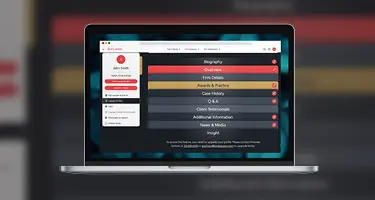
A laptop screen displaying the Best Lawyers profile dashboard showing customizable sections.

Google Is Losing Major Antitrust Cases. Is This the End of Big Tech’s Winning Streak?


by Justin Smulison

Legal experts say the remedies and appeals, not the liability findings, will determine if Google's losses reshape the tech industry.

Google Antitrust Losses: What They Mean for Big Tech

What Is a Hostile Work Environment?


by Bryan Driscoll

Not every difficult job is a hostile work environment in the eyes of the law. Here's how to tell the difference and what to do next.

Blurred image of a distressed employee in an office, surrounded by motion-blurred coworkers, conveyi

How to Start a Nonprofit: A Step-by-Step Guide


by Bryan Driscoll

Everything you need to know about turning your mission into a registered nonprofit, from your first board meeting to 501(c)(3) approval.

Three white blocks spelling "NPO" on a yellow background.

Turn Client Questions Into Content That AI Search Can Find


by Bryan Driscoll and Manny Candal

Client questions are becoming search inputs. Your firm’s content should answer them clearly.

Pile of question marks with a single bright yellow question mark in the center, representing search.

Can You Sue Someone for Emotional Distress?


by Bryan Driscoll

Emotional distress can sometimes support a lawsuit, but whether you have a valid claim depends on the facts, the law and your ability to prove real harm.

Abstract black-and-white face with multiple screaming mouths, representing emotional distress, anxie
Tap to expand

Welcome to Smithy AI the Best Lawyers Assistant

I can help you find attorneys, compare firms, explore practice areas, and surface rankings curated from the Best Lawyers methodology.

Not legal advice This assistant provides general information only. For guidance on your specific situation, please consult a licensed attorney.
Learn about Best Lawyers Research Process
Suggested prompts
Chat limit reached
You've reached the message limit for this chat. To keep exploring, browse Best Lawyers directly or come back later to start a fresh conversation.
Browse Best Lawyers