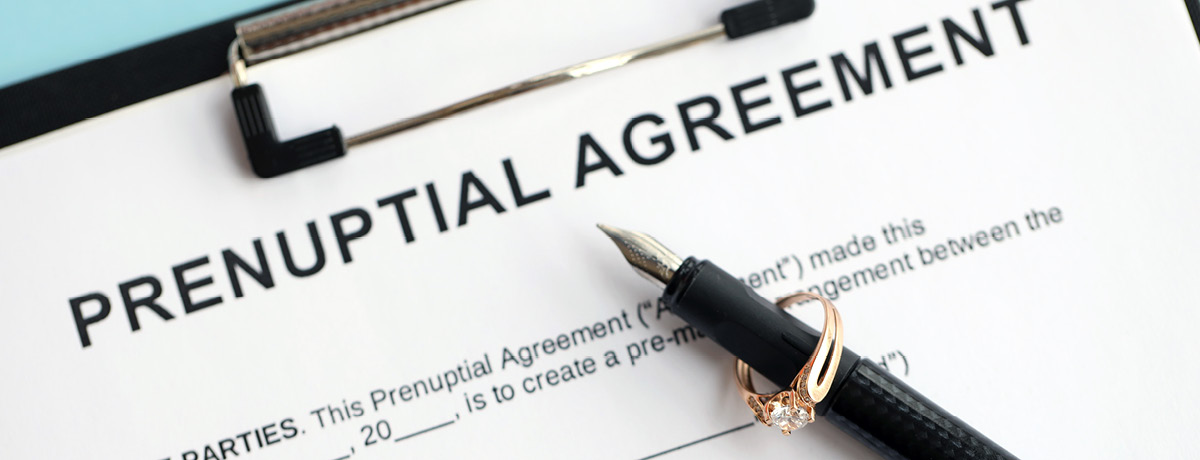

As wedding planning begins, one question quietly surfaces for many couples: Should I get a prenup? The idea often carries stigma, yet prenuptial agreements are becoming more common and less controversial.
This guide explains:
- what prenups do
- who usually benefits from having one
- the pros and cons
- what happens without one
By the end, you’ll have the context to decide whether a prenup makes sense for your relationship and how to take the next steps.
What Is a Prenup and What Does It Do?
A prenuptial agreement, or prenup, is a legal contract signed before marriage that sets out how assets, debts and financial responsibilities will be handled during the marriage and in the event of divorce.
At its core, a prenup is a financial planning tool. It allows couples to decide in advance how to handle estate, property, investments and debts during divorce, rather than leaving those decisions to state law. A well-drafted prenup can:
- Define which property is separate and which is marital
- Protect family businesses or professional practices
- Limit or set spousal support obligations
- Provide clarity about inheritance rights
It’s also worth addressing a myth: prenups are not just for celebrities or multimillionaires. Everyday couples use them to create certainty, protect individual assets and avoid conflict later. For example, a teacher marrying someone with significant student debt may use a prenup to ensure they are not financially responsible for that debt.
Why People Get Prenups
The motivations for prenups vary, but they usually tie back to financial security and fairness.
- Protecting premarital assets: A prenup can keep a home, retirement savings or investments acquired before marriage from being split in divorce.
- Shielding one partner from debt: If one spouse enters the marriage with substantial loans, the prenup can ensure that debt remains their responsibility.
- Safeguarding a business: Entrepreneurs often rely on prenups to prevent a spouse from acquiring an interest in their company. Without this protection, divorce could force a sale or division of business assets.
- Clarifying spousal support expectations: Prenups can set clear terms for spousal support or waive it entirely, avoiding lengthy disputes later.
- Preserving inheritances and heirlooms: Family wealth, heirlooms or property can be carved out in advance.
- Protecting children from previous relationships: Parents often use prenups to ensure that certain assets are reserved for their children rather than treated as marital property.
Do I Need a Prenup? How to Decide
The decision often comes down to your personal and financial circumstances. Asking yourself a few key questions can help clarify whether a prenup is worth exploring:
- Do you or your partner own property, savings, or investments? If either of you is bringing substantial assets into the marriage, a prenup can preserve them as separate property. This includes real estate, retirement accounts or brokerage investments. Without clear boundaries, courts may treat the growth in value or funds that become commingled as marital property.
- Do you own a business? Business ownership is one of the strongest reasons to consider a prenup. A prenup ensures that your spouse does not unintentionally acquire a share in the company. Without one, divorce could force a sale, trigger valuation disputes or involve your former spouse in ongoing operations.
- Do you expect to inherit significant assets? Although inheritances are typically considered separate property, they can become blurred if deposited into joint accounts or used for marital expenses. A prenup allows you to safeguard those assets and avoid conflict over their treatment later.
- Are there children from previous relationships? A prenup can protect the financial interests of children by reserving assets for them. This ensures inheritances or family property are preserved rather than treated as part of the marital estate during a divorce.
- Is there a large income or debt imbalance? When one spouse earns significantly more, a prenup can set fair expectations around spousal support. If one partner carries substantial debt, a prenup can shield the other from being responsible for obligations they did not incur.
If you answered yes to any of these questions, a prenup may be a good idea. Even if you answered no, some couples still choose one for peace of mind and the clarity it provides.
Pros and Cons of a Prenup
Understanding the advantages and drawbacks helps couples weigh whether a prenup fits their needs.
Pros:
- Clarity and fairness: Couples set the rules themselves rather than leaving decisions to state law
- Asset protection: Safeguards individual property, businesses and inheritances
- Reduced disputes: Clear terms minimize the risk of costly, drawn-out litigation
- Legal predictability: Provides a roadmap judges are likely to follow
Cons:
- Expense: A prenup can cost anywhere from a few thousand dollars to tens of thousands depending on complexity
- Perception of mistrust: Some couples view the process as unromantic
- Risk of imbalance: Poorly drafted prenups can favor one spouse unfairly, creating tension or vulnerability
What Happens Without a Prenup?
If a couple marries without a prenup, state law dictates how assets and debts are divided. For example, divorce in California follows community property rules, which usually require splitting most assets acquired during the marriage equally.
In equitable distribution states, judges divide assets in a way they deem fair, which may not align with the couple’s intentions.
For instance, one spouse’s premarital business that grew during marriage could be partially subject to division. Without a prenup, couples relinquish control of those decisions to courts.
What You Can Include in a Prenup
Prenups are versatile but not limitless. Common provisions allowed in a prenup include:
- Division of property and debts
- Ownership rights in businesses
- Treatment of inheritances and gifts
- Spousal support arrangements
What You Cannot Include in a Prenup
Certain issues cannot be controlled by a prenup, as they are determined by law or public policy. These include:
- Child custody and child support, which are always decided based on the child’s best interests
- Lifestyle clauses (e.g., household chores or personal conduct), which are generally unenforceable
Cost and Enforceability
A common concern couples raise is how much a prenup will cost and whether it will hold up in court. Both questions are important because the value of a prenup depends not just on what it says but also on whether it will be enforceable when needed.
How Much Does a Prenup Cost?
Most couples spend about $8,000 on a prenuptial agreement. The wide range comes down to three factors: where you live, how complicated your finances are and the lawyer you hire.
A prenup in Los Angeles or New York will almost always cost more than the same agreement in a smaller city because attorneys bill higher rates in expensive markets. The financial picture matters too. If both spouses have modest assets, drafting is fairly simple. Add in a business, multiple properties or international accounts and the agreement can take dozens of hours to negotiate and draft.
Attorney experience and billing model also push the number up or down. Some charge flat fees, others bill hourly. Paying more for an experienced family lawyer often means your prenup is less likely to be challenged—or overturned—later.
Are Prenups Enforceable?
Prenups are generally enforceable if they meet key requirements:
- Each spouse has independent legal representation
- There is full and honest financial disclosure
- The agreement is signed voluntarily, well before the wedding
- The terms are not grossly unfair
Courts may invalidate prenups that are rushed, coerced or one-sided. A prime example here is one spouse being presented with a prenup moments before walking down the aisle. Almost certainly, that prenup would be invalidated. While couples sometimes attempt to draft their own prenup, these often fail in court due to lack of compliance with state requirements.
Celebrity Prenups: Famous Examples and Lessons
High-profile marriages often illustrate the importance of prenups.
- Beyoncé and Jay-Z: Their reported prenup includes financial and lifestyle provisions, showing how couples can tailor terms to their lives.
- Kim Kardashian and Kanye West: Their prenup streamlined their split, avoiding a prolonged high-net-worth divorce legal battle.
- Jeff Bezos and MacKenzie Scott: They did not have a prenup, resulting in a settlement worth billions and reshaping wealth distribution on a global scale.
These examples underscore a lesson: whether you are famous, having—or not having—a prenup can dramatically affect financial outcomes.
How to Talk About a Prenup With Your Partner
Discussing a prenuptial agreement can feel sensitive, but a thoughtful approach makes the conversation more constructive.
Start the Conversation Early
Raise it early, before venue deposits and family invites. Pick a calm moment, not after a fight or on a deadline. Lead with goals: fairness, clarity and protection for both of you.
Open With a Why
Try: “I want us to decide money issues together rather than leave them to state law.” Or: “Because I own a business, I want to keep it separate so our household stays stable if something goes wrong.” If there is a debt imbalance, try: “A prenup can shield each of us from the other’s liabilities and set clear support expectations.”
Make It Mutual
Offer to protect your partner’s interests too. If you want to preserve a business, you can propose baseline spousal support. If your partner has student loans, you can clarify they stay separate. The goal is a balanced package, not a one-sided wish list.
Share Numbers Early
Exchange a simple balance sheet: income, accounts, debts, property. Surprises breed mistrust. Full disclosure now also supports enforceability later.
Agree on the Process
Outline topics first: separate vs marital property, business ownership, inheritances, debts, spousal support. Once you align on concepts, bring in lawyers so each of you has independent counsel. Set a light timeline: exchange disclosures this month, review a draft next month, sign at least 30 days before the wedding.
Name the Emotion Without Apologizing
You can say: “This is planning, not a prediction. I carry insurance and an estate plan for the same reason.” Keep the focus on transparency and the life you are building.
Avoid Deal Killers
No last-minute drafts, no pressure, no hidden assets. If the calendar is tight, consider a short, clean prenup now and a postnup refresh after the wedding when you have more time.
Alternatives to a Prenup
If a prenup is not practical or you are not marrying, two tools cover most needs. Each follows the same core principles: clear terms, full disclosure and separate counsel.
Postnuptial Agreements
A post-nuptial agreement, or postnup, is the same type of contract as a prenup but signed after the wedding.
It works when the wedding is too close for careful drafting, when finances change after marriage or when you want to reset expectations during a rough patch. Common triggers include starting or buying a business, receiving a large inheritance, moving to a new state or pausing a career for caregiving.
When to choose it over a prenup:
- You are already married
- The wedding is imminent and you refuse to rush terms
- A new event changes risk after the marriage, like a company launch or major equity grant
Cohabitation Agreements
For couples who live together but do not plan to marry soon, a cohabitation agreement sets rights and duties during the relationship and rules for a split.
It can address who owns the home, how to reimburse a partner who helps with a down payment, how you share expenses and what happens if one partner steps back from work. In some states, you can also include limited support obligations, subject to public policy.
When a cohabitation agreement applies:
- You live together and are not marrying
- You plan to buy property together or one partner is moving into the other’s home
- One partner will reduce work to support the household or a business
Choosing the Right Option
If you will marry and have time, a prenup sets expectations before vows. If you are married or time is short, use a postnup. But if you are not marrying, use a cohabitation agreement. No matter which path you choose, keep terms balanced, put everything in writing and give each partner a lawyer.
Plan With Confidence
Prenups are not signs of mistrust but tools for clarity and fairness. They allow couples to decide their financial future rather than relying on state law.
For couples with property, debt, businesses or children from prior relationships, a prenup can provide peace of mind. The decision depends on your circumstances and values, but exploring the option with professional guidance is worthwhile.
Consult an experienced family law attorney to draft or review an agreement that reflects your needs. The Best Lawyers family law directory connects you with qualified attorneys who can help you take the next step.