
Insight

Why Can't I Play Pokemon While Driving Anymore?

"Distracted driving is the single most cited reason for car accidents, especially among younger drivers. This means companies who produce products targeted toward younger peoples and especially those of driving age must be extra careful about how their products may their consumers while driving."

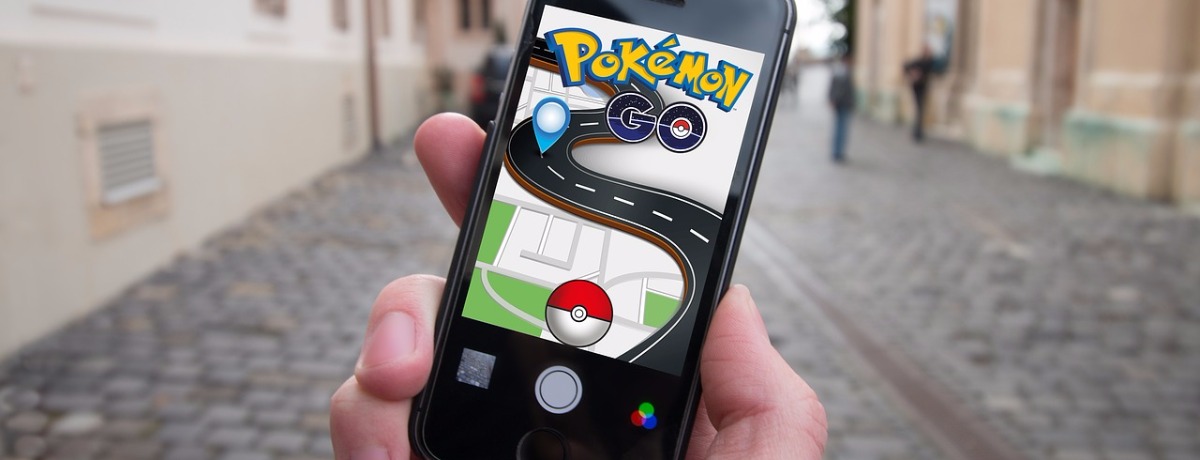
Person playing Pokemon Go on their phone in the middle of the street
William W. Hurst

William W. Hurst

November 30, 2016 12:00 AM

Pokemon Go’s most recent update made it so that Pokemon no longer spawn and Pokestops are no longer accessible once you’re travelling at a speed greater than approximately 25 MPH. Many have reacted to this update as if it were simply a “bug”, but it’s our belief that this was an intentional change made by the game’s developer, Niantic. Many of the game’s players are aggravated with the new change, especially those who are disabled and unable to travel on foot as easily. So why would Niantic make such a drastic change that impacts the playability of its most popular game? Well, hopefully we can help answer that question. For starters, check out an article we wrote a few months ago about SnapChat’s liability for “speed filter accidents” in order to get a baseline understanding for the possible legal ramifications and liability issues presented to mobile application developers. In short, people who play while driving cause car accidents and Niantic likely wants to avoid the possibility of being held liable for those accidents and help keep daily transit safe in the process.

In the world of Personal Injury law one of the most commonly used terms of art is foreseeability. This is because for as long as anyone can remember, the first step in deciding whether an individual or entity can be held liable for injuries to another person is whether or not they owed the injured party a duty. In order to determine whether a duty was owed it must be decided whether the injury was a foreseeable consequence of the individual’s or entity’s actions. Foreseeability, in turn, is determined using the reasonable man standard, i.e., would a reasonable (average) person have foreseen that their actions could lead to the injuries to the injured party that ensued? If yes, then they owe a duty to the injured party.

Distracted driving is the single most cited reason for car accidents, especially among younger drivers. This means companies who produce products targeted toward younger peoples and especially those of driving age must be extra careful about how their products may their consumers while driving. Since Pokemon Go is meant to be played while “on the go” it’s obviously reasonable to assume players will be moving while playing and those who want to gain a larger advantage will want to move as fast as possible. How do you do that? You drive and play or ride and play, the former being far more dangerous. This is why a court could easily decide that Niantic should have foreseeable that people would play and drive, leading to accidents, when it created the game.

If more evidence is needed that this was a foreseeable consequence just look at all the articles like this one, warning that in order to stay safe while playing Pokemon Go you should be sure not to play and drive. Additionally, shortly after the game came out Niantic implicitly acknowledged the danger by putting that pesky little pop-up in the game stating something like you’re traveling at a high rate of speed and asking if you are a passenger. If it was indeed reasonably foreseeable to that these accidents could happen, then Niantic owed a duty to both its players and third-parties to make the game as safe as possible, within reason.

Because Pokemon Go can sense when you’re going a certain speed and make the pop-up appear, they could just as easily shut off your ability to play, thus making players and third-parties less likely to be hit by those playing the game, without much of an expense. This makes it at least plausible that Niantic would eventually be held liable for injuries caused by Pokemon Go related vehicle accidents if it had done nothing. Now they’ve likely done enough to protect its players, third-parties, and itself from harm.

While many players do not play and drive, there are likely many that do and because of that Pokemon Go had no real choice in the matter. It was either do this or eventually be exposed to liability for an accident caused by someone playing while driving.

For further information, follow the source link below.
Related Articles

Municipal Liability - What You Must Know


by Brian G. Grant

It is therefore imperative for lawyers practicing in the field to understand the principle areas of potential municipal liability and to understand both the limits of municipalities’ liability and the specialized statutory defenses available to municipalities.

Traffic sign warning of curves ahead with 20 mph limit.

Used Tires Can Be Deadly


by Patrick McElhone, Jr.

The tires looked new based on the tread depth. However, what the Defendant did not know was that the tires were 10 years old. They had simply been kept in storage. As the Defendant was driving the vehicle on the interstate, the tire suddenly blew out.

Rusted tire and rim illustrating hazards from defective vehicle parts.

Malpractice Awards Caps Add Harm


by Jeffrey M. Kimmel

Where do the victims of these events turn? Make as many jokes as you’d like, but without lawyers, they’d be on their own. Medical malpractice insurance carriers, using their formidable assets and power, flex their muscles and bully their way through defending these inconvenient “events,” which may affect their bottom line.

Close up of a bunch of prescription pills and a mouth thermometer.

Dangerously Flawed Vehicle Designs


by Marc G. Brecher

When the harm is significant enough to raise major safety concerns, a recall may be issued, but that only goes so far. Many recalled items are never returned or repaired, leaving latent hazards everywhere.

Close-up of a car’s gear shift

Advocacy on the Cutting Edge


by Johanna Marmon

Randall Scarlett uses the latest in brain-imaging technology to stay ahead of the curve.

Photo of Attorney Randall H. Scarlett

Trending Articles

The Family Law Loophole That Lets Sex Offenders Parent Kids


by Bryan Driscoll

Is the state's surrogacy framework putting children at risk?

family law surrogacy adoption headline

Algorithmic Exclusion


by Bryan Driscoll

The Workday lawsuit and the future of AI in hiring.

Workday Lawsuit and the Future of AI in Hiring headline

Best Lawyers 2026: Discover the Honorees in Brazil, Mexico, Portugal, South Africa and Spain


by Jamilla Tabbara

A growing international network of recognized legal professionals.

Map highlighting the 2026 Best Lawyers honorees across Brazil, Mexico, Portugal, South Africa and Sp

Unenforceable HOA Rules: What Homeowners Can Do About Illegal HOA Actions


by Bryan Driscoll

Not every HOA rule is legal. Learn how to recognize and fight unenforceable HOA rules that overstep the law.

Wooden model houses connected together representing homeowners associations

Holiday Pay Explained: Federal Rules and Employer Policies


by Bryan Driscoll

Understand how paid holidays work, when employers must follow their policies and when legal guidance may be necessary.

Stack of money wrapped in a festive bow, symbolizing holiday pay

Reddit’s Lawsuit Could Change How Much AI Knows About You


by Justin Smulison

Big AI is battling for its future—your data’s at stake.

Reddit Anthropic Lawsuit headline

Florida Rewrites the Rules on Housing


by Laurie Villanueva

Whether locals like it or not.

Florida Rewrites the Rules on Housing headline

US Tariff Uncertainty Throws Canada Into Legal Purgatory


by Bryan Driscoll

The message is clear: There is no returning to pre-2025 normalcy.

US Tariff Uncertainty Throws Canada Into Legal Purgatory headline

Alimony Explained: Who Qualifies, How It Works and What to Expect


by Bryan Driscoll

A practical guide to understanding alimony, from eligibility to enforcement, for anyone navigating divorce

two figures standing on stacks of coins

UnitedHealth's Twin Legal Storms


by Bryan Driscoll

ERISA failures and shareholder fallout in the wake of a CEO’s death.

United healthcare legal storm ceo murder headline

Can a Green Card Be Revoked?


by Bryan Driscoll

Revocation requires a legal basis, notice and the chance to respond before status can be taken away.

Close-up of a U.S. Permanent Resident Card showing the text 'PERMANENT RESIDENT'

The 2026 Best Lawyers Awards in Chile, Colombia and Puerto Rico


by Jamilla Tabbara

The region’s most highly regarded lawyers.

Map highlighting Chile, Colombia and Puerto Rico for the 2026 Best Lawyers Awards

New Texas Family Laws Transform Navigating Divorce, Custody


by Bryan Driscoll

Reforms are sweeping, philosophically distinct and designed to change the way families operate.

definition of family headline

Why Skechers' $9.4B Private Equity Buyout Sparked Investor Revolt


by Laurie Villanueva

Shareholder anger, a lack of transparency and a 'surprising' valuation.

Skechers shareholder lawsuit headline

What Is the Difference Between a Will and a Living Trust?


by Bryan Driscoll

A practical guide to wills, living trusts and how to choose the right plan for your estate.

Organized folders labeled “Wills” and “Trusts” representing estate planning documents

How Far Back Can the IRS Audit You?


by Bryan Driscoll

Clear answers on IRS statutes of limitations, recordkeeping and what to do if you are under review.

Gloved hand holding a spread of one-hundred-dollar bills near an IRS tax document