
Insight

The Paris Climate Accord and Dissatisfaction

The Paris Climate Accord was a voluntary and non-enforceable approach to resolving climate issues.

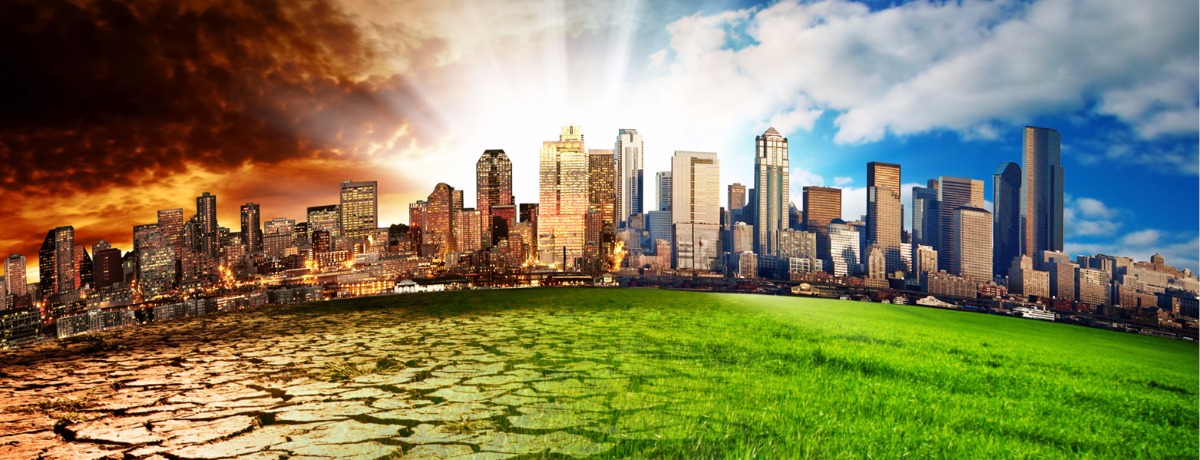
A city in between four different climates, one in sun, one cloudy, one in lots of heat, and one in t
Joseph Z. Fleming

Written by Joseph Z. Fleming and Mark L. Stermitz

Published: August 29, 2017

The Paris Climate Accord was a voluntary and non-enforceable approach to resolving climate issues. Despite the U.S. withdrawal, we may “always have Paris” and continuing debates about global warming, climate change, and rising tides. However, we should not be “misinformed.” We should consider certain conditions:

Areas of the world are impacted locally now by rising waters and resultant upland flooding. In Miami Beach, roads previously dry have been submerged and under water during periods of excellent weather when there were no rains and no winds or storms of any kind. Roads in recent decades have been submerged during calm weather due to “Super Moons.” Some scientists have reported that flooding incidents in Miami Beach have increased at least 400 percent a 10-year period. Miami Beach has tax dollars on raising road levels and has installed pumps in certain areas to protect public safety. Across the bay, the City of Miami is now discussing taxation to enable elimination of flooding. Many areas of the Florida Keys have residential homes and structures built on stilts—structural pilings lift access to a traditional first floor by use of stairs and elevators at the level that a third floor would have started years ago. Flooding has occurred in coastal areas in California due to “King Tides.” New York and New Jersey were flooded by Hurricane Sandy in a manner that had not occurred before. They have been planning and spending to eliminate potential problems by changing infrastructure and requiring new building standards to ensure safer replacement structures.

Our laws need to accommodate, cope with, and address rising waters not only by environmental, infrastructure and building code considerations, but insurance and tax requirements. Some flood zones have been, and will increasingly be, modified to impact development. We now have available common law, national flood insurance, consequent flood plain management statutes, as well as storm water controls at the federal, state, and local levels.

However, our regulatory structures were conceived for a more stable climate.

Federal, state, and local land use and related drainage, flood, and permitting laws were designed primarily to keep upland development from encroaching upon waters and wetlands. Now we need to use laws to protect against emergence of floods caused by rising waters and wetlands that encroach on previous upland developed areas. We may need to use existing environmental laws to prevent upland flooding. We may need modifications of laws to protect those on the upland from flooding and deal with possible relocations as people seek to evacuate areas in which they can no longer live. The U.S. Army Corps of Engineers and the Environmental Protection Agency may, in the near future, have to design permit systems to protect uplands. The National Environmental Protection Act (42 U.S.C. §§ 4321 to 4370m-12; NEPA) provides for environmental impact statements for “major federal actions significantly affecting the quality of the human environment” (NEPA, supra, at § 4332(c)) and NEPA’s “Congressional declaration of national environmental policy” (at § 4331(a)) recognizes the need to promote “the general welfare” and “maintain conditions under which man and nature can exist in productive harmony and fulfill the social, economic, and other requirements of present and future generations of Americans.”

We require creative solutions due to varying geological conditions. In Miami Beach, which is on porous limestone, there is no way to dam out rising waters because the water table rises with rising flood tides. As a result, diking and berming could prolong flooding times by retarding runoff and holding the high flood waters longer on the upland property. If there were no dikes and berms, there could be speedier runoff. Places like Miami Beach that were built on sand dunes and flats, which were in many cases submerged, may require more dredging, filling, and elevation of not only the sea walls but of the “upland” areas. The source of fill may not come from the adjacent wetlands and waters that created Miami Beach, but may have to be excavated in other areas.

Solutions, which may work in certain areas, may not be applicable in other areas. There may be creative ways to use existing and projected infrastructure. Many urban communities have elevated highways and metro rails that are, and can be, connected to federal, regional, or local development. Elevated corridors might become more valuable and serve more if public and private development were permitted to allow higher, denser, and more mixed use adjacent to, over, and surrounding such elevated corridors. Public and private housing and public and commercial development at such sites might create areas that could be accessed for housing and other mixed uses that could also be available in times of rising flood waters (and might replace the traditional use for flood victims of existing stadiums and schools at lower levels, which may be flooded).

Many laws and many areas of practice will be impacted.

This is not solely an environmental issue, which will be the subject of new elevated planning and zoning regulations but, also will be impacting workplaces.

New developments may, if combined with necessary infrastructure needs, create extra revenues and community gains resulting from transfer of development rights and rezoning that may be available by increased height and other related designs along elevated corridors.

The Tax Section of the Florida Bar recently announced that it would consider tax impacts on practitioners’ practices caused by climate changes and rising waters.

This is not a matter of debating global warming, climate change, or scientific concepts. It is a matter of dealing with the realities causing new legal issues in increasing areas of legal practice.

Notwithstanding flooding, places such as Miami Beach continue to be among the hottest real estate development locations in the world. As a result, even creative projects based on new infrastructure projects will not solve all climate change issues. Just as teaching cannibals to eat with a fork and a spoon does not constitute satisfactory progress as to eliminating cannibalism, increasing ad hoc recognition and efforts to overcome some climate problems will not enable global solutions.

The concepts as noted above may cause many modifications of legal practices in order to address these emerging issues. This predictive analysis may not cause “shock” or be “mistaken” since climate changes are now, and will continue to be, impacting the practice of environmental law and many other areas of the law.

As Rick suggested to Ilsa in Casablanca, we can expect more climate changes “maybe not today, maybe not tomorrow, but soon and for the rest of your life.”

-----------------------------

Joseph Z. Fleming is an experienced litigator and management labor and employment, safety, environmental, and land use law attorney. He can be reached at flemingj@gtlaw.com or 305-579-0517.


Learn More About:

Global Warming

Paris Climate Agreement

Climate Change

Related Articles

The Paris Agreement: A Global Turning Point in Climate Action


by Marie-Léonie Vergnerie

When the world (almost) united to fight climate change.

Earth in a flame emoji with a blue background and red and white circle

U.S. Impact on Paris Climate Agreement


by Lisa S. Zebovitz

The United States Climate Alliance, currently comprised of 14 states, is “committed to the goal of reducing greenhouse gas emissions consistent with the goals of the Paris Agreement.”

Green and white shake hands with a big red circle on the handshake

New England's Climate Litigation Surge


by Bryan Driscoll

What law firms need to know

New England's Climate Litigation Surge: What Firms Must Know headline

Critical Period


by Maryne Gouhier and Armelle Royer

How the green-energy raw materials chase is rewriting geopolitics

Overhead shot of mineral extraction plant

Building a Greener Future on Unsolid Ground


by William S. Thomas

As climate change only intensifies, natural disasters are becoming more frequent and shifting how construction legal professionals conduct litigation.

Mutli-level house in the process of being built

9 Ways Lawyers Are Addressing Climate Change Through Environmental Law


by Best Lawyers

To combat climate change and protect depleting resources, Best Lawyers assesses how lawyers play a pivotal role in addressing ongoing environmental problems.

Animated sky polluted by smoke

A Climate Duty


by Samantha Daly and Lara Douvartzidis

Converging trends in Australia and the Netherlands: reasonable foreseeability in climate change law and other novel developments.

Giant dirt road filled with dust and smoke and a truck and steam pike

Great Rebuild


by Best Lawyers

Néstor Méndez discusses labor peace, junk-bond repercussions, and the laudable resilience of those who call this storm-battered island home.

Néstor M. Méndez, founder of "Law Firm of the Year", Pietrantoni Méndez & Alvarez

Turning Down the Heat


by Janice Zhou

What sort of legal and legislative action is necessary to help put Pennsylvania on the front lines of the battle against climate change?

Giant planet with multi-colored swirls with a black background

Easy Being Green


by Best Lawyers

Markus Deutsch discusses the impact of climate change on the firm and its clients.

Photo of Lawyers from Dolde Mayen & Partner

Impact of Climate Change on Real Estate Law


by Best Lawyers

Dr. Christian Schede discusses rent in large cities, the effect of Airbnb, and more.

Dr. Christian Schede discusses rent in large cities due to Airbnb

The Generals’ Next War


by Alison Torbitt and Gayatri Joshi

Businesses’ Sense of Corporate Social Responsibility Is Increasingly Driving Long-Term Growth. Here’s How General Counsel Can Best Confront CSR’s Numerous Challenges and Opportunities.

Desk with laptop and a notepad with glasses and a green grass background

2020 Vision


by Sean Devlin

What Does Corporate Environmental Concern Look Like in 2020?

Woman with binoculars looks into the sky with symbols behind her head

Hotter and More Intense


by Lori Tripoli

Multiple Category 5 hurricanes. Drought. Wildfires. Climate change isn’t just damaging the environment and our health. It’s impacting the bottom line.

Temperature increases on a scale causing iceberg to sink

Floating Infrastructure


by Kerri L. Barsh

The ability to move a water treatment plant closer to the populations that the plant would serve and then re-locate that facility to another location as demographics change or in the event of a natural disaster could prove invaluable.

Infrastructure with filters on it and buildings overlayed

Going Global


by Joseph K. Reinhart, Esq. and Meredith Odato Graham, Esq.

Expanding the scope of environmental review for the energy sector.

Land with two giant steam turnpikes with two purple triangles and two white triangles

Trending Articles

Recognizing Legal Leaders: The 2027 Best Lawyers Awards in Australia, Japan and Singapore


by Jamilla Tabbara

Market drivers, diversity trends and the elite practitioners shaping the legal landscape.

Illustrated maps of Australia, Japan and Singapore displayed with their national flags, representing

Holiday Pay Explained: Federal Rules and Employer Policies


by Bryan Driscoll

Understand how paid holidays work, when employers must follow their policies and when legal guidance may be necessary.

Stack of money wrapped in a festive bow, symbolizing holiday pay

Can a Green Card Be Revoked?


by Bryan Driscoll

Revocation requires a legal basis, notice and the chance to respond before status can be taken away.

Close-up of a U.S. Permanent Resident Card showing the text 'PERMANENT RESIDENT'

How Far Back Can the IRS Audit You?


by Bryan Driscoll

Clear answers on IRS statutes of limitations, recordkeeping and what to do if you are under review.

Gloved hand holding a spread of one-hundred-dollar bills near an IRS tax document

US Tariff Uncertainty Throws Canada Into Legal Purgatory


by Bryan Driscoll

The message is clear: There is no returning to pre-2025 normalcy.

US Tariff Uncertainty Throws Canada Into Legal Purgatory headline

Can You File Bankruptcy on Credit Cards


by Bryan Driscoll

Understanding your options for relief from overwhelming debt.

Red credit card on point-of-sale terminal representing credit card debt

Musk v. Altman: The Lawyers Behind the Case


by Jamilla Tabbara

Meet the Trial Lawyers Shaping One of AI's Biggest Legal Disputes.

Portrait photos of Elon Musk and Sam Altman positioned in front of the OpenAI logo.

How AI Is Changing the Way Clients Find Lawyers


by Jamilla Tabbara

Best Lawyers CEO Phil Greer explains how AI-driven search tools are reshaping legal marketing and why credibility markers matter.

AI chat bubble icon with stars representing artificial intelligence transforming client-lawyer conne

Colorado’s 2026 Water Rights Battles


by Bryan Driscoll

A new era of conflict begins.

Colorado Water Rights 2026: A New Era of Conflict headline

The Legal Teams Behind the Blake Lively–Justin Baldoni Settlement


by Grace Greer

A closer look at the legal teams and attorneys involved in the Blake Lively–Justin Baldoni litigation and its resolution.

Split-screen image of Blake Lively and Justin Baldoni

When Is It Too Late to Stop Foreclosure?


by Bryan Driscoll

Understanding the foreclosure timeline, critical deadlines and the legal options that may still protect your home.

Miniature house model on orange background surrounded by thumbtacks representing foreclosure

Can You Go to Jail at an Arraignment?


by Bryan Driscoll

Understanding What Happens at Your First Court Appearance.

A heavy chain lying on the ground in the foreground with a blurred figure standing in the background

What’s the Difference Between DUI and DWI?


by Bryan Driscoll

Understanding the terminology and consequences of impaired driving charges.

Driver during nighttime police traffic stop with officer's flashlight shining through car window

Canadian Firms Explore AI, But Few Fully Embrace the Shift


by David L. Brown

BLF survey reveals caution despite momentum.

Canadian Firms Explore AI, But Few Fully Embrace the Shift headline

Is Federal Inaction Crippling New York’s Gun Laws?


by Bryan Driscoll

Tragedy tests the limits of Empire State gun control.

limits of new york gun laws headline

How to Choose a Personal Injury Lawyer


by Bryan Driscoll

Finding the right legal representation after an injury is a critical decision that requires careful evaluation. 

3D scene representing the deliberative process of choosing a personal injury attorney