More False Claims Act “Good Cause” Activity in the MDTN
November 3, 2021 I Sherrard Roe Blog I Christopher C. Sabis
In May, I wrote about some interesting rulings from the Middle District of Tennessee related to the “good cause” standard in False Claims Act (FCA) cases. Under 31 U.S.C. § 3730(c)(3),
If the Government elects not to proceed with the action, the person who initiated the action shall have the right to conduct the action…. When a person proceeds with the action, the court, without limiting the status and rights of the person initiating the action, may nevertheless permit the Government to intervene at a later date upon a showing of good cause. (emphasis added).
The statute does not define good cause, but the standard applies in a couple of important contexts. First, the Government must show good cause to intervene and take over litigation of an FCA case after it already declined to do so and the relator has begun prosecuting the case. Second, the Government must show good cause to intervene and dismiss a relator’s claim under 31 U.S.C. § 3730(c)(2)(A) (“The Government may dismiss the action notwithstanding the objections of the person initiating the action if the person has been notified by the Government of the filing of the motion and the court has provided the person with an opportunity for a hearing on the motion.”).
Early this year, Chief Judge Waverly Crenshaw denied the Government’s request to intervene in the first scenario in United States et al. ex rel. Odom et al. v. Southeast Eye Specialists, PLLC, et al.[1] In doing so, the court vacated a federal magistrate judge’s prior decision to grant the United States the right to intervene. The Government filed a notice of appeal in the case but later withdrew it, and the relator is proceeding with the litigation. Chief Judge Crenshaw’s decision signaled that the Middle District might employ a more stringent good cause standard for delayed government interventions than some jurisdictions.
But in April, District Judge William Campbell granted the Government’s request to intervene in order to dismiss United States ex rel. Hinds v. SavaSeniorCare, LLC et al.[2] In that case, Judge Campbell, inter alia, declined to “second-guess the Government’s determination that additional recovery [was] ‘unlikely.’” Despite the different context, the “good cause” standard for intervention is, theoretically, the same. Judge Campbell’s decision raised the question of whether there may be differences in how district judges within the Middle District will approach the FCA’s good cause standard in both scenarios.
Now we may find out. In United States ex rel. Liebman v. Methodist Le Bonheur Healthcare, et al.,[3] Judge Campbell will have the opportunity to rule on a Government intervention motion where the Government seeks to take over the litigation. In October 2021, a little less than two years after it initially declined to intervene in this case, the Government filed a motion to intervene. In its motion, the Government maintains there is good cause to intervene because “(i) Relators consent to the proposed intervention; (ii) the United States has obtained new and additional evidence that supports intervention at this time; (iii) there is limited, if any, prejudice to Methodist if the United States intervenes at this time; and (iv) it is in the best interest of the public to allow the United States to intervene, which outweighs any arguable prejudice to Methodist.”[4] Among the new information obtained by the Government were “provided documents to Relators that had not been provided to the United States or produced in the action” following a settlement between Relator and one of the defendants in the case.[5]
The Government’s arguments in favor of intervention in Southeast Eye Specialists before Chief Judge Crenshaw were similar to the arguments it presents in Methodist. Although the particular facts will differ, it will be interesting to see how Judge Campbell applies the 31 U.S.C. § 3730(c)(3) good cause standard to the Government’s request. Anyone who does business with the federal government in Tennessee should keep an eye on Methodist for further guidance on how the judges in the Middle District will approach future Government intervention motions under § 3730(c)(3).
We continue to monitor developments in the FCA area. Subscribe to the Sherrard Roe blog and follow us on LinkedIn for future updates. Contact the lawyers in our Government Compliance & Investigations group with any questions or concerns.
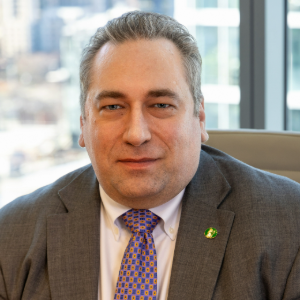
Chris Sabis is a healthcare and procurement fraud lawyer at Sherrard Roe, specializing in Government Compliance and Investigations, Healthcare, and Litigation.
[1] No. 3:17-cv-0689 (M.D. Tenn.).
[2] No. 3:18-cv-01202 (M.D. Tenn.).
[3] 3:17-cv-0902 (M.D. Tenn.).
[4] Id., Dkt. 193 at 2
[5] Id., Dkt. 194 at 3.