Insight

What about the Legal Immigrants?

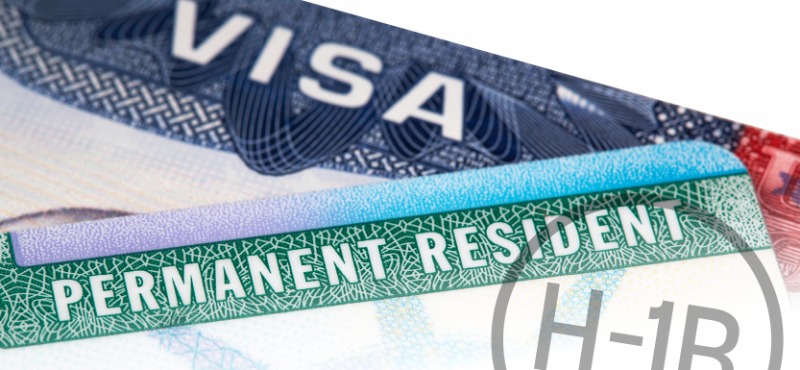
The difference between a Visa, H-1B, and a Permanent resident card
MN

Clark Hill PLC

December 22, 2016 12:00 AM

There has been a lot of discussion about undocumented foreign nationals in this presidential election season. But there has been almost no discussion of the plight of documented foreign nationals who are of lawful immigration status but cannot secure a temporary work visa. Often even if they do, they must wait years for U.S. lawful permanent residence (a green card). There are many challenges for those playing by the rules.

To illustrate this, many of these foreign nationals start out in the U.S. on F-1 and M-1 student visas. In March 2016, the U.S. Immigration and Customs Enforcement (ICE) reported that 1.18 million foreign nationals were in the U.S. studying on these student visas. For those attending public universities and colleges, they must pay out-of-state tuition.

Upon graduation, the F-1 students can apply for, and are routinely granted, one year of optional practical training (OPT) so they can work in the U.S. and receive training. Those who studied in a program that involved science, technology, engineering, or math (STEM) can apply for an additional two years of OPT work authorization if they work for a qualifying employer. According to ICE, 40 percent of these students are studying in a STEM field and over 500,000 are enrolled in master or doctoral degree programs.

But there aren’t great odds for students looking for a long-term work visa. The most common work visa for professionals is called the H-1B visa. The H-1B is needed for students to remain in the U.S. after their OPT runs out. Congress hasn’t given private sector U.S. employers enough H-1B visas to keep up with demand. For the roughly 85,000 H-1Bs that are available each fiscal year, over 200,000 applications are received during the five filing days available per year. Our office estimates that the odds for being selected in the random H-1B lottery are 50 percent if the worker has a U.S. master’s degree or higher and 30 percent for everyone else.

H-1B workers cannot be “cheap immigrant labor,” as they must be paid what a U.S. worker would be paid for the same job or meet the U.S. government’s wage floor for that position in that area. Additionally, the filing fees for an H-1B application are over $2,300 per employee for most private employers plus attorney costs, and the vast majority of H-1B workers cannot stay in the U.S. and secure a green card unless their U.S. employer sponsors them. Sadly, many professionals have been trying for years and still haven’t received an H-1B. Congress is not moving to increase the H-1B quota—even the word “H-1B” is caustic in their halls.

Even if these students receive an H-1B, they can only stay in the U.S. for six years. The U.S. doesn’t have enough employment-based green cards, and Congress has put a quota system in place to tell applicants how long they will wait for an employment-based green card. The employment-based green card system is the opposite of a frequent flyer card: persons from countries that have more applicants wait longest for a green card, since no country can use more than the seven percent of total green card numbers available per year. Persons born in India, China, and the Philippines typically wait the longest for employment-based green cards. Wait times can be over five years, with many applicants from India waiting decades for a green card.

For most employees, this green card process does not start until the employer can prove, after running ads in six different media outlets, that the employer was unable to find a U.S. worker who was minimally qualified to do the job advertised at a wage determined by the DOL.

Who pays for these H-1B applications, extensions, and most of the green card costs? The employers. By regulation, many of these costs cannot be paid for by the employee, including the H-1B filing fees and attorney fees, and PERM labor certification attorney fees and advertising costs.

“For the roughly 85,000 H-1Bs that are available each fiscal year, over 200,000 applications are received during the five filing days available per year.”

These students are the people we trained in our universities, and many of them paid a lot of money for their education. Many of these foreign-born graduates went on to become founders of successful companies. Recent studies confirm that foreign-born workers in the U.S. are far more entrepreneurial than their U.S.-born counterparts. It is a shame that we have an immigration system where only those with the intestinal fortitude to go through the dizzying highs and terrifying lows, along with some luck for highly educated entrepreneurial individuals, make it out at the end. These foreign nationals have the same job and financial and family stressors as the rest of us—oftentimes even more. However, the pinnacle of their concerns is the question, “Will I be allowed to stay?”

Related Articles

The Price of Admission


by Janice Zhou

States and the federal government are engaged in a pitched battle over immigration and refugee settlement—with the legal profession caught in the middle, taking fire from both sides.

Three black silhouettes, one of a father and two of children

Trump and Immigration: Separating Truth from Fiction


by Harlan G. York

Deportations aren’t up, but the people who are being deported are more “newsworthy.”

American flag with a blue spotlight and a black background with a black wire fence in front of it

Stroock Partners with New York Lawyers for Public Interest to Develop Critical Guide for Nonprofits on Immigration Enforcement


by Stroock & Stroock & Lavan

Marked increases in immigration arrests, especially in and around courts, schools, places of worship, and health care facilities, have generated fear and uncertainty among immigrant communities and left many non-profit service providers questioning how to continue effectively assisting their immigrant clients.

Stroock Partners with New York Lawyers with American flag in the background and people in a room

Employers Must Soon Use Yet Another New I-9 Form


by Fisher Phillips

New document could be liability trap for unsuspecting employers.

Department of Homeland Security I-9 Form

The Global Employer: Strategies and Best Practices for an International Workforce


by Garfinkel Immigration Law Firm

Developing and retaining an international workforce is essential to competing in the global marketplace.

Black background with Earth in the center and employers surrounding the planet

Immigration Due Diligence in Mergers and Acquisitions


by Martha J. Schoonover and Nataliya Binshteyn Dominguez

An Overview

Five businesspeople walk into a conference building

Visa Options for Employees Who Lose the H-1B Lottery


by Kristal Ozmun and Stephen Yale-Loehr

Green Statue of Liberty with a cloudy sky

Not too Broken to Fix


by Brian Graham

How to improve the H1-B lottery and protect wages now.

Man with brown suit jacket holds a wheel with different chance opportunities and the circle is in th

Can a Green Card Be Revoked?


by Bryan Driscoll

Revocation requires a legal basis, notice and the chance to respond before status can be taken away.

Close-up of a U.S. Permanent Resident Card showing the text 'PERMANENT RESIDENT'

Is Time Running Out for DC’s Sanctuary City Law?


by Bryan Driscoll

The Capitol is battling the White House in a dangerous game.

DC sanctuary city law headline

Do I Really Need an Immigration Attorney? Key Factors to Consider


by Best Lawyers

Immigrating to the U.S. can be a complex and lengthy experience. In this article, Best Lawyers evaluates how an immigration attorney can help along the way.

Department of Homeland Security logo with American flag in the backdrop

Maximizing Your Chances of Approval with an Immigration Attorney


by Best Lawyers

Tips for choosing the right immigration attorney and navigating the complex path to citizenship.

View of Statue of Liberty with birds in backrop

Cost of Entry


by Best Lawyers

As naturalization fees increase, a local nonprofit provides financial relief for immigration

Close of the statue of liberty in red and dollar signs in the back

Loophole or Fatal Flaw?


by Joseph Begonis

Canada's Best Lawyers share their thoughts on the Safe Third Country Agreement

Line cues with the words "Immigration" written on them and a blue and red filter

Traversing the Immigration Frontier


by Best Lawyers

Brian Graham 2019 “Lawyer of the Year” award in Texas’ Best Lawyers.

Photo of Brian Graham 2019 Lawyer of the Year Honoree

Issue Spotting Guide for Assessing Inbound to U.S. Travel Issues


by Kathleen M. Peregoy

Essential guidance for management and HR on assessing U.S. travel and work visa issues to ensure immigration compliance and smooth workforce mobility.

Flight attendants and pilot silhouettes walk in the airport with construction in the back

Trending Articles

2026 Best Lawyers Awards: Recognizing Legal Talent Across the United States


by Jamilla Tabbara

The 2026 editions highlight the top 5% of U.S. attorneys, showcase emerging practice areas and reveal trends shaping the nation’s legal profession.

Map of the United States represented in The Best Lawyers in America 2026 awards

Gun Rights for Convicted Felons? The DOJ Says It's Time.


by Bryan Driscoll

It's more than an administrative reopening of a long-dormant issue; it's a test of how the law reconciles the right to bear arms with protecting the public.

Firearms application behind jail bars

2026 Best Lawyers Awards in Canada: Marking 20 Years of Excellence


by Jamilla Tabbara

Honoring Canada’s most respected lawyers and spotlighting the next generation shaping the future of law.

Shining Canadian map marking the 2026 Best Lawyers awards coverage

How to Sue for Defamation: Costs, Process and What to Expect


by Bryan Driscoll

Learn the legal standards, costs and steps involved when you sue for defamation, including the difference between libel and slander.

Group of people holding papers with speech bubbles above them

Best Lawyers 2026: Discover the Honorees in Brazil, Mexico, Portugal, South Africa and Spain


by Jamilla Tabbara

A growing international network of recognized legal professionals.

Map highlighting the 2026 Best Lawyers honorees across Brazil, Mexico, Portugal, South Africa and Sp

Algorithmic Exclusion


by Bryan Driscoll

The Workday lawsuit and the future of AI in hiring.

Workday Lawsuit and the Future of AI in Hiring headline

Reddit’s Lawsuit Could Change How Much AI Knows About You


by Justin Smulison

Big AI is battling for its future—your data’s at stake.

Reddit Anthropic Lawsuit headline

How to Choose a Good Lawyer: Tips, Traits and Questions to Ask


by Laurie Villanueva

A Practical Guide for Your First-Time Hiring a Lawyer

Three professional lawyers walking together and discussing work

Common-Law Marriage in Indiana: Are You Legally Protected?


by Laurie Villanueva

Understanding cohabitation rights and common-law marriage recognition in Indiana.

Married Indiana couple in their home

The 2026 Best Lawyers Awards in Chile, Colombia and Puerto Rico


by Jamilla Tabbara

The region’s most highly regarded lawyers.

Map highlighting Chile, Colombia and Puerto Rico for the 2026 Best Lawyers Awards

US Tariff Uncertainty Throws Canada Into Legal Purgatory


by Bryan Driscoll

The message is clear: There is no returning to pre-2025 normalcy.

US Tariff Uncertainty Throws Canada Into Legal Purgatory headline

Unenforceable HOA Rules: What Homeowners Can Do About Illegal HOA Actions


by Bryan Driscoll

Not every HOA rule is legal. Learn how to recognize and fight unenforceable HOA rules that overstep the law.

Wooden model houses connected together representing homeowners associations

AI Tools for Lawyers: How Smithy AI Solves Key Challenges


by Jamilla Tabbara

Understand the features and benefits within the Best Lawyers Digital Marketing Platform.

Legal professional editing profile content with Smithy AI

UnitedHealth's Twin Legal Storms


by Bryan Driscoll

ERISA failures and shareholder fallout in the wake of a CEO’s death.

United healthcare legal storm ceo murder headline

Alimony Explained: Who Qualifies, How It Works and What to Expect


by Bryan Driscoll

A practical guide to understanding alimony, from eligibility to enforcement, for anyone navigating divorce

two figures standing on stacks of coins

Florida Rewrites the Rules on Housing


by Laurie Villanueva

Whether locals like it or not.

Florida Rewrites the Rules on Housing headline