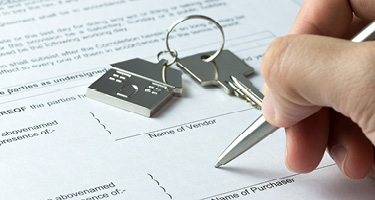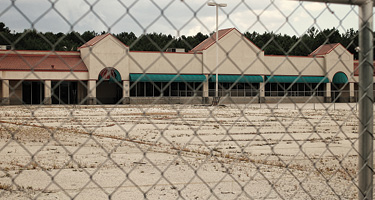
If you are purchasing or leasing property, or you are a lender making a loan to anyone who owns, is buying, or leases property, it is very important to make sure the property has proper, legal access to a public street or road.
In most cases, it’s also important to make sure that the property not only has legal access to a public street or road, but also that vehicles can get onto the property using a driveway or curb cut. This may be by direct access from the property to the street, or it may be indirect access by way of a servitude or easement to cross adjoining property to get to the street. In some cases, you may want both, because you may want to have a drive-through lane or delivery road on someone else’s property, in addition to any driveways that connect your property directly to a street.
Developed Property with Direct Access
If the property is already developed, this can be a fairly simple part of your due diligence inspections if the access is directly from the property onto a street. A visual inspection by your surveyor or building inspection team should disclose whether the property has a driveway onto a street and whether it is adequate for your intended use of the property.
If your team is not certain that the street is dedicated to public use, you can ask the local municipality or parish/county. There will usually be a department of public works or a planning and permitting department who can confirm if a street is public.
Title Insurance for Developed Property with Direct Access
You should also consider asking the title insurance company to issue an ALTA 17-06 Access and Entry Endorsement with your title policy. This gives you title insurance coverage against loss you sustain if it turns out that on the date the title policy is effective, the property does not have both actual vehicular and pedestrian access to and from a public street and you do not have the right to use existing curb cuts or entries along that portion of the street abutting the property.
The title policy does not insure that this won’t change in the future, but it is valuable to have the title insurance coverage in effect when you buy or lease the property. Once you own or lease the property, you’re in a better position to protect yourself against future changes to access, but if you buy or lease it without knowing you have proper access, you may have problems that are hard (and expensive) to fix.
Developed Property with Indirect Access
You may know or discover that your property does not have a driveway directly onto a street, but that it connects across a neighbor’s property and that you use the neighbor’s driveway to get to the street. Even if you have a direct driveway, you may you want additional access to your property across a neighbor’s property for a drive-through lane or delivery road. In that event, you should take your inquiry to the next step and confirm that you have a valid, written servitude or easement allowing you to cross the neighbor’s property and to use its driveway.
If you know before you sign a purchase agreement or lease that access is via a servitude or easement on adjoining property, be sure to include in your agreement the right to examine the title to the servitude estate and to inspect that property, including the right to make title, survey, and physical objections in connection with the servitude, similar to your due diligence rights regarding the property you are buying or leasing.
This is not unusual in shopping centers and similar developments where property owners share driveways, because municipalities often won’t give each owner a driveway permit. Permitting departments often require that owners share common driveways, in order to limit the number of driveways opening onto a street in a congested area.
Your inspections may reveal that there is not an existing servitude or easement across adjoining property to give you access to a street. In that case, you will need to negotiate with adjoining owners to get a satisfactory servitude or easement that will let you go across their property and use their driveway to get to and from the street.
If you know before you sign the purchase agreement or lease that it is necessary to get a servitude or easement from a neighboring property, be sure to include a right to terminate the purchase agreement or lease if a satisfactory access servitude is not obtained before you buy or lease the property. If you’re not certain, include the right to terminate the agreement if inspections show that it’s necessary to negotiate a servitude or easement with another owner and the servitude or easement cannot be obtained. Make sure your inspection and termination provisions are sufficient.
Title Insurance for Undeveloped Property with Indirect Access
If your property has or will have indirect access by virtue of a servitude or easement across adjoining property, it is also important to work with your title insurance company to include the servitude or easement rights as an insured estate in your title insurance commitment and policy. If there is or will be a valid access servitude or easement in favor of your property, you want to have it included in the title insurance as an appurtenant estate – that is, a legal right that goes with the property you will own or lease.
Additionally, you may want to ask the title insurance company to issue an ALTA 17.1-06 Indirect Access and Entry Endorsement with your title policy. This is similar to the ALTA 17-06 Access and Entry Endorsement, but recognizes that access is via a servitude or easement. The ALTA 17.1-06 gives you title insurance coverage against loss you incur if it turns out that on the date the title policy is effective, the servitude or easement that is in favor of your property does not provide your property both actual vehicular and pedestrian access to and from a public street and you do not have the right to use existing curb cuts or entries along that portion of the street abutting the servitude property.
As with the direct access endorsement, this does not insure that nothing will change in the future, but it does give you title insurance for what is in effect when you buy or lease the property.
Undeveloped Property with Direct Access
You may need to do some additional due diligence when buying or leasing undeveloped property. If the property already has a driveway onto a public street, you will want to confirm with the local permitting department that you will be allowed to use that driveway for your intended use of the property. For example, a curb cut may already exist on property that is either vacant or on which the existing buildings will be demolished, but it may not be adequate for your intended use.
Suppose you are planning to build something with a lot of cars and trucks entering your property, such as a hotel which will have a lot of guests and delivery vehicles entering and exiting the street. You need to be sure that the building permit you obtain includes the right to use the existing driveway for those purposes, and if it doesn’t, you need to know what the permitting department’s requirements will be. You should make sure that your inspection rights in the purchase agreement or lease cover this contingency and that you have the right to terminate if you cannot get a permit for adequate access to a public street.
Title Insurance for Undeveloped Property with Direct Access
You may also want to ask the title insurance company if an endorsement is available for your title policy. If there is no existing driveway when the policy is issued, you may not be able to obtain the standard ALTA 17-06 Access and Entry endorsement, but there may be something else the title company can issue, so it’s worth discussing with them.
Undeveloped Property with Indirect Access
If you know in advance that you won’t be able to get a driveway permit for undeveloped property you’re buying, or you discover this during your inspections, your purchase agreement or lease needs to cover this contingency.
This is often the case when buying or leasing an undeveloped parcel in a shopping center or similar development where the local government may not want to give additional driveway permits on a particular street. You can include an obligation for the seller or lessor to get a satisfactory servitude or easement from a neighboring property and a governmental permit to use that driveway for your intended purposes, and provide that you can terminate the agreement if the servitude or easement and driveway permit are not obtained.
It is possible that the seller or lessor owns the adjoining property, so the purchase agreement or lease would provide that you have to negotiate a satisfactory servitude or easement with the seller or lessor and get a satisfactory driveway permit during your due diligence period, rather than getting the servitude from a third party, but still giving you the right to terminate the agreement if the servitude or easement and driveway permit are not completed before the closing.
Title Insurance for Undeveloped Property with Indirect Access
Whether the servitude or easement is from your seller or lessor or from another property owner, you should ask the title insurance company to include the servitude or easement rights in your title insurance commitment. You should also ask the title insurance company if an ALTA 17.1-06 Indirect Access and Entry Endorsement is available, and if it is not because the driveway does not exist yet, whether there is any other endorsement the title insurer can issue.
Property on a Street That Has No Driveway
There are some properties that have a boundary on a public street, but do not and will not have a driveway. This is sometimes the case in urban areas where buildings are too close to each other to allow for driveways between them, and are built in a way that there is no room for a driveway onto the property.
Imagine a busy city street in an older part of a city, such as Canal Street in New Orleans. There are several buildings that have a frontage along Canal Street, so the property has legal access, but for which there is no driveway and thus the property does not have vehicular access to a public street. Customers, people making deliveries, and guests at properties like these park elsewhere and walk to the property.
If you’re buying or leasing property like this (or are the lender), the lack of a driveway may not be a big concern as long as you make sure that the property complies with local zoning ordinances. A lot of properties like this do not have off-street parking requirements under the zoning ordinance.
This should be in your due diligence inspections, with a right to terminate the purchase agreement or lease if you determine that the property is not compliant with current zoning ordinances, or does not have rights to maintain its existing use even though it’s not compliant with current zoning ordinances (commonly referred to as being grandfathered in or being a legal non-conforming use).
Title Insurance for Property on a Street That Has No Driveway
With a property that is on a street but cannot have a driveway, and which by its nature won’t have an access servitude or easement on adjoining property, you probably will not be able to get an ALTA 17-06 Access and Entry endorsement with your title policy because the property does not have actual vehicular access. The standard title policy includes insurance that there is a legal right of access to and from the property, but does not insure that there is vehicular access.
If you are comfortable with the property’s zoning status, know that people can walk to your property, and have made adequate arrangements for deliveries to your property, the absence of the extra title insurance endorsement should not be an issue for you.
Conclusion – Can You Get There From Here?
The key to deciding what type of access rights you need and what title insurance coverage you want regarding access is to understand the property and your intended use, and to determine if your access to a public street and driveways is adequate for your needs, including any building permits you need. We can help you analyze this, negotiate contracts that cover the bases, and work with the title insurance company to make sure you have appropriate title insurance coverage.