

Choosing legal representation after an accident is one of the most significant decisions an individual can make. The process of how to choose a personal injury lawyer often feels overwhelming, especially when dealing with the physical and emotional aftermath of an injury. However, knowing how to choose a good lawyer can significantly influence the trajectory of your case and your ability to secure fair compensation.
This article serves as a guide to help you navigate this process with confidence. Rather than promoting a specific firm, the focus here is on helping you make an informed choice based on practical criteria.
- This article guides individuals on a critical decision: choosing a personal injury lawyer when the stakes are high post-injury.
- Explore practical advice on identifying reputable lawyers through online searches, referrals and understanding key evaluation criteria.
- Gain insights into fee structures, common challenges and why selecting the right lawyer can impact your case's timeline and success.
- Discover methods to ensure your lawyer matches your specific case needs and preferences, emphasizing efficient resolution and minimal stress.
Why Someone Might Need a Personal Injury Lawyer
If you have suffered serious injuries that require long-term medical care or have resulted in lost wages, the stakes are high. Cases where liability is disputed—meaning the parties involved do not agree on who is at fault—also require a lawyer's ability to gather and present evidence effectively. There are countless situations when you might need a personal injury lawyer and you can find more information on the complexities of these scenarios in this guide to hiring a personal injury lawyer.
How to Find a Personal Injury Lawyer
The search for representation begins with identifying a pool of qualified candidates. Knowing how to find a personal injury lawyer involves using several reliable methods to ensure you are looking in the right places.
- Online Searches and Legal Directories: Googling is the most common starting point. Reputable legal directories allow you to filter results by practice area and geographic location, ensuring the lawyers you find are authorized to practice in your jurisdiction.
- Referrals from Trusted Sources: Personal recommendations from friends, family or colleagues who have had similar legal needs can be invaluable. If you have worked with a lawyer in a different field, they may be able to provide a referral to a trusted personal injury colleague.
- Contact Your Local or State Bar Association: Many state and county bar associations provide free referrals to lawyers in your area. You may even be granted a short consult for free or nominal charge based on this referral.
- Reviewing Profiles and Credentials: Once you have a list of names, examine their professional profiles. Look for their educational background, years of practice and whether they hold leadership positions in legal associations.
It is important to remember that finding a lawyer is merely the first step. Thorough evaluation is essential as a lawyer’s availability does not necessarily mean they are the right fit for your specific case.
Which Factors Should You Consider When Choosing a Personal Injury Lawyer?
When considering what to look for in a personal injury lawyer, keep these high-level factors in mind:
- Relevant Experience: Does the lawyer have a history of handling cases similar to yours?
- Reputation: How is the lawyer viewed by their peers and former clients?
- Communication Style: Will they be accessible and transparent throughout the process?
- Case Fit: Does the lawyer’s approach align with your goals for the case?
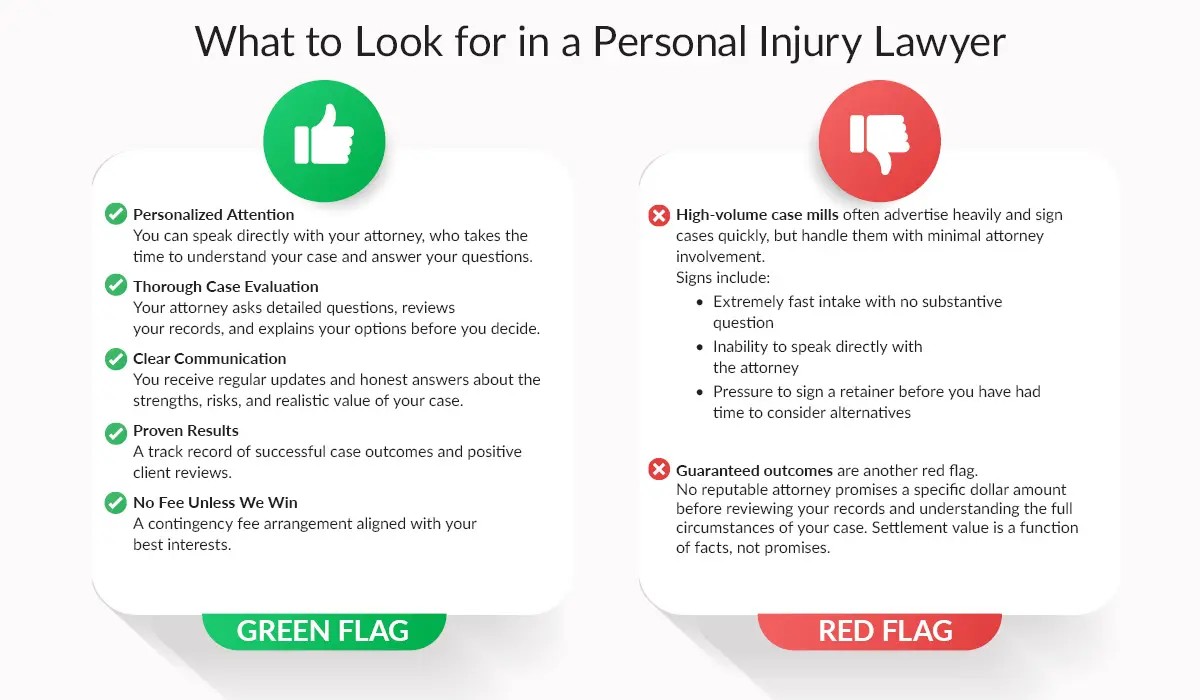
How to Choose a Good Personal Injury Lawyer
To determine how to find a good personal injury lawyer, look beyond basic advertisements and evaluate the substance of their practice. A good lawyer is not just someone who is licensed, but someone whose specific skills and resources match the demands of your claim.
Relevant Experience and Case Focus
Personal injury law is a broad field. Some lawyers focus specifically on medical malpractice, while others may specialize in motor vehicle accidents or workplace injuries. Choosing a lawyer with a focus on your specific type of injury is essential because they will be familiar with the relevant statutes, common defense tactics and medical nuances associated with those cases.
Track Record and Case Handling Approach
While ethical rules prevent lawyers from promising specific outcomes, you can assess their experience by looking at their history. Some lawyers are known for their settlement skills, aiming to resolve cases efficiently out of court. Others have a strong litigation background and are prepared to take a case to trial if a fair settlement cannot be reached. Understanding their tendencies helps you decide if their style matches your preferences.
Reputation and Professional Standing
A lawyer’s reputation among their peers often reflects their skill and integrity. You can check professional directories, look for peer-reviewed recognitions and verify their standing with the state bar association to ensure there are no history of disciplinary actions. For more detail, you can read our guide on how to check a lawyer’s reputation.
Communication and Accessibility
A common frustration for clients is a lack of communication. During your initial interactions, note how responsive the firm is. A good lawyer should prioritize transparency, providing regular updates and explaining complex legal concepts in a way that you can understand.
Firm Resources and Support
Complex personal injury cases often require significant resources. This may include the ability to hire expert witnesses, accident reconstructionists or medical investigators. Ensure the firm has the support staff and financial stability to see a case through to the end, especially if it becomes protracted.
What Questions Should You Ask Before Hiring a Personal Injury Lawyer?
The initial consultation is your opportunity to interview the lawyer. Focus on these types of questions to ask a personal injury lawyer within these key categories to gather the information you need.
- Experience with Similar Cases: Ask about their familiarity with cases involving your specific injury or the circumstances of your accident. How many similar cases have they handled in the past year?
- Case Management: Ask who will be the primary point of contact. Will the lawyer you are speaking with handle the case themselves, or will it be managed by an associate or paralegal?
- Communication Expectations: Receiving regular updates about your case is critical. Ask how the firm will communicate with you and how often.
- Timeline and Challenges: While they cannot provide a certain date for resolution, they should be able to discuss potential challenges that could affect the timeline and how they plan to address them.
- Client Responsibilities: Ask what will be expected of you. This may include maintaining medical records, documenting your recovery or being available for depositions.
How Do Personal Injury Lawyers Charge for Their Services?
Most personal injury lawyers operate on a contingency fee arrangement. In this model, the lawyer does not collect an hourly fee. Instead, they receive a percentage of the final recovery. If no money is recovered, the lawyer typically does not receive a fee. The specific percentage can vary depending on the complexity of the case and the stage at which it is resolved but usually falls in the 30 to 40 percent range.
Also ask about case-related costs. These are expenses incurred during the case, such as filing fees or payments to expert witnesses. Clarify whether these costs are deducted from your portion of the recovery or if you are responsible for them regardless of the outcome.
While many lawyers offer free initial consultations, this is not a universal guarantee, so it is best to verify this beforehand. For more information, see our article on lawyer consultation fees.
Common Challenges in Personal Injury Cases and Why the Right Lawyer Matters
The path to a successful claim is rarely without obstacles. Understanding these challenges reinforces why your choice of lawyer is so critical.
- Proving Liability: Establishing fault is rarely simple. It often requires meticulous evidence collection, witness testimony and expert analysis to prove the other party’s negligence.
- Proving the Severity of Injuries: Invisible injuries, such as traumatic brain injuries or chronic pain, are among the hardest to prove. A lawyer must be skilled at using medical documentation and expert testimony to demonstrate the long-term impact of these conditions.
- Insurance Company Tactics: Insurers may attempt to minimize payouts or deny claims altogether. An experienced lawyer understands these tactics and can negotiate from a position of strength.
- Uncertainty of Outcomes: No two personal injury cases are exactly alike and lawyers cannot provide you with a guarantee of how long your case will take and if you’ll win. Having a lawyer you trust can help manage the stress associated with the uncertainty of the outcome.
- Time and Emotional Demands: Personal injury cases can take longer than you want. Combine this with your recovery process and frustration can build. When you have a lawyer working diligently on your case, it can reduce the emotional strain on both you and your family.
Find the Right Lawyer for You
Finding the top personal injury lawyers—and knowing how to choose a good personal injury attorney—involves more than just a quick search. It requires a careful evaluation of experience, a thorough check of professional reputations and a clear understanding of how communication and fees will be handled. When you are ready to take the next step, you can use the Best Lawyers law directory to find qualified legal professionals in your area.