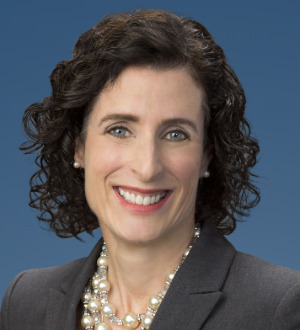

Throughout her 40-year career at CaseyGerry, attorney Gayle M. Blatt has built one of the most impressive national track records in consumer class action litigation. A trailblazer in civil and injury law, she has consistently stepped up to lead the legal battles defining privacy rights today.
In an era when our most intimate information can fit on a thumb drive or live in the cloud, Gayle M. Blatt has built a career ensuring that data isn’t easily taken or quietly abused. A longtime partner and head of the complex litigation practice at San Diego-based plaintiffs firm Casey Gerry Francavilla & Blatt, Blatt began her career in personal injury. Her experience and practice evolved over four decades at the forefront of high-stakes litigation—long before "data breach" entered the modern vernacular.
As co-lead counsel in the 23andMe data breach multidistrict litigation, Blatt found herself at the center of a defining privacy battle for the digital age—fighting for more than 6 million customers whose most sensitive genetic and ancestry information had been exposed.
“After all these decades, there is still something new to learn because of these emerging areas of business and technology,” said Blatt, who has been recognized by The Best Lawyers in America® for Mass Tort Litigation / Class Actions and Personal Injury Litigation since 2012. “A good lawyer enjoys the challenge.”
A Career That Began by Going West
Blatt’s path to becoming one of the country’s leading “data defenders” began decades ago in Long Island, New York In her case, the law was in her blood. Her father was a lawyer and general counsel, and her mother was a teacher. She followed in her dad’s footsteps and has not looked back.
“I sincerely don’t remember consciously saying that I wanted to be a lawyer,” she said, laughing. “But my parents said I did, and I made the move, so it must have been true.”
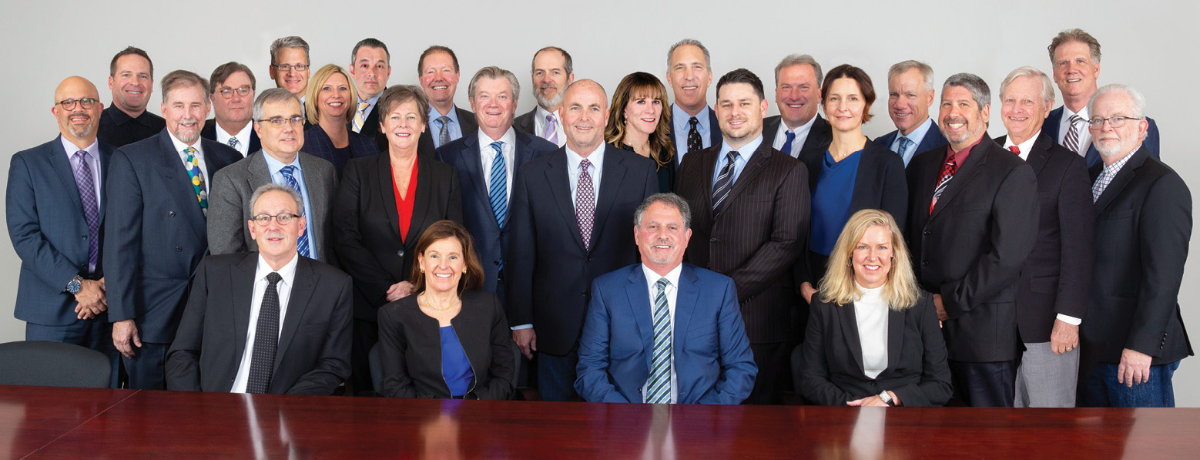
The calling took her across the country to Southern California, where she graduated from California Western School of Law, J.D., in 1985 and settled in San Diego shortly after to join CaseyGerry, where she has practiced ever since. CaseyGerry was a small firm at the time, and is now a boutique injury firm with 14 attorneys, two investigators, a fire consultant, and several staff members.
“What fascinated me was the stories about the people—the victims and survivors—of injury,” Blatt said, “especially the veterans and military employees who suffered from mesothelioma due to asbestos exposure. That really resonated with me, and I wanted to help them, because they were concerned for their families and, ultimately, the victims were becoming younger and younger.”
Transitioning to High-Risk, High-Reward Actions
She transferred to non-asbestos-related injury law and litigated some class actions and torts, which prepared her for leading CaseyGerry’s strategic expansion into more nationwide class actions. Since then, 2026 Best Law Firms® has ranked the plaintiffs’ firm Tier 1 in San Diego in the areas that Blatt has led, namely Mass Tort Litigation / Class Actions, Personal Injury Litigation and Product Injury Litigation.
“The top priority is to hold companies responsible for negligence, malice or any harm they have caused,” she said. “But I genuinely loved the collaborative nature of these practice areas. Working alongside other lawyers from other firms and leading steering committees are some of the best ways to learn and help you develop your experience.”
The transition into these higher-stakes areas has been fraught with risk and reward. As one of the firm’s five partners, Blatt’s advocacy includes work on leading landmark cases, including the Volkswagen diesel emissions scandal that broke in September 2015.
Often referred to as “Dieselgate,” the suit alleged Volkswagen installed “defeat devices” software in millions of diesel cars to cheat emissions tests. Affected vehicles emitted illegal, high levels of nitrogen oxides, causing respiratory illnesses and premature death. Approximately 11 million cars worldwide were fitted with the illegal software, including 500,000 in the U.S. This led to millions of recalls, the resignation of CEO Martin Winterkorn, and several executives suspended or facing criminal charges. Blatt’s firm was one of the steering committee members whose participation resulted in the historic $14.7 billion settlement.
Similarly, Blatt worked on the Wells Fargo Collateral Protection Insurance class action. Litigated in the U.S. District Court for the Central District of California, the suit alleged that between 2005 and 2016, Wells Fargo and National General Insurance added collateral protection insurance (CPI) policies to auto loans even when borrowers already had their own coverage, often without notifying the customers, leading to excessive payments. The practice caused approximately 274,000 customers to go into delinquency and resulted in 27,000 wrongful vehicle repossessions. In 2019, Wells Fargo entered into a settlement and agreed to pay nearly $394 million to the plaintiffs.
When reflecting on these landmark results, Blatt noted that a special combination of knowledge, organization, and strength is what resonated most strongly with the court.
“It takes a certain amount of confidence to handle claims of this magnitude,” Blatt said. “You have to be willing to speak up, but without too much ego. Also, I think what judges want most of all is candor and responsible people in their courtroom. They are so overloaded with cases and work and want people who can deliver what they say they will. They want lawyers who can get along with other lawyers and who will not bring unnecessary disputes before them.”
Recent Data and Privacy Breaches
In parallel, Blatt has taken on a portfolio of data breach and privacy cases that read like a timeline of the digital era’s most consequential failures of the past 15 years: leadership roles in litigation over the Yahoo! customer data security breaches, the Sony Gaming Networks incident, and other national data security cases.
In re: Yahoo! Inc., the multidistrict litigation was heard in the U.S. District Court for the Northern District of California and covered breaches from 2013 to 2016, including a 2014 breach impacting 500 million accounts and a 2013 breach affecting all 3 billion Yahoo accounts. She was the only California attorney on the five-member executive committee representing the plaintiffs, leading the efforts to secure a $117.5 million settlement in 2019. Blatt’s impact helped shape a settlement framework in one of the first truly global consumer data breach cases.
“Handling a case with millions of plaintiffs can be intimidating at times,” Blatt said. “It’s the sort of thing you work toward. Thankfully, the other lawyers, particularly on the executive committee, were all consummate professionals, which enabled us to secure the settlement.”
Stepping in When Data Privacy Litigation Gets Personal
The 23andMe case is Blatt’s most visible assignment to date, because it is also a natural extension of what she has been doing for years: translating highly technical failures in data governance, cybersecurity, and corporate risk management into human terms for judges and juries.
In re: 23andMe, Inc. Customer Data Security Breach Litigation, which was argued in the U.S. District Court for the Northern District of California, the plaintiffs alleged that 23andMe failed to adequately safeguard extraordinarily sensitive genetic and ancestry information, including details that can reveal ethnic origin, family relationships, and health‑related insights—data that, if misused or exposed, cannot simply be “reissued” like a credit card number.
23andMe announced the breach on Oct. 6, 2023. According to the company, the hacker accessed 5.5 million DNA Relatives profiles, which let customers share information, and accessed information for another 1.4 million customers who used a feature called Family Tree.
The breach had particular implications for vulnerable groups; reports indicated that data tied to individuals of Chinese descent and Ashkenazi Jewish heritage was disproportionately affected, underscoring the ways genetic information can intersect with identity, discrimination, and even physical safety.
Blatt noted that she first became aware of the breach almost immediately after the terror attack by Hamas on Israelis in the Gaza Strip on Oct. 7, 2023, which only added to the urgency of the breach.
For Blatt, who has spent decades representing injured clients against “untouchable” defendants, the 23andMe MDL is both a technical case about cybersecurity and a moral case about autonomy, consent, and the permanence of DNA. In 2024, 23andMe agreed to a $30 million settlement to settle a lawsuit accusing the genetics testing company of failing to protect the privacy of more than 6 million U.S. customers whose personal information was exposed. In 2025, 23andMe filed for bankruptcy and received court approval in the same year for its Chapter 11 reorganization plan. This led to a new settlement which received final approval.
“The clients were frightened, of course, because there was so much chaos in the days after the breach,” Blatt said. “It’s disappointing to know that this sort of trust can be breached by companies that are supposed to be at the forefront of technology. We all value our individualism and identities, and when that is taken—and being sold—it’s a major violation that affects people in various ways.”
Preparing for AI’s New Wave of Data Privacy Litigation
The explosion of data breach litigation has also elevated questions about how the law will keep pace with advances in artificial intelligence, biometrics, and genetic technology. The 23andMe case, in particular, sat at the edge of several emerging fault lines: the commercialization of genetic data; and the prospect that our DNA—uniquely identifying and immutable—could be misused in ways current statutes barely anticipate.
As regulators, policymakers, and courts wrestle with how to define harm and allocate responsibility in this new terrain, Blatt’s work helps translate abstract fears about “big data” and AI into specific legal duties: what companies must disclose, how they must secure information, and what accountability looks like when they fail.
“It’s actually quite frightening to imagine what will happen if adequate policies for artificial intelligence are not active and if laws are not enforced,” Blatt said. As for using it in her own work, she noted the many benefits, but she retains a healthy skepticism about using it too much or too frequently. “There are so many warnings that indicate that AI cannot be relied upon by itself. It needs to be refined quite a bit before I would rely on it too heavily—even in my day-to-day tasks.”
For now, Blatt continues to do what she has done for decades at CaseyGerry: build meticulous cases on behalf of clients who rarely have the resources to take on global corporations alone. The stakes were higher in the 23andMe litigation, where the “product” at issue is not a car, bank account, or device, but genetic information that makes individuals unique. Yet the core of her work remains unchanged: using the tools of complex litigation to restore power to consumers and to carve out legal protections commensurate with the risks of life in a data‑driven world. Gayle Blatt has emerged as one of the plaintiffs’ bar’s most trusted guardians of digital and genetic privacy—a defender of data for a generation whose most personal information now lives online, whether they like it or not.
“Consumer protection has certainly become more complex since I began practicing, because injury is no longer relegated to damages to a body or real property,” she said. “When these major companies bury the terms of use in a six-point font in a 30-page document, it’s unreasonable to assume someone will read it or fully comprehend what they are signing on for. The public is savvier now, but we need to keep educating them about their rights. That awareness is really one of the key takeaways of our advocacy now.”
Legal Community Impact and the Next Generation of Women in the Law
Along the way, she has been repeatedly recognized for her work, including multiple Outstanding Trial Lawyer awards from the Consumer Attorneys of San Diego and honors such as Top Plaintiff’s Lawyers in California and Top Women Lawyers by the Daily Journal, as well as a place among San Diego’s Top 10 lawyers and Top 25 women attorneys and a 2024 Super Lawyers Top 10 and Top 25 Women designation.
Blatt has also been omnipresent in local and legal community organizations, holding positions such as past president of the San Diego County Bar Association Foundation (2020), and as a member of the Consumer Attorneys of California President’s Club, and of the Leader’s Forum of the American Association for Justice.
“There is nothing like practicing law in San Diego,” she said. “I’ve been very fortunate in that everyone I’ve been surrounded by at CaseyGerry and the people during my early time at the San Diego Superior Court were always supportive of myself and other women in the profession.”
She acknowledged that not everyone will have the same experience as her own, and that the struggle for equality continues. She added that she hopes that the challenges women face will not deter them from pursuing their career goals.
“One of the big changes through the years is that there are obviously many more women lawyers,” she said. “And I really appreciate how so many women are going out on their own and charting their own path by launching their own firms. It’s wonderful to see them succeed and have the confidence to pursue their chosen goals on their own terms. Once you decide on the lifestyle you want, you can do it all. You just need to know what you’re getting into and that it makes you happy.”