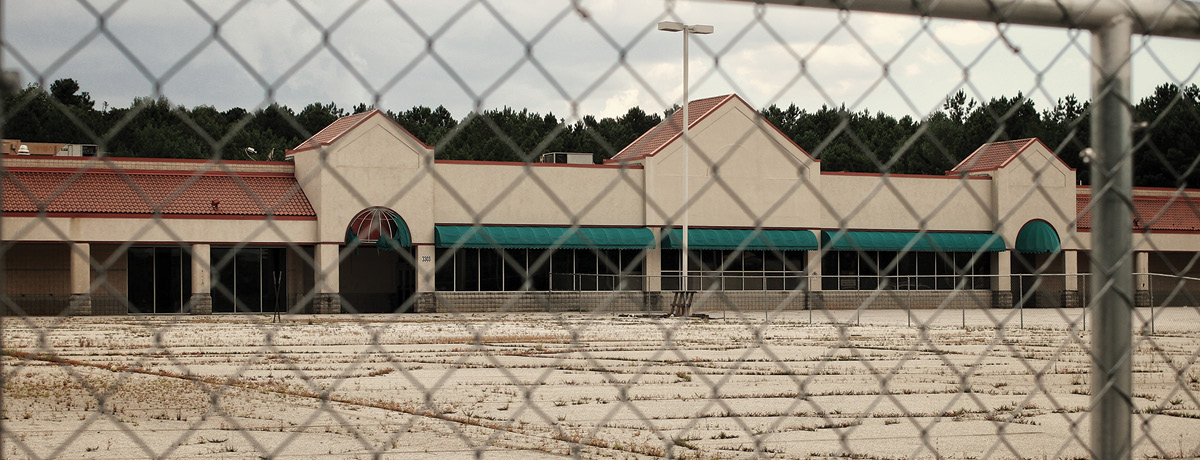

Not long ago, a developer in Tampa or Miami or any other Florida community could stare at an aging strip mall or empty warehouse and see nothing but red tape—years of zoning battles, neighborhood opposition and planning commission meetings that could put an end to their ambitions long before a project even got off the ground. Now, with the stroke of a pen and a 30-year affordability commitment, that same property can be transformed into a high-rise apartment building—no rezoning required, no public hearing necessary.
- Developers in Florida can swiftly transform properties due to the Live Local Act, bypassing previous zoning hurdles for affordable housing projects.
- Passed in 2023 and expanded in 2025, the law exempts projects from rezoning and public hearings, promising fast-tracked approval and tax incentives.
- Resistance mounts as municipalities challenge the law on grounds of lost local control and potential gentrification, with South Florida communities filing lawsuits.
- The outcome of these legislative changes could significantly impact Florida's housing supply amidst a projected population surge by 2030.
This is the vision of a new Florida, reimagined under the "Live Local Act"—a sweeping state law that gives developers unprecedented power to build affordable and workforce housing in places once off-limits. Pitched as a bold solution to Florida's housing crisis, the law sidesteps local zoning restrictions, potentially overrides some historic preservation rules and even lets churches build apartments in their parking lots.
Supporters call it a lifeline for working families and a long-overdue correction to exclusionary zoning. Critics see it as a power grab that steamrolls local control, fast-tracks gentrification and leaves communities with little say in how—or where—development happens.
One thing is certain: The "Live Local Act" is reshaping the Florida real estate landscape, perhaps faster than anyone expected.
A Crisis Meets a Radical Solution
Florida’s housing shortage didn’t arrive overnight.
For years, wages have lagged while rents soared, pricing out teachers, nurses and service workers across the state. According to the University of Florida’s Shimberg Center, more than 900,000 low-income households now spend more than 40% of their income on rent. The situation is especially dire in metro areas like Miami, Tampa and Orlando, where new housing supply hasn’t kept up with population growth.
The Live Local Act, passed in 2023 and significantly expanded in 2025, is the state’s boldest attempt to tackle the crisis. It allows developers to bypass zoning restrictions on properties zoned commercial or industrial—as long as at least 40% of the units are reserved for affordable or workforce housing. In return, projects receive administrative approval. Local officials can’t require rezoning, public hearings or planning board votes.
Density and height are dictated not by the parcel’s zoning but by whatever is allowed within a one-mile radius. Local development codes are essentially sidelined if they conflict with the state’s pro-housing mandates. The Live Local Act also provides tax incentives, including property tax exemptions, for developers who create affordable housing
The 2025 Overhaul: SB 1730
In June 2025, Gov. Ron DeSantis signed Senate Bill 1730 into law, strengthening the Live Local Act’s preemption language and clarifying ambiguities that had bogged down early projects.
Among the key updates:
● Expanded definitions: The term "commercial property" now clearly includes strip malls, warehouses and planned-unit developments, making them eligible for redevelopment under Live Local.
● Religious land use: Churches and other religious institutions can now build affordable housing on their land, including parking lots, under the new "Yes in God’s Backyard" provision.
● Preemption power: The law now explicitly overrides local height, density and floor-area-ratio limits unless a city adopted its own affordability-focused standards before July 1, 2023.
● Fast-tracked approval: Projects that meet comprehensive plans and development regulations are approved by staff—no public input required.
● Design review carve-outs: Historic buildings listed on national or local registries may be subject to aesthetic rules, but only if those rules don’t reduce size or scale.
Aging Condo Redevelopment: A Flashpoint on the Coast?
Nowhere is the law’s potential impact more obvious than along Florida’s coast, where aging condo buildings are quickly becoming targets for demolition and redevelopment. In the wake of the catastrophic Surfside collapse in June 2024, Florida introduced stricter inspection and reserve requirements for older buildings, which caused many coastal condominium communities to become financially unsustainable.
“People are waiting on pins and needles to see what the next budget will look like, what the next assessment will be,” Dimitri Karides, a broker associate with Sand Key Realty in Clearwater Beach, recently told the Tampa Bay Times. “Sellers are realizing they might want to spend their money elsewhere.”
Enter the Live Local Act, which provides developers with a streamlined process to buy out condo owners, demolish the buildings and replace them with taller, denser structures. These new developments must also include a portion of affordable housing units. But here’s the catch: The affordable housing doesn’t have to be on-site or even serve the immediate neighborhood
Projects Move Forward. Resistance Mounts.
Across Florida, developers have not been reluctant to wield the Live Local Act.
In St. Petersburg, for instance, a project known as Alta Roosevelt was proposed in May 2024 to redevelop a former office site into a 381-unit apartment complex, including approximately 152 workforce housing units. The project moved forward administratively under the Live Local Act, bypassing traditional zoning approvals.
In Miami-Dade County, Beacon Hill at Princeton became the county’s first Live Local Act project to break ground in June 2025. Located in Homestead, the 112-unit development will be entirely income-restricted, with units reserved for residents earning between 30% and 80% of the area's median income.
South Beach the New Manhattan?
But not everyone is on board.
Months after the Live Local Act took effect in 2023, for example, Pasco County commissioners unanimously voted to sue any developers attempting to build under the law within county boundaries. In Miami Beach’s historic Art Deco district, officials warned that even with the recent amendments, the law could allow developers to wipe out the city’s architectural identity.
“This would transform South Beach into Manhattan, there’s no other way of putting it,” Commissioner Alex Fernandez told NBC6 in April. “Low-scale apartment buildings ... by legislation transformed into 50-story towers.”
Home Rule vs. Legislative Mandates
At its core, the Live Local Act amplifies state preemption over municipal zoning—bringing tensions over the principle of home rule, as enshrined in Florida's Constitution, to the fore. Can cities reject projects that don't fit their comprehensive plans? Can historic preservation survive legislative override?
One of the major concerns with the Live Local Act is its impact on commercial plazas. In most circumstances, these areas are solely designated for public use. However, developers can now potentially build apartment complexes within these spaces. This has raised red flags for city officials who fear overcrowding and strain on public resources.
“Normally, I would tell you that you can’t build an apartment complex in a commercial plaza. That’s where the public is supposed to go,” said Deerfield Beach planning director Eric Power, according to the Commercial Observer. “But what Live Local says is, yes, you can do that ... Live Local also takes away our ability to regulate certain things related to height and density.”
No Safe Harbor
Others have raised questions about the potential impact of the law's affordable housing tax incentives.
“The Live Local Act enables property owners to claim substantial tax reductions without requiring them to lower rents or build additional housing,” Polk County Property Appraiser Neil Combee wrote in an April letter to county commissioners, according to The Ledger.
“Meanwhile, critical public services funded by property taxes—such as public safety, infrastructure and education—face the risk of being underfunded.”
South Florida Communities Mount First Legal Challenges
In June, two South Florida communities—Hollywood and Bal Harbour—filed lawsuits challenging key provisions of the Live Local Act, the first to test the state’s broad preemption of local zoning regulations.
According to Hollywood’s filing in Broward County Circuit Court, the Live Local Act “violates the principle of home rule” by allowing the state to override zoning restrictions without offering cities a meaningful opportunity to regulate development. City leaders further claim the law enables developers to pursue projects inconsistent with local comprehensive plans, height limits and neighborhood character.
Bal Harbour’s challenge takes a slightly different angle. In a petition for declaratory relief filed in Miami-Dade County, the village asserts that the Live Local Act’s definition of “administrative approval” is vague and violates due process. Officials argue the law removes public hearings and neighborhood input from the development process without providing clear standards for approval, leaving cities vulnerable to legal and political uncertainty.
What’s Next for the Live Local Act?
While both lawsuits are in early stages, if successful, they could trigger a cascade of similar challenges from other Florida towns and cities reluctant to enforce the law as written.
Until then, many local governments are watching closely—uncertain how far the state’s authority will go and whether the judiciary will draw new boundaries around what the law can and cannot override. In the meantime, the next few years will determine whether the Live Local Act delivers on its promise or becomes a cautionary tale.
With Florida’s population projected to swell by three million by 2030, the stakes could not be higher.