Insight

FEDERAL WHITE-COLLAR ENFORCEMENT – DOJ's New Fraud Division Is Now Official

By Sara Mieczkowski and Eddie Suarez

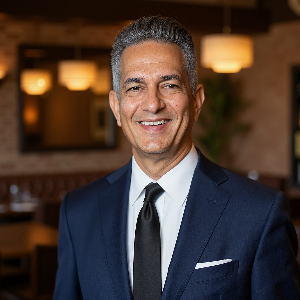
Eduardo Suarez

Written by Eduardo Suarez

Published: September 24, 2026

The Department of Justice has now turned its National Fraud Enforcement Division from an announced initiative into a formal component with nationwide authority. The final rule became effective on August 24, 2026, complete with a new enforcement-priorities memorandum.

DOJ is consolidating personnel, data analytics, corporate-enforcement expertise, asset recovery, and trial resources around a single mission: fraud enforcement.

The final rule gives the new division a broad criminal mandate

The final rule amends 28 C.F.R. Part 0 to establish the National Fraud Enforcement Division and delegate authority to its Assistant Attorney General. The rule was published on August 18 and took effect on August 24.

It assigns the division responsibility for criminal fraud matters, except antitrust conspiracy to defraud cases assigned to the Antitrust Division, as well as criminal tax cases, trade and customs fraud, crimes involving money owed to or paid by the United States, fraud involving health plans, and healthcare-fraud and controlled-substance diversion schemes.

The division shares general criminal fraud authority with the Criminal Division; only criminal tax cases and health-plan fraud move to the new division exclusively.

The rule also permits the Attorney General or Deputy Attorney General to assign other cases to the division. It authorizes the new division to prosecute additional federal offenses discovered during investigations within its portfolio.

In practice, a matter that begins as procurement fraud, healthcare fraud, or customs evasion may expand into money laundering, tax, obstruction, false-statement, or other charges without leaving the division.

In practice, a matter that begins as procurement fraud, healthcare fraud, or customs evasion may expand into money laundering, tax, obstruction, false-statement, or other charges without leaving the division.

The priorities memo explains how DOJ plans to use that authority

Assistant Attorney General Colin M. McDonald's August 13 priorities memorandum identifies five principal areas: public trust and financial integrity, healthcare, internal revenue, global trade and commerce, and corporate misconduct.

The memo says DOJ is shifting substantial resources into the division, bringing it to about 500 attorneys and staff by the rule's effective date, with further growth planned over the next two years.

The memorandum describes specialized trial sections supported by asset-recovery lawyers, appellate counsel, a dedicated privilege-review team, corporate-enforcement specialists, automated litigation support, data scientists, and a National Fraud Detection Center. Prosecutors will work with U.S. Attorney's Offices and other agencies across the country.

That structure points toward faster identification of cases and more coordinated parallel exposure. DOJ expressly plans to use data analysis in healthcare and tax matters, to combine criminal tools with financial forensics, and to coordinate trade-fraud cases across agencies.

Companies should assume that billing data, claims data, customs records, tax information, and internal business records may be compared earlier than they were in a traditional complaint-driven investigation.

Corporate disclosure decisions will become more time-sensitive

The memo states that the division will reward companies that voluntarily self-disclose, cooperate, and remediate. That commitment fits within DOJ's department-wide Corporate Enforcement and Voluntary Self-Disclosure Policy.

But the practical difficulty remains because a company must decide whether to disclose before it knows all the facts, while the new division is designed to uncover misconduct through government data and cross-agency information sharing.

The bottom line

The new rule does not expand the criminal code, but it changes the machinery used to enforce it. DOJ has placed a wide range of fraud, tax, trade, healthcare, and corporate matters under a national division built for data analytics and coordinated prosecution.

Companies and individuals should respond with disciplined speed by preserving records, identifying law enforcement actors, protecting privilege, and making disclosure decisions before the government's systems make those decisions for them.

The Suarez Law Firm, P.A. represents individuals and companies in federal white-collar investigations, corporate-enforcement matters, and False Claims Act cases. If you have questions about these issues, contact us.


Trending Articles

What AI Visibility Means for Lawyers


by Bryan Driscoll and Josh Rupall

AI tools increasingly interpret lawyers public information. Clear, consistent and credible sources help ensure they describe legal expertise accurately.

AI dashboard visualizing a lawyer's online profile, reputation, and practice information across mult

The Best Lawyers in Canada 2027: Recognizing the Nation's Top Legal Talent


by Jamilla Tabbara

Honoring established leaders and rising practitioners across Canada's legal profession.

3D model of Canada textured with the Canadian flag.

2027 Best Lawyers Awards: Honoring Excellence in the Legal Profession


by Jamilla Tabbara

Recognizing the outstanding attorneys leading top practice areas nationwide.

United States with American flag representing The Best Lawyers in America 2027 awards

Announcing the 2027 Best Lawyers Awards: Austria, Germany and Switzerland


by Jamilla Tabbara

Celebrating the legal professionals throughout Central Europe.

Graphic displaying three-dimensional map cutouts of Austria, Germany and Switzerland.

The Best Lawyers in France 2027: Peer-Reviewed Excellence


by Jamilla Tabbara

Seventeen editions of peer trust, a growing profession and a dynamic legal market.

3D Map of France with National Flag Graphic

Who Can Override a Power of Attorney?


by Bryan Driscoll

A power of attorney carries real legal authority, but it isn't absolute. Here's who can step in to revoke, restrict or set it aside.

Close-up of a power of attorney document, symbolizing legal authority, revocation rights, guardiansh

How to Get an Eviction Off Your Record


by Bryan Driscoll

Whether an eviction can be removed, sealed or corrected depends on your state, your case and where the record appears.

A printed eviction notice attached to a decorative metal security gate, representing housing instabi

Inside the 2027 Best Lawyers Awards in Chile, Colombia and Puerto Rico


by Jamilla Tabbara

A closer look at the research process, methodology and key statistics behind the 2027 editions.

3D map cutouts of Chile, Colombia, and Puerto Rico

How Peer Review Works: Best Lawyers Methodology Explained


by Jamilla Tabbara

Understanding the independent, data-driven framework that defines professional legal standing.

A glowing professional icon surrounded by incoming arrows, symbolizing data collection and feedback.

How to Optimize Your Best Lawyers Profile for AI Search


by Everett Sizemore

Learn how a complete, well-structured Best Lawyers profile can strengthen your visibility and accuracy across AI search platforms.

A laptop screen displaying the Best Lawyers profile dashboard showing customizable sections.

Google Is Losing Major Antitrust Cases. Is This the End of Big Tech’s Winning Streak?


by Justin Smulison

Legal experts say the remedies and appeals, not the liability findings, will determine if Google's losses reshape the tech industry.

Google Antitrust Losses: What They Mean for Big Tech

What Is a Hostile Work Environment?


by Bryan Driscoll

Not every difficult job is a hostile work environment in the eyes of the law. Here's how to tell the difference and what to do next.

Blurred image of a distressed employee in an office, surrounded by motion-blurred coworkers, conveyi

Turn Client Questions Into Content That AI Search Can Find


by Bryan Driscoll and Manny Candal

Client questions are becoming search inputs. Your firm’s content should answer them clearly.

Pile of question marks with a single bright yellow question mark in the center, representing search.

How to Start a Nonprofit: A Step-by-Step Guide


by Bryan Driscoll

Everything you need to know about turning your mission into a registered nonprofit, from your first board meeting to 501(c)(3) approval.

Three white blocks spelling "NPO" on a yellow background.

Can You Sue Someone for Emotional Distress?


by Bryan Driscoll

Emotional distress can sometimes support a lawsuit, but whether you have a valid claim depends on the facts, the law and your ability to prove real harm.

Abstract black-and-white face with multiple screaming mouths, representing emotional distress, anxie

What Is the Downside of Filing for Bankruptcy?


by Bryan Driscoll

A balanced look at the credit, financial and emotional costs of bankruptcy and when filing still makes sense.

A close-up photograph of a weathered, empty red leather wallet lying abandoned.
Tap to expand

Welcome to Smithy AI the Best Lawyers Assistant

I can help you find attorneys, compare firms, explore practice areas, and surface rankings curated from the Best Lawyers methodology.

Not legal advice This assistant provides general information only. For guidance on your specific situation, please consult a licensed attorney.
Learn about Best Lawyers Research Process
Suggested prompts
Chat limit reached
You've reached the message limit for this chat. To keep exploring, browse Best Lawyers directly or come back later to start a fresh conversation.
Browse Best Lawyers