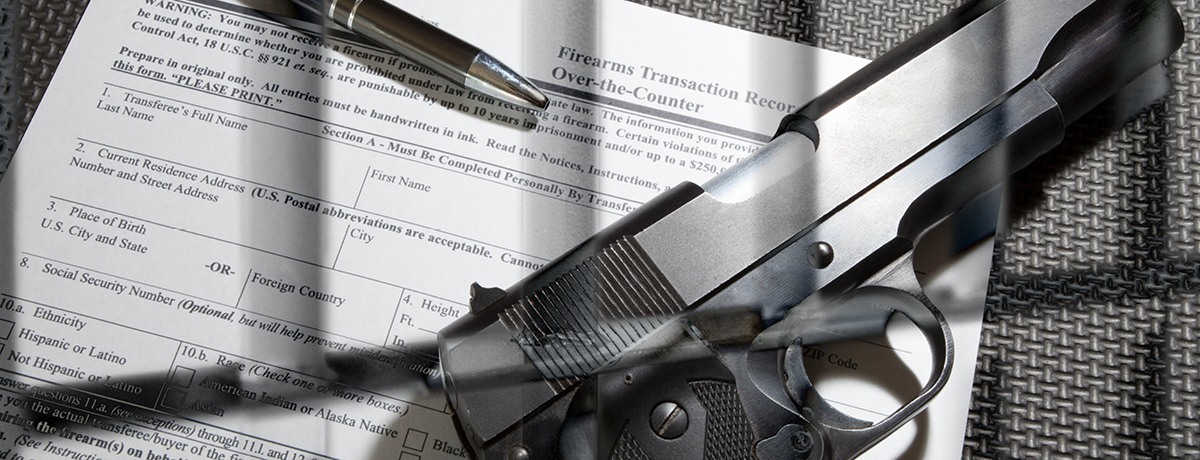

Some U.S. convicted felons may soon have their gun rights restored—if the Trump administration can convince Congress it's a constitutional corrective.
The U.S. Department of Justice is working to revive a long-dormant process allowing certain individuals with felony convictions and other federal firearm prohibitions to petition for the restoration of their gun rights under 18 U.S.C. § 925(c). The statute grants the attorney general authority to lift these restrictions if the applicant can show they are not likely to act in a manner dangerous to public safety and that granting relief is not contrary to the public interest.
For decades, that pathway was effectively closed—Congress barred the Bureau of Alcohol, Tobacco, Firearms, and Explosives from using funds to process applications in 1992, citing concerns about cost, administrative burden, and the risk of putting firearms back into dangerous hands.
The decision to reopen it now sits at the fault line of constitutional law, criminal justice reform, and national politics. Supporters frame restoring gun rights to certain convicted felons as every bit as fundamental as speech or voting; opponents warn it could undermine public safety amid persistent gun violence. It also arrives in a post–Bruen legal landscape, where Second Amendment protections are expanding and categorical bans face heightened scrutiny. The result is a policy move with the potential to redefine the boundaries between rehabilitation, regulation, and the right to bear arms.
Historical and Legal Foundation of Firearm Rights Restoration
In practice, the restoration program became politically toxic. A 1991 report from the Violence Policy Center revealed that some restorations had gone to individuals convicted of violent crimes, including armed robbery and assault.
Critics in Congress questioned the wisdom of returning firearms to people with serious criminal histories, regardless of their subsequent conduct. The program’s cost also drew fire—processing petitions was resource-intensive, requiring detailed investigations, interviews, and records reviews.
By 1992, the political calculus shifted decisively. Lawmakers inserted a budget rider prohibiting ATF from spending funds on § 925(c) applications, effectively mothballing the process. For the next three decades, the statute remained on the books but functionally dormant. No federal agency had the mandate or the budget to restore firearm rights, leaving those subject to federal prohibitions without a viable administrative path to relief.
Political and Constitutional Crosscurrents
The Trump administration has cast the revival of the § 925(c) program as a constitutional corrective. Attorney General Pamela Bondi describes it as restoring a constitutional right for every person, on the same level as the right to vote, to free speech, and to practice a chosen religion. In this framing, the current system is overbroad, permanently disenfranchising individuals from firearm ownership without assessing whether they pose an actual risk to public safety.
Gun rights advocates have seized on the move as an overdue recalibration of federal policy. Groups like Gun Owners of America hail the change as outstanding progress, arguing that a blanket ban sweeps in nonviolent offenders and those who have long since demonstrated rehabilitation. For them, the revival is less about expanding access to firearms and more about restoring due process for those unfairly caught in an indiscriminate prohibition.
Opponents, however, see the initiative as reckless. Gun control groups, including Brady and Everytown for Gun Safety, warn that the program could place firearms back into dangerous hands and undermine decades of bipartisan consensus on keeping guns from convicted criminals.
Democratic lawmakers have accused the administration of sidestepping Congress, reviving a defunded program through executive action rather than legislative approval. For critics, the process is both a public safety risk and a constitutional overreach in the other direction.
The timing is no accident. The move comes against the backdrop of recent Supreme Court decisions—most notably New York State Rifle & Pistol Association v. Bruen—that have expanded Second Amendment protections and applied a more stringent historical test to gun restrictions. Lower courts have increasingly scrutinized categorical bans, including those on nonviolent felons, for lacking individualized assessments.
In this climate, the restoration program could serve a strategic purpose for the federal government. By creating a formal process for relief, DOJ can argue that the felon-in-possession statute is not an absolute prohibition but a conditional restriction with a safety valve.
That individualized review could help insulate the law from constitutional challenges by showing it accommodates legitimate claims for reinstatement. Whether that argument persuades the courts or simply fuels further litigation will help determine the durability of both the program and the broader framework of federal gun laws.
The Mechanics of the New DOJ Program
The revived firearm rights restoration process will be housed in the Office of the Pardon Attorney, which has been given a new mandate and additional funding. The DOJ’s FY 2026 budget allocates $448,000 to develop the infrastructure needed to intake, review, and decide applications. This marks a significant expansion of the office’s traditional clemency role, placing it at the center of a politically charged Second Amendment policy shift.
Central to the program is a planned web-based application portal designed to handle high volumes efficiently. Working with the FBI’s Criminal Justice Information Services, the Pardon Attorney’s office is building a case management system that integrates records from multiple agencies, reducing manual review where possible. The stated goal is to make the process user-friendly while still allowing for detailed vetting. Applicants will be able to submit documentation electronically, track the status of their petitions, and receive decisions through the same platform.
While the DOJ has yet to publish final regulations, officials have signaled that eligibility determinations will weigh the nature of the original offense, the applicant’s conduct since conviction, and the amount of time elapsed. Evidence of rehabilitation—such as steady employment, community involvement, and the absence of new criminal activity—will likely be critical.
Some categories will be effectively closed off. Under the proposed framework, violent felons, registered sex offenders, and individuals unlawfully present in the United States will be presumptively ineligible absent extraordinary circumstances. This mirrors language from the proposed rule and reflects an effort to reassure the public that the program will not open the door to those with the highest risk profiles.
The potential reach is enormous. DOJ estimates that more than 25 million people could qualify to apply, a number inflated by the decades-long absence of a functioning process. If even a fraction of that population pursues relief, the Pardon Attorney’s office will be managing one of the largest administrative review programs in federal criminal law.
Policy, Litigation and the Role of Lawyers
Litigation is inevitable. Once the DOJ begins issuing decisions, applicants who are denied will have strong incentives to challenge the process in federal court. Disputes are likely to center on eligibility criteria, evidentiary standards, and procedural fairness.
Questions will arise over how much discretion the attorney general can exercise, and whether denials must be supported by detailed factual findings. Given the high stakes, attorneys should expect early test cases to help define the contours of the program, with courts weighing in on due process requirements and the limits of administrative authority.
Congress is another wildcard. Lawmakers could move to restrict the program, much as they did in 1992, by cutting off funding or narrowing statutory authority.
Alternatively, a supportive majority could codify the DOJ’s approach, embedding specific eligibility standards or procedural safeguards into law. The political climate will dictate which path prevails, and attorneys advising clients must monitor legislative developments closely. A sudden funding cut or statutory amendment could leave pending applications in limbo.
What is certain is a surge in petitions. With more than 25 million people potentially eligible, even a modest participation rate will translate into thousands of applications. Many will come from individuals unfamiliar with legal processes, increasing the demand for lawyers who can navigate the system efficiently. This includes gathering the right documentation, presenting persuasive evidence of rehabilitation, and anticipating objections from the DOJ. Lawyers will also need to counsel clients on the practical realities of the program’s timelines and the likelihood of success based on their record.
Balancing Act
Strategic planning is critical because a federal restoration is not the same as a full reinstatement of gun rights. State laws often impose independent prohibitions on firearm possession, and those restrictions will remain in force unless separately addressed.
A client who clears the federal hurdle could still face a state-level ban that blocks them from purchasing or possessing a firearm locally. Effective representation will require a dual-track approach—pursuing federal relief while also navigating relevant state restoration processes or litigation.
This dual jurisdictional layer creates a unique role for criminal defense and constitutional law attorneys. Defense lawyers bring experience in mitigating criminal records and framing narratives of rehabilitation. Constitutional practitioners add expertise in Second Amendment jurisprudence and the nuances of individual rights litigation. Together, they are positioned to influence not only individual outcomes but the broader policy conversation about how rights restoration should function in a post-Bruen era.
At the same time, lawyers must balance client advocacy with awareness of community impact. Representing someone in a restoration petition involves not only legal skill but reputational considerations, especially in high-profile or politically charged cases. Attorneys will be navigating a public debate that pits rehabilitation and redemption against fears of increased gun violence. The way lawyers frame their cases—emphasizing evidence-based assessments, public safety commitments, and legal integrity—will help shape the legitimacy of the program in the eyes of both courts and the public.
Ultimately, the DOJ’s move to revive § 925(c) is more than an administrative reopening; it’s a live test of how the legal system reconciles the right to bear arms with the duty to protect the public. The program will generate new law, prompt congressional fights, and challenge courts to define the limits of administrative discretion in rights restoration. For lawyers, the opportunity is as large as the applicant pool, provided they can navigate the legal, political, and reputational complexities that will define this next chapter in Second Amendment jurisprudence.
If questions about firearm rights restoration or related criminal matters affect you or a loved one, speaking with an experienced criminal defense lawyer or a civil rights lawyer can provide clarity. A qualified lawyer can explain how current laws apply to your situation and advise on next steps.